
〜んだって~n datte
N datte (〜んだって) means “casual hearsay”.
I heard that this summer will be considerably hotter than usual.
Use 「〜んだって」 among friends to pass on information you heard from someone else.
In the course
How it works
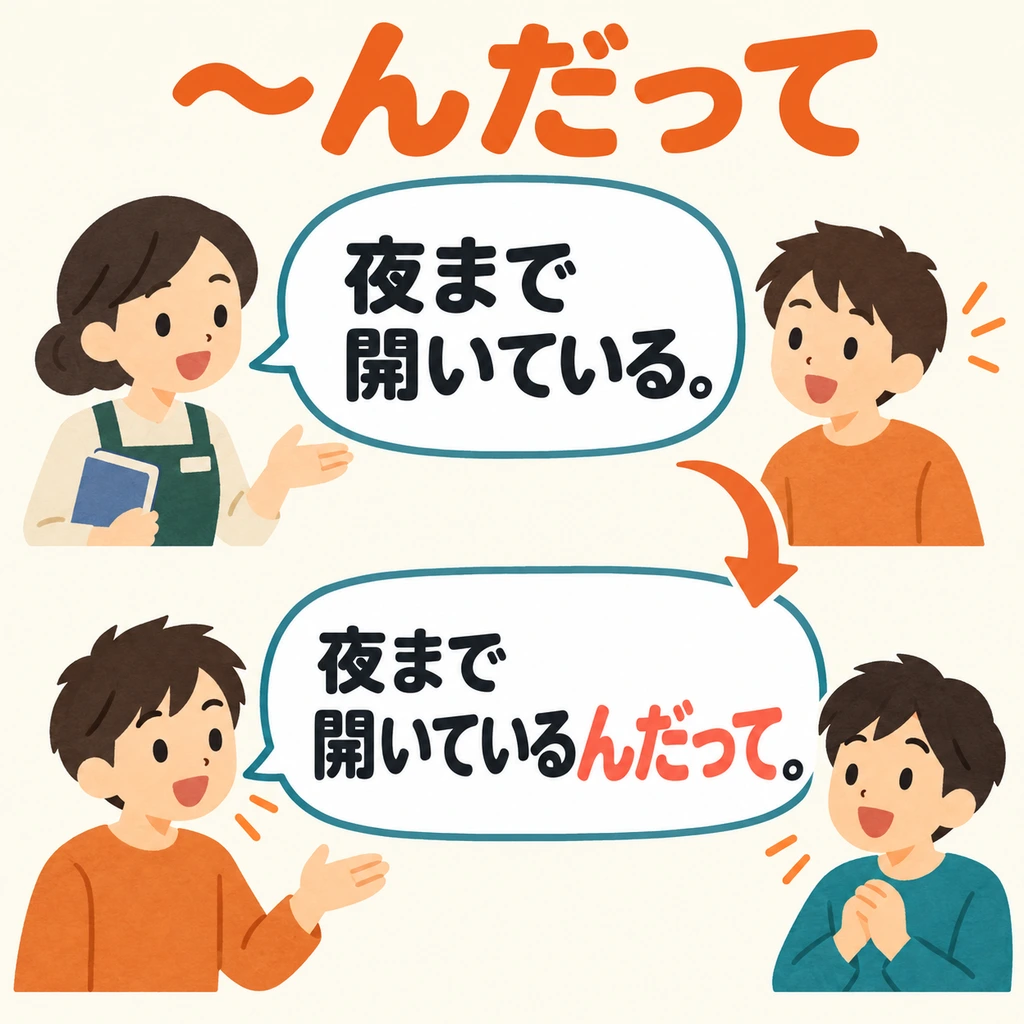
What did the librarian tell him? He passes the library information he heard on to a friend.
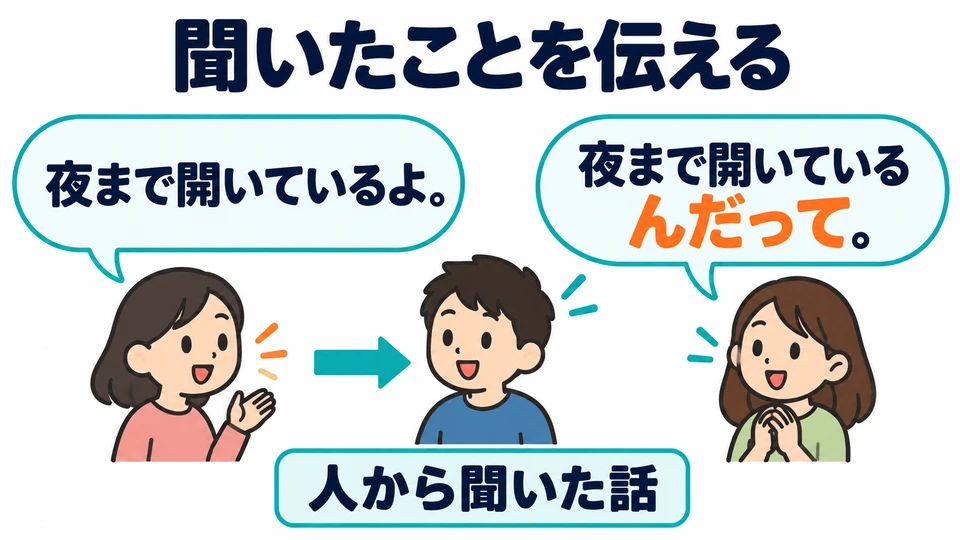
「んだって」 marks hearsay or reported speech. The information comes from someone else, rather than your own guess.
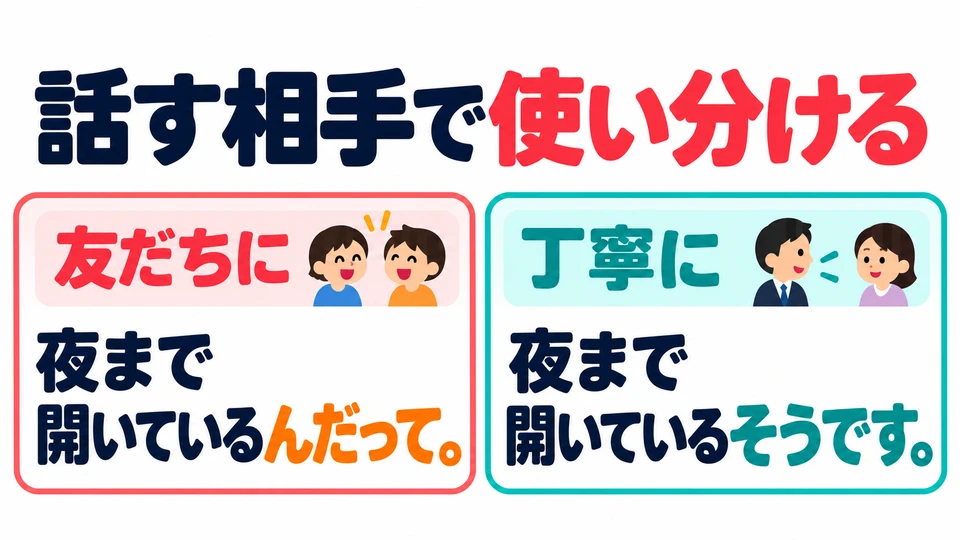
This is a casual expression used among friends. For formal or polite reporting, use the 「そうです」 you already learned.
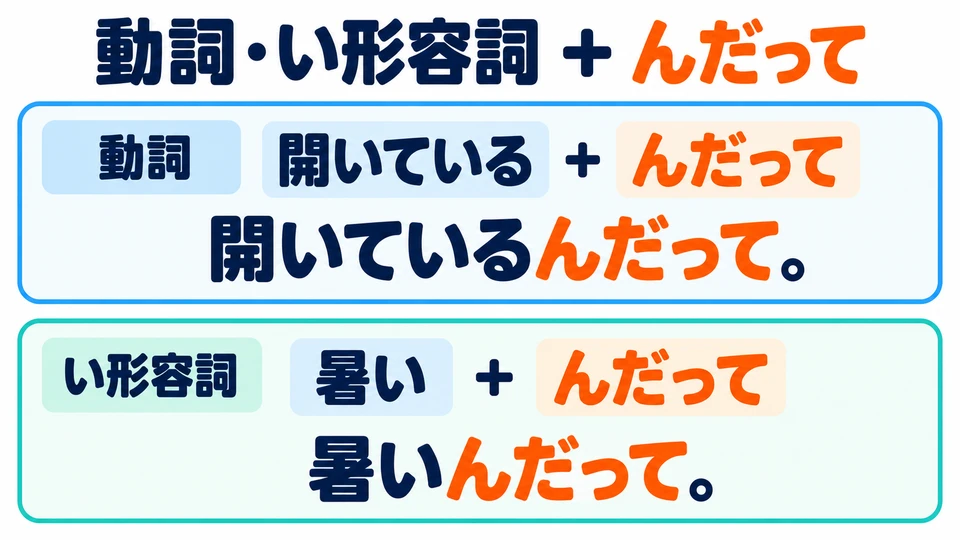
Use the plain form of verbs and い-adjectives, as in 「開いている+んだって」.
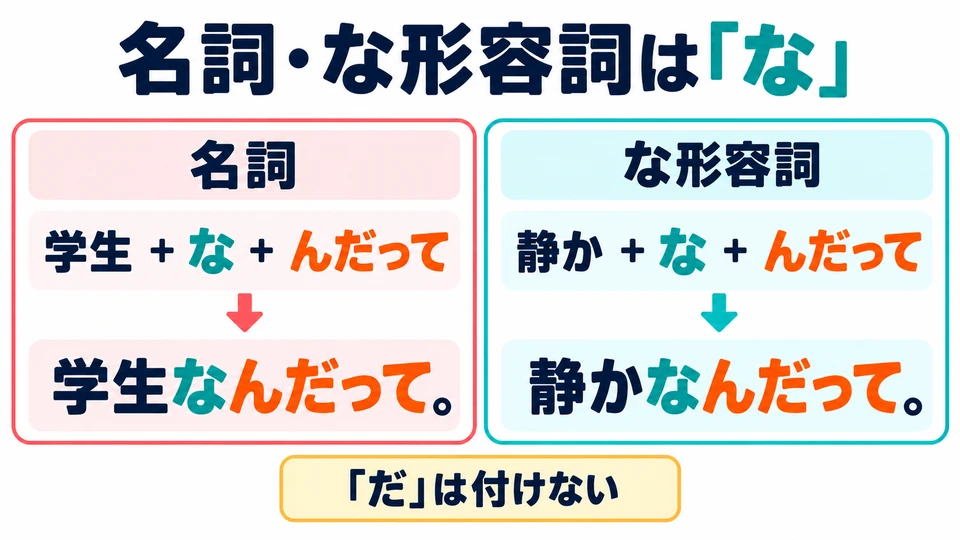
For nouns and な-adjectives in the present affirmative, use 「な+んだって」, without 「だ」.
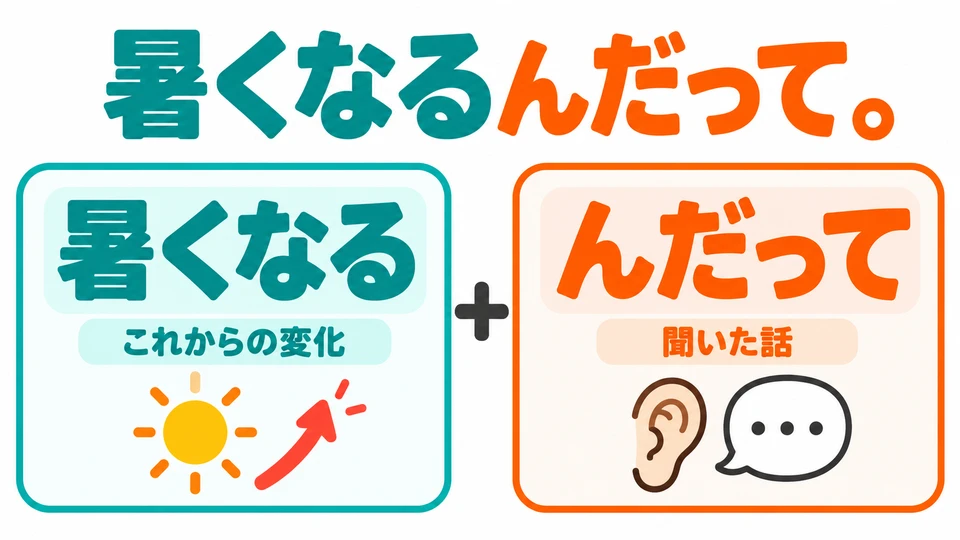
In the summer example, 「なる」 expresses a future change; 「んだって」 simply shows that the information was heard from someone else.
Example sentences
- 今年kotoshiのno夏natsuは、wa、例年reinenよりyoriかなりkanari暑くatsukuなるnaruんnだdaって。tte。
In a conversation

- Aねえ、さっきのニュースの速報、もう見た?
A: Hey, did you see the breaking news just now?
- Bううん、見ていない。何か大きな
Check yourself
Level 1 · Recognise
Which sentence is correct?
Level 1 · Recognise
Listen and choose the meaning
Level 2 · Build
Put the words in order
I heard this summer will be much hotter than usual.
Level 3 · Use
What goes in the blank?
今年の夏は、例年よりかなり____。
I heard this summer will be much hotter than usual.
More grammar in this theme
- 〜んだってcasual hearsay