Lesson notes · ≈ JLPT N3 · Intermediate 1
〜っぽい~ppoi
characteristic or impression
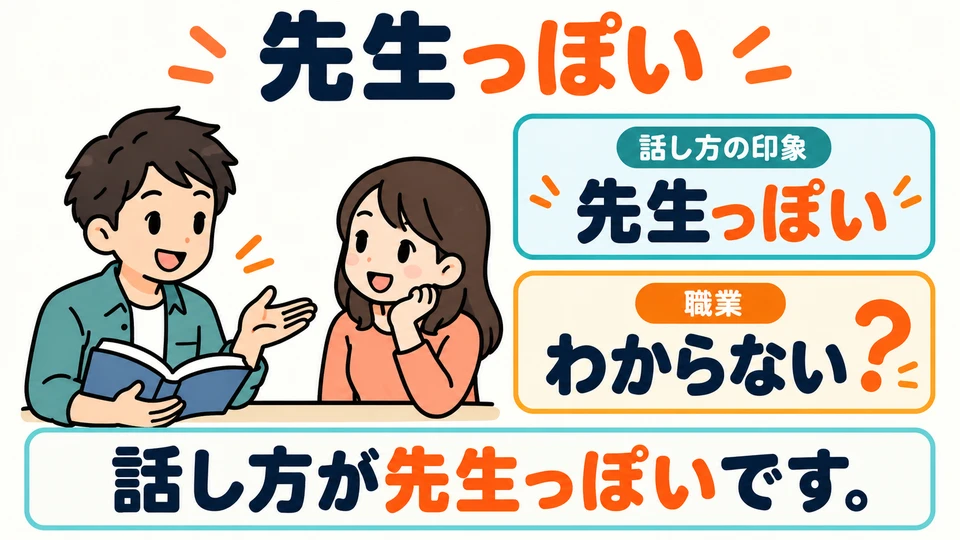
Use 「〜っぽい」 after a noun to describe a characteristic or impression, such as acting or sounding like someone.
How it works
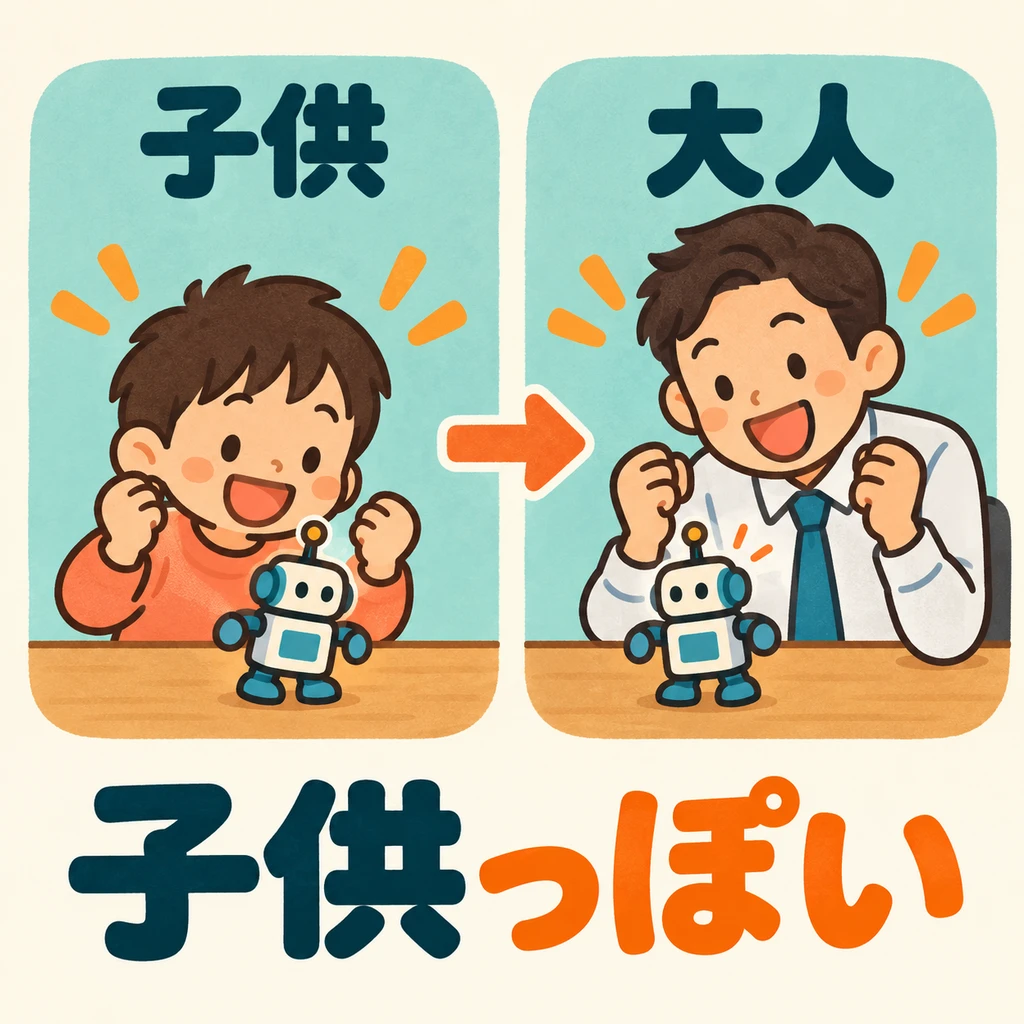
Adults can get excited like children too. Look at the picture: how do the two behave alike?
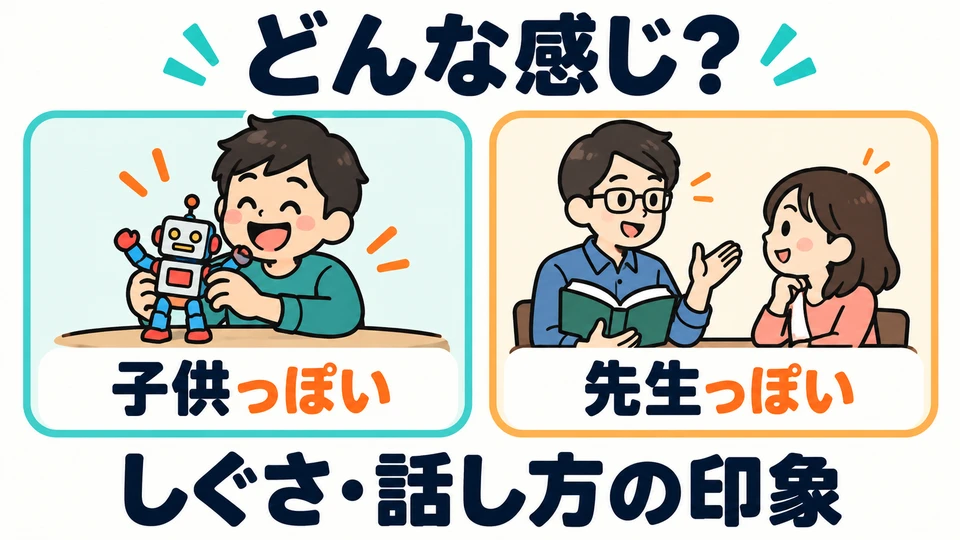
Use 「っぽい」 to express a characteristic or impression when describing how someone acts, speaks, and so on.
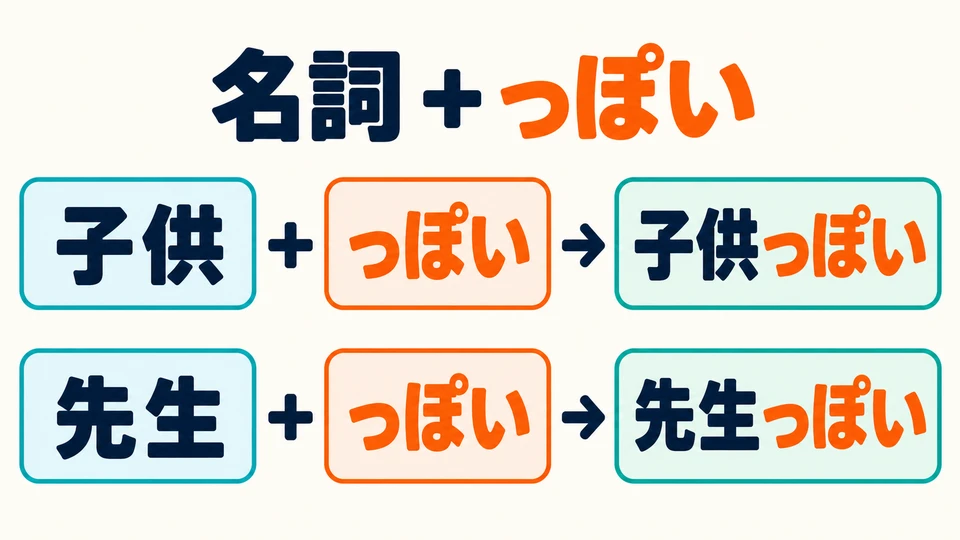
In this lesson, attach 「っぽい」 directly to a noun: 子供+っぽい→子供っぽい.
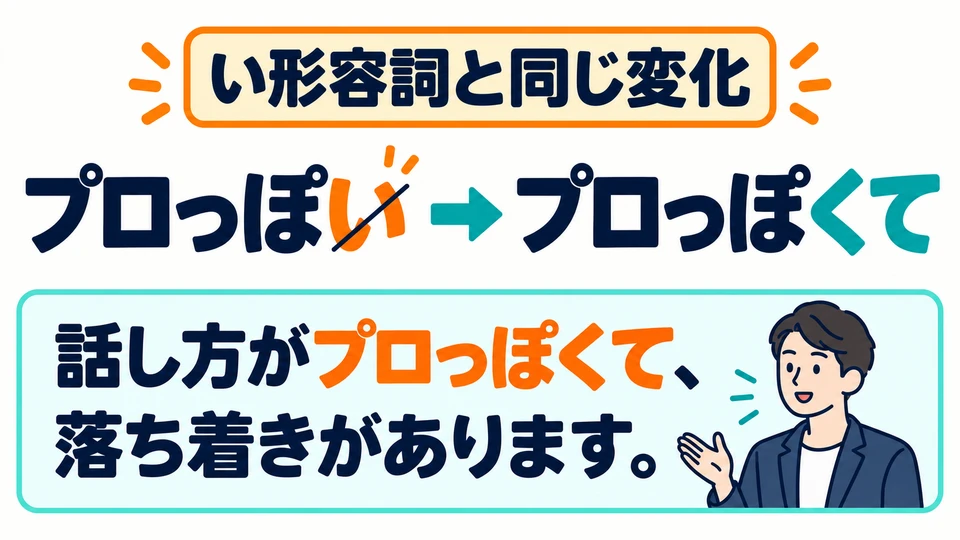
「っぽい」 changes like an い-adjective. To connect it to what follows: プロっぽい→プロっぽくて.
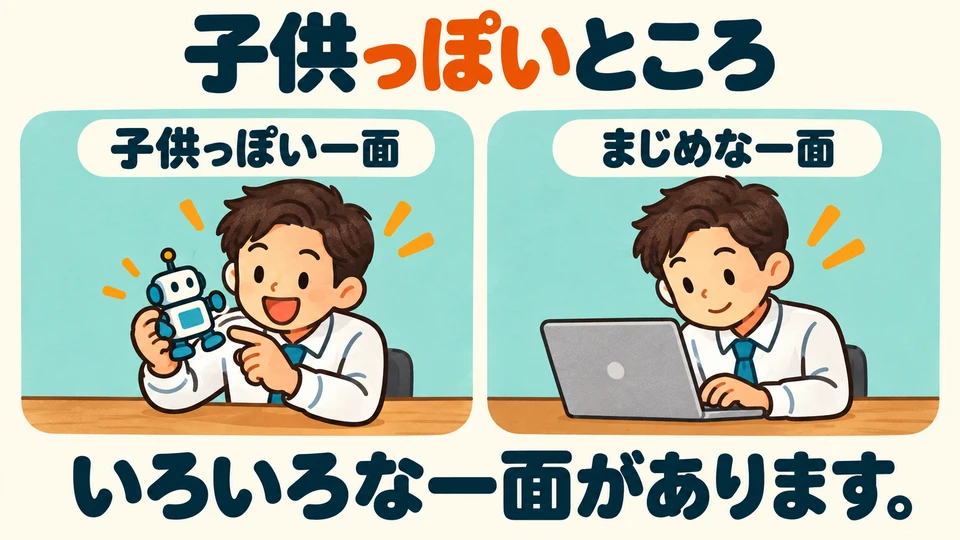
In the example, 「子供っぽいところ」 refers to a childish side, not an entirely immature person.