
Japanese grammar · ≈ JLPT N3 · Intermediate 1
〜ために~tame ni
cause: because of
Use 〜ために to explain the cause of a change or event, especially in formal reports.
How it works
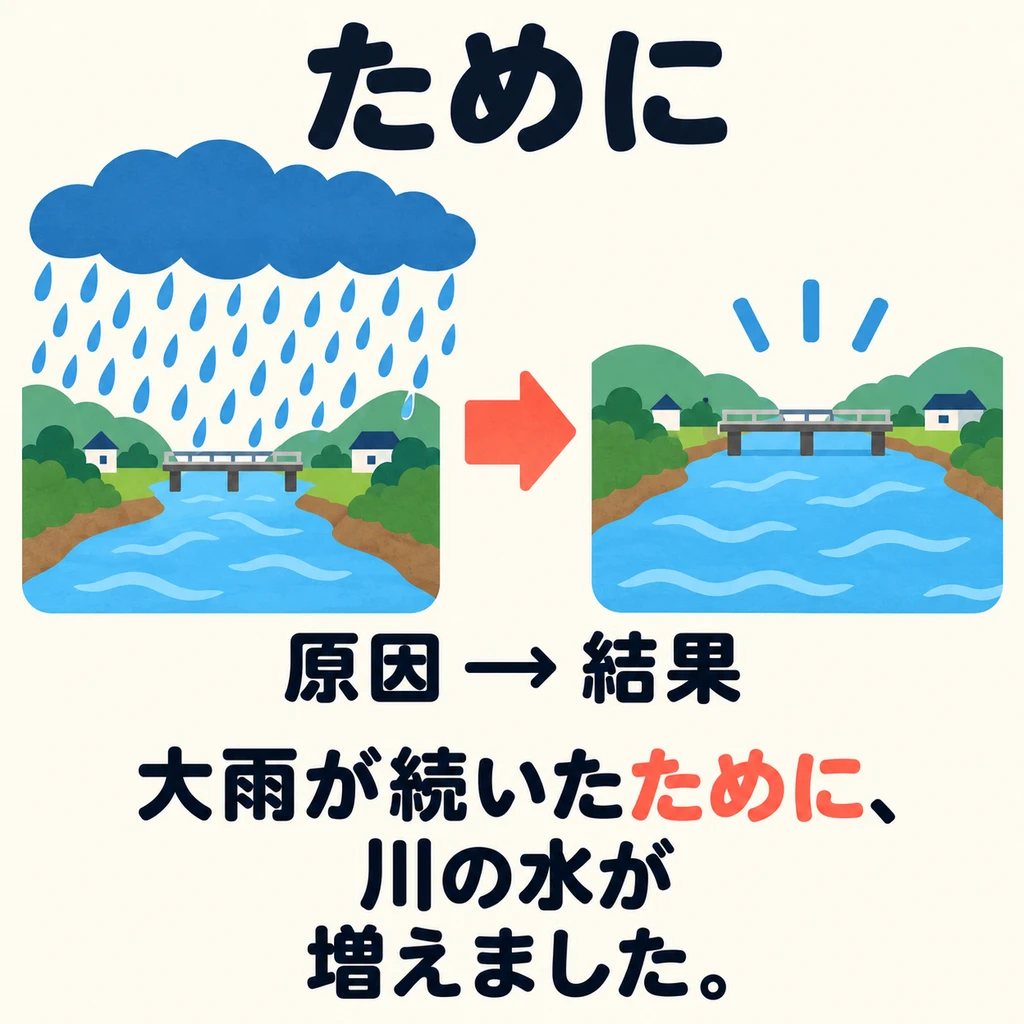
Why did the river rise? Use 「ために」 to connect the cause of a change with its result.
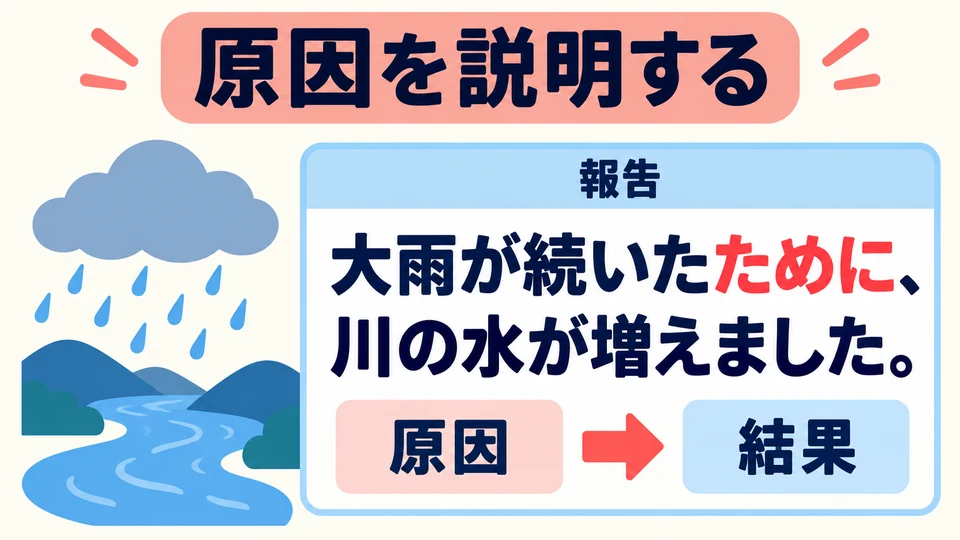
Use this pattern to explain why something happened. It is common in fairly formal reports and explanations.
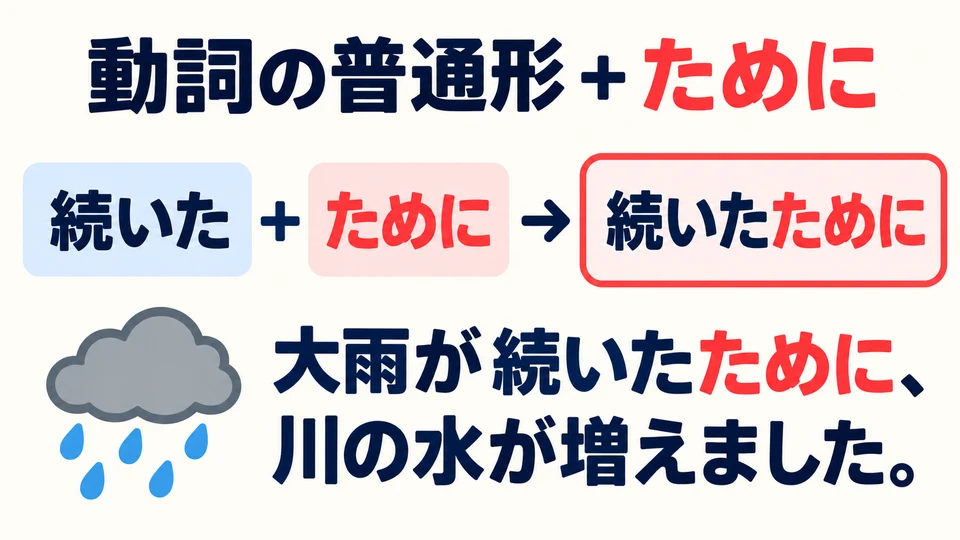
Attach 「ために」 to a verb in plain form. In the example, 「続いた」 describes a cause that has already occurred.
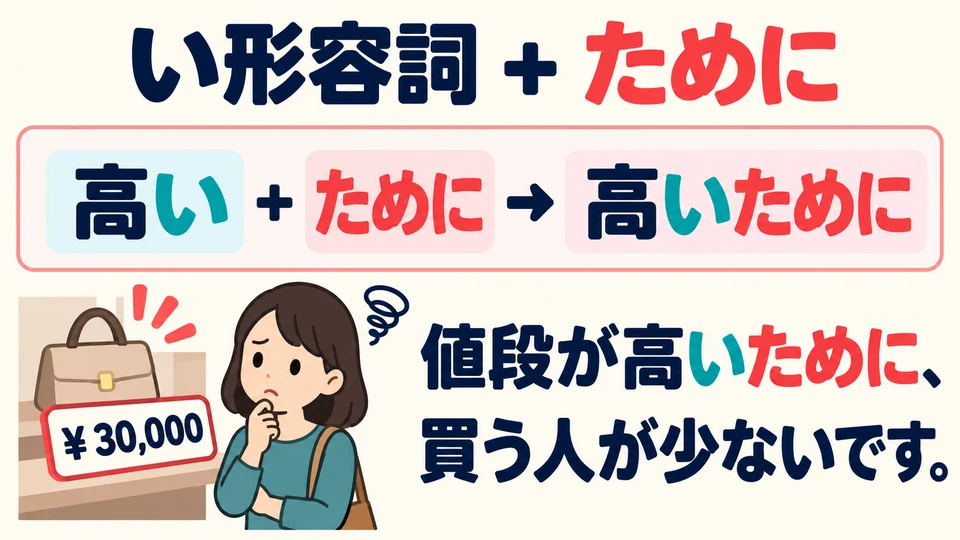
Attach 「ために」 directly to an い-adjective to give a cause, as in 「高いために」.
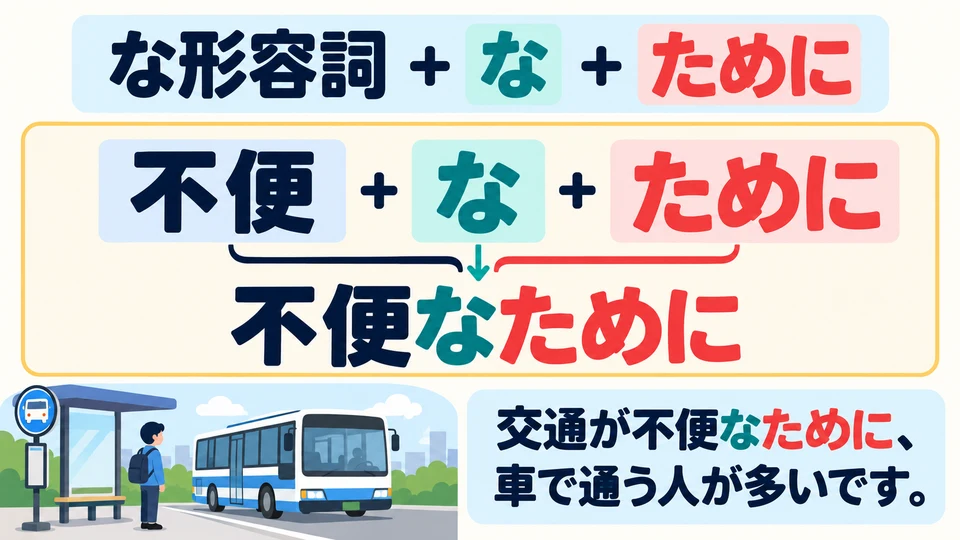
Use 「な」 between a な-adjective and 「ために」 to give a cause, as in 「不便なために」.
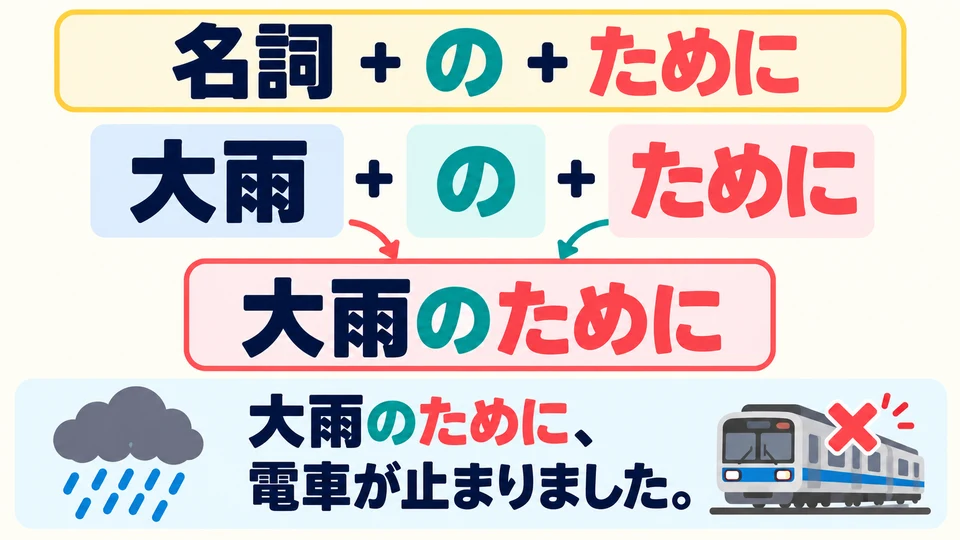
Use 「の」 between a noun and 「ために」 to give a cause, as in 「大雨のために」.
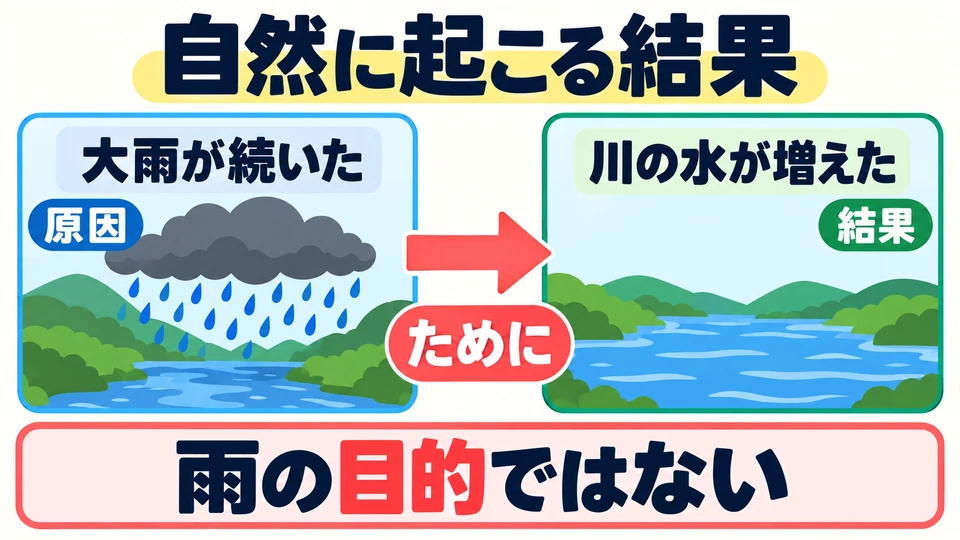
In the example, continuing heavy rain caused the river to rise. The rain did not fall with the aim of raising the river level.
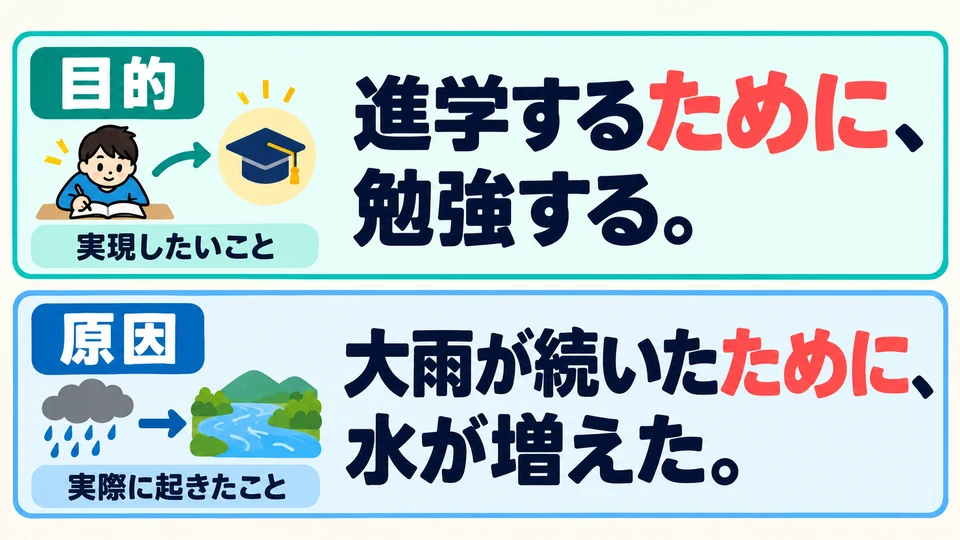
The familiar 「進学するために」 expresses a goal someone wants to achieve. Here, 「続いた」 gives an actual cause.
Example sentences
- 物価bukkaがga上がったためagattatameに、ni、生活seikatsuがga苦しくkurushikuなった人nattahitoもmoいます。imasu。
Because prices have risen, some people's lives have become difficult.
In a conversation

Check yourself
Level 1 · Recognise
Which sentence is correct?
Level 1 · Recognise
Listen and choose the meaning
Level 2 · Build
Put the words in order
Because prices went up, some people have found life harder.
Level 3 · Use
What goes in the blank?
物価が上がった____、生活が苦しくなった人もいます。
Because prices rose, some people's lives have become harder.
More grammar in this theme
- 〜ためにcause: because of