
Japanese grammar · ≈ JLPT N3 · Intermediate 1
〜させてくれます~sasete kuremasu
kindly let me do
Use 「〜させてくれます」 when someone kindly lets you or your group do something.
How it works
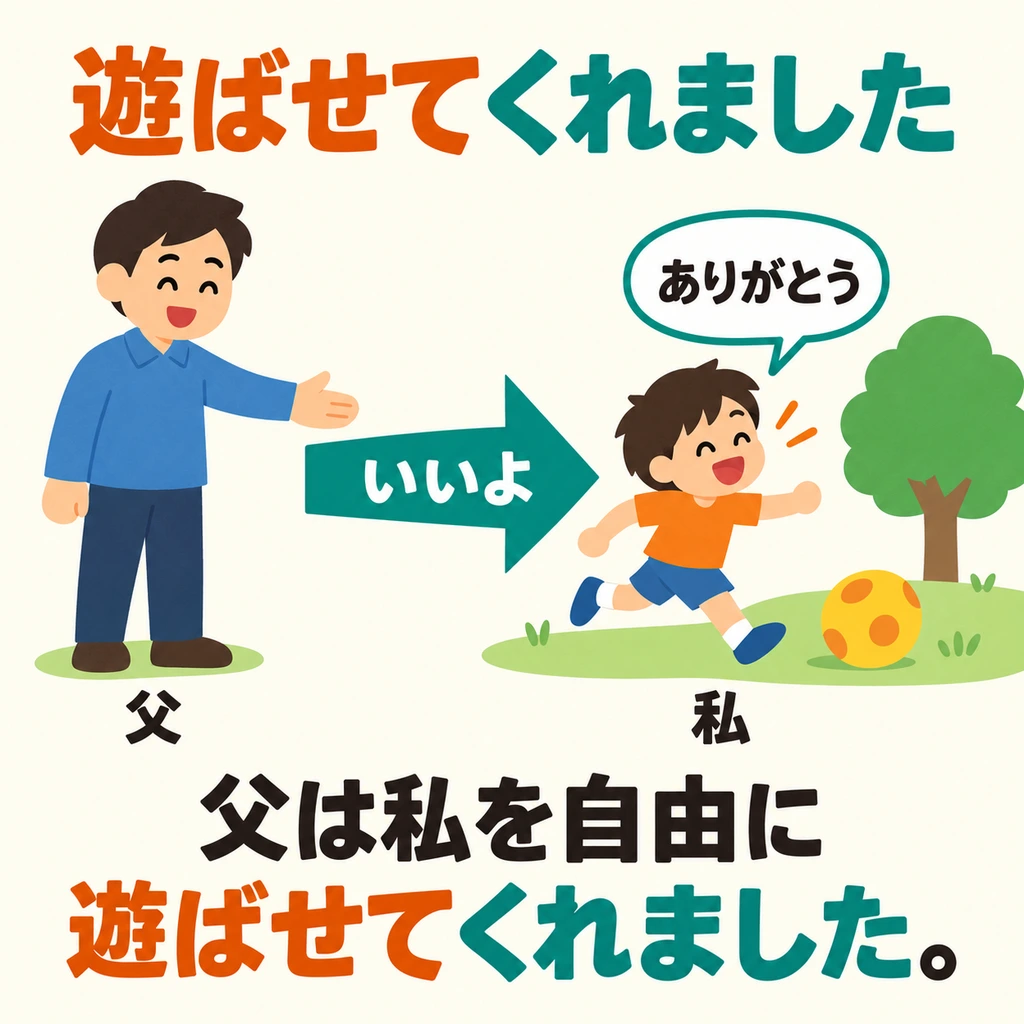
Look at the picture: who is actually playing? Dad says “yes,” giving me the chance to play freely.
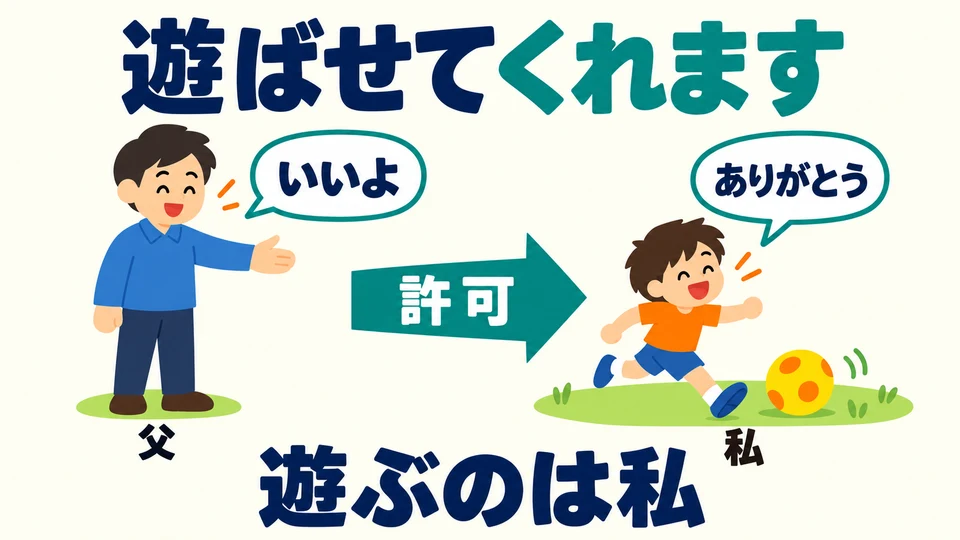
Someone lets me, or someone on my side, do what we want. 「くれます」 conveys that we benefit from this and feel grateful.
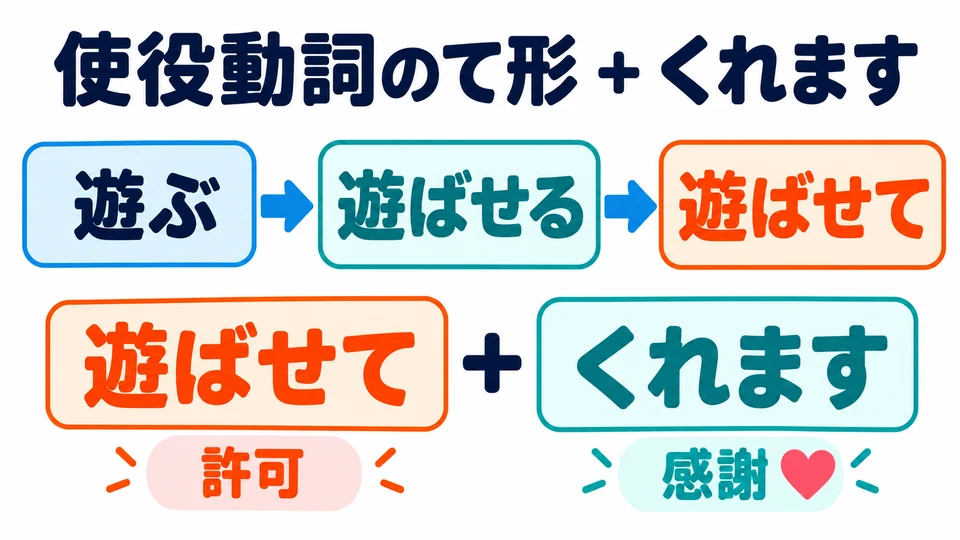
Attach it to the て-form of a causative verb: 遊ばせて+くれます. The first part expresses letting someone act; the second expresses the benefit received.
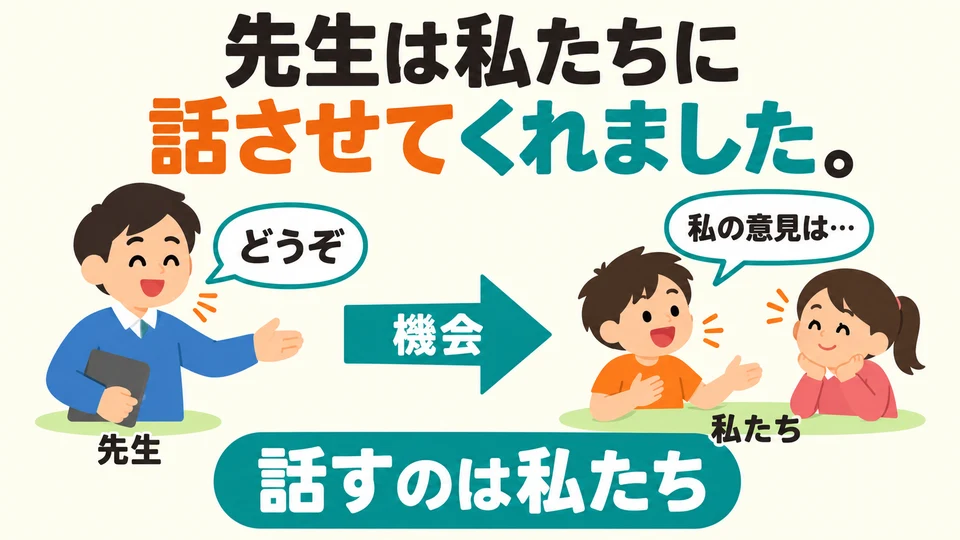
The teacher lets us share our opinions. “We” are the ones actually speaking; the teacher gives us the opportunity to speak.
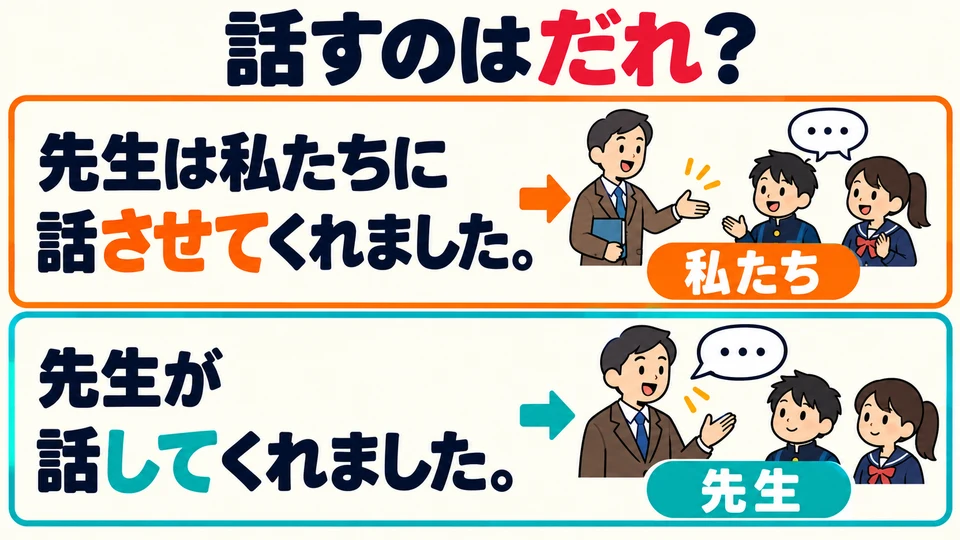
With 「先生が話してくれました」, the teacher is the one who speaks. Notice how the person doing the action changes.
Example sentences
- 父chichiはwa休みyasumiのno日hiに、ni、私watashiをo公園kouenでde自由jiyuu
In a conversation

Check yourself
Level 1 · Recognise
Which sentence is correct?
Level 1 · Recognise
Listen and choose the meaning
Level 2 · Build
Put the words in order
On his days off, my father let me play freely in the park.
Level 3 · Use
What goes in the blank?
父は休みの日に、私を公園で自由に____。
On days off, my father let me play freely in the park.
More grammar in this theme
- 〜させてくれますkindly let me do