Lesson notes · ≈ JLPT N4 · Beginner 3
〜てしまいました~te shimaimashita
completely finished
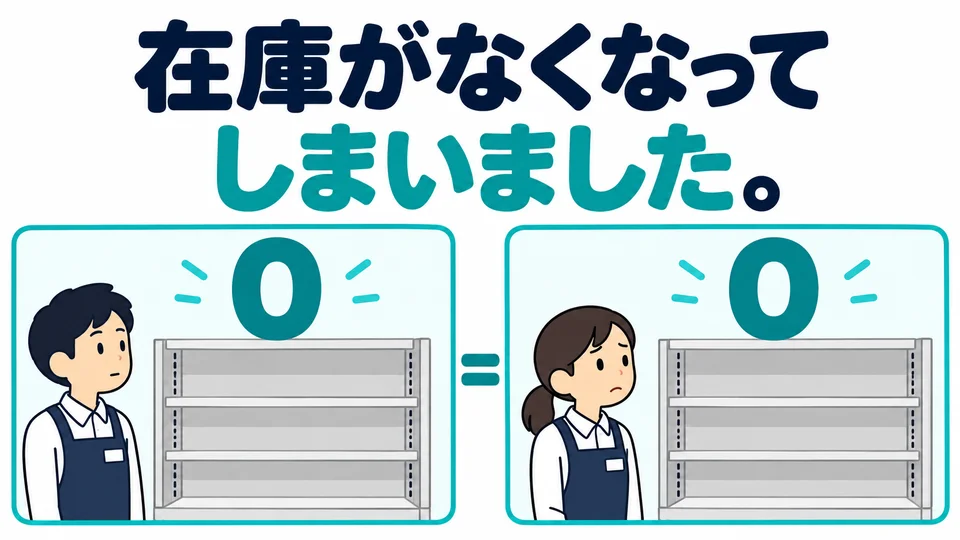
Use past 「〜てしまいました」 to emphasize that an action or change is fully complete; it need not express regret.
How it works
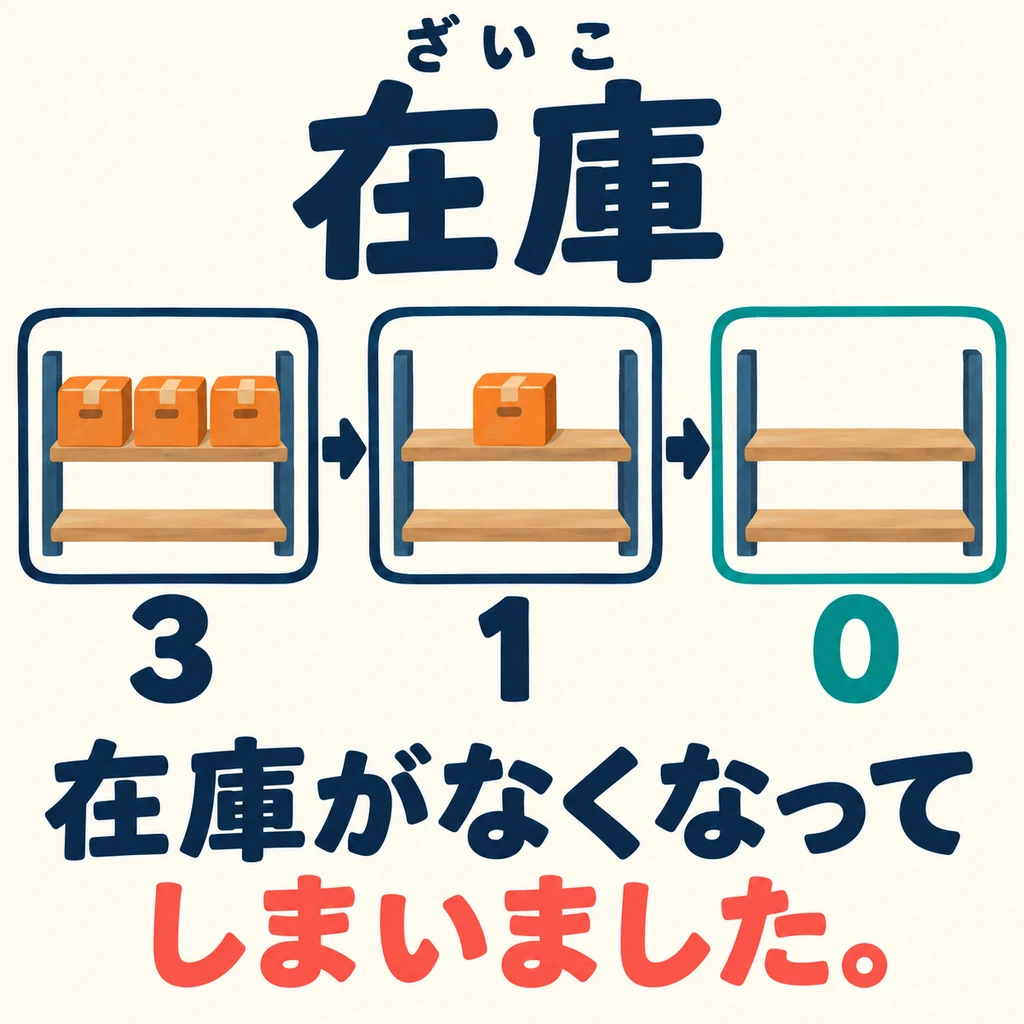
Look at the shelves: even the last item is gone. The focus here is that the stock has completely run out.

Use this when an action is finished or a change of state is complete. The key idea is “fully completed.”
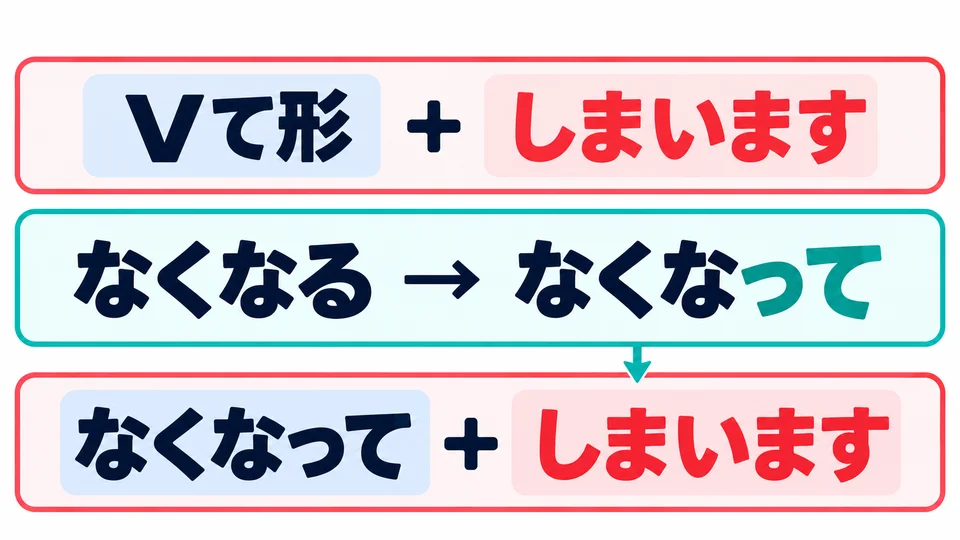
Attach it to the verb’s て-form: なくなる → なくなって + しまいます.
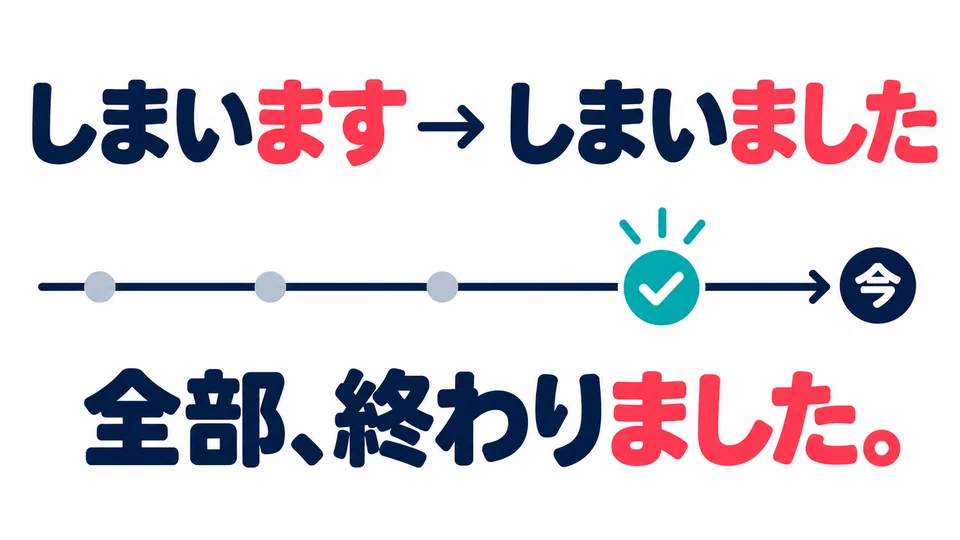
For something already completed, use the past form 「しまいました」 to show that it has finished completely.
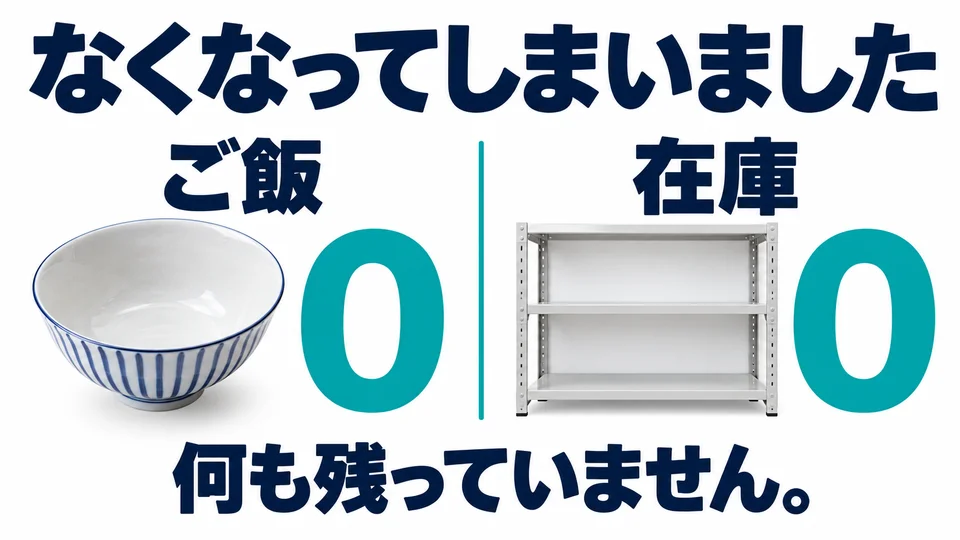
In both sentences, 「なくなってしまいました」 emphasizes that nothing is left, rather than just that the amount has decreased.