JPEDLAB iconJPEDLAB
Save history

Create an account and play

Explore first, then save your progress whenever you are ready. No email address is required.

Start free
Read as articleCards
See the whole course›Beginner 3›Social Life

Japanese grammar · ≈ JLPT N4 · Beginner 3

〜てしまいました~te shimaimashita

completely finished

Use past 「〜てしまいました」 to emphasize that an action or change is fully complete; it need not express regret.

Start the interactive lessonIllustrated cards, audio and speaking practice

How it works

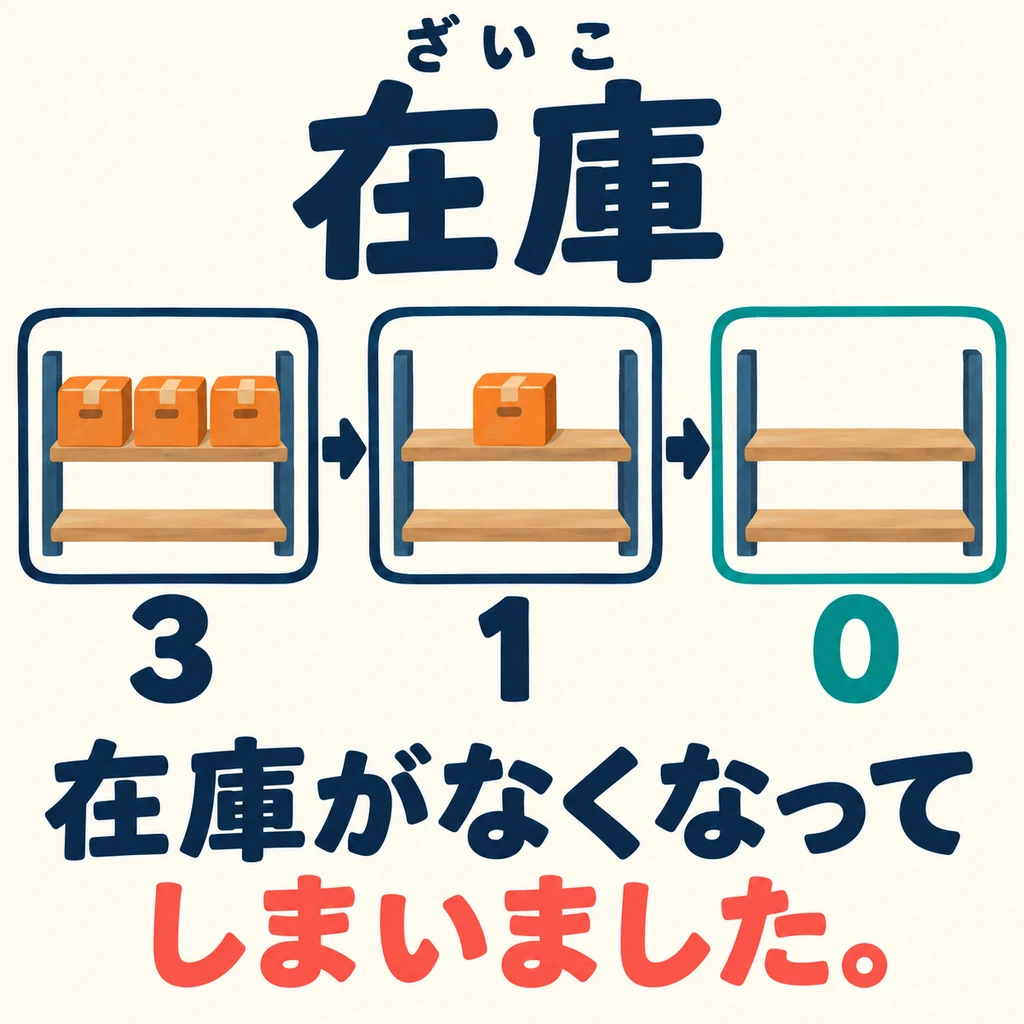
  1. Look at the shelves: even the last item is gone. The focus here is that the stock has completely run out.
    Look at the shelves: even the last item is gone. The focus here is that the stock has completely run out.

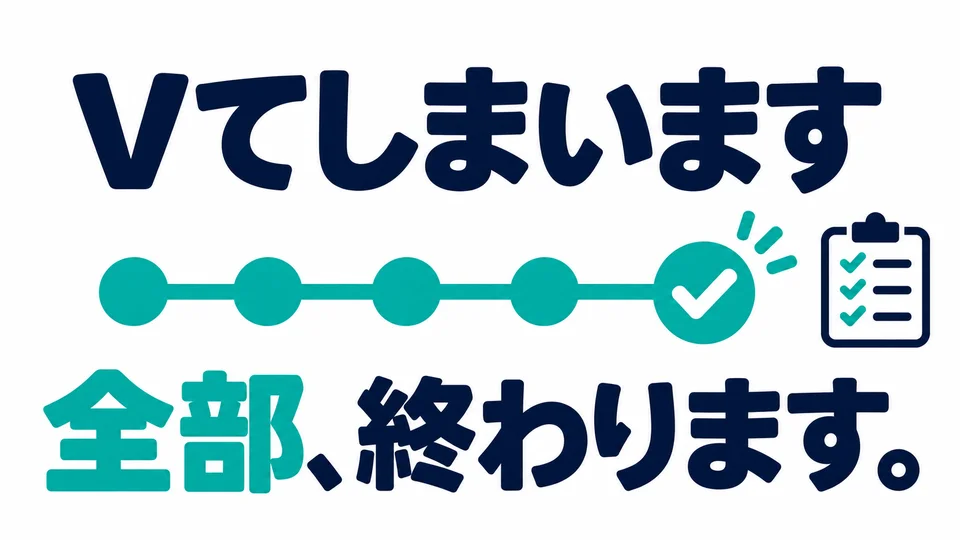
  2. Use this when an action is finished or a change of state is complete. The key idea is “fully completed.”
    Use this when an action is finished or a change of state is complete. The key idea is “fully completed.”

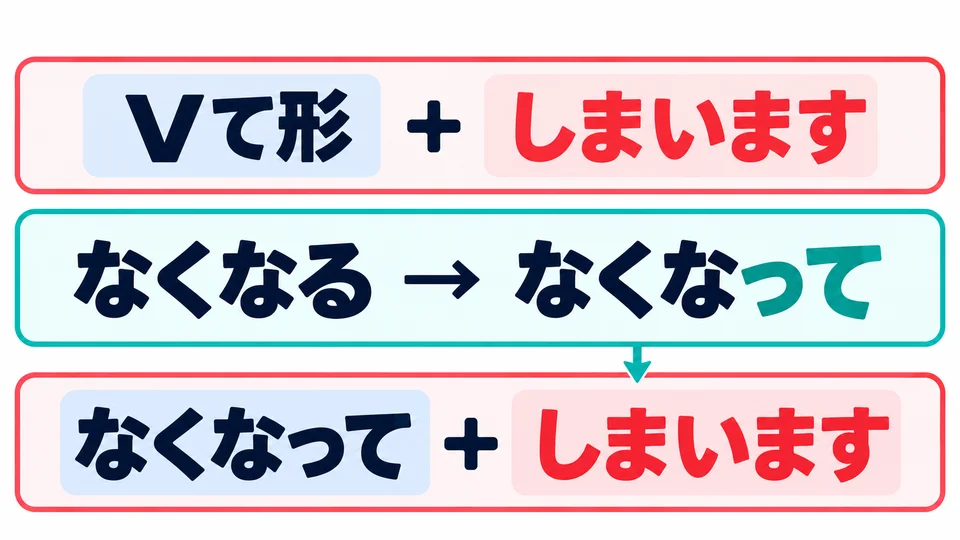
  3. Attach it to the verb’s て-form: なくなる → なくなって + しまいます.
    Attach it to the verb’s て-form: なくなる → なくなって + しまいます.

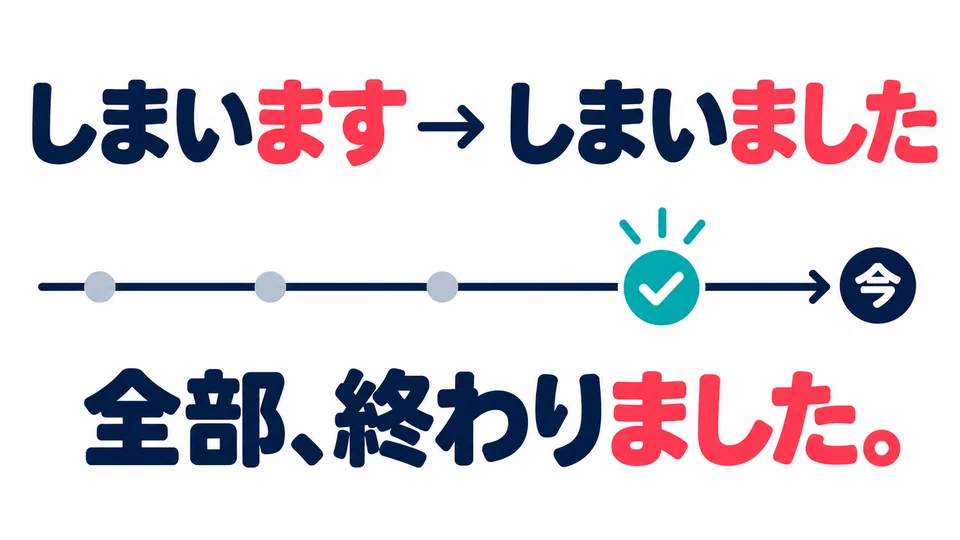
  4. For something already completed, use the past form 「しまいました」 to show that it has finished completely.
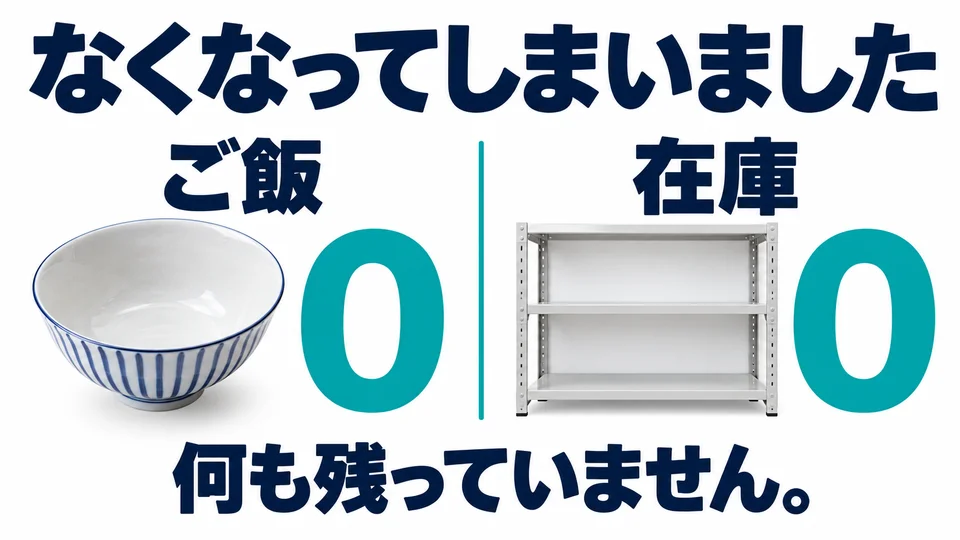
    For something already completed, use the past form 「しまいました」 to show that it has finished completely.

  5. In both sentences, 「なくなってしまいました」 emphasizes that nothing is left, rather than just that the amount has decreased.
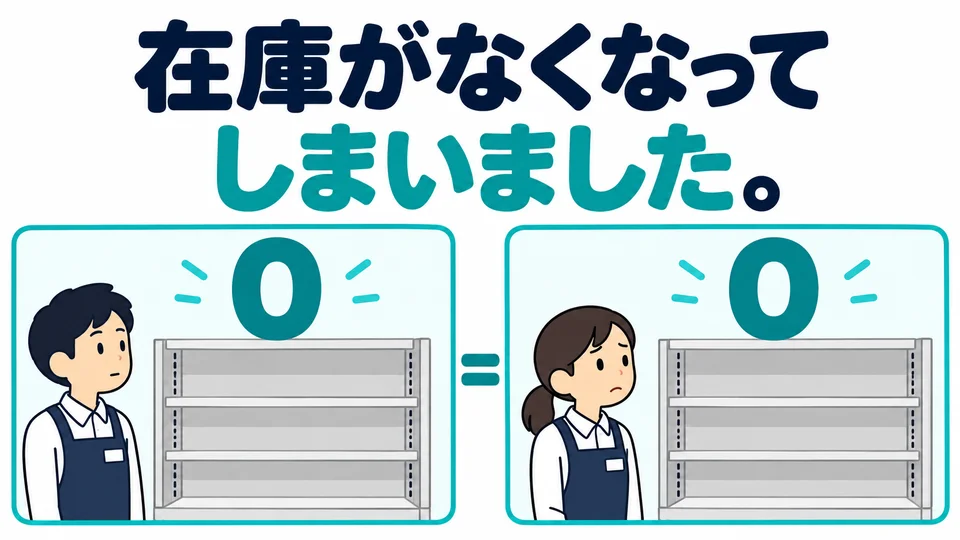
    In both sentences, 「なくなってしまいました」 emphasizes that nothing is left, rather than just that the amount has decreased.

  6. 「しまいました」 does not always express regret. In these two sentences, the main point is that everything has run out.

    「しまいました」 does not always express regret. In these two sentences, the main point is that everything has run out.

Example sentences

  • ご飯ごはんgohanがgaなくなっnakunatてteしまいました。しまいましたshimaimashita

    We've run out of rice.

  • 在庫ざいこzaikoがgaなくなっnakunat

In a conversation

  • A
    大変です。たいへんです在庫ざいこがなくなってしまいました。しまいました

    A: It's a problem. We've run out of stock.

  • B
    ええ?ええいつですか。か

    B: What? When did that happen?

  • A

Check yourself

  1. Level 1 · Recognise

    Which sentence is correct?

  2. Level 1 · Recognise

    Listen and choose the meaning

  3. Level 2 · Build

    Put the words in order

    Unfortunately, all the popular products have sold out.

  4. Level 3 · Use

    What goes in the blank?

    ご飯がなくな ました。

    The rice has run out.

More grammar in this theme

  • 〜てしまいましたcompletely finished

Keep practising

Test your Japanese vocabulary12 adaptive questions, freeCheck your pronunciationRead aloud and get a scorePractise verb forms10-question conjugation quizSee the whole courseGrammar, vocabulary and quizzes by theme
て
te
しまいました。しまいましたshimaimashita

We've run out of stock.

先ほどさきほど最後さいごのものを販売はんばいしました。しました

A: We just sold the last one a moment ago.

  • B
    分かりました。わかりましたすぐに発注はっちゅうします。します

    B: Got it. I'll place an order right away.

  • A
    すみません。すみません

    A: I'm sorry.

  • B
    いえ、いえ早めはやめに気付いにきづいてよかったです。よかったです

    B: It's fine. I'm glad we noticed early.

  • 〜ことになっていますestablished rule or convention
    〜ように、〜action toward a desired result
    〜ようにしてくださいgentle request to make sure
    お〜ください/ご〜くださいformal polite instruction
    〜そうです(様態)looks about to happen
    〜ておきますleave in a state
    〜ことになっていますsettled plan or assignment
    Previous〜ておきます
    Next〜ことになっています