
Japanese grammar · ≈ JLPT N4 · Beginner 3
〜ようになります~you ni narimasu
become able; develop a habit
「〜ようになります」 describes a change that brings a new ability or habit.
How it works
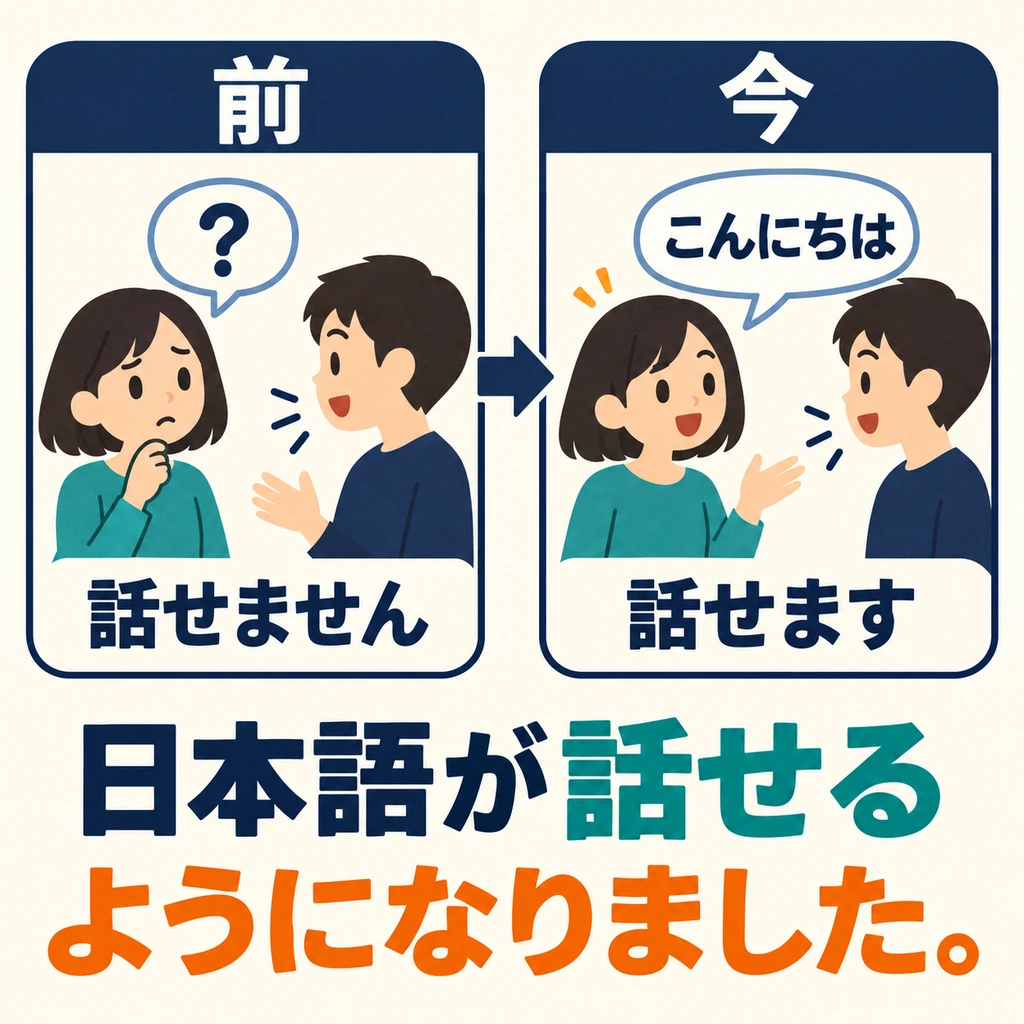
Compare the pictures: she could not speak before, but now she can. Use 「ようになりました」 for this change in ability.
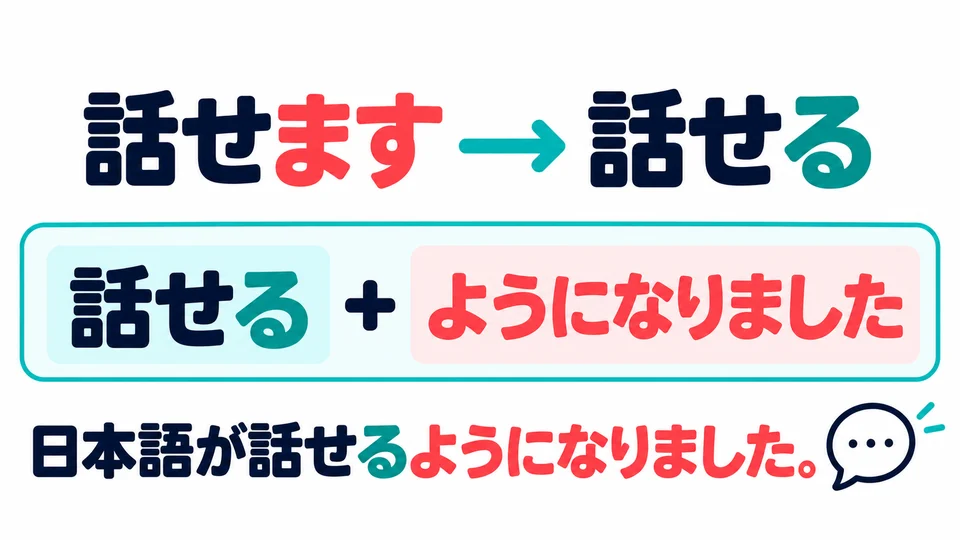
For a change in ability, put the dictionary form of a potential verb before it: 「話せます」 becomes 「話せる」.
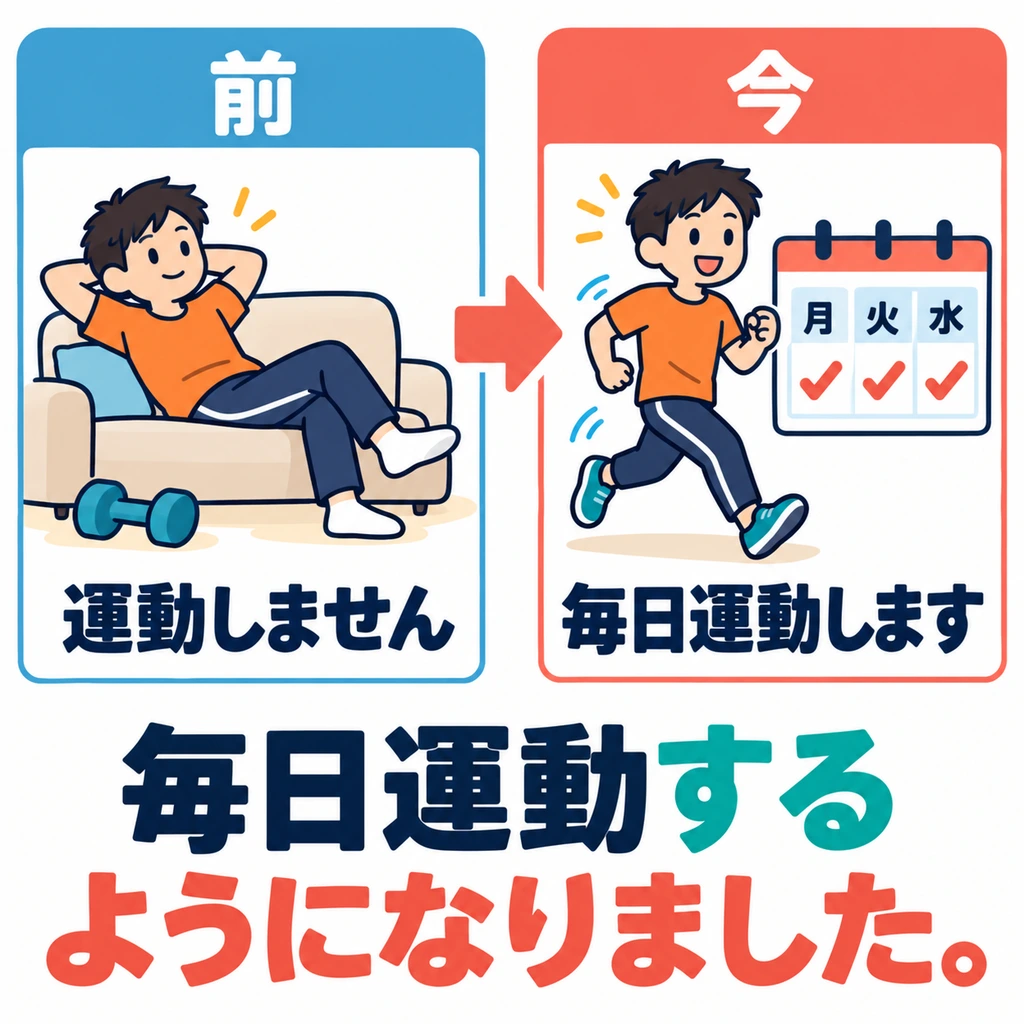
He did not exercise before, but now he exercises every day. 「ようになりました」 can also express a new habit.
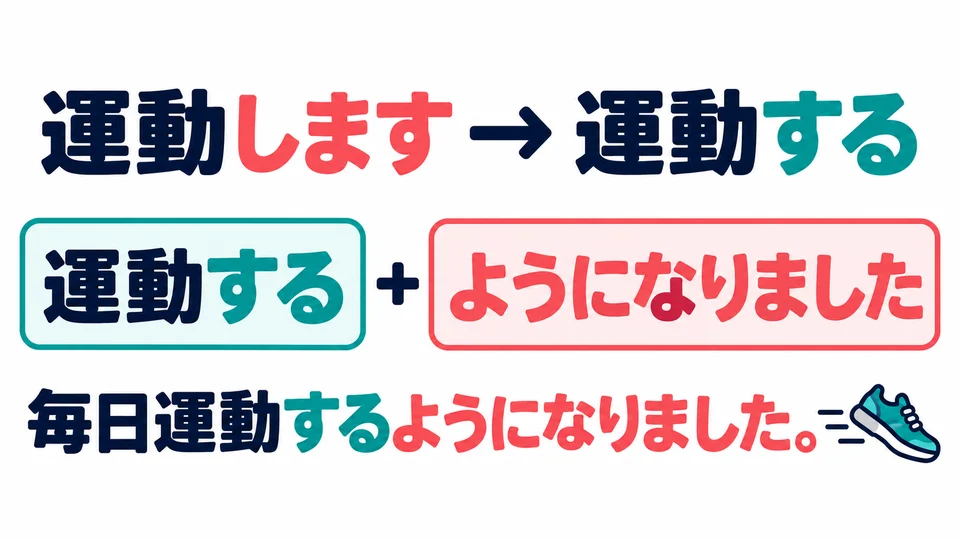
For a change in habit, put the dictionary form of an action verb before it: 「運動します」 becomes 「運動する」.
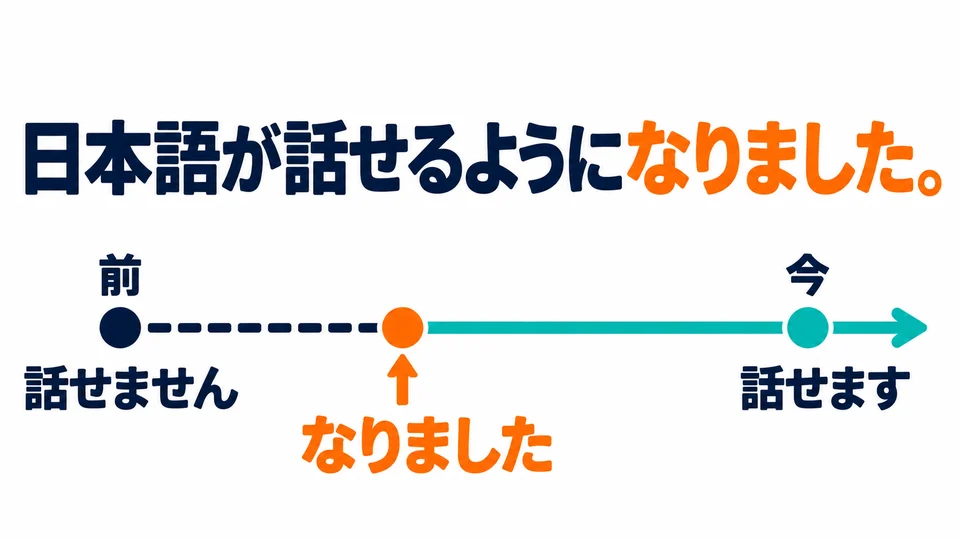
Use 「なりました」 when the change has already happened. Even if it happened in the past, the new state may still continue.
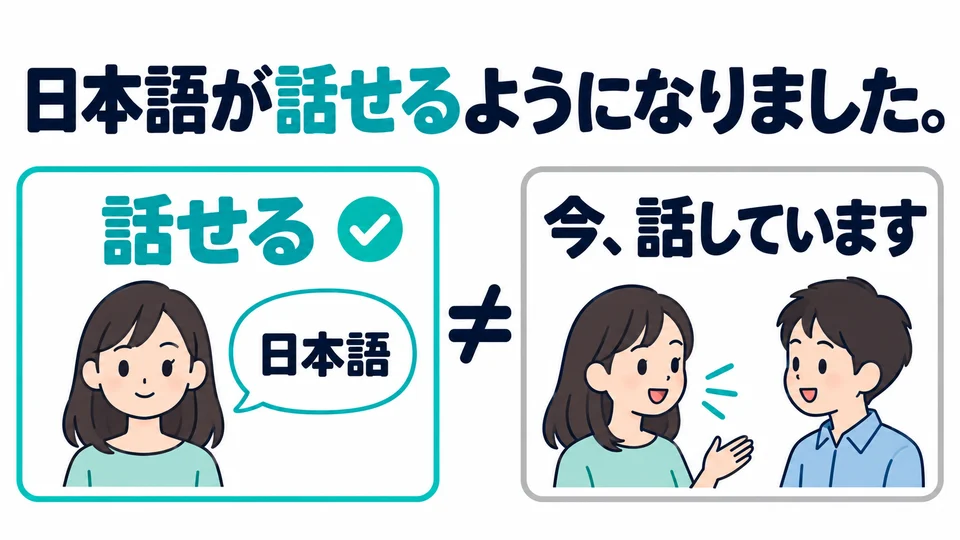
In the example, 「話せる」 emphasizes being able to speak Japanese now. It does not mean speaking at this very moment.
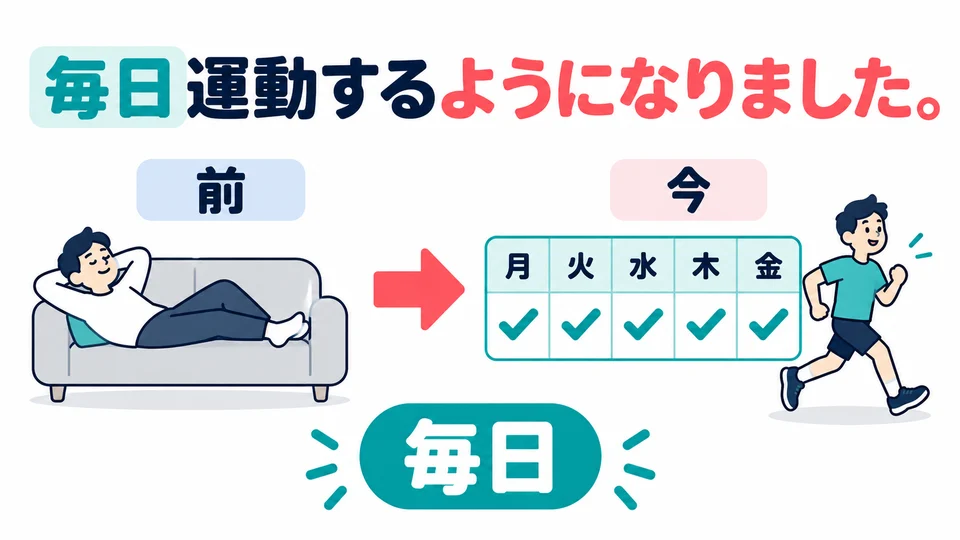
In the example, 「毎日」 shows that exercise has become a habit. The focus is the change in habit, not one exercise session.
Example sentences
- 日本nihon語goがga話せるhanaseruようにyouniなりました。narimashita
I've become able to speak Japanese.
- 毎日mainichi運動
In a conversation

- A最近、何か変わりましたか。
A: Recently, has anything changed?
- Bはい、毎日運動するようになりました。
B: Yes, I've started exercising every day.
Check yourself
Level 1 · Recognise
Which sentence is correct?
Level 1 · Recognise
Listen and choose the meaning
Level 2 · Build
Put the words in order
I have become able to speak Japanese.
Level 3 · Use
What goes in the blank?
日本語が りました。
I've come to be able to speak Japanese.
More grammar in this theme
- 〜ようになりますbecome able; develop a habit