
JPEDLAB iconJPEDLAB
Save history

Create an account and play

Explore first, then save your progress whenever you are ready. No email address is required.

Start free
Read as articleCards
1/10

Compare the pictures: she could not speak before, but now she can. Use 「ようになりました」 for this change in ability.

››

Lesson notes · ≈ JLPT N4 · Beginner 3

〜ようになります~you ni narimasu

become able; develop a habit

「〜ようになります」 describes a change that brings a new ability or habit.

How it works
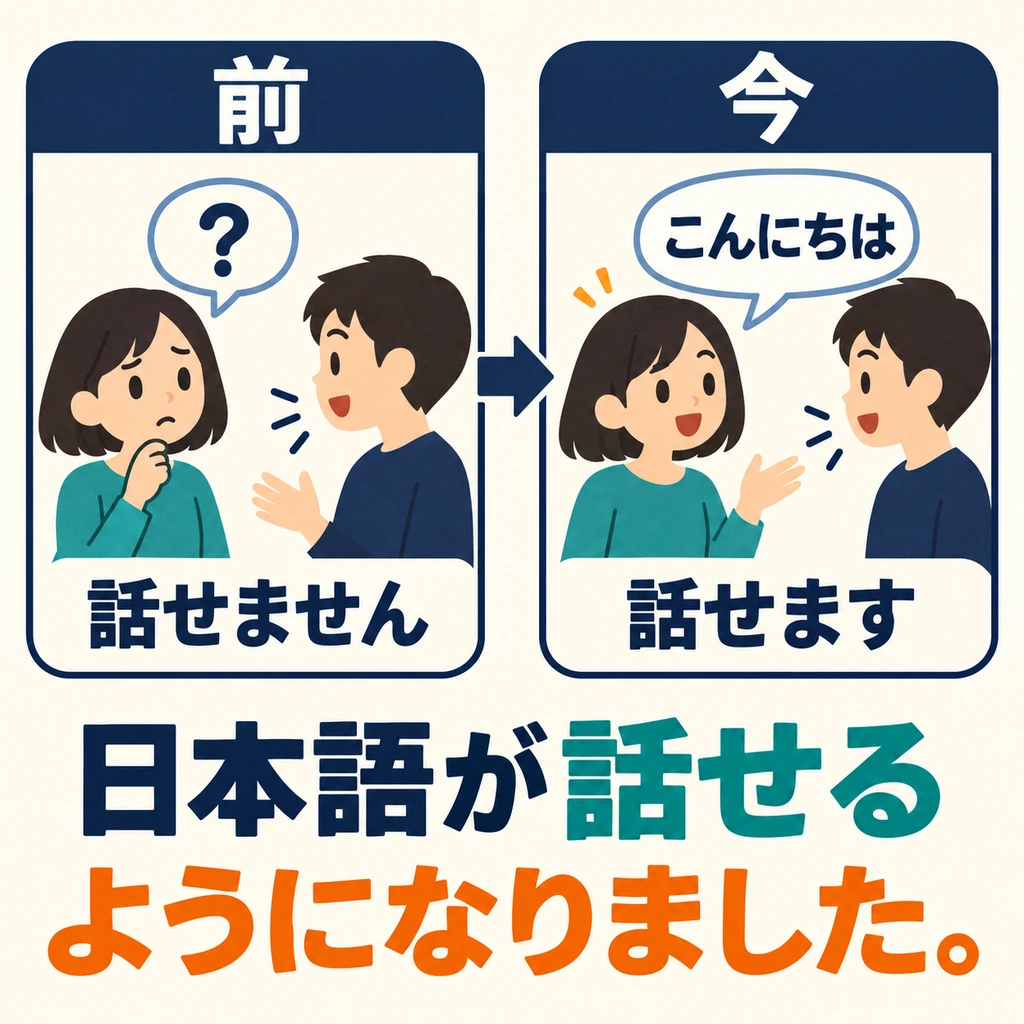
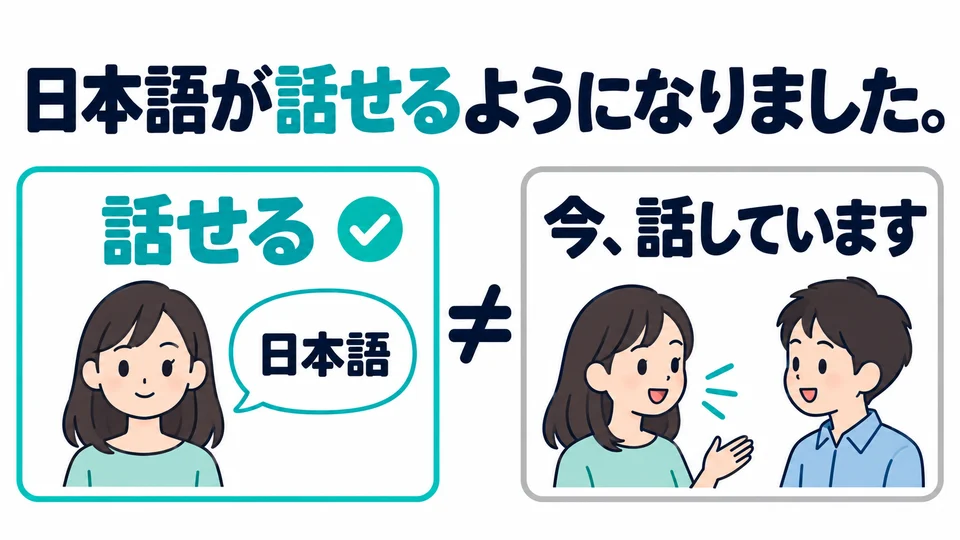
  1. Compare the pictures: she could not speak before, but now she can. Use 「ようになりました」 for this change in ability.
    Compare the pictures: she could not speak before, but now she can. Use 「ようになりました」 for this change in ability.

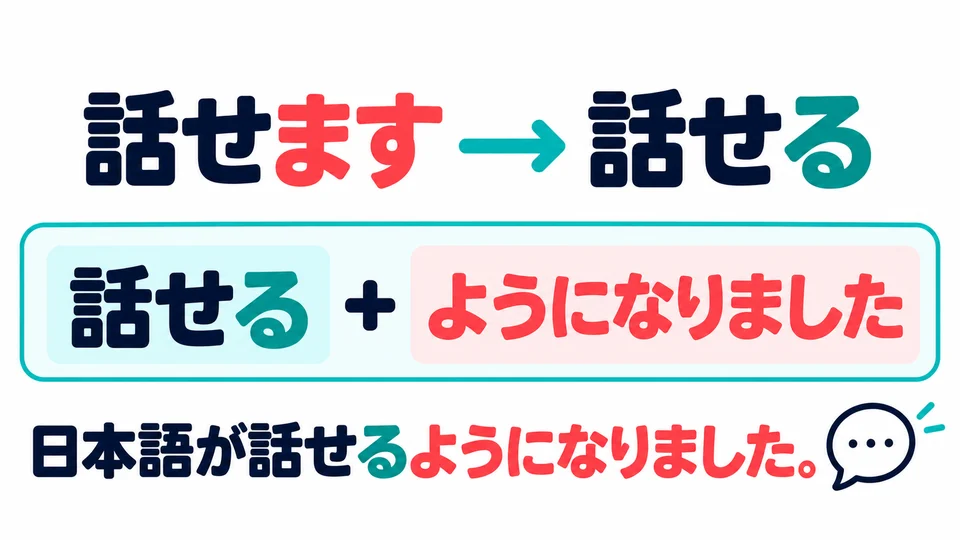
  2. For a change in ability, put the dictionary form of a potential verb before it: 「話せます」 becomes 「話せる」.
    For a change in ability, put the dictionary form of a potential verb before it: 「話せます」 becomes 「話せる」.

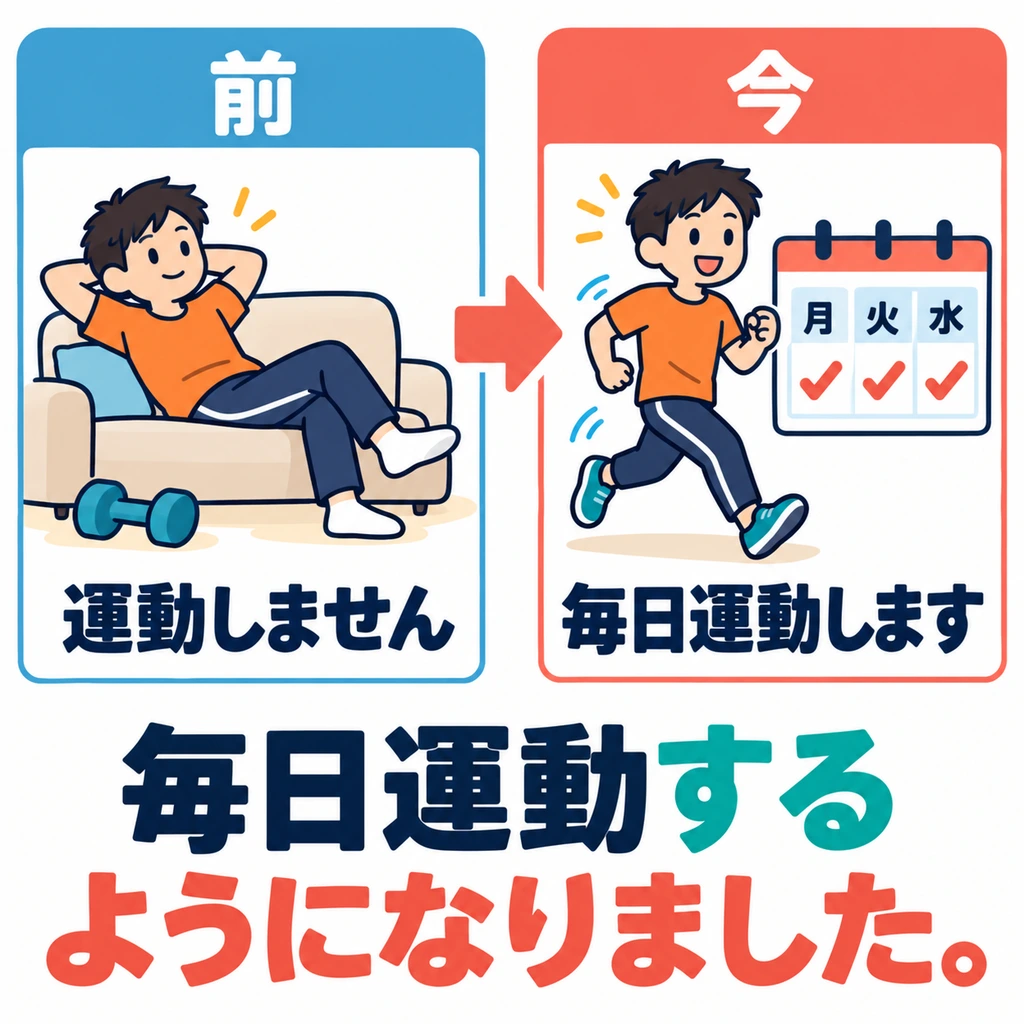
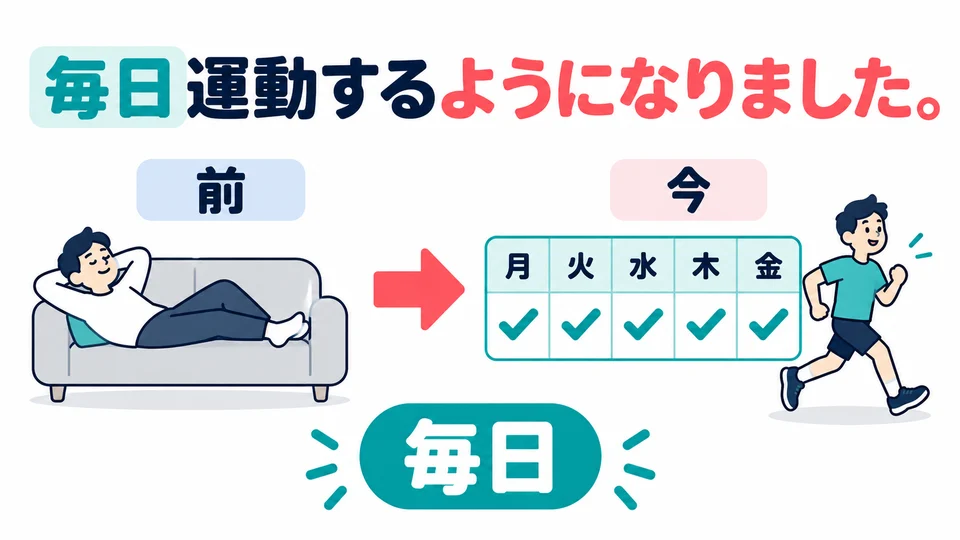
  3. He did not exercise before, but now he exercises every day. 「ようになりました」 can also express a new habit.
    He did not exercise before, but now he exercises every day. 「ようになりました」 can also express a new habit.

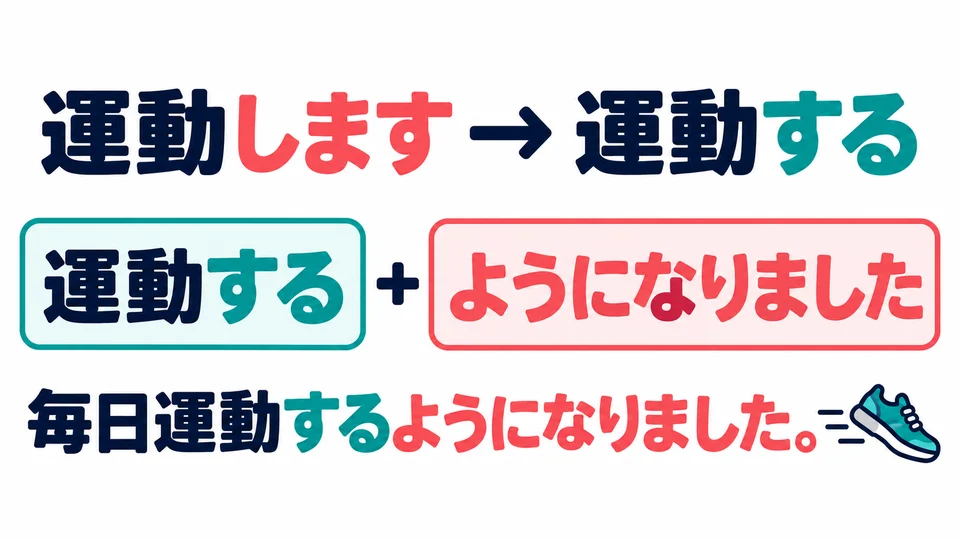
  4. For a change in habit, put the dictionary form of an action verb before it: 「運動します」 becomes 「運動する」.
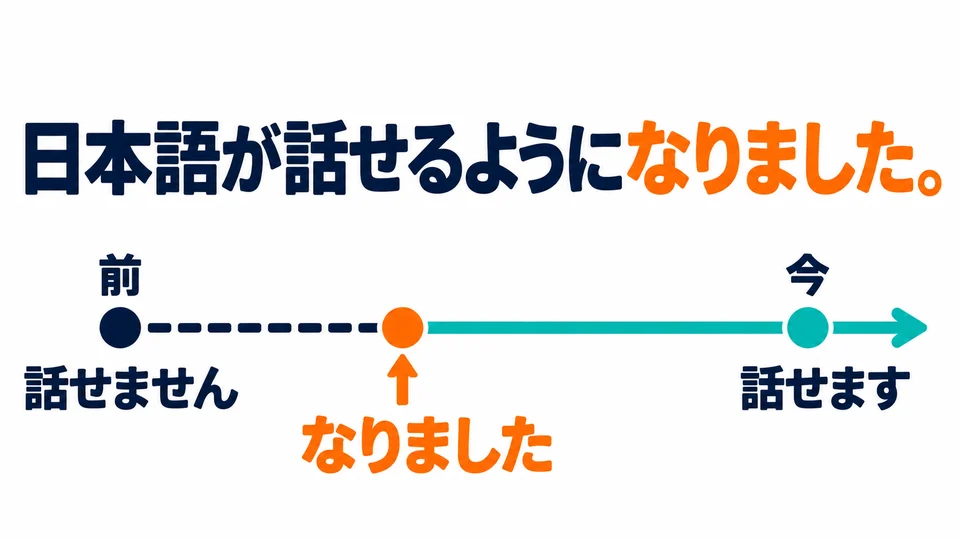
    For a change in habit, put the dictionary form of an action verb before it: 「運動します」 becomes 「運動する」.

  5. Use 「なりました」 when the change has already happened. Even if it happened in the past, the new state may still continue.
    Use 「なりました」 when the change has already happened. Even if it happened in the past, the new state may still continue.

In the example, 「話せる」 emphasizes being able to speak Japanese now. It does not mean speaking at this very moment.

In the example, 「話せる」 emphasizes being able to speak Japanese now. It does not mean speaking at this very moment.

  • In the example, 「毎日」 shows that exercise has become a habit. The focus is the change in habit, not one exercise session.

    In the example, 「毎日」 shows that exercise has become a habit. The focus is the change in habit, not one exercise session.

  • Example sentences

    • 日本にほんnihon語ごgoがga話せるはなせるhanaseruようにyouniなりました。なりましたnarimashita

      I've become able to speak Japanese.

    • 毎日まいにちmainichi運動うんどうundouするsuruようにyouniなりました。なりましたnarimashita

      I've started exercising every day.

    In a conversation

    • A
      最近、さいきん何なにか変わりましたかわりましたか。か

      A: Recently, has anything changed?

    • B
      はい、はい毎日まいにち運動うんどうするようになりました。なりました

      B: Yes, I've started exercising every day.

    • A
      そうですか。か私わたしはわ本ほんを読むよむようになりました。なりました

      A: I see. I've started reading books.

    • B
      何なんの本ほんを読んよんでいますか。か

      B: What kind of books are you reading?

    • A
      日本にほん語ごの本ほんです。です

      A: Japanese books.

    Check yourself

    1. Level 1 · Recognise

      Which sentence is correct?

    2. Level 1 · Recognise

      Listen and choose the meaning

    3. Level 2 · Build

      Put the words in order

      I have become able to speak Japanese.

    4. Level 3 · Use

      What goes in the blank?

      日本語が りました。

      I've come to be able to speak Japanese.

    More grammar in this theme

    • いらっしゃいますrespectful be, come, go
    • 〜と申しますformal humble self-introduction
    • 可能形ability or possibility
    • 〜ので/〜なのでreason; gentle explanation
    • 参りますhumble go or come
    • 〜ならif; under that condition
    • 〜のが好きですlike doing; be good at
    • 〜のは〜ですmake an activity the topic
    • 〜ようになりますbecome able; develop a habit
    Previous〜のは〜です

    Keep practising

    Test your Japanese vocabulary12 adaptive questions, freeCheck your pronunciationRead aloud and get a scorePractise verb forms10-question conjugation quizSee the whole courseGrammar, vocabulary and quizzes by theme
    See the whole course
    Beginner 3
    New Life