
Japanese grammar · ≈ JLPT N5 · Beginner 3
〜のが好きです~no ga suki desu
like doing; be good at
Use 「〜のが好きです」 to treat an action as an activity you like; the same structure can describe being good at it.
- Pattern
- 〜のが好きです
- Romaji
- ~no ga suki desu
- JLPT (approx.)
- ≈ N5
- Course level
- Beginner 3
- Theme
- New Life
How it works

When talking about hobbies, use this pattern to say what you like doing. In the picture, she likes reading books.
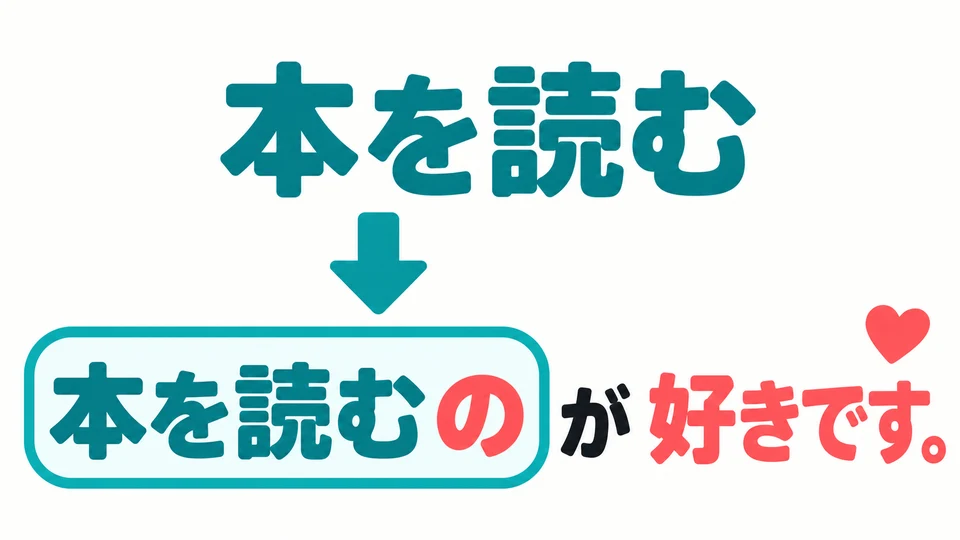
「の」 turns the whole action 「本を読む」 into an activity that you can say you like.
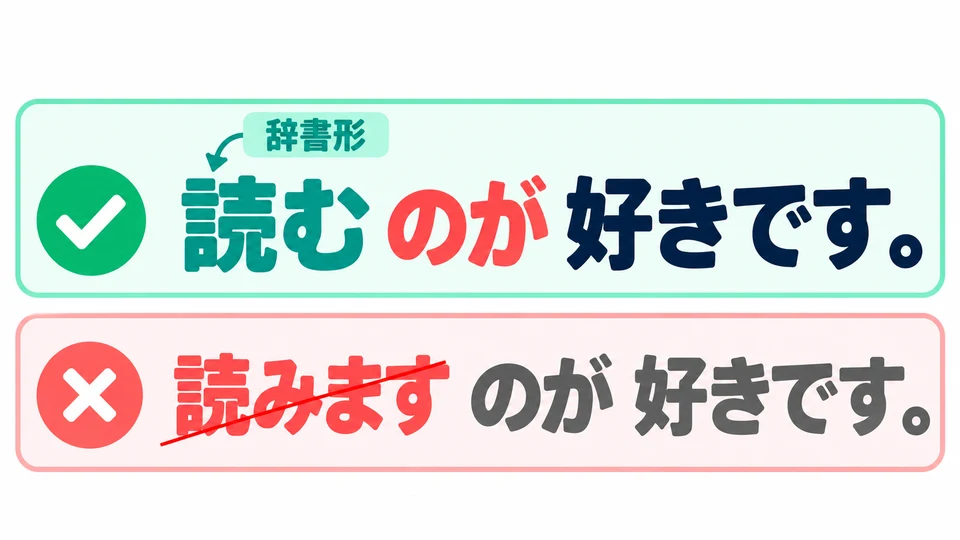
Use the dictionary form of the verb before 「のが」: 読むのが, not 読みますのが.
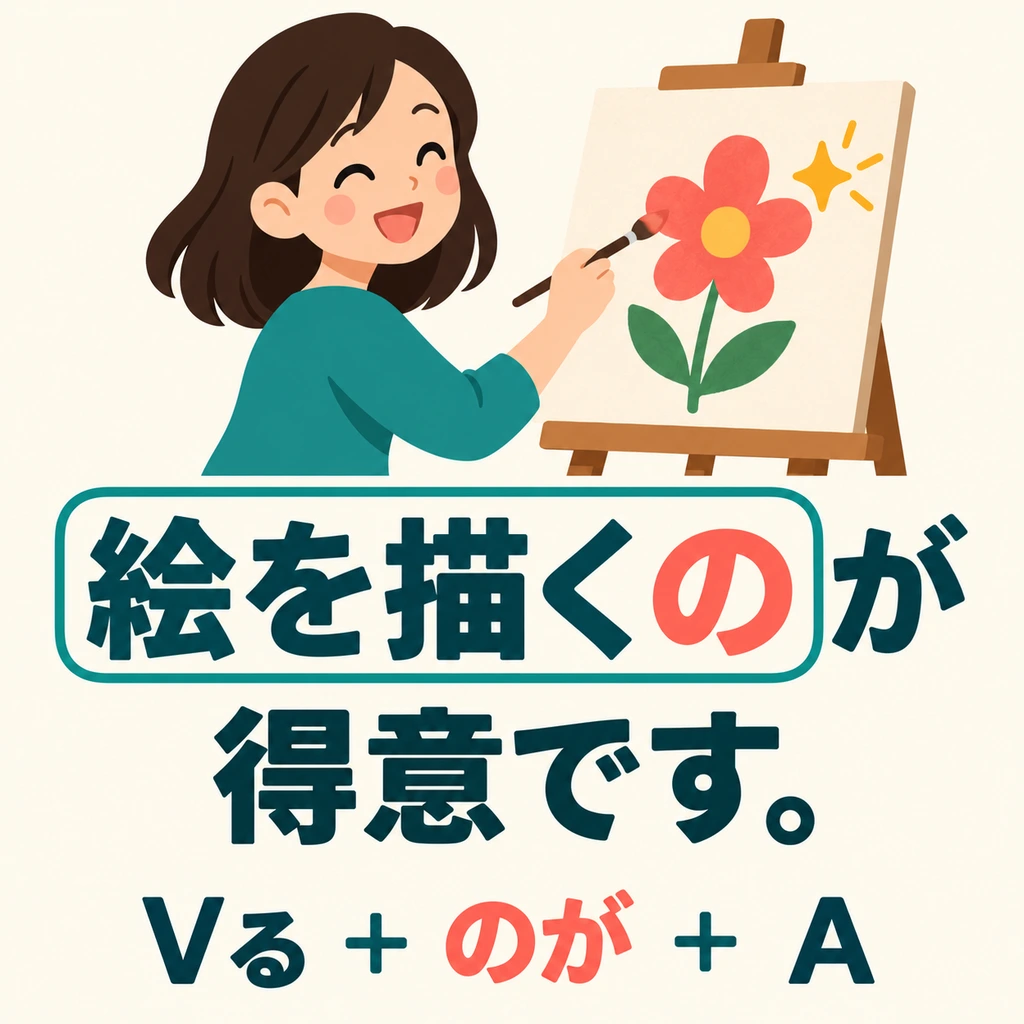
Use the same structure to say what you are good at doing. The picture shows 「絵を描くのが得意です」.
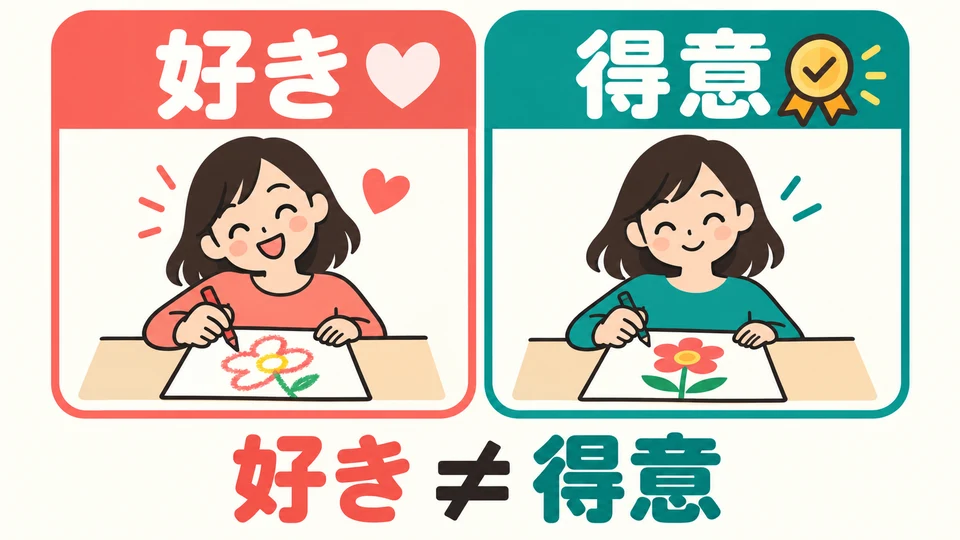
「好き」 means you like something; 「得意」 means you are good at it. Liking an activity does not always mean being good at it.

In the example, 「楽しい」 describes the activity of studying Japanese: doing it is enjoyable.

In the reading example, 「を」 marks what is read; 「が」 marks the whole activity that is liked. Keep both particles.
Example sentences
- 本honをo読むyomuのnoがga好きです。sukidesu
I like reading books.
- 日本nihon語goをo
In a conversation

- A趣味は何ですか。
A: What are your hobbies?
- B山を登るのが好きです。
B: I like climbing mountains.
- A
Check yourself
Which sentence is correct?
- 山を登るのが好きです。
- 山を登るのが好きます。
- 山を登るが好きです。
- 山が登るのが好きです。
Show answer
Answer: A 山を登るのが好きです。
Which sentence is correct?
- ピアノを弾くのが楽しいです。
- ピアノを弾くのが楽しくです。
- ピアノが弾くのが楽しいです。
- ピアノを弾くの楽しいです。
Show answer
Answer: A ピアノを弾くのが楽しいです。
Which sentence is correct?
- 絵を描くのが得意です。
- 絵を描くのが得意ます。
- 絵に描くのが得意です。
- 絵を描くのが得意の。
Show answer
Answer: A 絵を描くのが得意です。
More grammar in this theme
- 〜のが好きですlike doing; be good at