
Japanese grammar · ≈ JLPT N4 · Beginner 2
〜と思います~to omoimasu
I think; give an opinion
Put a plain-form thought before 「と」 to give your opinion or express a judgment or tentative suggestion.
How it works
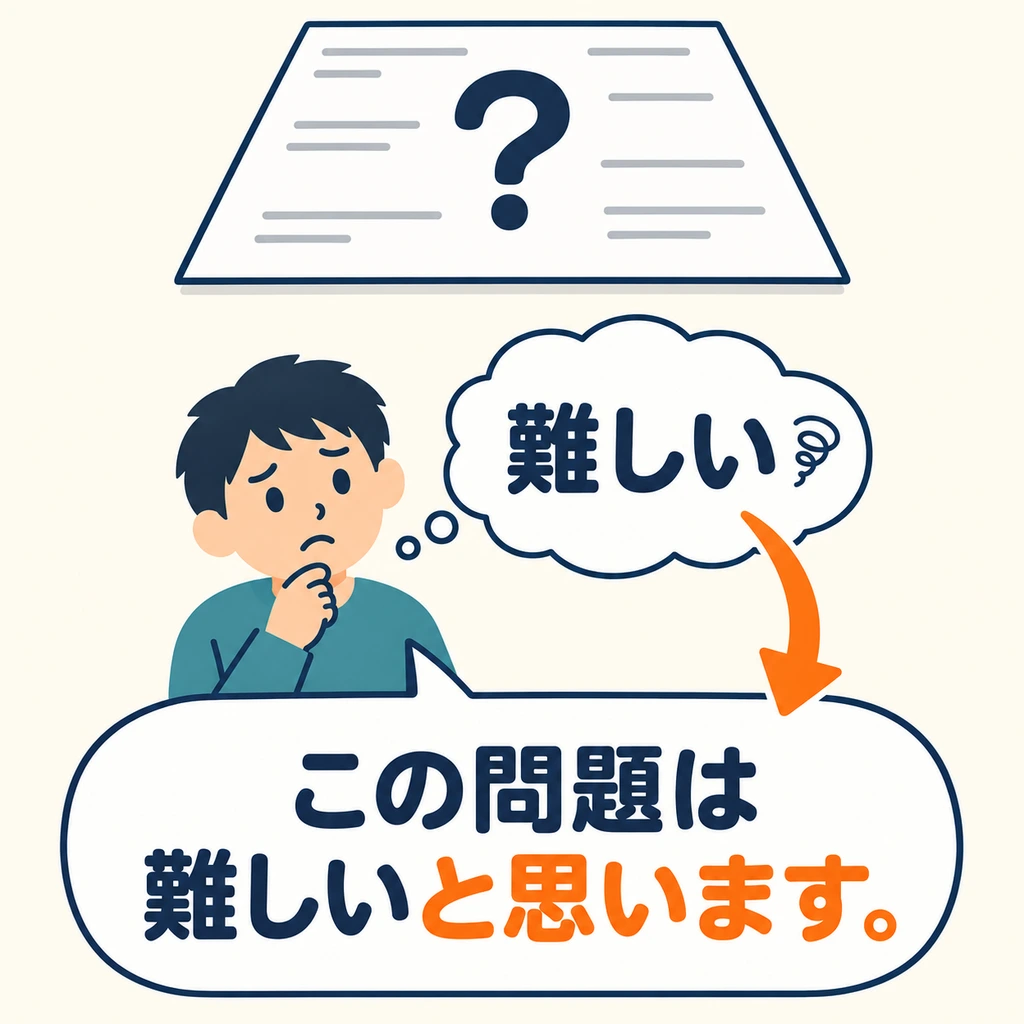
When you find a problem difficult, use 「と思います」 to express what you think.
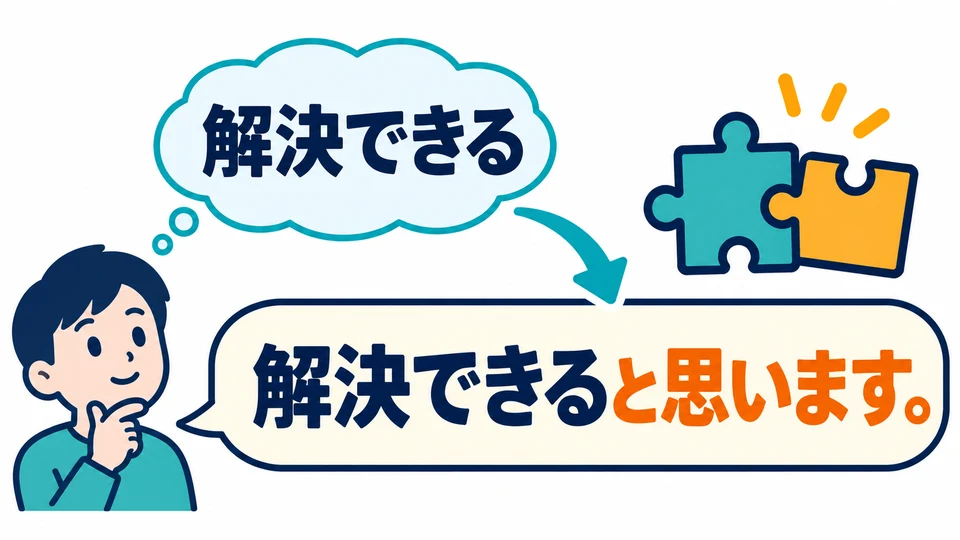
Saying 「解決できると思います」 expresses your own judgment or guess.
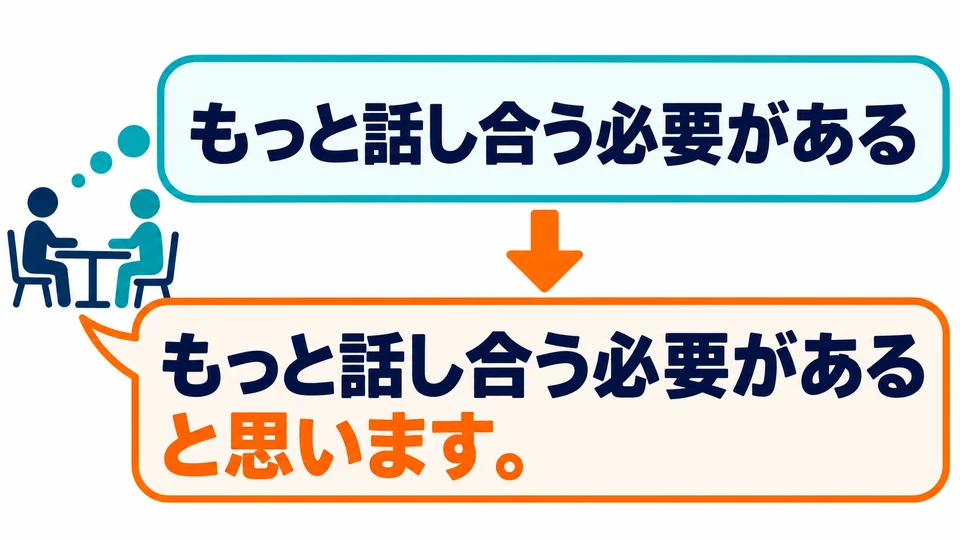
If you think more discussion is needed, 「と思います」 can also soften a suggestion.
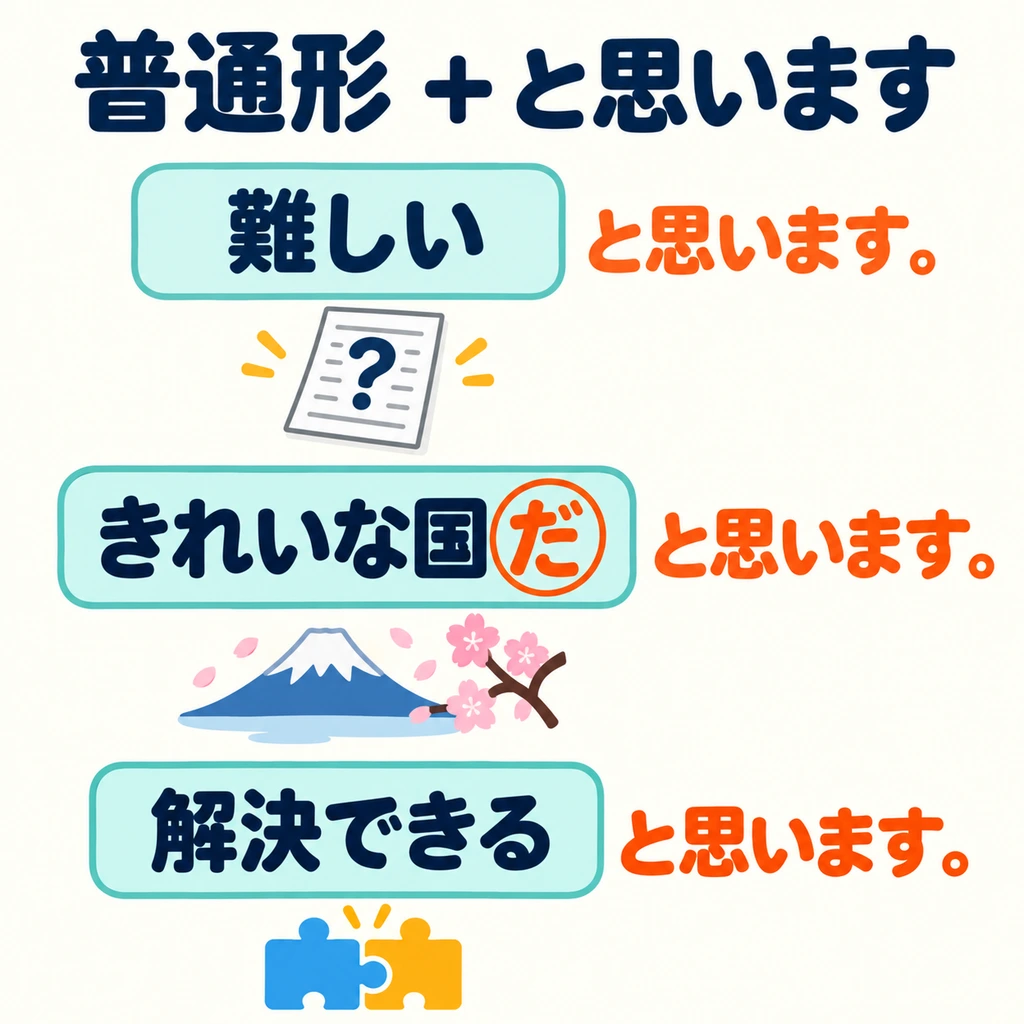
Put what you think before 「と」, ending it in the plain form, then add 「思います」.
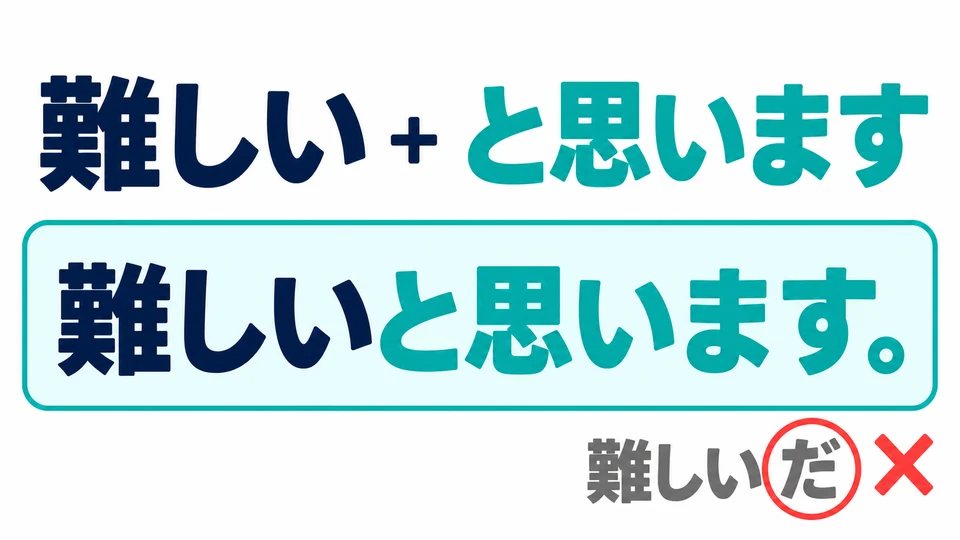
い-adjectives connect directly to 「と」: 「難しいと思います」. Do not add 「だ」.
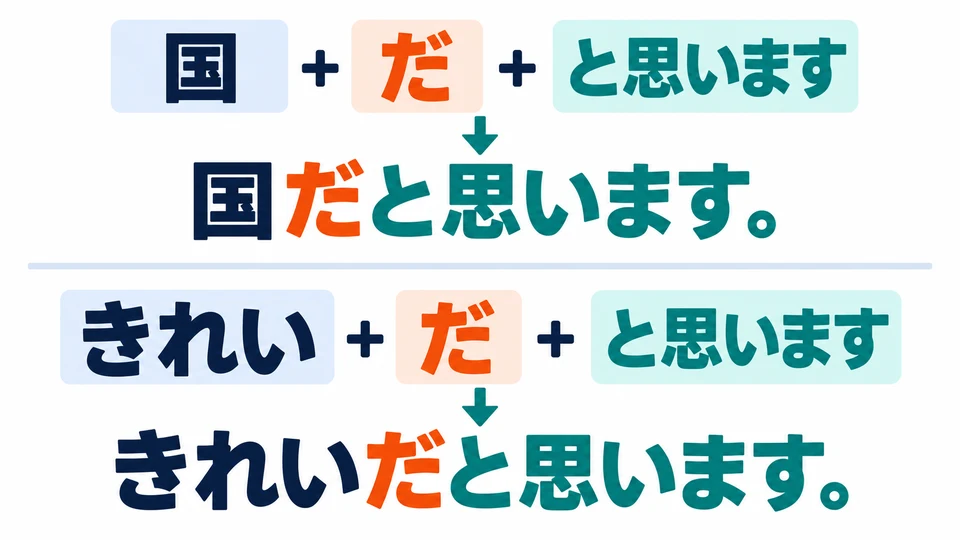
For nouns and な-adjectives, add 「だ」 in the affirmative present form, as in 「国だ」 and 「きれいだ」.
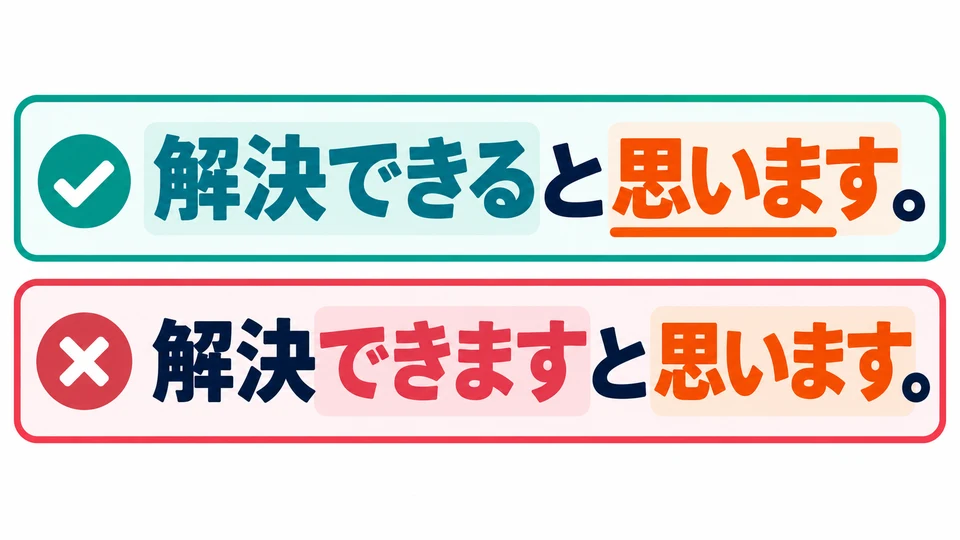
Do not use 「です・ます」 before 「と」. The final 「思います」 makes the whole sentence polite.

In the example, 「きれいな」 modifies 「国」. The ending is a noun, so use 「国だ」.
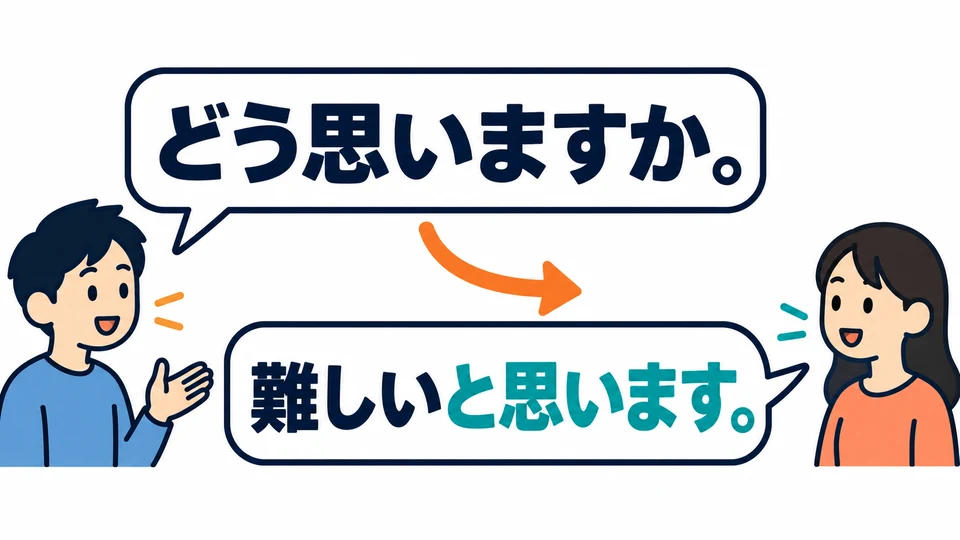
「どう思いますか」 asks for the other person’s opinion. You can answer with 「〜と思います」.
Example sentences
- 日本nipponはwaとてもtotemoきれいなkireina国kuniだdaとto思います。omoimasu
I think Japan is a very beautiful country.
In a conversation

- Aこの問題についてどう思いますか。
A: What do you think about this issue?
- B難しいと思いますが、解決
Check yourself
Level 1 · Recognise
Which sentence is correct?
Level 1 · Recognise
Listen and choose the meaning
Level 2 · Build
Put the words in order
I think Japan is a very beautiful country.
Level 3 · Use
What goes in the blank?
この規則を守ることが大切だ 。
I think it is important to follow this rule.
More grammar in this theme
- 〜と思いますI think; give an opinion