JPEdLab iconJPEdLab
Save history

Create an account and play

Explore first, then save your progress whenever you are ready. No email address is required.

Start free
  1. Japanese grammar
  2. JLPT N4 grammar
  3. 〜という〜

〜という〜~to iu ~

To iu (〜という〜) means “named or called something”.

浅草あさくさasakusaとtoいうiu町まちmachiをo知っしっshiてteいますimasuか。かka

Do you know a town called Asakusa?

Use「〜という〜」to connect a name with its category, as in a town called Asakusa or a writer named Dazai.

In the course›

How it works

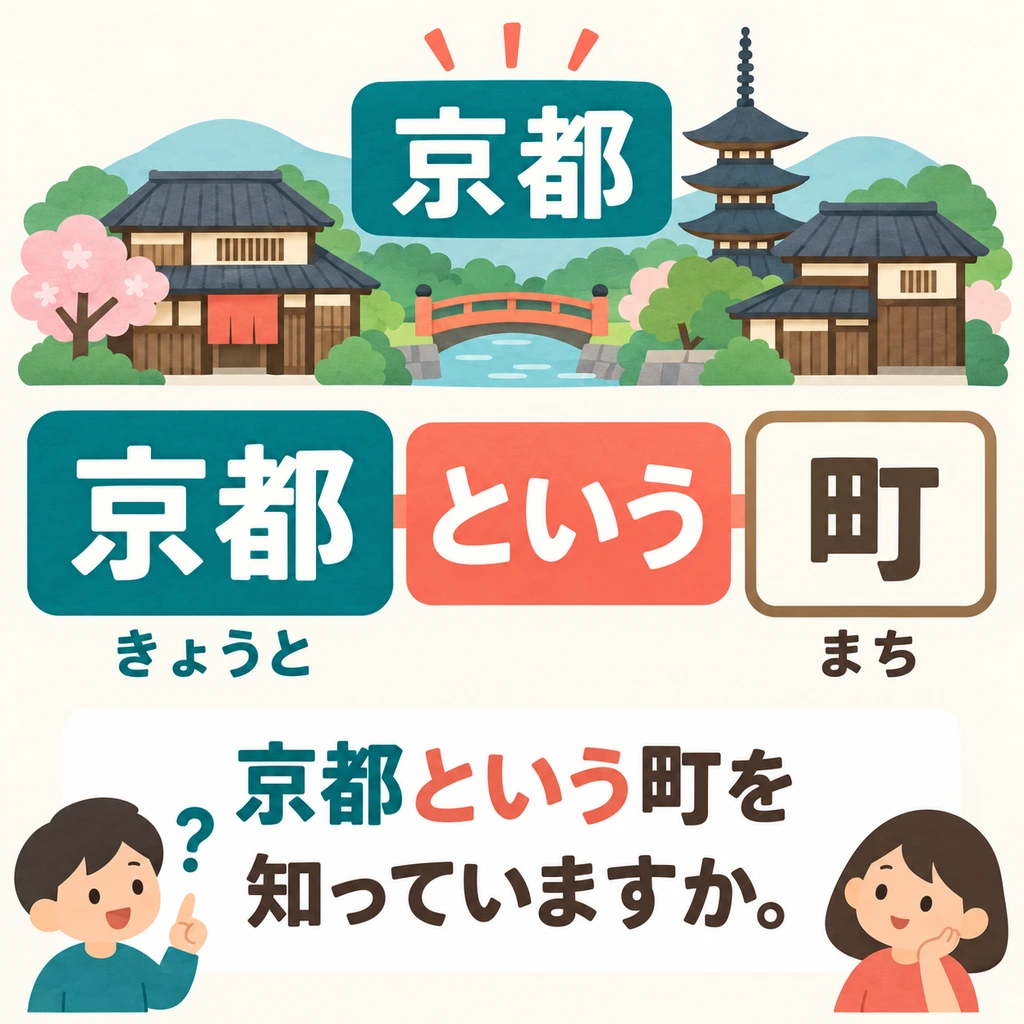
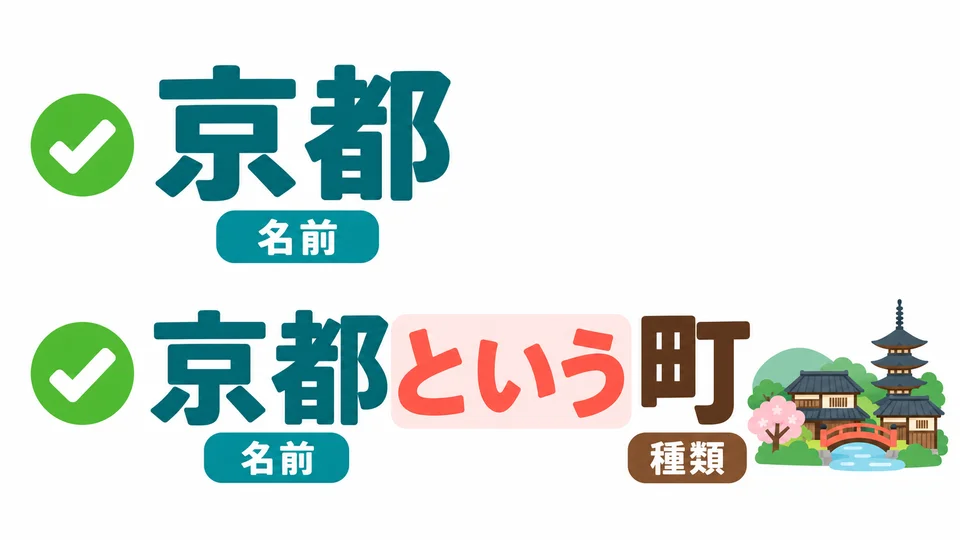
  1. The listener may not know Kyoto. Look at the question in the picture: how can you explain what kind of place Kyoto is?
    The listener may not know Kyoto. Look at the question in the picture: how can you explain what kind of place Kyoto is?

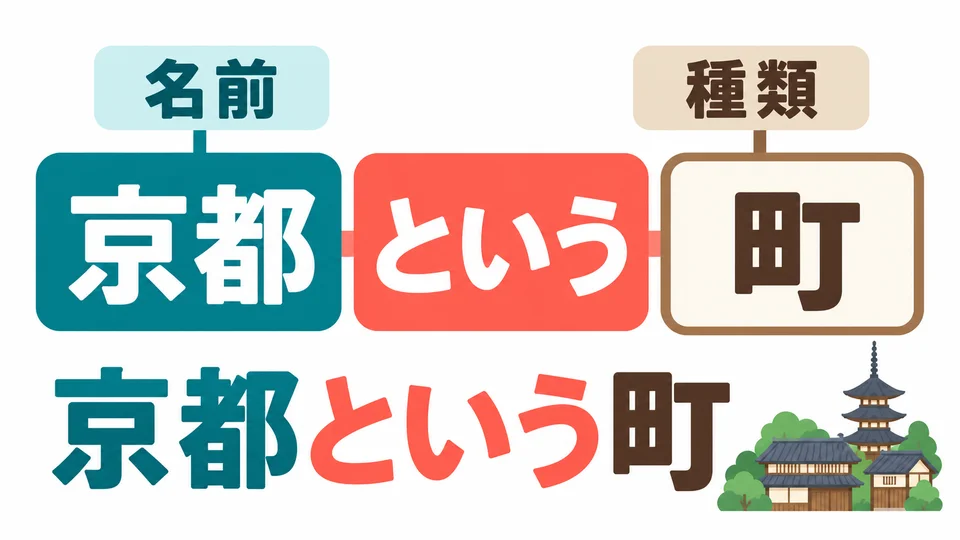
  2. 「京都」 is the name, and 「町」 is the category. Put the name first and the category last, with 「という」 between them.
    「京都」 is the name, and 「町」 is the category. Put the name first and the category last, with 「という」 between them.

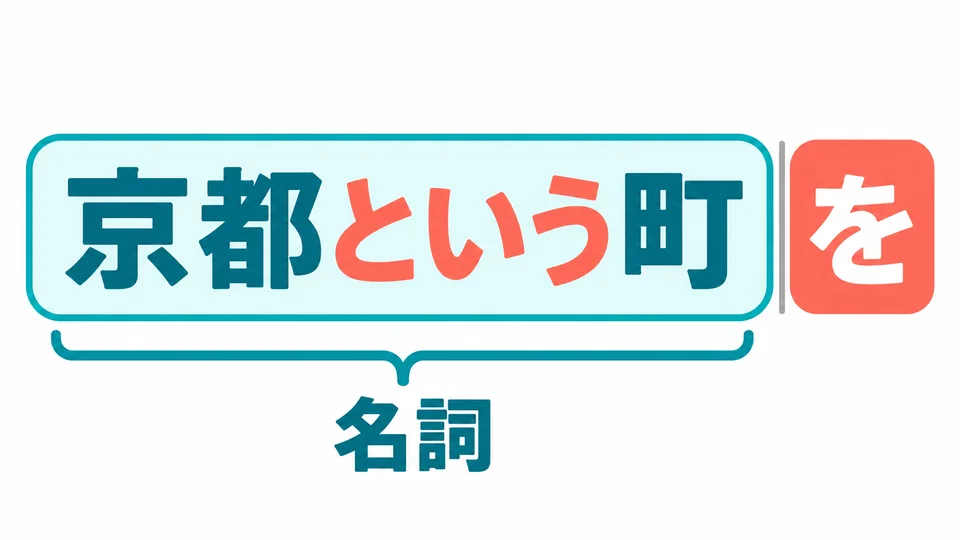
  3. 「京都という町」 is a noun phrase meaning “a city called Kyoto.” You can add 「を」 after the whole phrase.
    「京都という町」 is a noun phrase meaning “a city called Kyoto.” You can add 「を」 after the whole phrase.

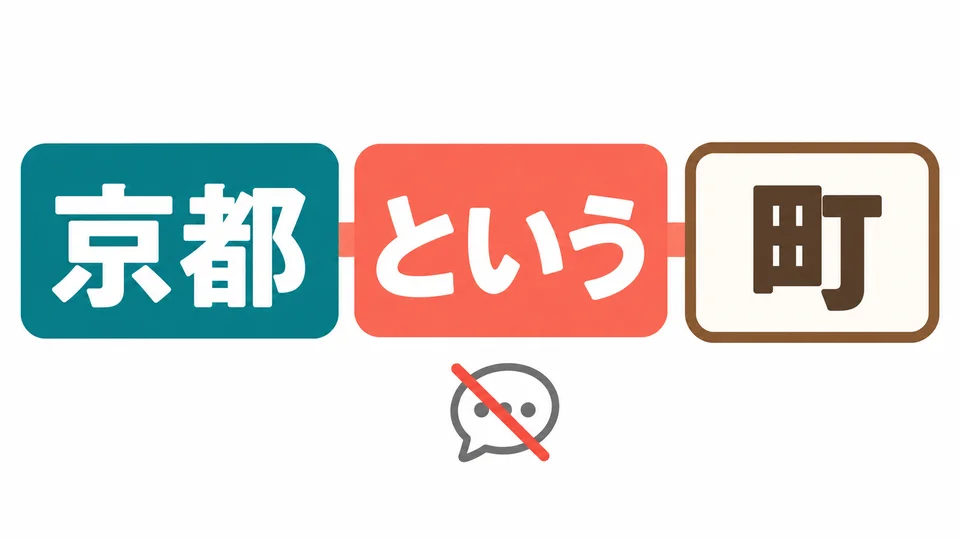
  4. Here, 「いう」 does not mean someone is speaking. Together with 「と」, it connects the name and the category.
    Here, 「いう」 does not mean someone is speaking. Together with 「と」, it connects the name and the category.

  5. You can also just say 「京都」. Adding 「という町」 tells the listener what kind of place it is, too.
    You can also just say 「京都」. Adding 「という町」 tells the listener what kind of place it is, too.

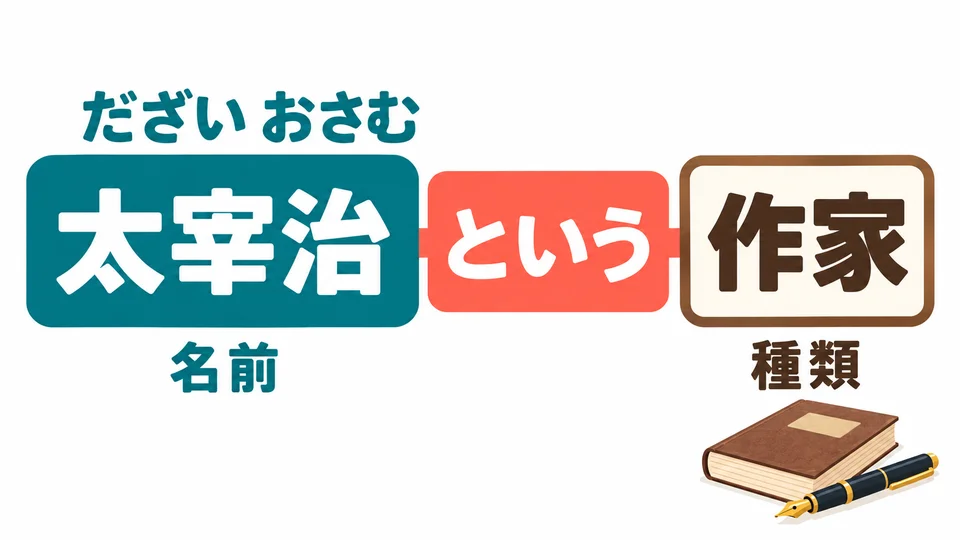
  6. In the example, 「太宰治」 is read 「だざい おさむ」. This is the writer’s name; 「作家」 after it gives the category: writer.
    In the example, 「太宰治」 is read 「だざい おさむ」. This is the writer’s name; 「作家」 after it gives the category: writer.

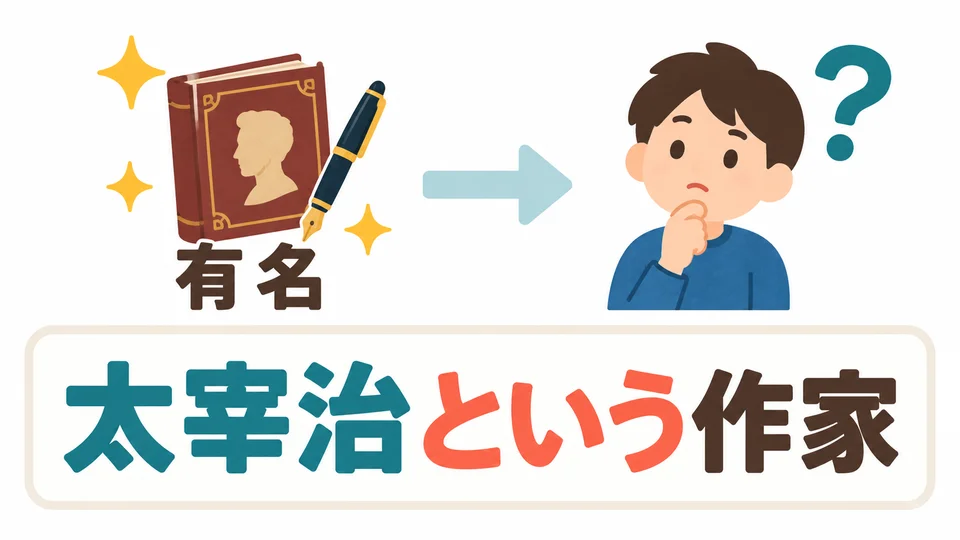
  7. Even a famous writer can be introduced with 「という」. What matters is that the speaker is unsure whether the listener knows him.

    Even a famous writer can be introduced with 「という」. What matters is that the speaker is unsure whether the listener knows him.

Example sentences

  • 浅草あさくさasakusaとtoいうiu町まちmachiをo知っしっshiてteいますimasuか。かka

    Do you know a town called Asakusa?

  • 太宰だざい

In a conversation

  • A
    京都きょうとという町まちを知っしっていますか。か

    A: Do you know a city called Kyoto?

  • B
    はい、はい知っしっています。いますとても

Check yourself

  1. Level 1 · Recognise

    Which sentence is correct?

  2. Level 1 · Recognise

    Listen and choose the meaning

  3. Level 2 · Build

    Put the words in order

    I went to an old town called Kyoto.

  4. Level 3 · Use

    What goes in the blank?

    上海 な都市に住んでいます。

    I live in a bustling city called Shanghai.

More grammar in this theme

  • 〜という〜named or called something

More JLPT N4 grammar

Keep practising

Test your Japanese vocabulary12 adaptive questions, freeCheck your pronunciationRead aloud and get a scorePractise verb forms10-question conjugation quizSee the whole courseGrammar, vocabulary and quizzes by theme
dazai
治おさむosamu
とto
いうiu
作家さっかsakka
をo
知っしっshi
てte
いますimasu
か。かka
とてもtotemo
有名なゆうめいなyuumeina
作家さっかsakka
です。ですdesu

Do you know a writer called Osamu Dazai? He is a very famous writer.

有名なゆうめいな
町まち
です
ね。ね

B: Yes, I know. It's a very famous city, isn't it?

  • A
    そうです。京都ですきょうとで着物きものを着るきるという体験たいけんをしました。しました

    A: That's right. I had the experience of wearing a kimono in Kyoto.

  • B
    そうですか。かそれはわ面白おもしろそうですね。ね

    B: I see. That sounds interesting.

  • A
    とてもよかったです。京都きょうとという町まちで、古いふるい町並みまちなみを散歩さんぽしました。

    A: It was very good. I took a walk through the old streets in a town called Kyoto.

  • B
    凄いですすごいですね。ね私わたしもやってみたいです。みたいです

    B: That's amazing. I want to try it too.

  • A
    「富士ふじ山」さんという山やまに一緒いっしょに登っのぼってみませんか。

    A: Would you like to try climbing a mountain called “Mount Fuji” together?

  • B
    いいですね。ね行きましょう。いきましょう

    B: Sounds good. Let's go.

Beginner 2
Recommendations
More quizzesOpen this lesson’s quizzes in the course
〜たことがありますpast experience
知っていますかasking if someone knows
〜は〜ですdescribing a noun
〜ていますwearing state
〜た〜を/へnoun modifier + particle
〜た〜はnoun modifier as topic
Previous知っていますか
Next〜は〜です
See all 138
〜んですexplaining a situation
どうしたんですかasking what’s wrong
〜たほうがいいですadvice to do something
〜ないほうがいいですadvice against doing
〜と、〜condition and result
〜と言いますreporting what someone said
〜なければなりませんmust do
〜なくてもいいですdo not have to