JPEdLab iconJPEdLab
Save history

Create an account and play

Explore first, then save your progress whenever you are ready. No email address is required.

Start free
  1. Japanese grammar
  2. JLPT N5 grammar
  3. 知っていますか

知っていますかshitte imasu ka

Shitte imasu ka (知っていますか) means “asking if someone knows”.

最近さいきんsaikin話題わだいwadaiの「のno猫ねこnekoカフェ」かふぇkafeをo知っしっshiてteいますimasuか。かka

Do you know about the "cat cafes" that are popular lately?

Use「知っていますか」to ask whether someone knows about something, even if they have never visited it.

In the course›

How it works

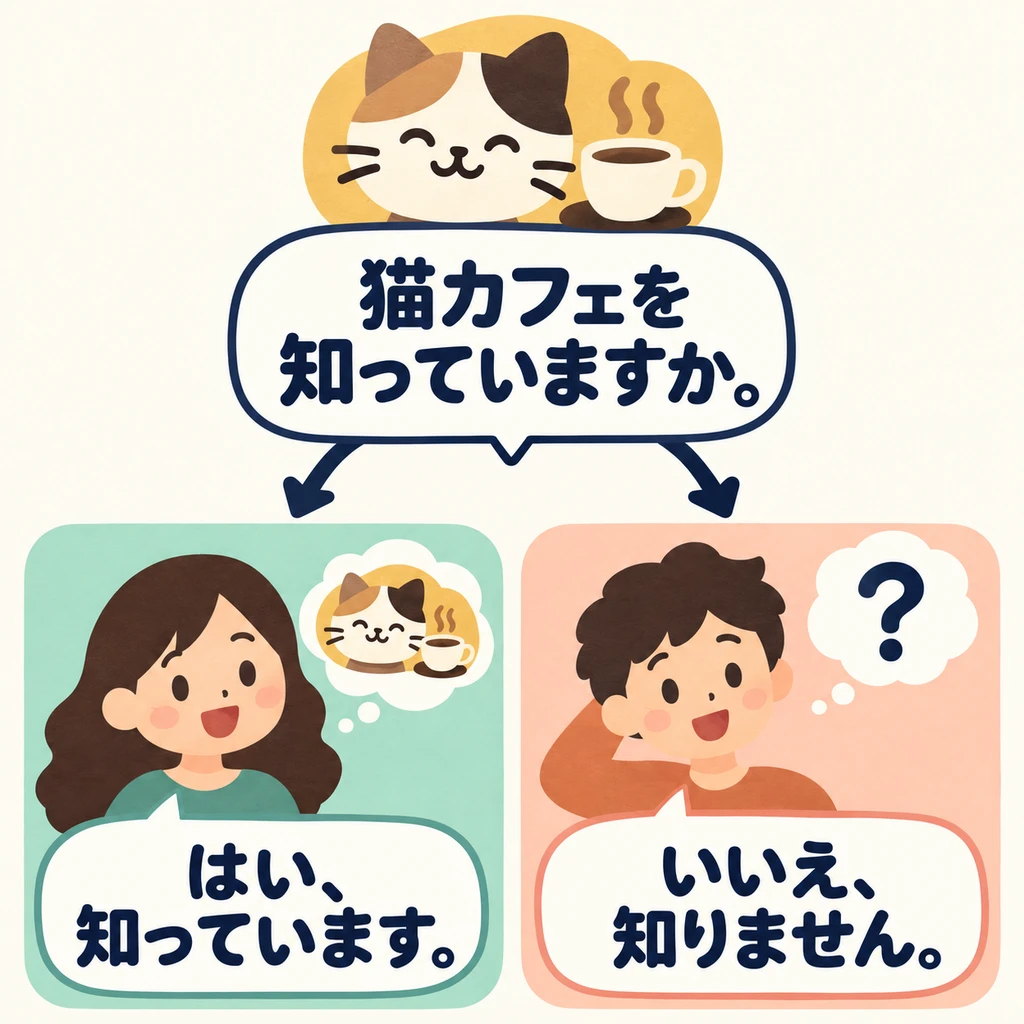
  1. A friend mentions a cat café. Use the question in the picture to ask whether the other person knows about it.
    A friend mentions a cat café. Use the question in the picture to ask whether the other person knows about it.

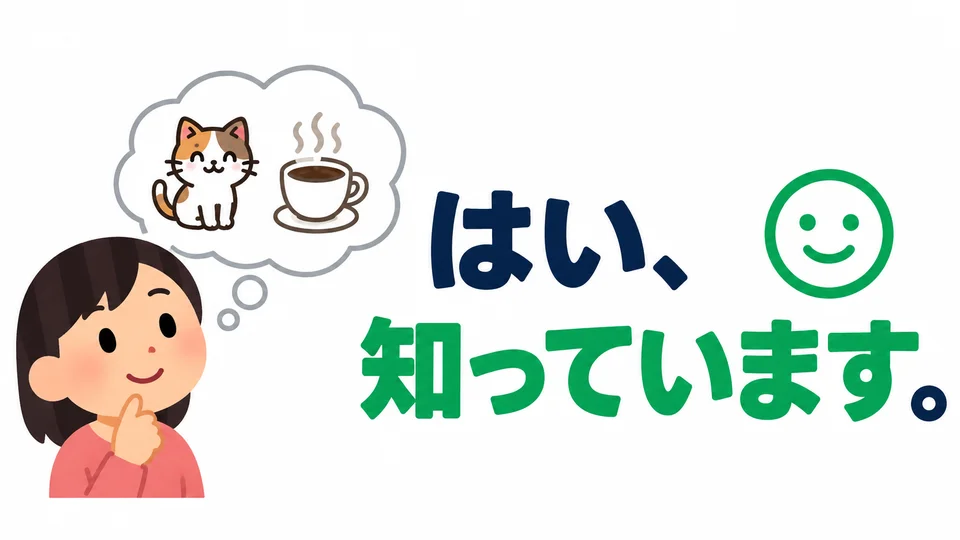
  2. If you already know about this café, answer 「はい、知っています。」 to say “Yes, I know.”
    If you already know about this café, answer 「はい、知っています。」 to say “Yes, I know.”

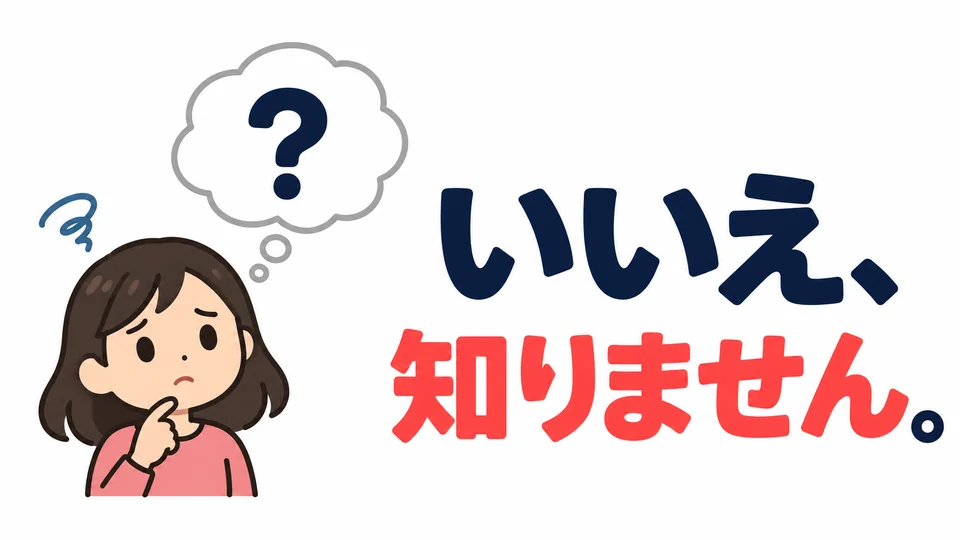
  3. If you do not know about this café, answer 「いいえ、知りません。」 to say “No, I don’t know.”
    If you do not know about this café, answer 「いいえ、知りません。」 to say “No, I don’t know.”

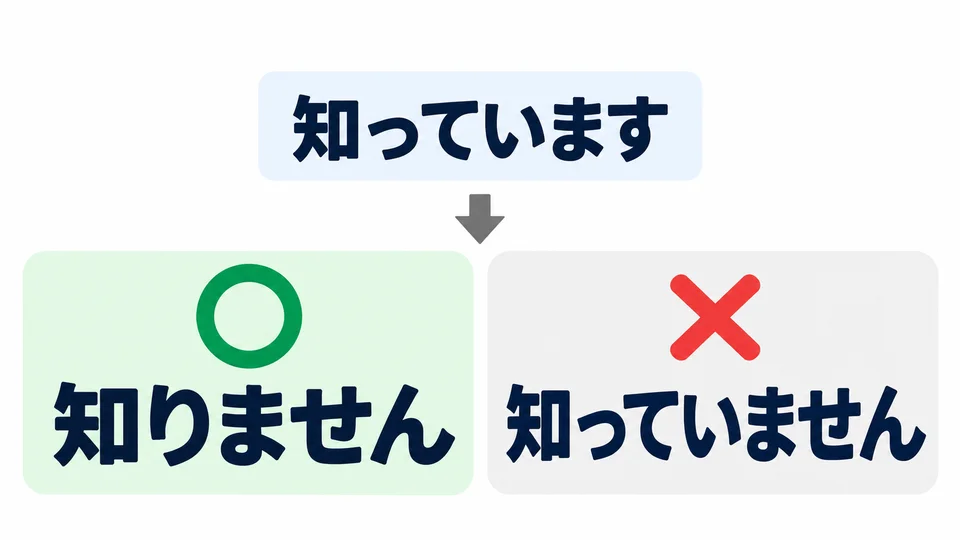
  4. Remember: the negative form is 「知りません」. To answer “I don’t know,” do not use 「知っていません」.
    Remember: the negative form is 「知りません」. To answer “I don’t know,” do not use 「知っていません」.

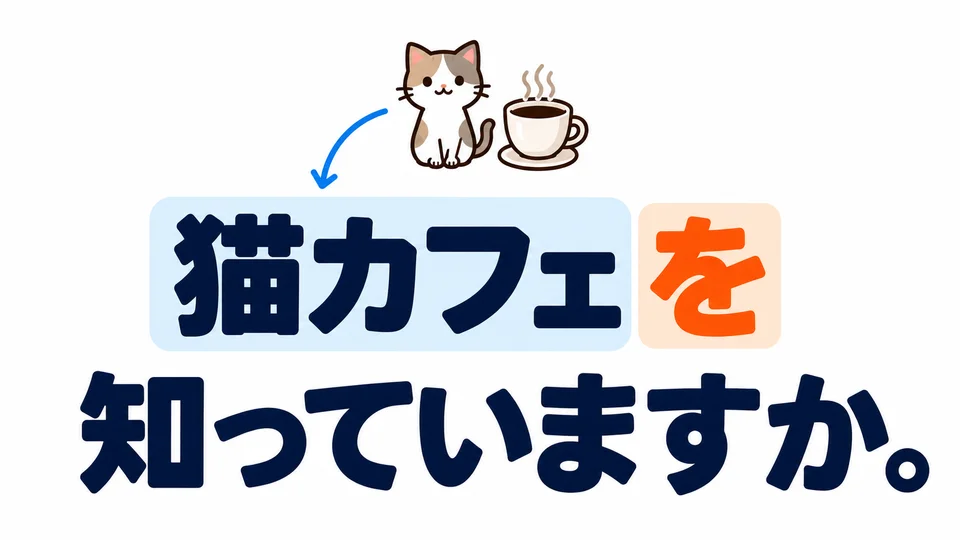
  5. In 「猫カフェを」, 「を」 marks what you are asking about: whether the other person knows about the cat café.
    In 「猫カフェを」, 「を」 marks what you are asking about: whether the other person knows about the cat café.

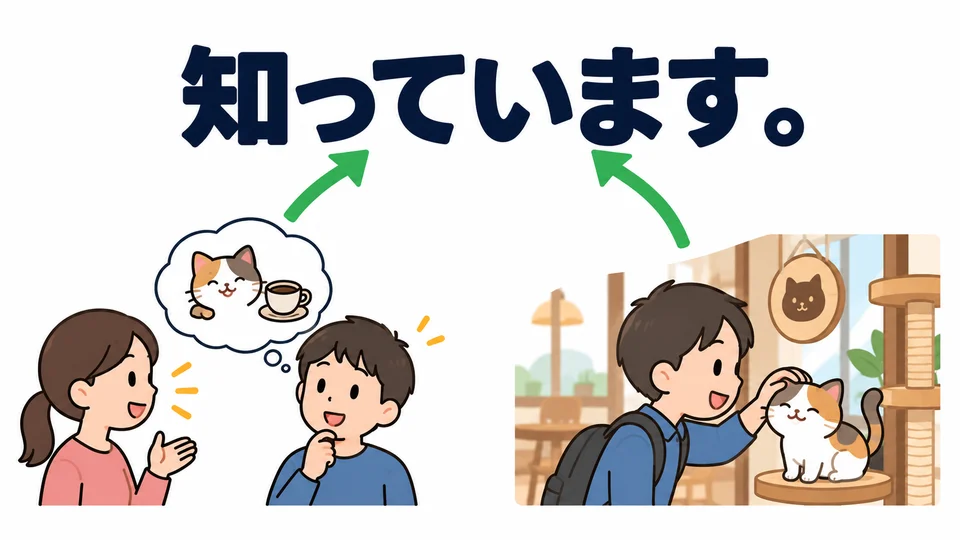
  6. The example only asks whether you know about the cat café, not whether you have been there. Even if you have only heard of it, you can answer that you know.

    The example only asks whether you know about the cat café, not whether you have been there. Even if you have only heard of it, you can answer that you know.

Example sentences

  • 最近さいきんsaikin話題わだいwadaiの「のno猫ねこnekoカフェ」かふぇkafeをo知っしっshiてteいますimasuか。かka

    Do you know about the "cat cafes" that are popular lately?

In a conversation

  • A
    ねえ、ねえ今話題いまわだいの「の猫ねこカフェ」かふぇを知っしっていますか。か

    A: Hey, do you know about the "cat cafes" that are popular right now?

  • B
    はい、はい知っしっ

Check yourself

  1. Level 0 · Conjugate

    Use 〜ています to describe the state now. ています

    先生の名前を今も(覚えるおぼえる)。

  2. Level 1 · Recognise

    Which sentence is correct?

  3. Level 1 · Recognise

    Listen and choose the meaning

  4. Level 2 · Build

    Put the words in order

    Do you know the famous Asakusa Shrine?

  5. Level 3 · Use

    What goes in the blank?

    最近話題の「猫カフェ」____(目的語の助詞)知っていますか。

    Do you know about the "cat cafe" that's been popular recently?

More grammar in this theme

  • 知っていますかasking if someone knows

More JLPT N5 grammar

Keep practising

Test your Japanese vocabulary12 adaptive questions, freeCheck your pronunciationRead aloud and get a scorePractise verb forms10-question conjugation quizSee the whole courseGrammar, vocabulary and quizzes by theme
て
います
よ。よ
前まえ
に
友達ともだち
と
行ったいった
こと
が
あります。あります

B: Yes, I know. I've been there with a friend before.

  • A
    そうですか。かどうでしたか。か

    A: I see. How was it?

  • B
    凄くすごくよかったです。よかったです可愛いかわいい猫ねこがたくさんいました。いました

    B: It was great. There were lots of cute cats.

  • A
    私わたしも行っいってみたいです。その猫ねこカフェかふぇの名前なまえを知っしっていますか。

    A: I want to go too. Do you know the name of that cat café?

  • B
    いいえ、名前なまえはわ知りません。しりません。でも、浅草あさくさにあります。浅草寺せんそうじから歩いあるいて5ご分ふんです。

    B: No, I don't know its name. But it's in Asakusa, a five-minute walk from Senso-ji Temple.

  • A
    その店みせを知っしっていますか。いいえ、知りません。しりません。

    A: Do you know that shop? No, I don't.

Beginner 2
Recommendations
More quizzesOpen this lesson’s quizzes in the course
〜たことがありますpast experience
〜という〜named or called something
〜は〜ですdescribing a noun
〜ていますwearing state
〜た〜を/へnoun modifier + particle
〜た〜はnoun modifier as topic
Previous〜たことがあります
Next〜という〜
See all 111
普通形casual plain speech forms
動詞のた形past verb form
〜てからafter doing something
〜前にbefore doing something
〜てはいけませんprohibited action
て形link actions; form requests
参りますhumble go or come
〜のが好きですlike doing; be good at