Japanese grammar · ≈ JLPT N5 · Beginner 2
〜ています~te imasu
wearing state
Use「〜ています」with a wearing verb to describe an item already being worn, such as a hat or earrings.
How it works
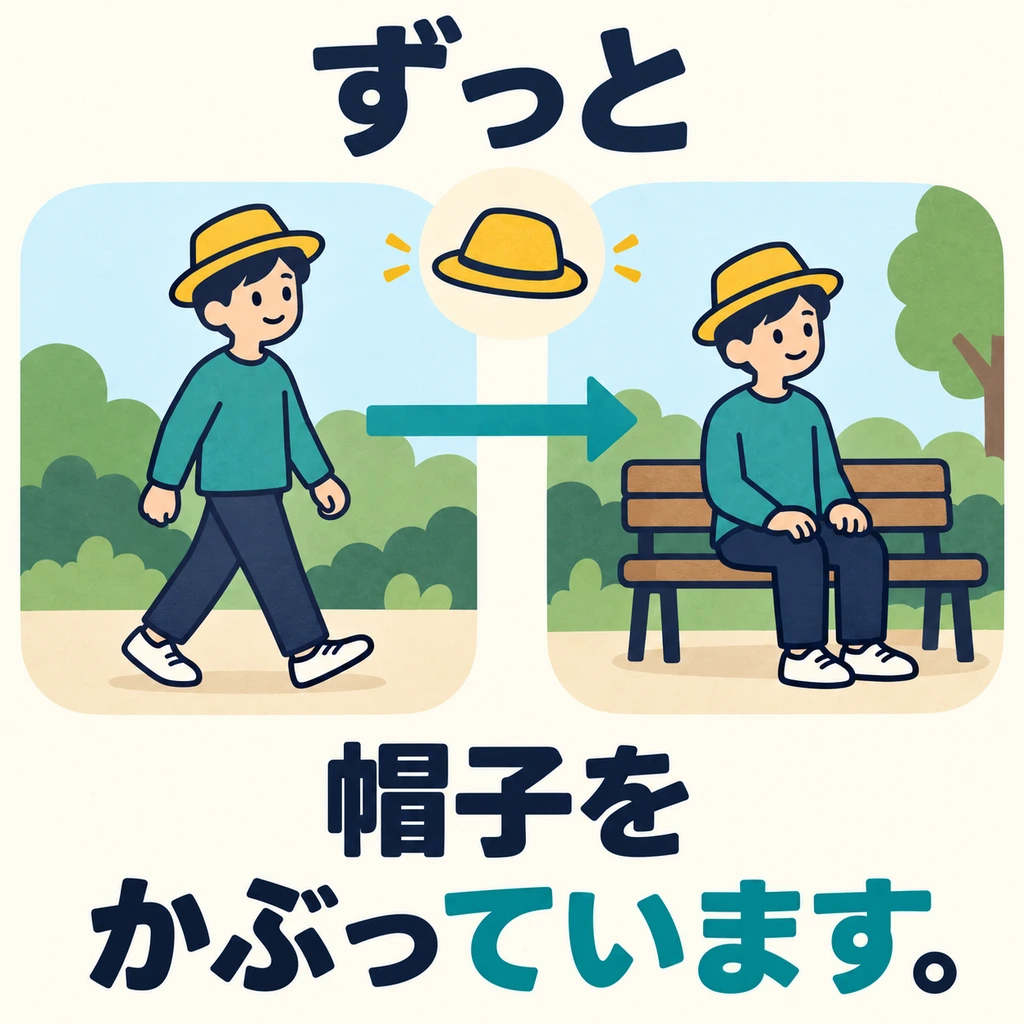
Look at the two pictures: from walking to sitting down, the hat stays on his head. This describes the state of wearing it.
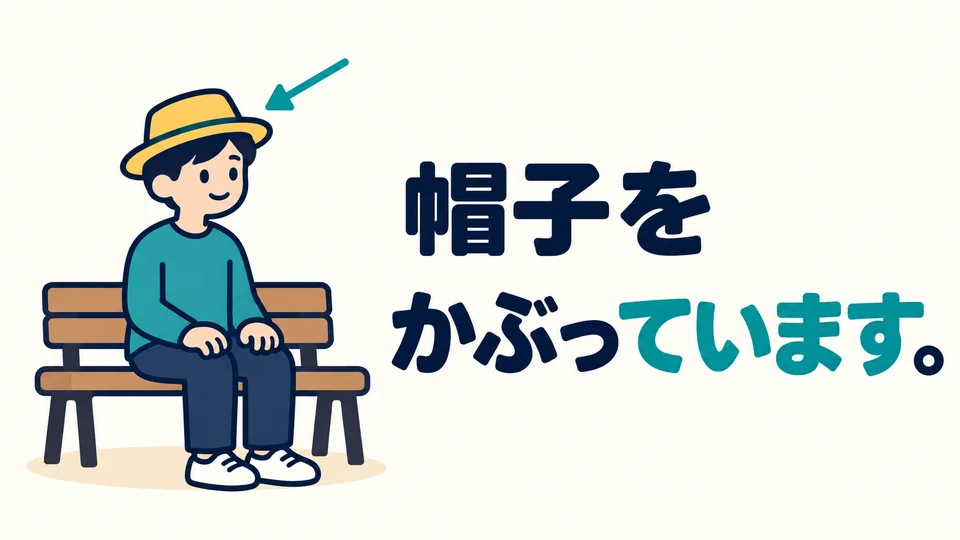
The hat is already on; his hands do not need to be moving. かぶっています can describe this state too.
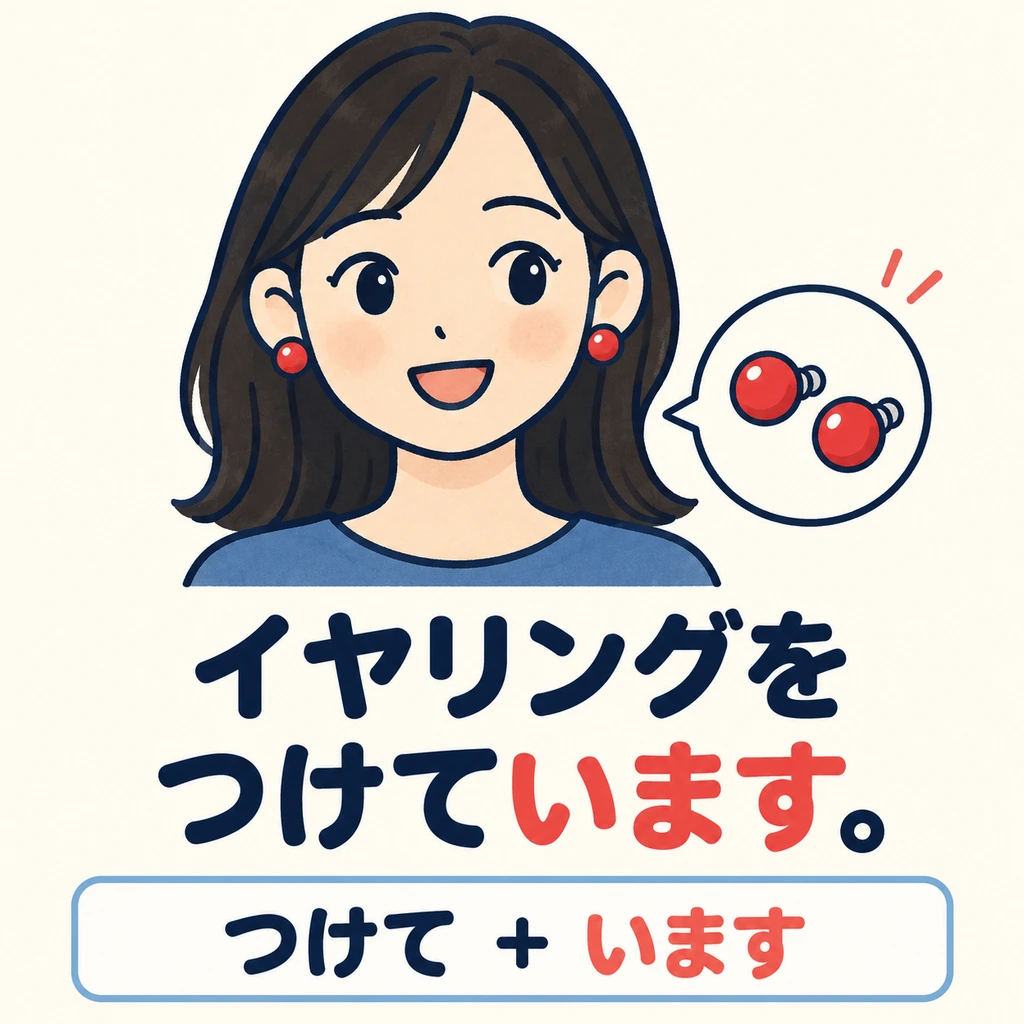
The earrings are already on her ears. Add います to the て形 of a verb for wearing something to describe the current state.
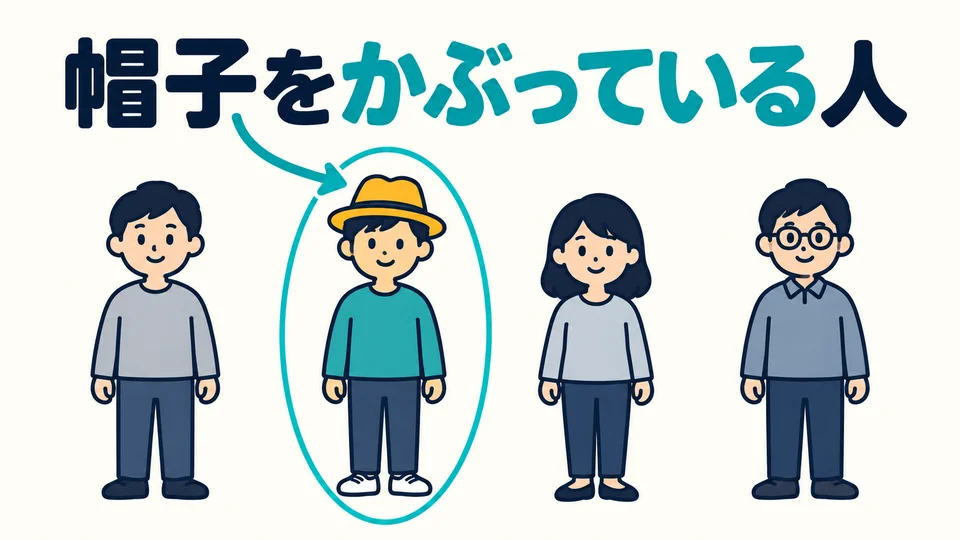
To find someone in a crowd, you can describe what they are wearing. In the conversation, the hat helps identify the person.
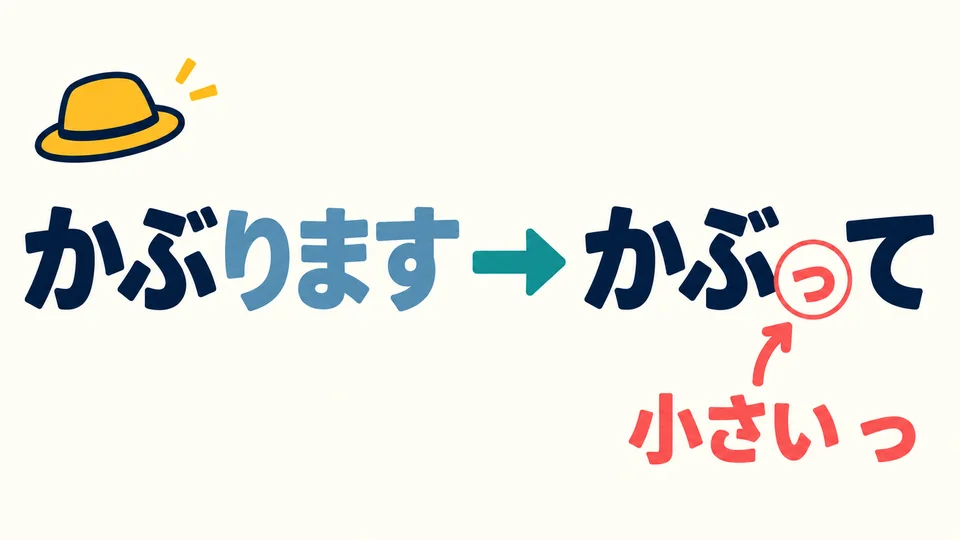
In the example, かぶって comes from かぶります. Notice the small っ here: かぶって.
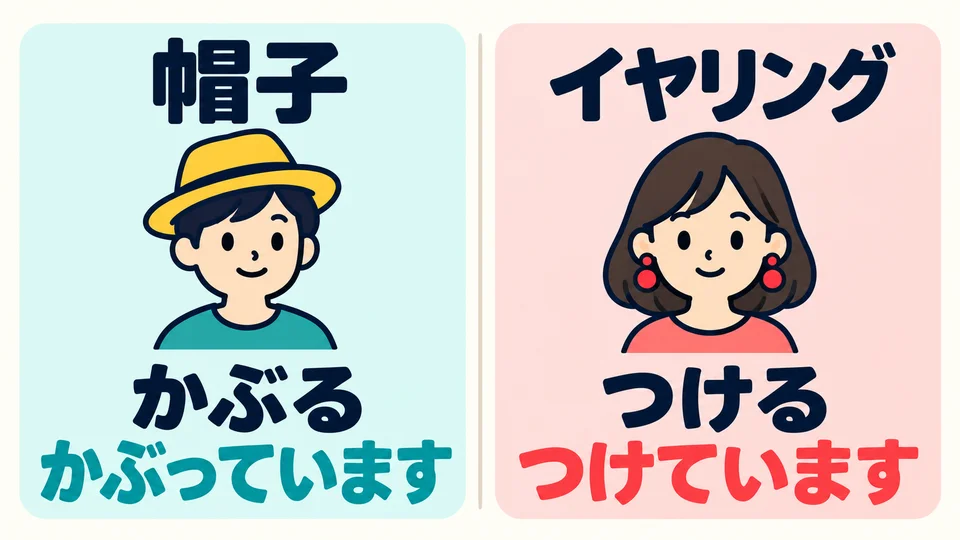
Both sentences mean “wearing,” but the verbs differ: use かぶる for hats and つける for earrings.
Example sentences
- 彼kareはwa帽子boushiをoかぶっkabutてteいます。imasu
He is wearing a hat.
- 彼女kanojo
In a conversation

- Aあれは誰ですか。
A: Who is that?
- B帽子をかぶっている人ですか。
B: The person wearing a hat?
Check yourself
Level 1 · Recognise
Which sentence is correct?
Level 1 · Recognise
Listen and choose the meaning
Level 2 · Build
Put the words in order
She is wearing a scarf.
Level 3 · Use
What goes in the blank?
彼は帽子を 。
He is wearing a hat.
More grammar in this theme
- 〜ていますwearing state