
Japanese grammar · ≈ JLPT N5 · Beginner 2
〜くなります/になります~ku narimasu/~ni narimasu
change into a new state
Use 「〜くなります」 with い-adjectives and 「〜になります」 with な-adjectives to describe a change of state.
- Pattern
- 〜くなります/になります
- Romaji
- ~ku narimasu/~ni narimasu
- JLPT (approx.)
- ≈ N5
- Course level
- Beginner 2
- Theme
- Doing Things with Others
How it works
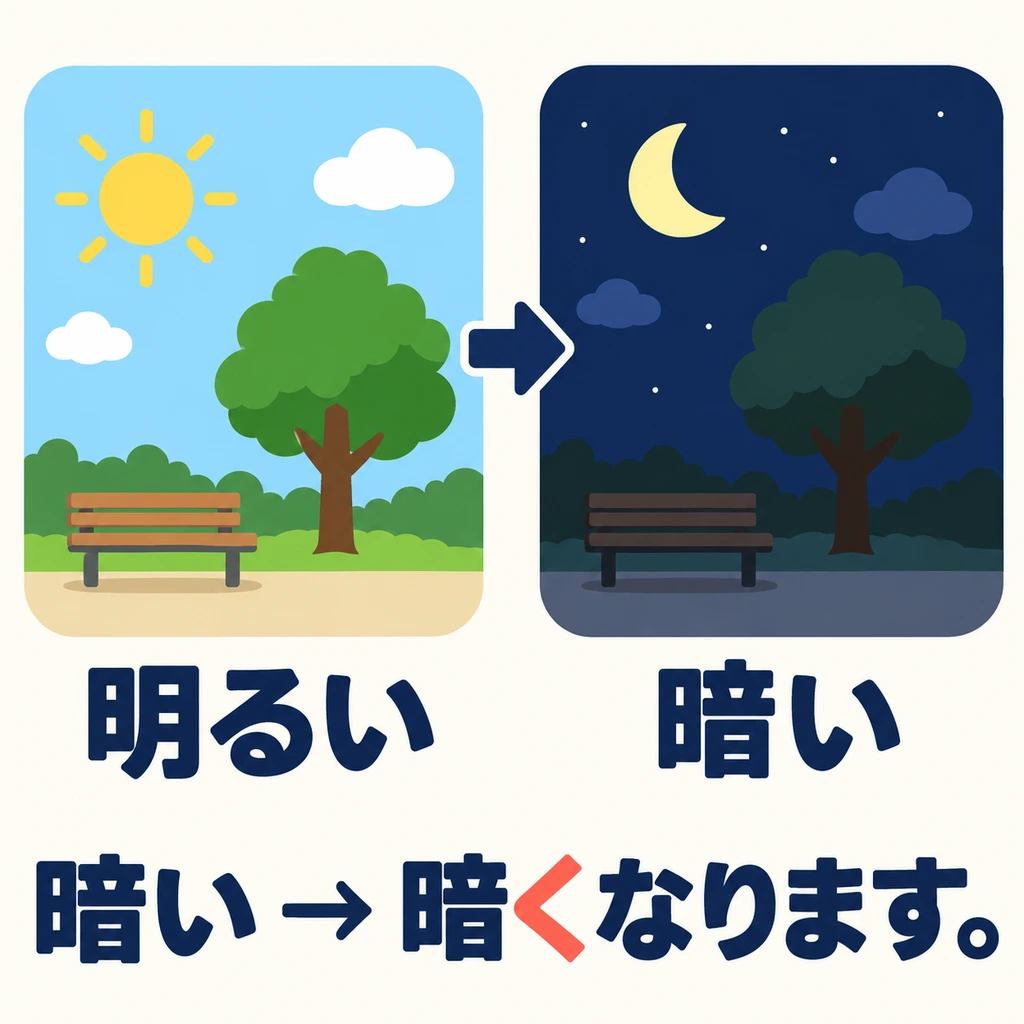
The same park changes from bright to dark. 「なります」 expresses a change of state.
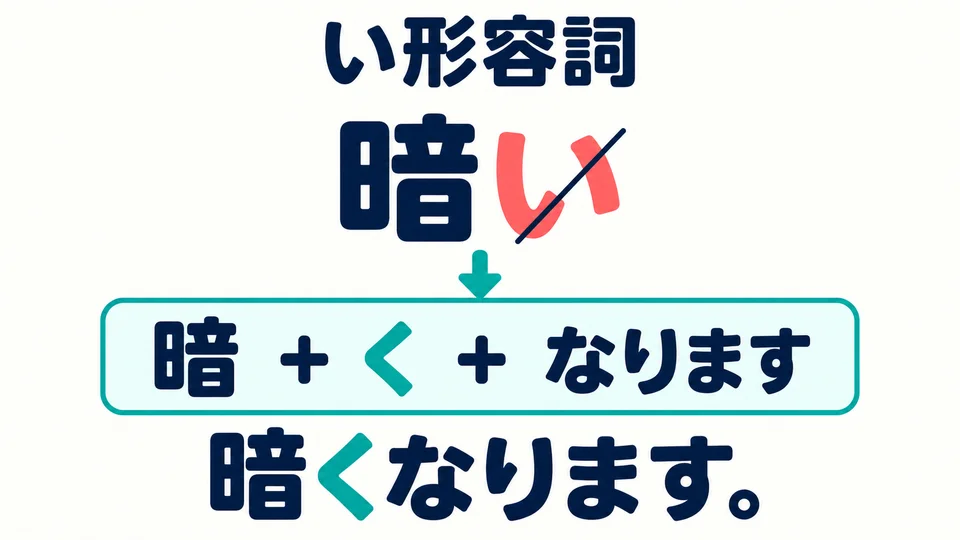
For an い-adjective, remove the final 「い」 and add 「くなります」, as in 「暗くなります」.
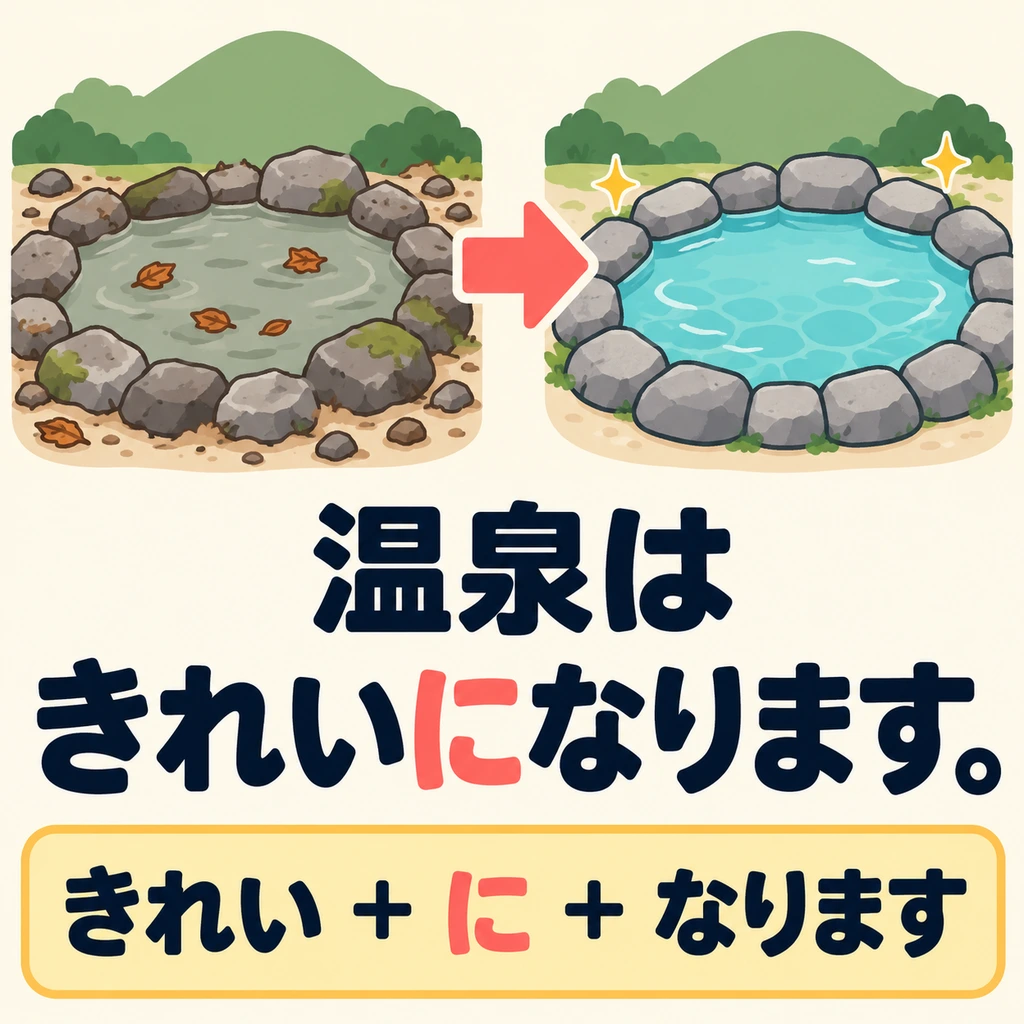
The hot spring goes from untidy to clean and beautiful. The adjective describes the state after the change.
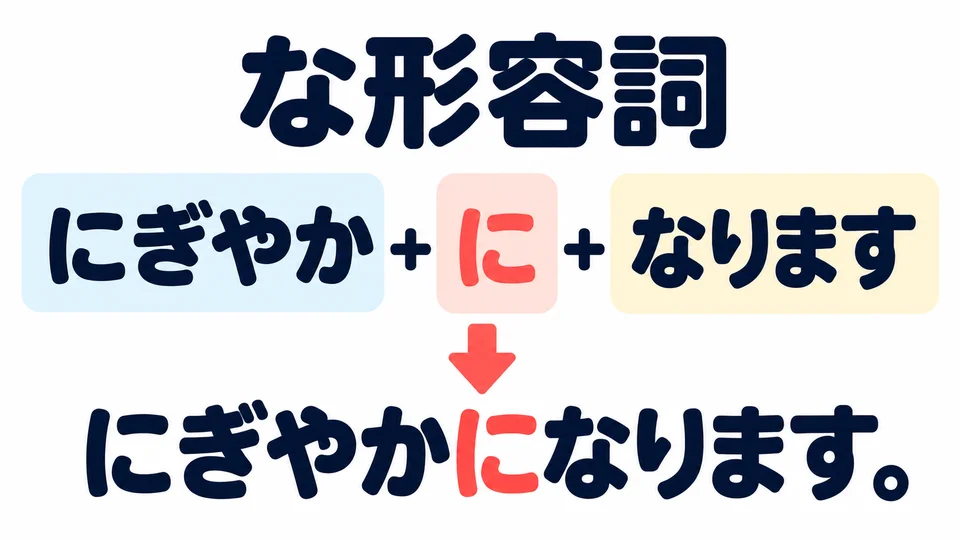
For a な-adjective, simply add 「になります」, as in 「にぎやかになります」.
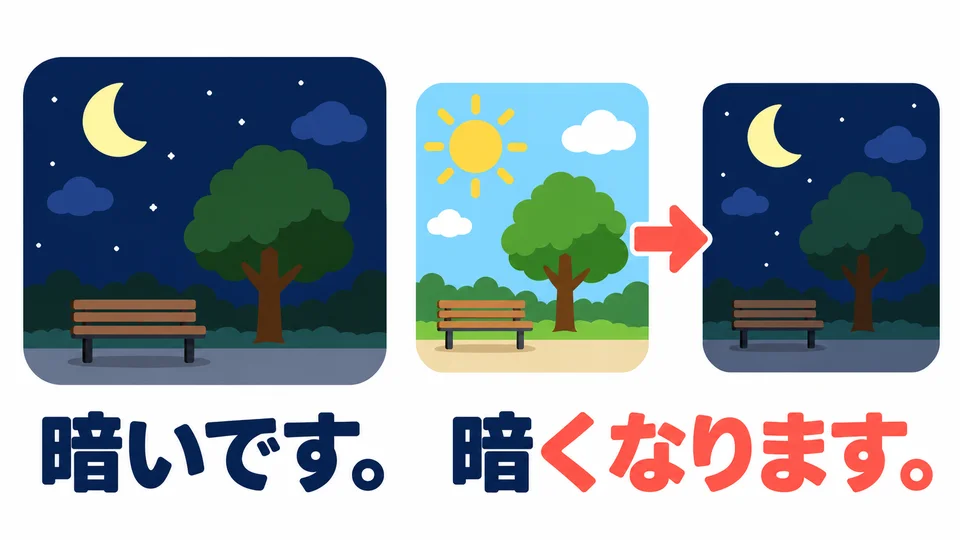
「暗いです」 says it is dark now; 「暗くなります」 says it will get dark, emphasizing the change.
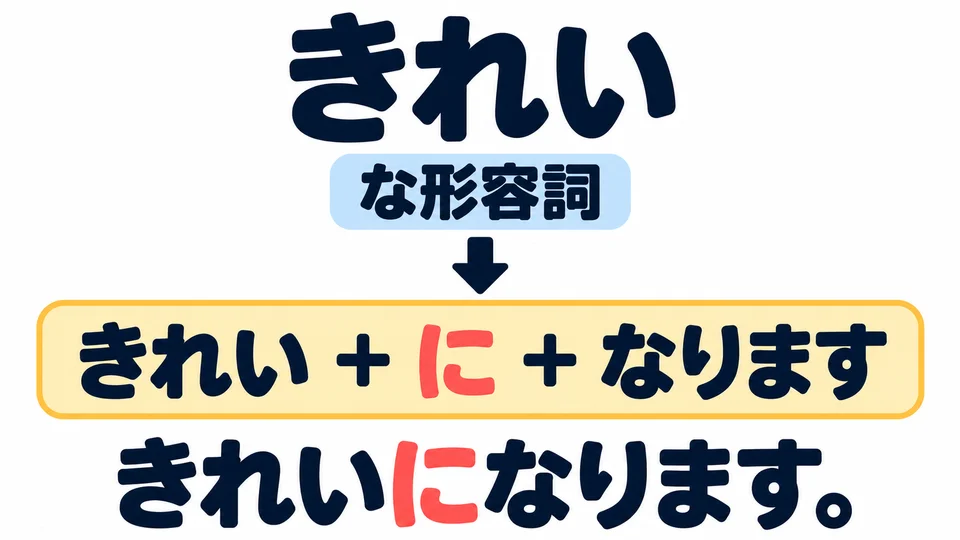
Although 「きれい」 in the example ends in 「い」, it is a な-adjective, so it takes 「に」.
Example sentences
- 寒くsamukuなります。narimasu暗くkurakuなります。narimasu
It will get cold. It will get dark.
- きれいにkireiniなります。narimasu
It will become beautiful.
In a conversation

- Aスポーツセンターはどうなりますか。
A: What will happen to the sports center?
- Bにぎやかになります。
B: It will become lively.

- A
Check yourself
Which sentence is correct?
- 温泉がきれいになります。
- 温泉がきれいにします。
- 温泉がきれいになりますか。
- 温泉がきれいとなります。
Show answer
Answer: A 温泉がきれいになります。
Which sentence is correct?
- スポーツセンターがにぎやかになります。
- スポーツセンターがにぎやかくなります。
- スポーツセンターがにぎやかになります。が。
- スポーツセンターににぎやかになります。
Show answer
Answer: A スポーツセンターがにぎやかになります。
Which sentence is correct?
- プールが暑くなります。
- プールが暑にます。
- プールが暑くあります。
- プールが暑くにになります。
Show answer
Answer: A プールが暑くなります。
More grammar in this theme
- 〜くなります/になりますchange into a new state