JPEDLAB iconJPEDLAB
Save history

Create an account and play

Explore first, then save your progress whenever you are ready. No email address is required.

Start free
Read as articleCards
1/11

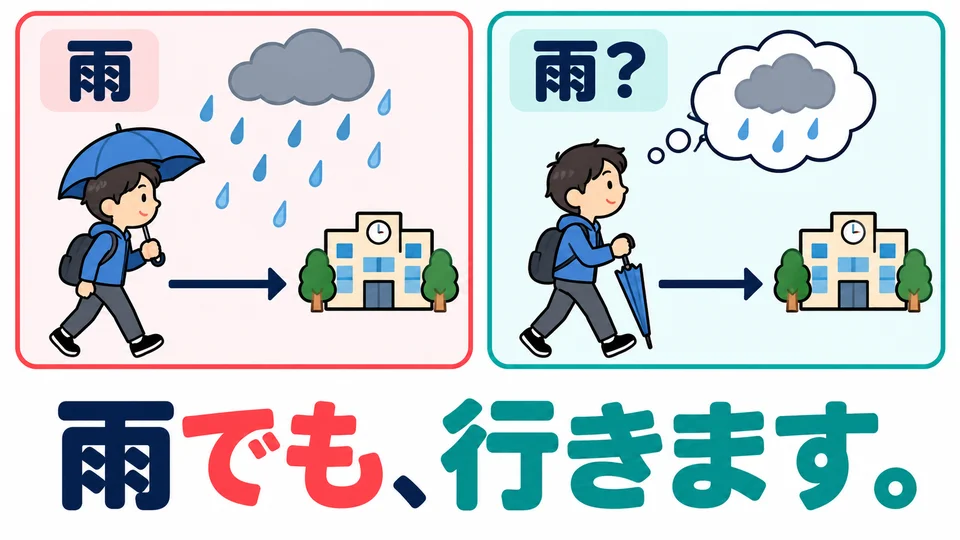
Rain usually affects plans to go out, but the person in the picture still goes: even if it rains, the decision stays the same.

››

Lesson notes · ≈ JLPT N4 · Beginner 3

〜ても/〜でも~te mo / ~de mo

even if; still

Use 「〜ても/〜でも」 when a condition does not change what happens next.

How it works
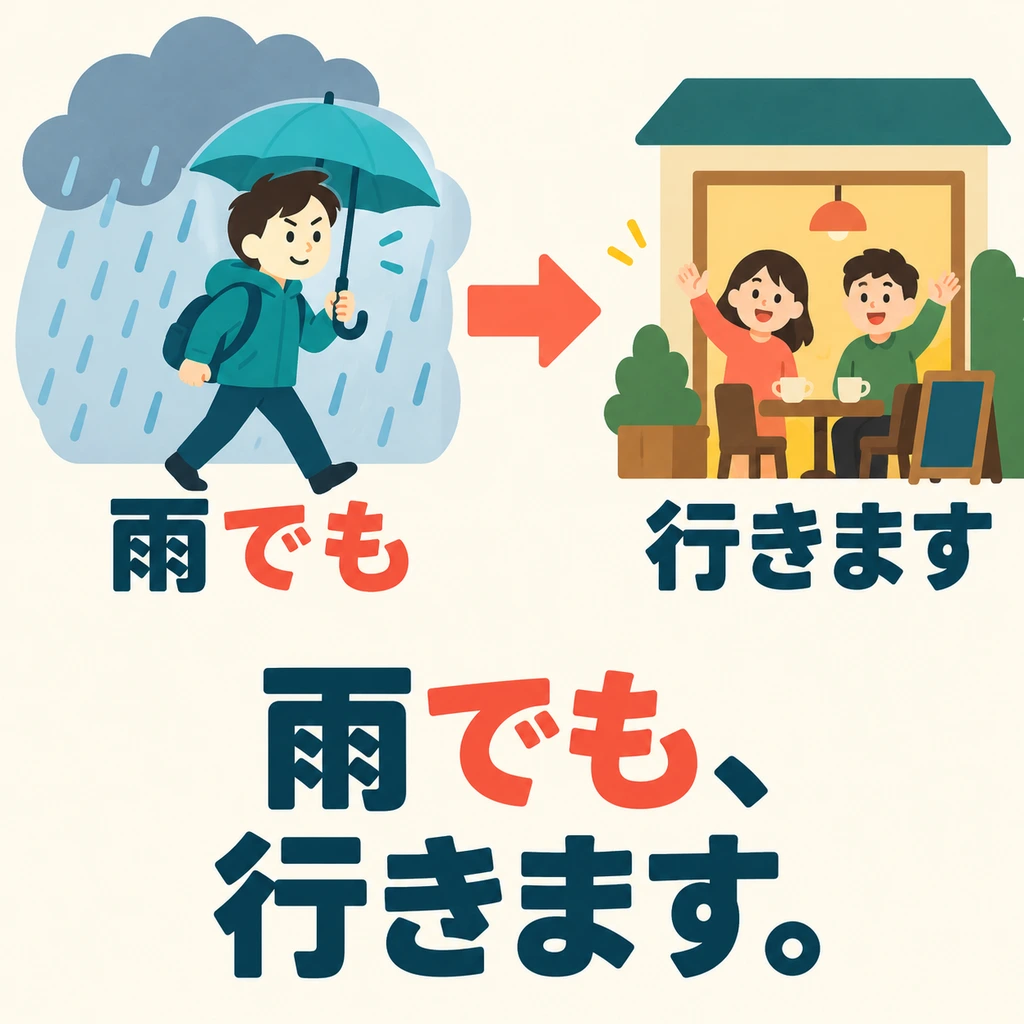
  1. Rain usually affects plans to go out, but the person in the picture still goes: even if it rains, the decision stays the same.
    Rain usually affects plans to go out, but the person in the picture still goes: even if it rains, the decision stays the same.

  2. Both mean “even if …, ….” Whether you add ても or でも depends on the type of word before it.
    Both mean “even if …, ….” Whether you add ても or でも depends on the type of word before it.

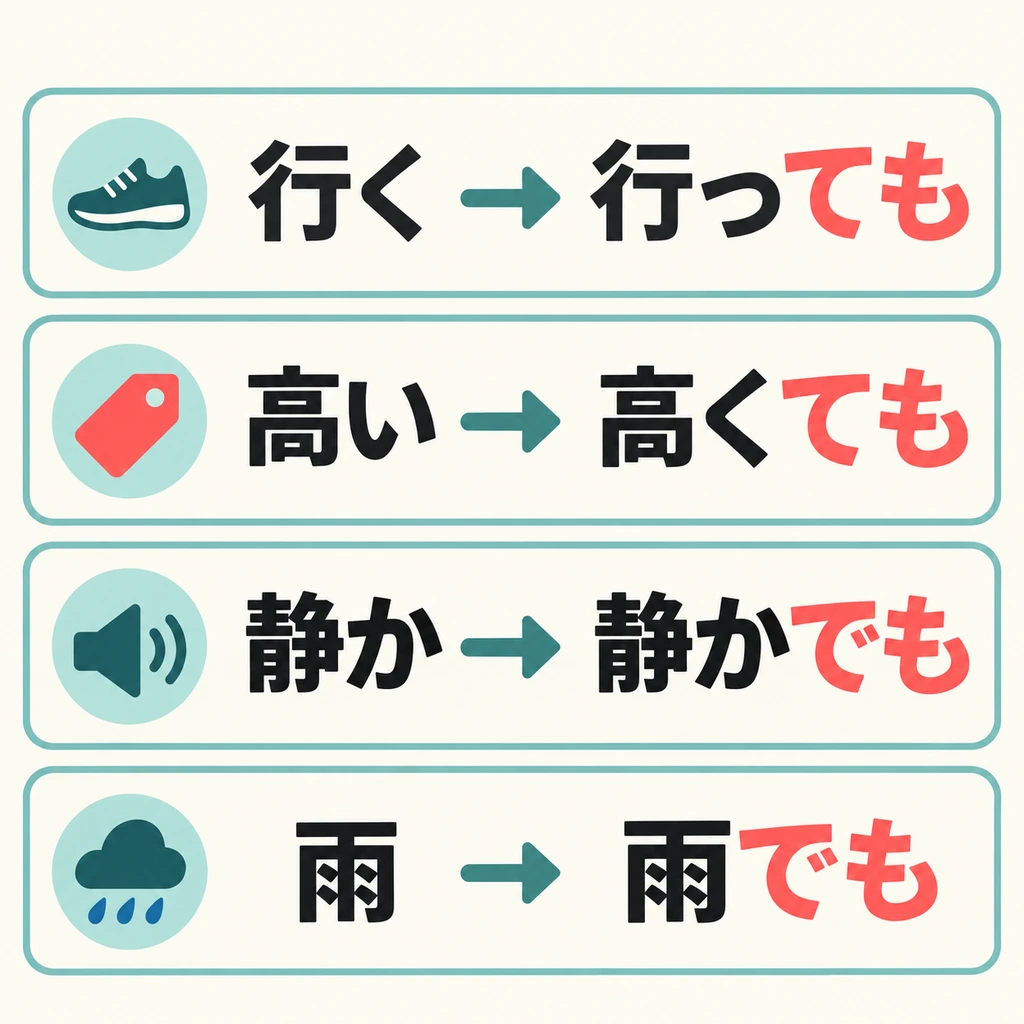
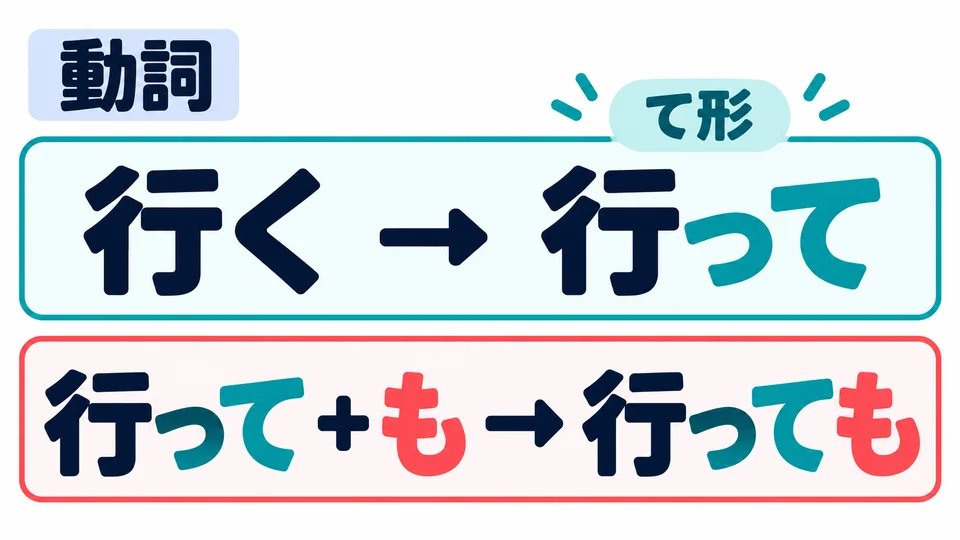
  3. Put a verb into its て-form, then add も. In the picture, 行く becomes 行って before も is added.
    Put a verb into its て-form, then add も. In the picture, 行く becomes 行って before も is added.

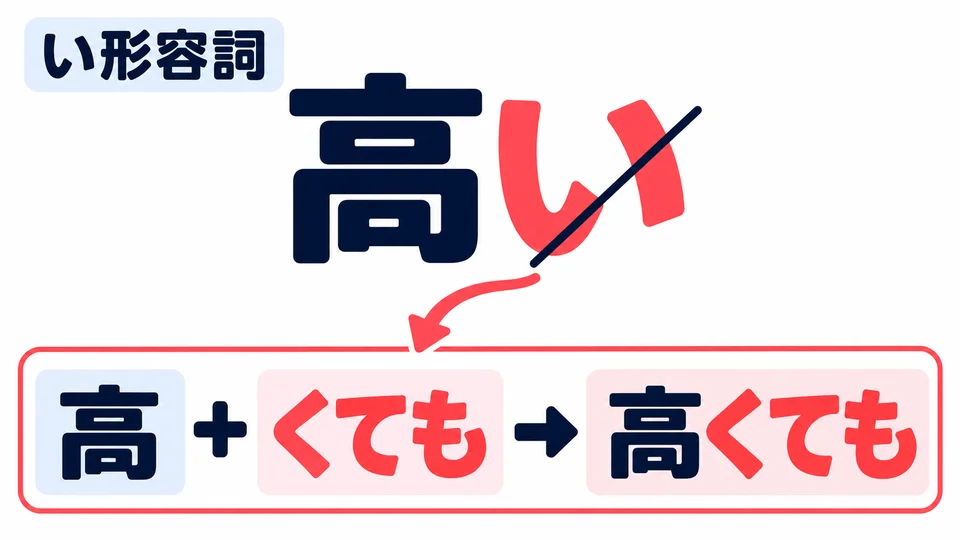
  4. For an い-adjective, replace the final い with くても: 高い becomes 高くても.
    For an い-adjective, replace the final い with くても: 高い becomes 高くても.

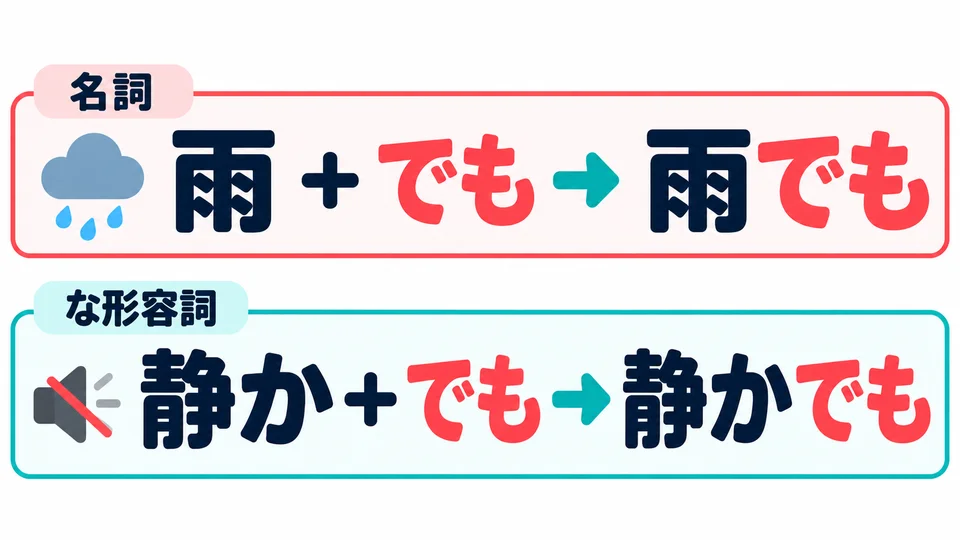
  5. Add でも directly to a noun or a な-adjective stem. 雨でも and 静かでも both follow this pattern.
    Add でも directly to a noun or a な-adjective stem. 雨でも and 静かでも both follow this pattern.
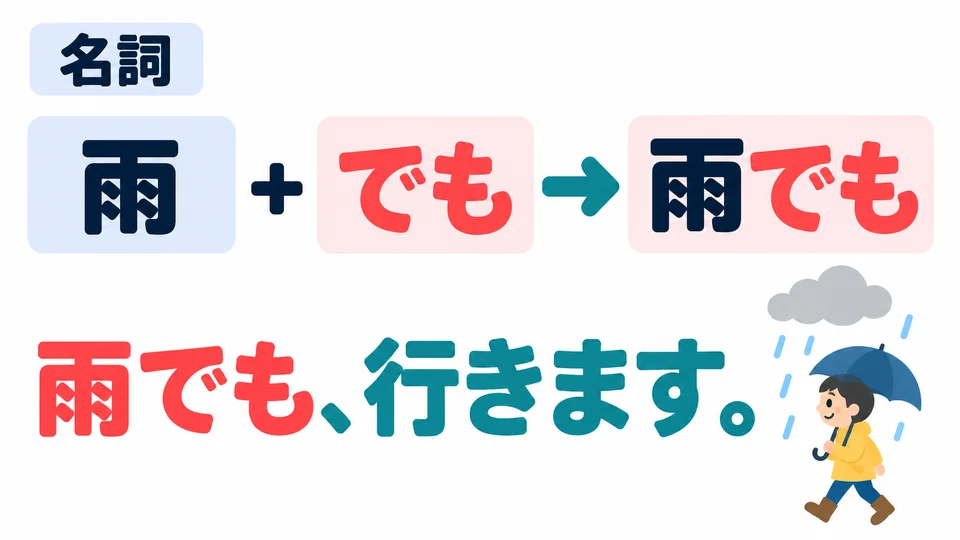
  6. The first part can describe something that has already happened or a hypothetical situation. Either way, the second part is unaffected.

The first part can describe something that has already happened or a hypothetical situation. Either way, the second part is unaffected.

  • In 雨でも, 雨 is a noun, so でも is added directly. There is no need to make a て-form here.

    In 雨でも, 雨 is a noun, so でも is added directly. There is no need to make a て-form here.

  • 高くても買います emphasizes that you will buy it even if it is expensive—not because it is expensive.

    高くても買います emphasizes that you will buy it even if it is expensive—not because it is expensive.

  • Example sentences

    • 雨あめameでdeもmo行きます。いきますikimasu

      I will go even if it rains.

    • これkoreはわwa高くたかくtakakuてteもmo買います。かいますkaimasu

      I will buy this even if it's expensive.

    In a conversation

    • A
      明日あすはわ忙しいですいそがしいですね。ね

      A: Tomorrow will be busy, won't it?

    • B
      忙しくいそがしくても、も集まりますあつまりますか。か

      B: Will we get together even if we're busy?

    • A
      はい、はいどうしても行きたいです。いきたいです

      A: Yes, I really want to go.

    • B
      わかりました。わかりました何時なんじに集合しゅうごうしますか。か

      B: I understand. What time shall we meet?

    Check yourself

    1. Level 1 · Recognise

      Which sentence is correct?

    2. Level 1 · Recognise

      Listen and choose the meaning

    3. Level 2 · Build

      Put the words in order

      Even if the schedule changes, I will contact you.

    4. Level 3 · Use

      What goes in the blank?

      暑 散歩に行きます。

      I'll go for a walk even if it's hot.

    More grammar in this theme

    • 〜そうですhearsay; I hear that
    • 〜て/〜でcause and result
    • 〜たらif; imagined condition
    • 〜と思いますI think; give an opinion
    • 〜ても/〜でもeven if; still
    • て形link actions; form requests
    • 〜ていますresulting state still holds
    Previous〜と思いますNextて形

    Keep practising

    Test your Japanese vocabulary12 adaptive questions, freeCheck your pronunciationRead aloud and get a scorePractise verb forms10-question conjugation quizSee the whole courseGrammar, vocabulary and quizzes by theme
    See the whole course
    Beginner 3
    TV and Magazines