JPEDLAB iconJPEDLAB
Save history

Create an account and play

Explore first, then save your progress whenever you are ready. No email address is required.

Start free
Read as articleCards
1/19

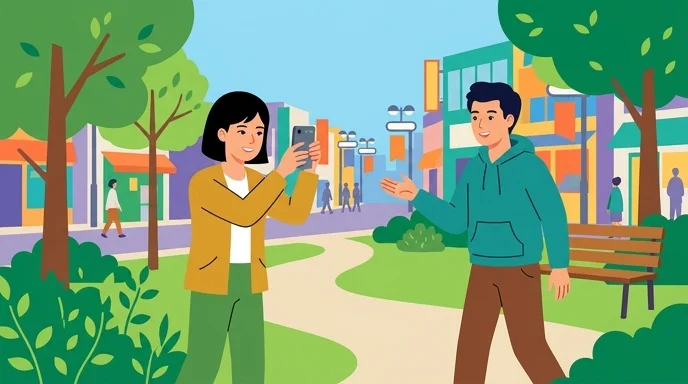
Find the actions in the picture. Adding います to the て form can describe what is happening now.

››

Lesson notes · ≈ JLPT N5 · Beginner 3

て形tekei

link actions; form requests

「て形」 links actions, and with います can describe an ongoing activity or a habit.

How it works
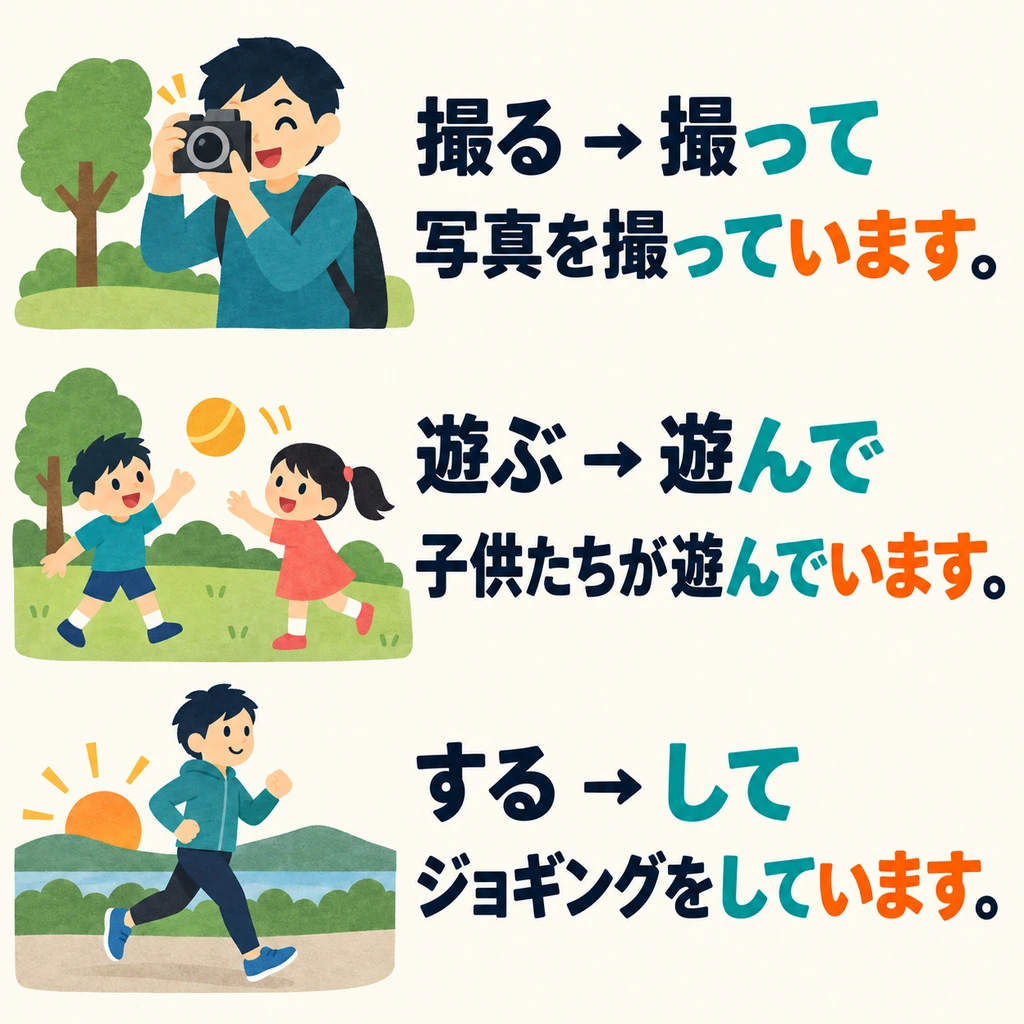
  1. Find the actions in the picture. Adding います to the て form can describe what is happening now.
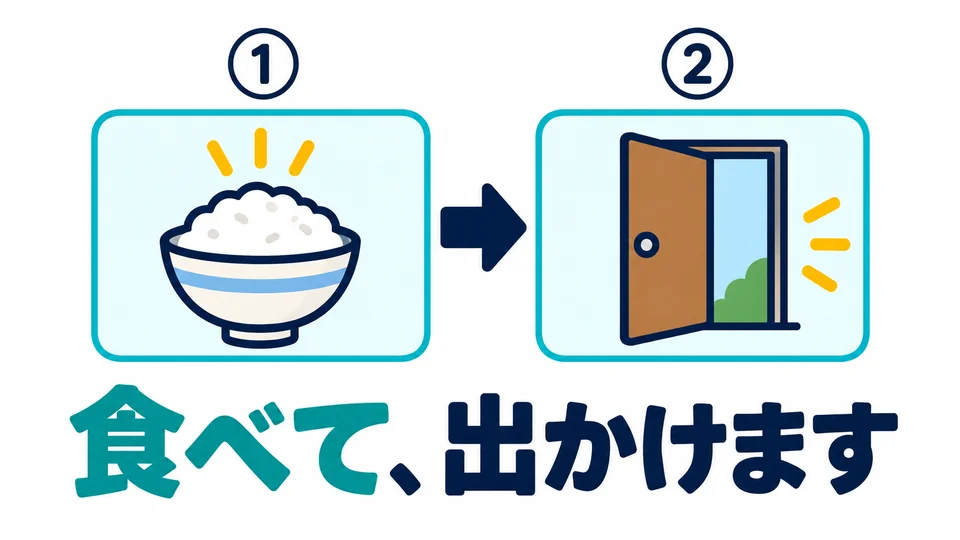
    Find the actions in the picture. Adding います to the て form can describe what is happening now.

  2. The て form also links actions in order, as in 「食べて、出かけます」. It does not express tense by itself.
    The て form also links actions in order, as in 「食べて、出かけます」. It does not express tense by itself.
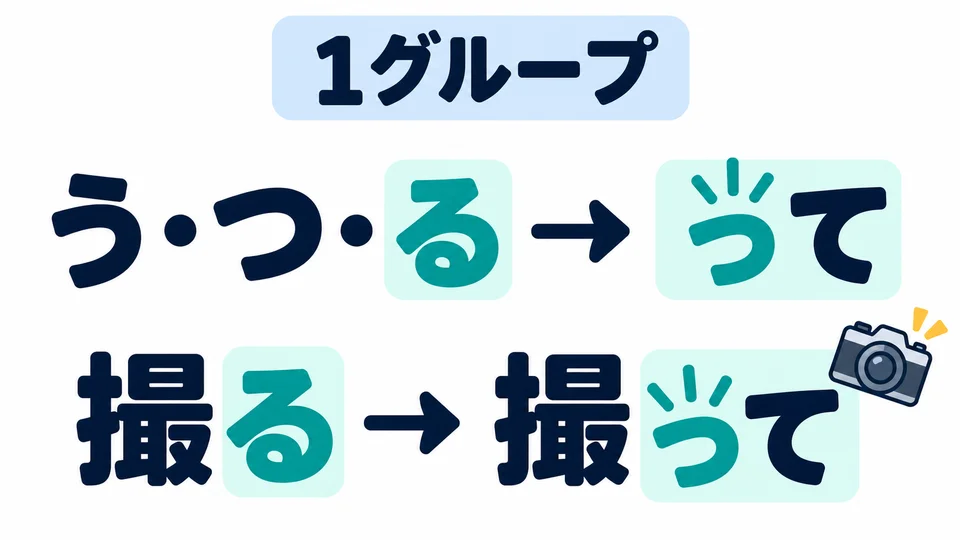
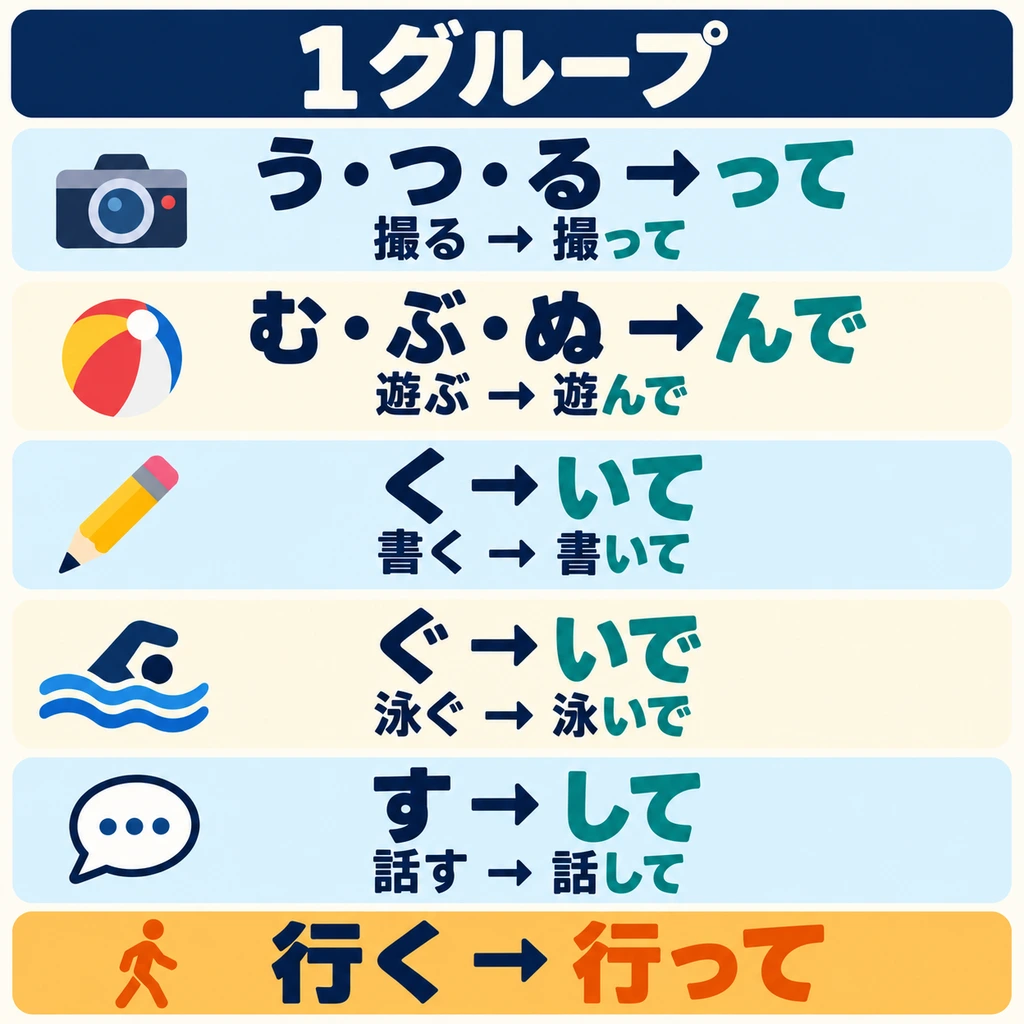
First check the verb group. For Group 1, use the dictionary-form ending to find the right change.

First check the verb group. For Group 1, use the dictionary-form ending to find the right change.

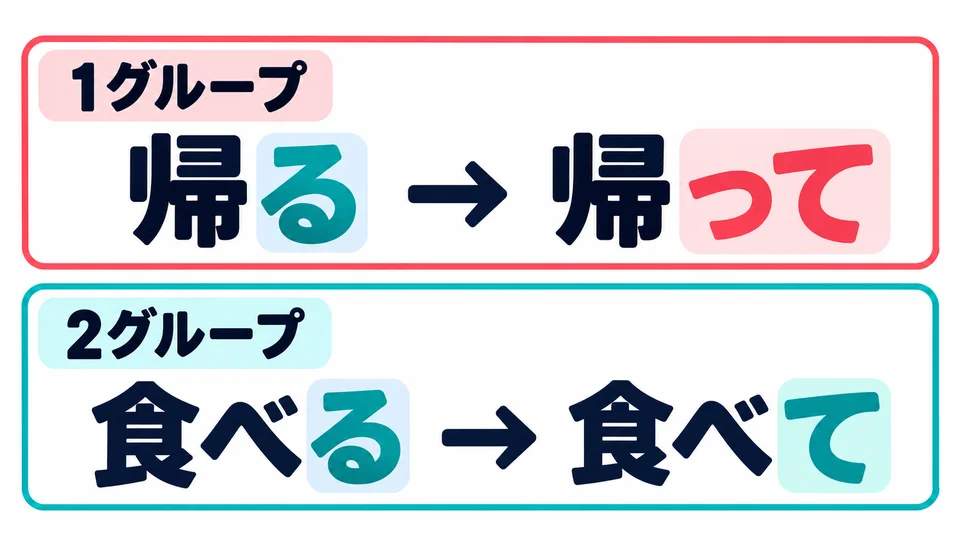
  • In Group 1, う, つ and る become って. For example, 「撮る→撮って」. Remember the small っ.

    In Group 1, う, つ and る become って. For example, 「撮る→撮って」. Remember the small っ.

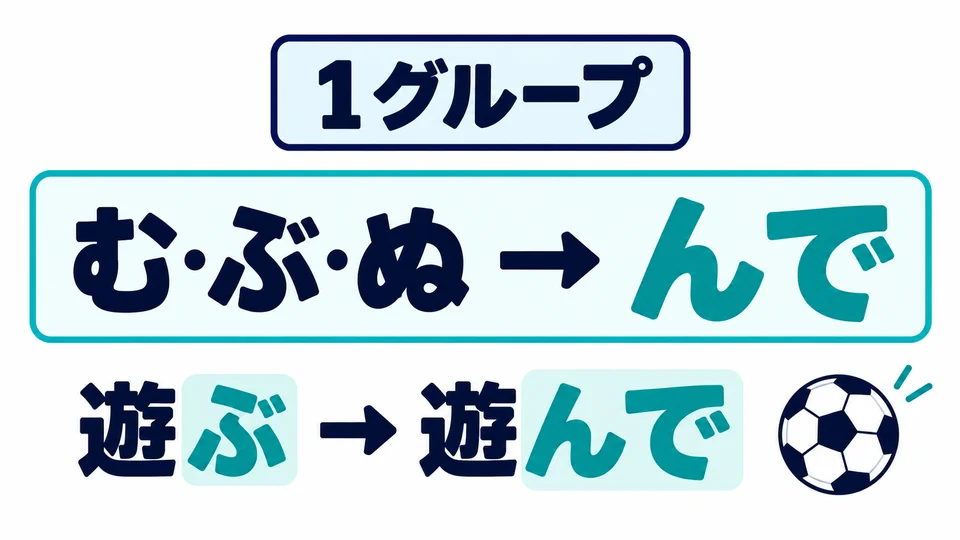
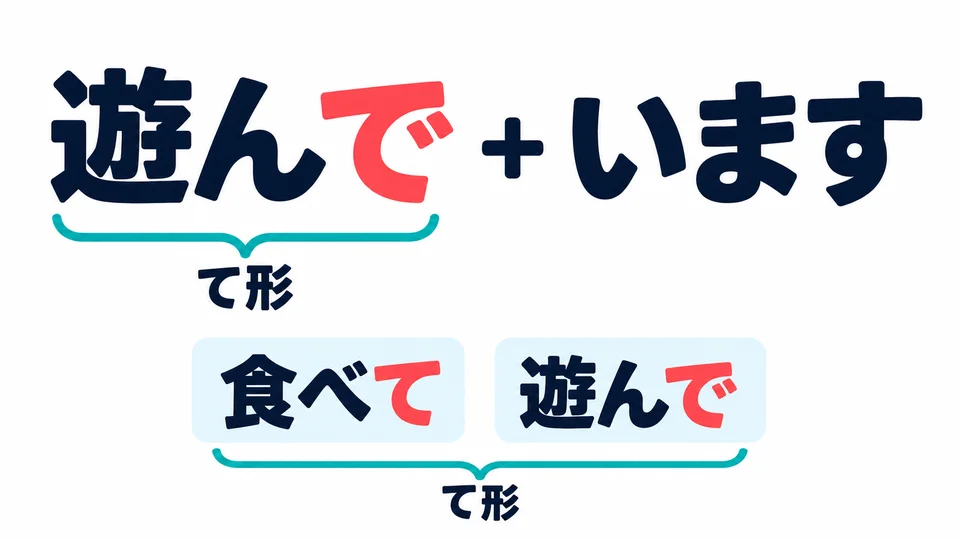
  • In Group 1, む, ぶ and ぬ become んで. For example, 「遊ぶ→遊んで」. Use で here.

    In Group 1, む, ぶ and ぬ become んで. For example, 「遊ぶ→遊んで」. Use で here.

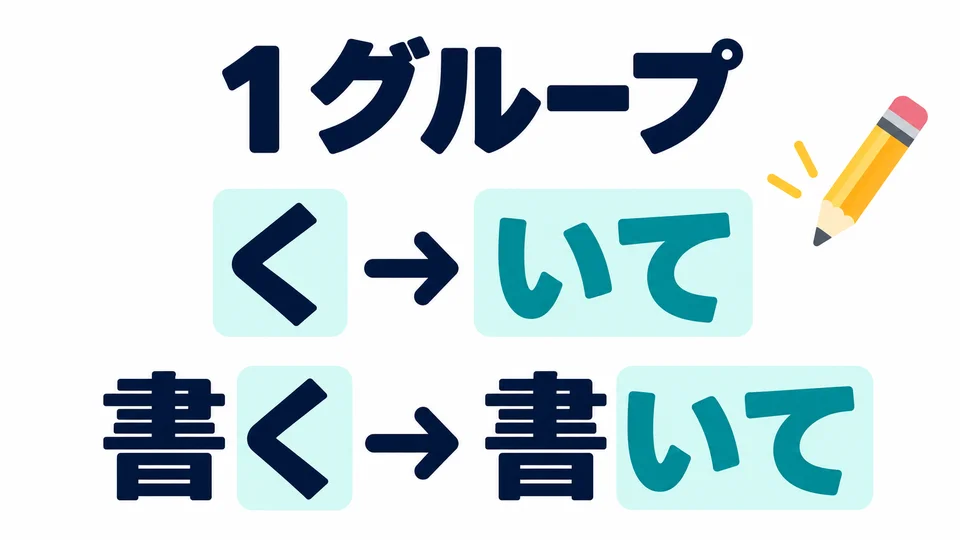
  • Group 1 verbs ending in く usually change to いて: 「書く→書いて」, not 「書くて」.

    Group 1 verbs ending in く usually change to いて: 「書く→書いて」, not 「書くて」.

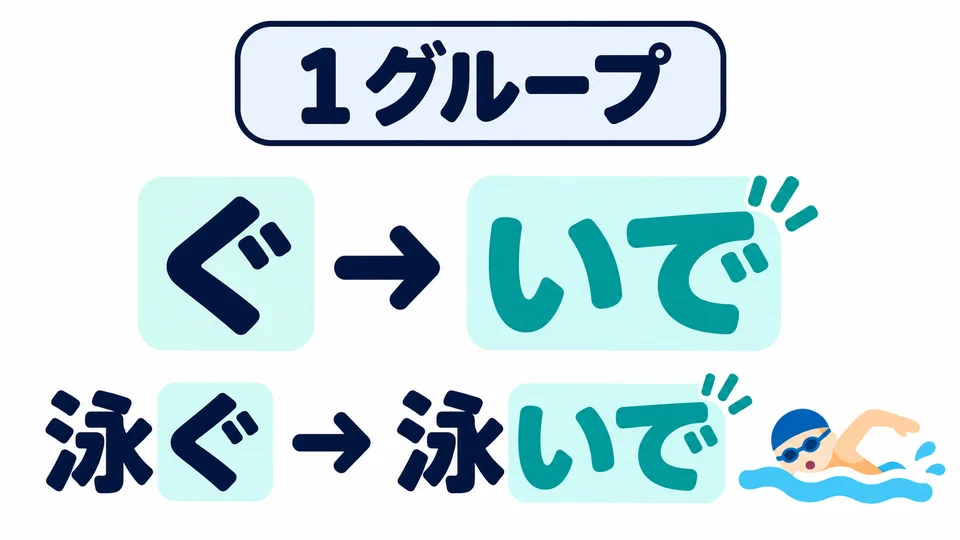
  • Group 1 verbs ending in ぐ change to いで: 「泳ぐ→泳いで」. Distinguish this from く → いて.

    Group 1 verbs ending in ぐ change to いで: 「泳ぐ→泳いで」. Distinguish this from く → いて.

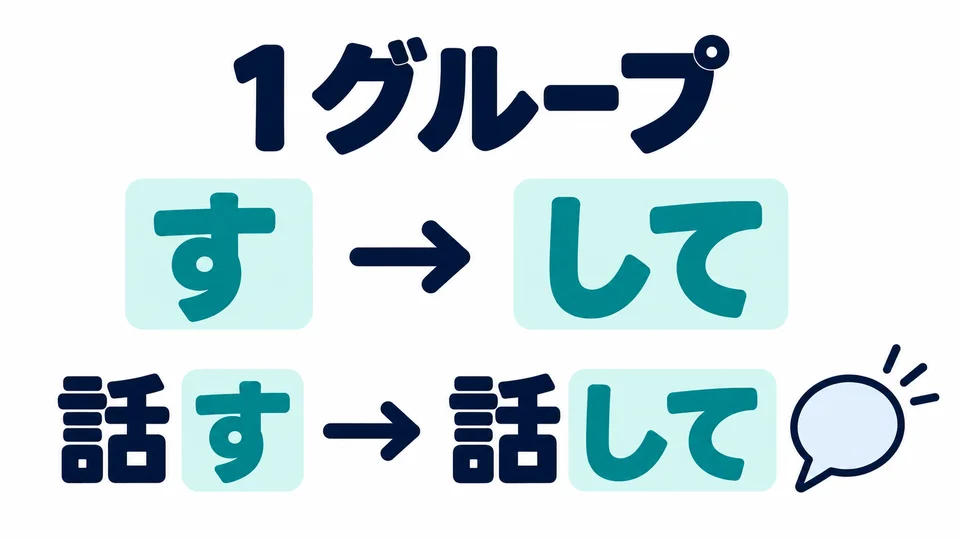
  • Group 1 verbs ending in す change to して: 「話す→話して」. Keep the stem before the ending.

    Group 1 verbs ending in す change to して: 「話す→話して」. Keep the stem before the ending.

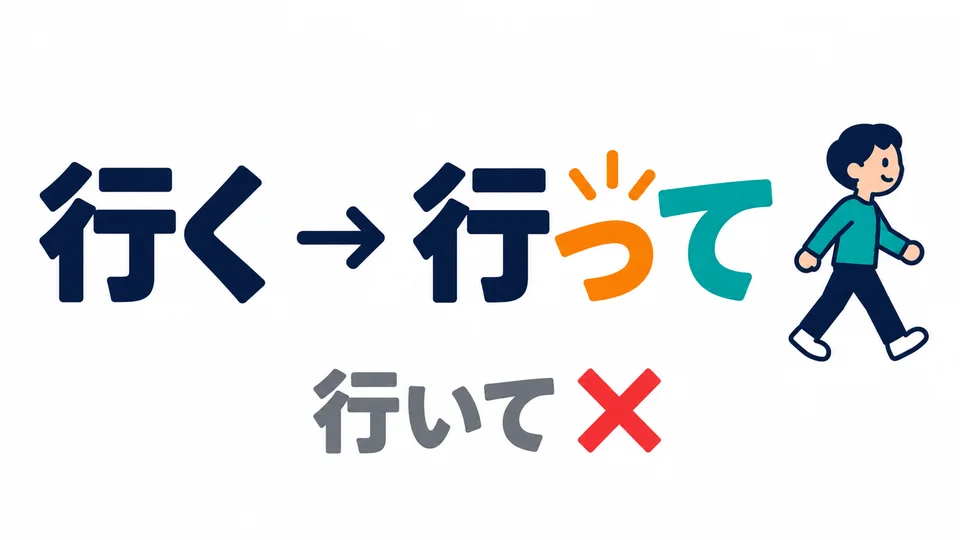
  • 「行く」 is an exception: 行って. Do not apply the usual く rule and say 行いて.

    「行く」 is an exception: 行って. Do not apply the usual く rule and say 行いて.

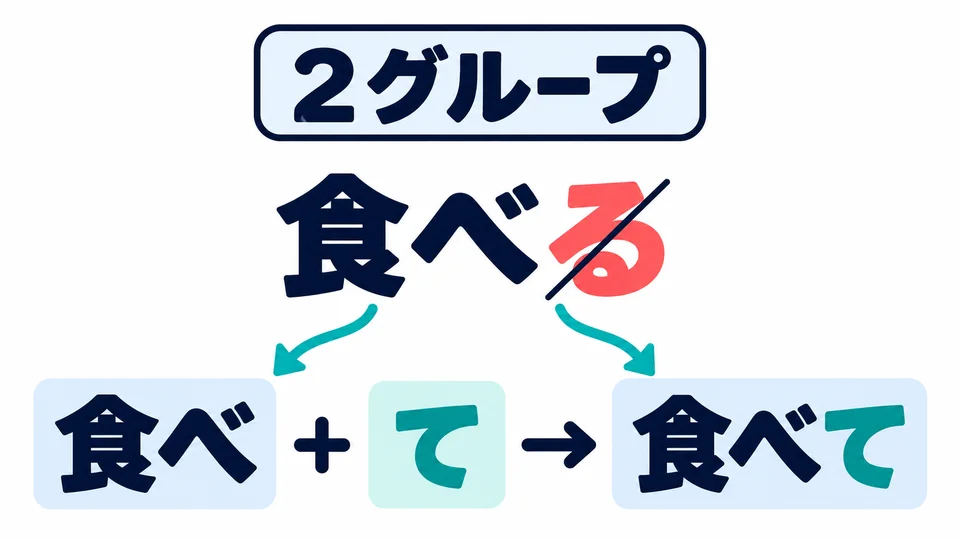
  • For Group 2, remove る and add て: 「食べる→食べて」. No small っ is needed.

    For Group 2, remove る and add て: 「食べる→食べて」. No small っ is needed.

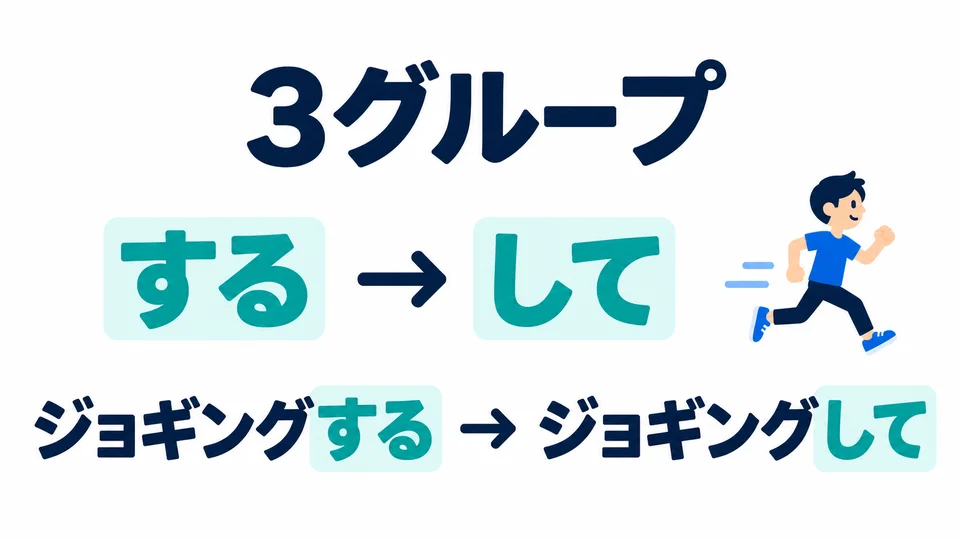
  • In Group 3, 「する→して」. The same applies to ジョギングする: ジョギングして.

    In Group 3, 「する→して」. The same applies to ジョギングする: ジョギングして.

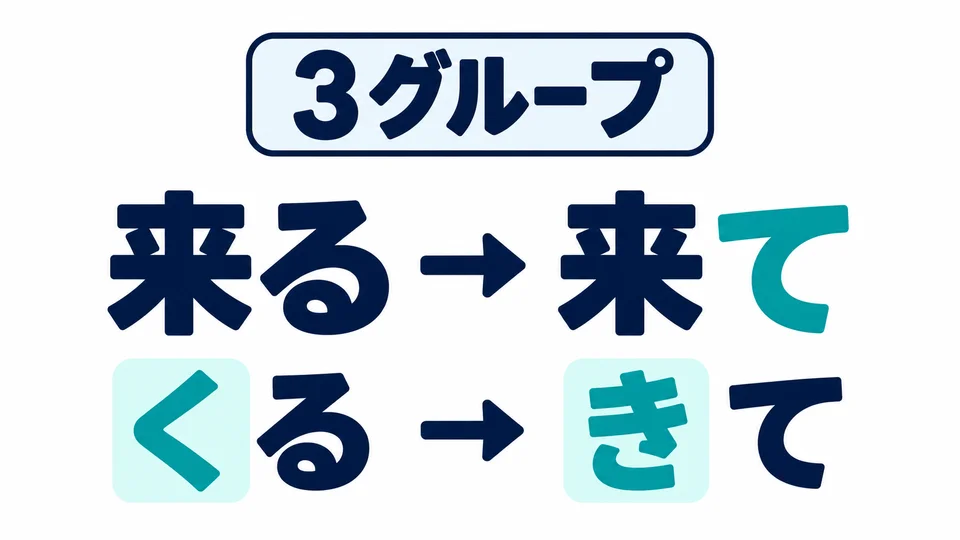
  • In Group 3, 「来る→来て」. The kanji stays the same, but the reading changes from くる to きて.

    In Group 3, 「来る→来て」. The kanji stays the same, but the reading changes from くる to きて.

  • An ending in る does not always mean Group 2. 「帰る」 belongs to Group 1, so it becomes 帰って.

    An ending in る does not always mean Group 2. 「帰る」 belongs to Group 1, so it becomes 帰って.

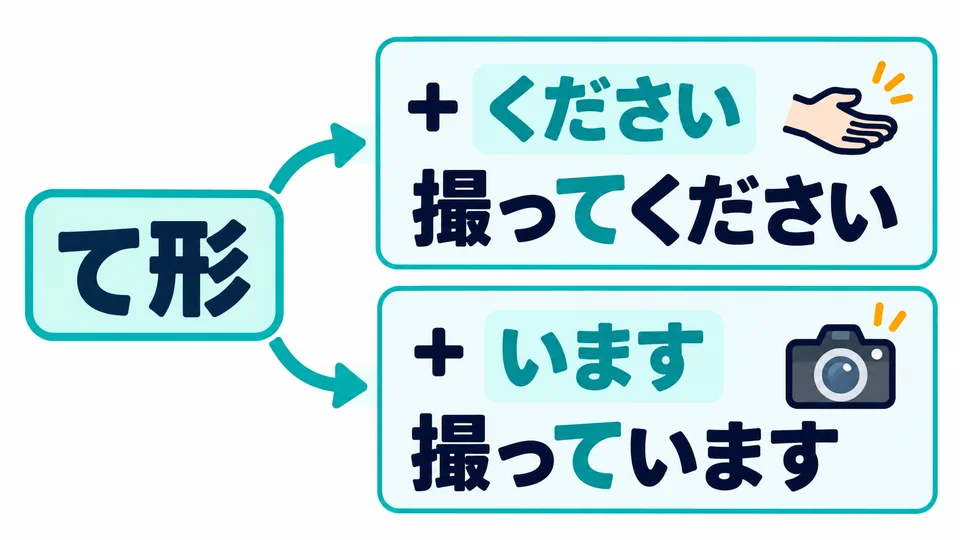
  • The て form connects expressions. Add ください for a request, or います to describe an activity.

    The て form connects expressions. Add ください for a request, or います to describe an activity.

  • The で in the example 「遊んでいます」 is also part of the て form. This form does not always end in て.

    The で in the example 「遊んでいます」 is also part of the て form. This form does not always end in て.

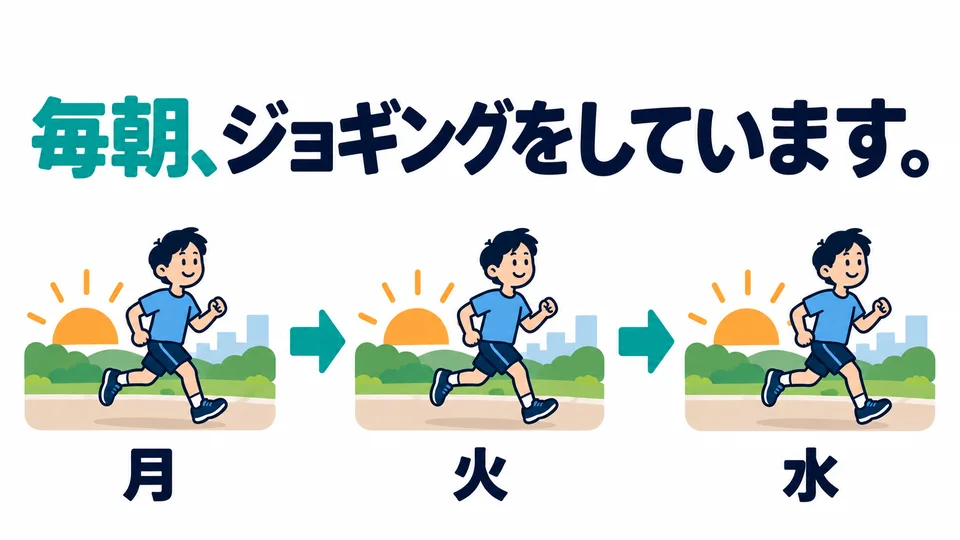
  • 「毎朝」 signals a regular habit. Here, しています does not necessarily mean the speaker is jogging right now.

    「毎朝」 signals a regular habit. Here, しています does not necessarily mean the speaker is jogging right now.

  • Example sentences

    • 公園こうえんkouenでde子供たちこどもたちkodomotachiがga遊んあそんasonでdeいます。いますimasu

      The children are playing in the park.

    • 私わたしwatashiはわwa毎朝まいあさmaiasaジョギングじょぎんぐjoginguをoしshiてteいます。いますimasu

      I jog every morning.

    In a conversation

    • A
      今、いま何なんをしていますか。か

      A: What are you doing now?

    • B
      公園こうえんで写真しゃしんを撮っとっています。います

      B: I'm taking photos at the park.

    • A
      へえ、へえどこで撮っとっているんですか。か

      A: Oh, where are you taking them?

    • B
      この近くちかくの商店街しょうてんがいで撮っとっています。います

      B: I'm taking them at the shopping street near here.

    Check yourself

    1. Level 1 · Recognise

      Which sentence is correct?

    2. Level 1 · Recognise

      Listen and choose the meaning

    3. Level 2 · Build

      Put the words in order

      Children are playing in the park.

    4. Level 3 · Use

      What goes in the blank?

      公園で子供たちが います。

      Children are playing in the park.

    More grammar in this theme

    • 〜そうですhearsay; I hear that
    • 〜て/〜でcause and result
    • 〜たらif; imagined condition
    • 〜と思いますI think; give an opinion
    • 〜ても/〜でもeven if; still
    • て形link actions; form requests
    • 〜ていますresulting state still holds
    Previous〜ても/〜でもNext〜ています

    Keep practising

    Test your Japanese vocabulary12 adaptive questions, freeCheck your pronunciationRead aloud and get a scorePractise verb forms10-question conjugation quizSee the whole courseGrammar, vocabulary and quizzes by theme
    See the whole course
    Beginner 3
    TV and Magazines