JPEDLAB iconJPEDLAB
Save history

Create an account and play

Explore first, then save your progress whenever you are ready. No email address is required.

Start free
Read as articleCards
See the whole course›Beginner 2›Introducing Your Life

Japanese grammar · ≈ JLPT N5 · Beginner 2

〜のとき、〜ました~no toki, ~mashita

something done at that time

Add 「〜のとき」 after a noun to name a period, then use 「〜ました」 to say what you did during it.

Start the interactive lessonIllustrated cards, audio and speaking practice

How it works

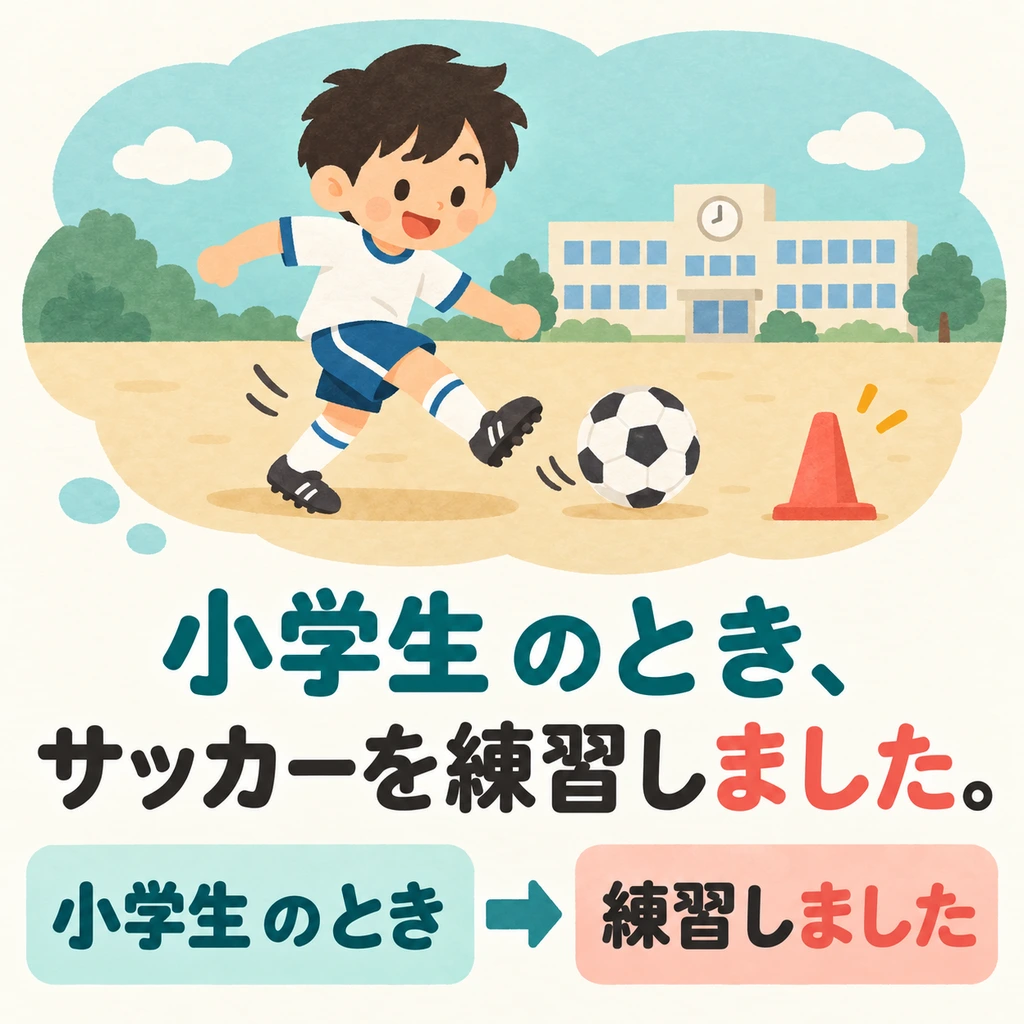
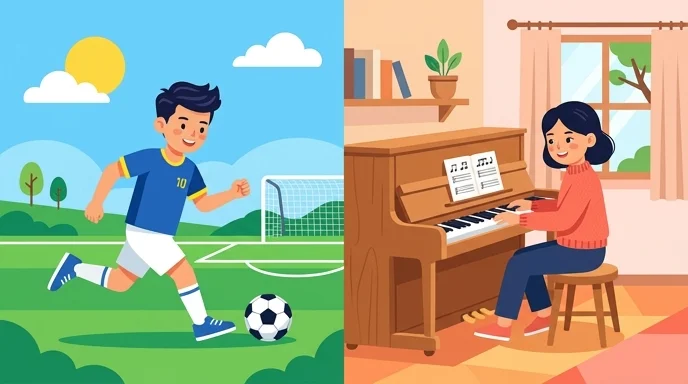
  1. When did he practice soccer? 「とき」 takes us back to his elementary school days.
    When did he practice soccer? 「とき」 takes us back to his elementary school days.

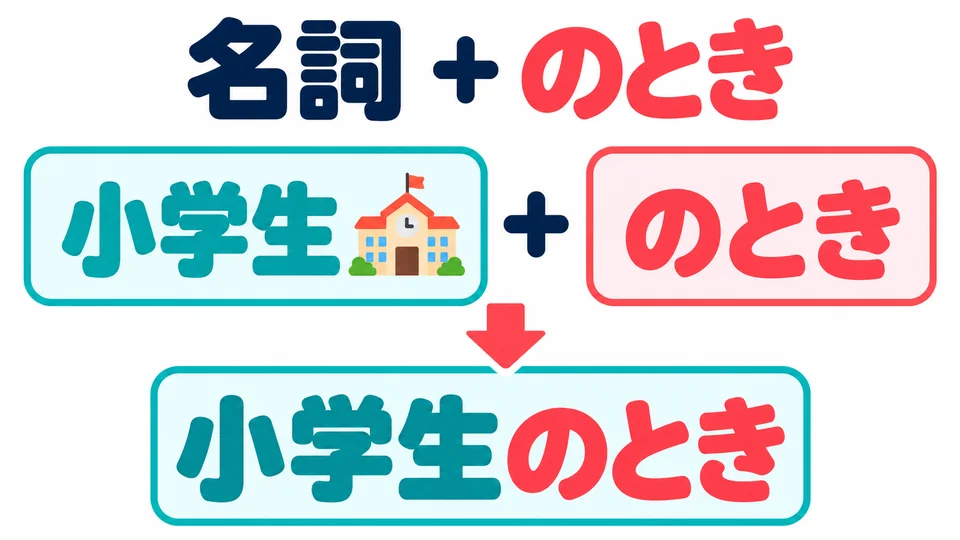
  2. Add 「のとき」 after a noun: 「小学生のとき」 means “when I was in elementary school.”
    Add 「のとき」 after a noun: 「小学生のとき」 means “when I was in elementary school.”

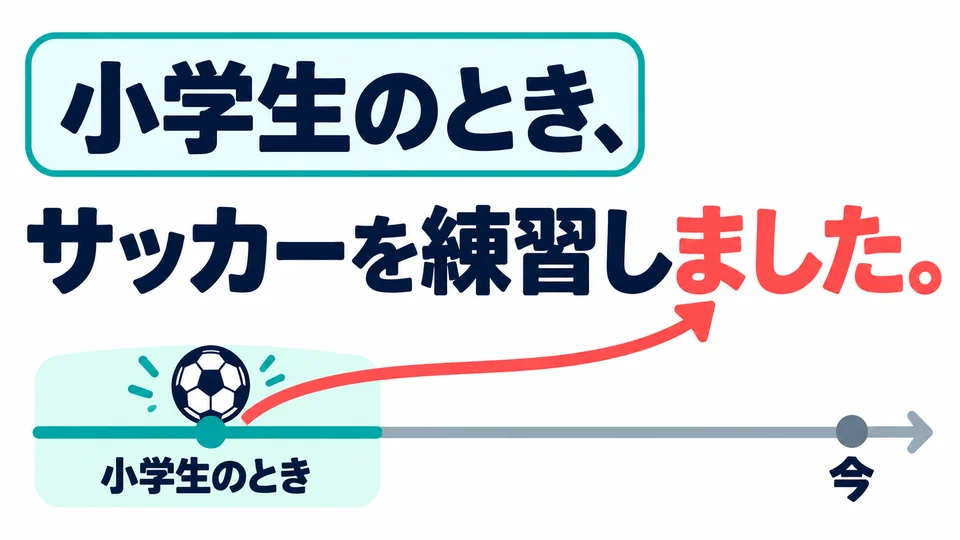
  3. The second half uses 「Vました」 to describe something done during that time.
    The second half uses 「Vました」 to describe something done during that time.

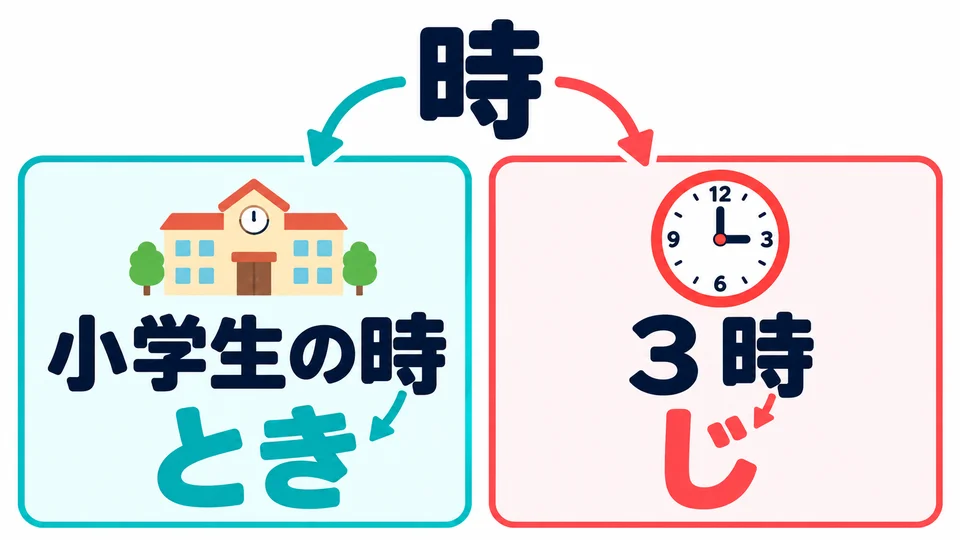
  4. In these examples, 「時」 is read 「とき」, not 「じ」 as when telling the time.
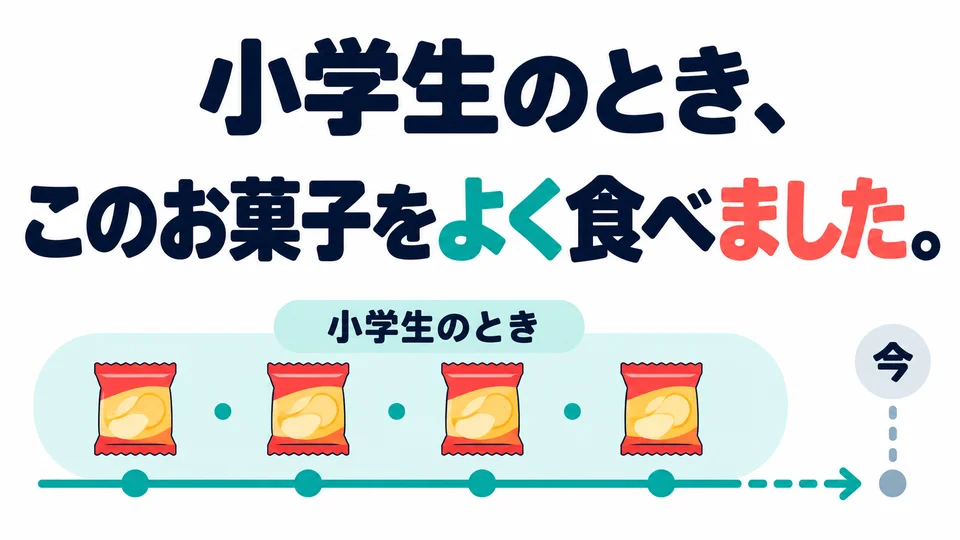
    In these examples, 「時」 is read 「とき」, not 「じ」 as when telling the time.

  5. In the snack example, 「よく」 means “often.” The past tense can also describe things done repeatedly in the past.
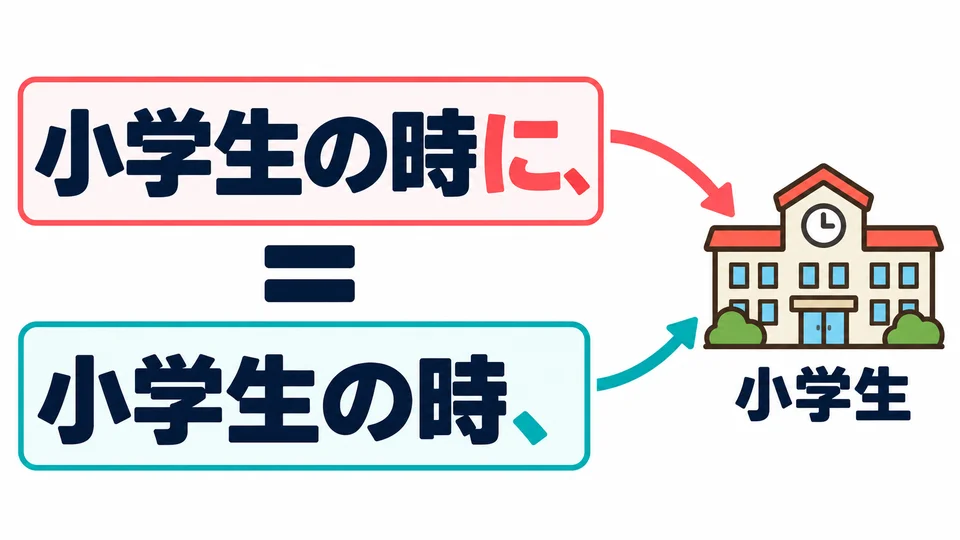
    In the snack example, 「よく」 means “often.” The past tense can also describe things done repeatedly in the past.

  6. In the question, 「時に」 also refers to elementary school days. Leaving out 「に」 here keeps that meaning.

    In the question, 「時に」 also refers to elementary school days. Leaving out 「に」 here keeps that meaning.

Example sentences

  • 小学生しょうがくせいshougakuseiのno時、ときtokiこのkonoお菓子おかしokashiをoよくyoku食べました。たべましたtabemashita

    When I was in elementary school, I often ate this snack.

In a conversation
  • A
    小学生しょうがくせいの時、とき何なにをしていましたか。か

    A: What were you doing when you were in elementary school?

  • B
    サッカーさっかーを練習れんしゅうし

Check yourself

  1. Level 1 · Recognise

    Which sentence is correct?

  2. Level 1 · Recognise

    Listen and choose the meaning

  3. Level 2 · Build

    Put the words in order

    When I was in elementary school, I practiced soccer.

  4. Level 3 · Use

    What goes in the blank?

    子ども 母にお菓子をくれました。

    When I was a child, (someone) gave my mother sweets.

More grammar in this theme

  • 〜のとき、〜ましたsomething done at that time

Keep practising

Test your Japanese vocabulary12 adaptive questions, freeCheck your pronunciationRead aloud and get a scorePractise verb forms10-question conjugation quizSee the whole courseGrammar, vocabulary and quizzes by theme
あなたanata
はわwa
小学生しょうがくせいshougakusei
のno
時ときtoki
に、にni
どんなdonna
おかしokashi
をo
食べましたたべましたtabemashita
か。かka

What kind of snacks did you eat when you were in elementary school?

  • 1. いちichi小学生しょうがくせいshougakuseiのno時、ときtokiサッカーさっかーsakkaaをo練習れんしゅうrenshuuしました。しましたshimashita

    1. When I was in elementary school, I practiced soccer.

  • て
    いました。いました
    とても
    楽しかったです。たのしかったです

    B: I was practicing soccer. It was a lot of fun.

  • A
    そうですか。か私わたしはわピアノぴあのを習っならっていました。いました

    A: I see. I was learning piano.

  • 〜は〜ですが、〜は〜ですcontrasting two topics
    〜ていますrepeated everyday habit
    〜たり、〜たりしますlisting example activities
    普通形casual plain speech forms
    〜てcasual request or invitation
    Previous〜たり、〜たりします
    Next普通形