〜は〜ですが、〜は〜です~wa ~desu ga, ~wa ~desu
Wa desu ga, wa desu (〜は〜ですが、〜は〜です) means “contrasting two topics”.
School is fun, but cram school is boring.
Use 「〜は〜ですが、〜は〜です」 to contrast two related topics or to pair a positive point with a concern.
In the course
How it works
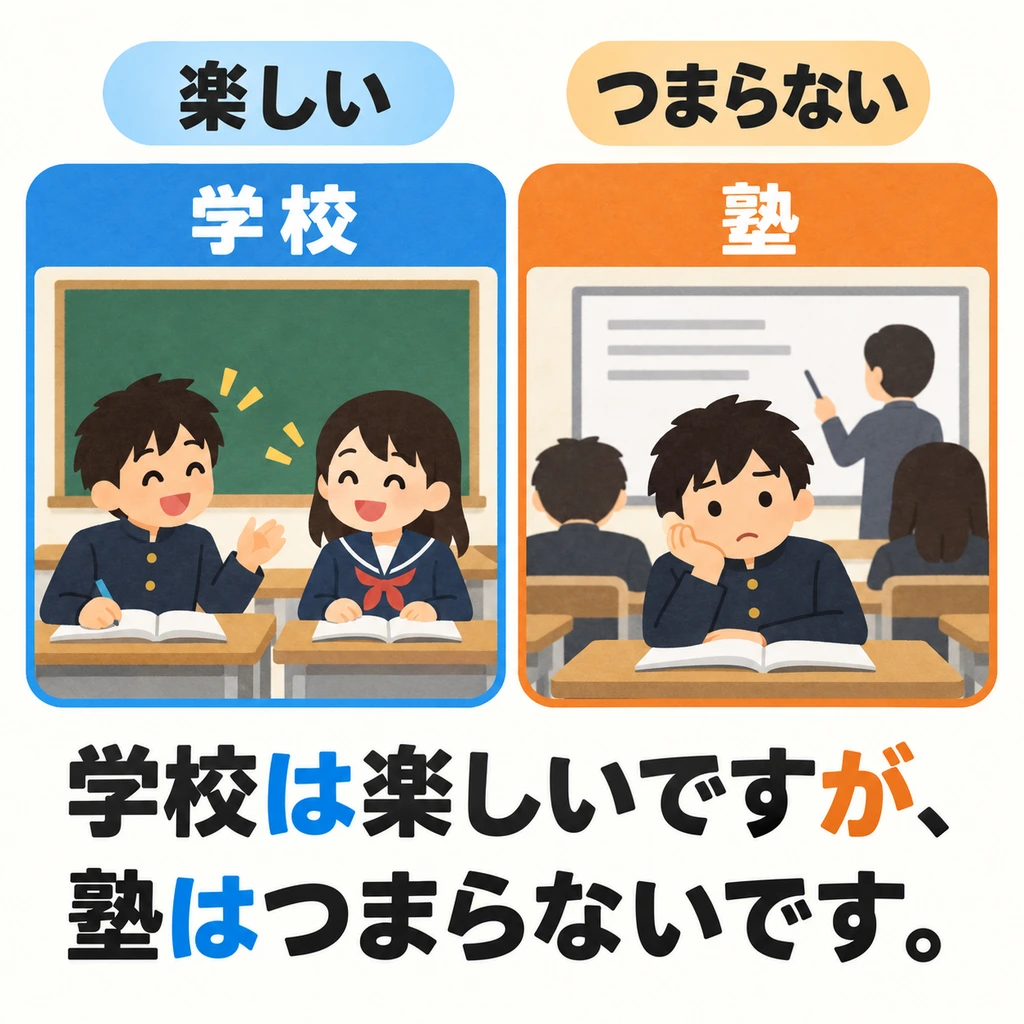
Both are about studying: school is fun, and cram school is boring. Use this pattern to highlight the difference.
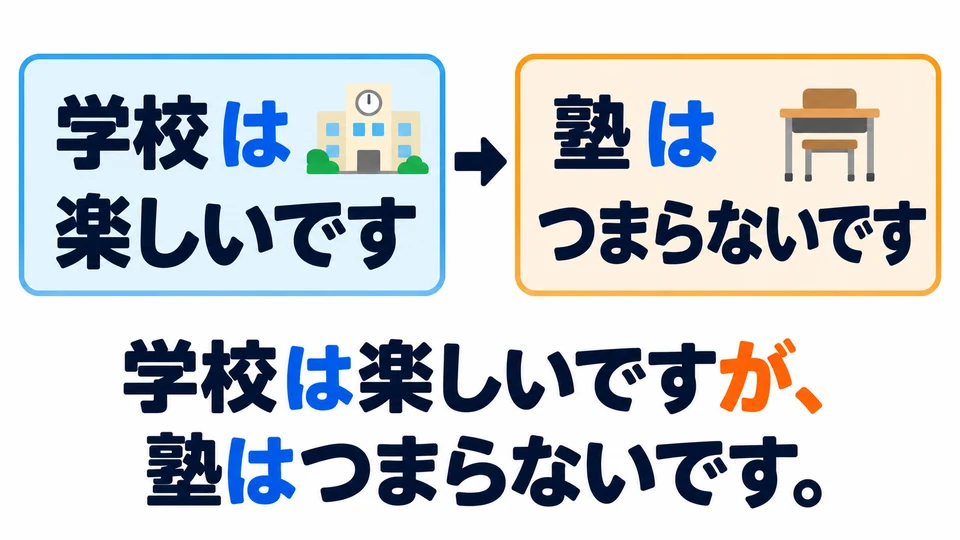
The two 「は」 mark the things being contrasted: first school, then the topic shifts to cram school.
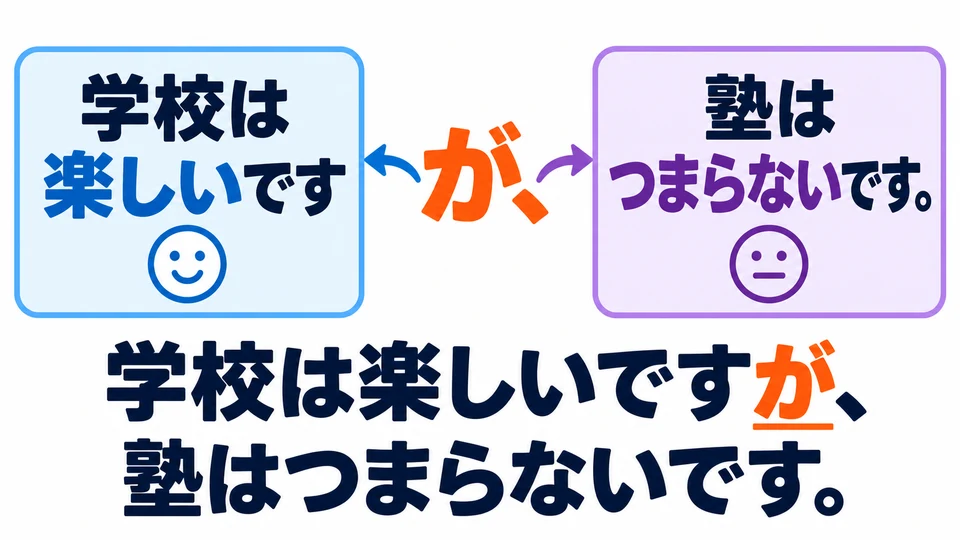
「が」 comes at the end of the first clause and connects two different situations. Its meaning is close to “but.”
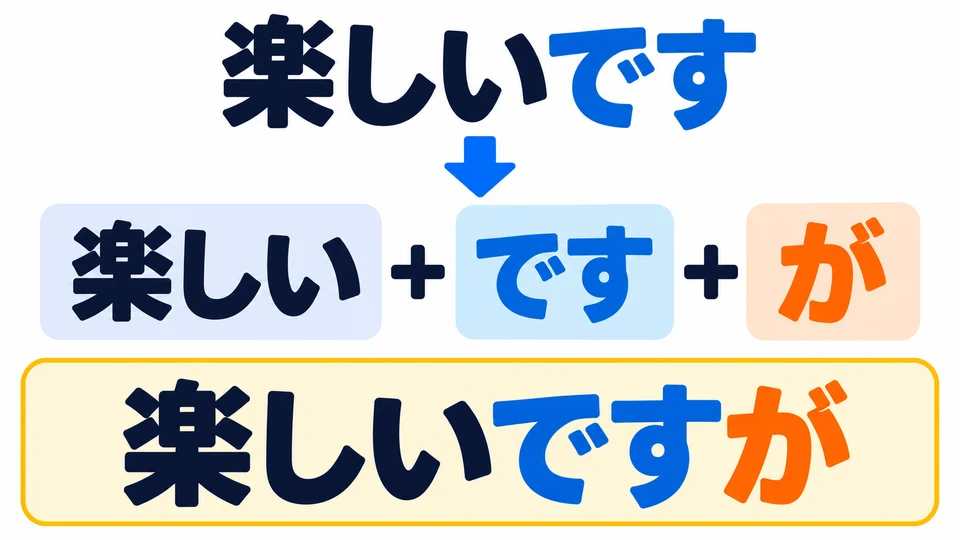
Keep 「です」 in the first clause, then add 「が」: say 「楽しいですが」, as in the picture.
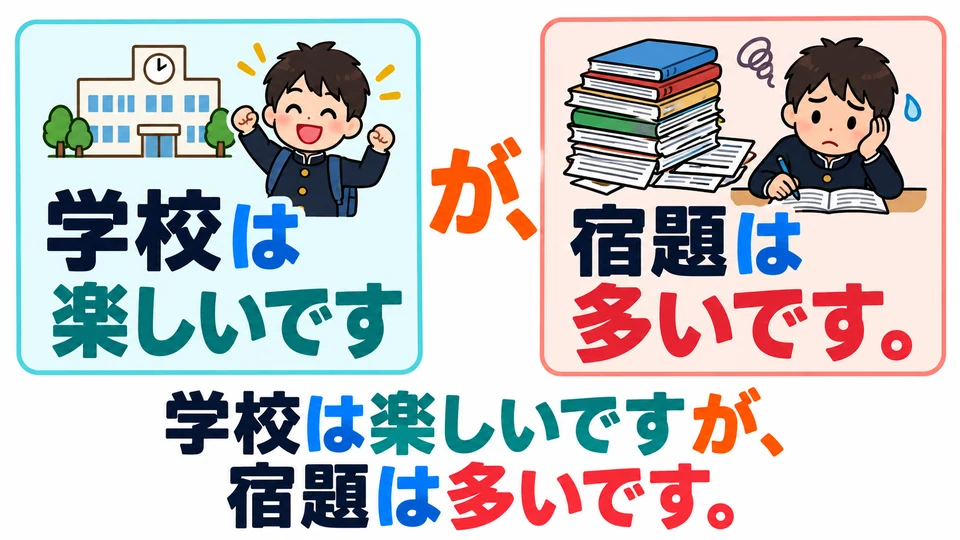
You can also contrast different, related aspects: school is fun, but there is a lot of homework. Mention a good point, then a concern.
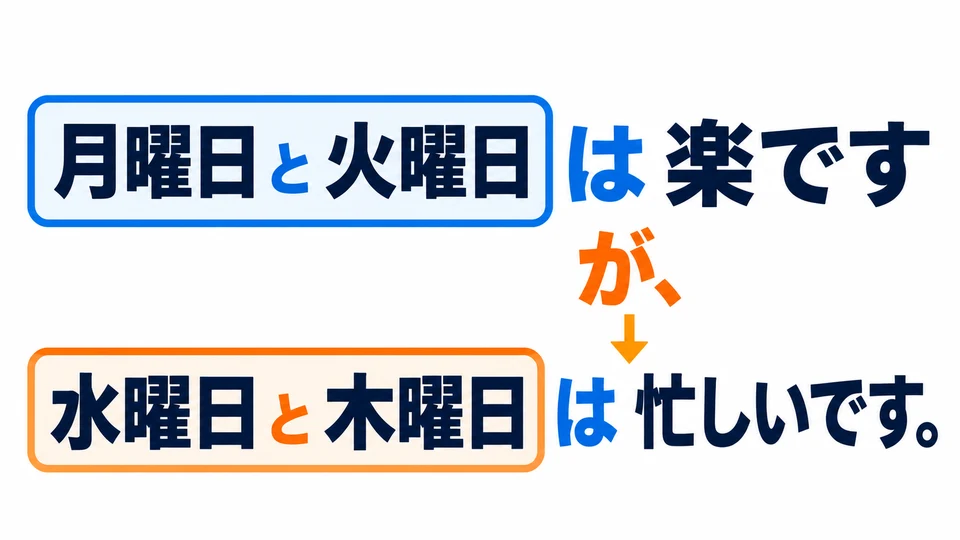
In the weekday example, 「月曜日と火曜日」 form one group. Put 「は」 after the whole group, then contrast it with another group.
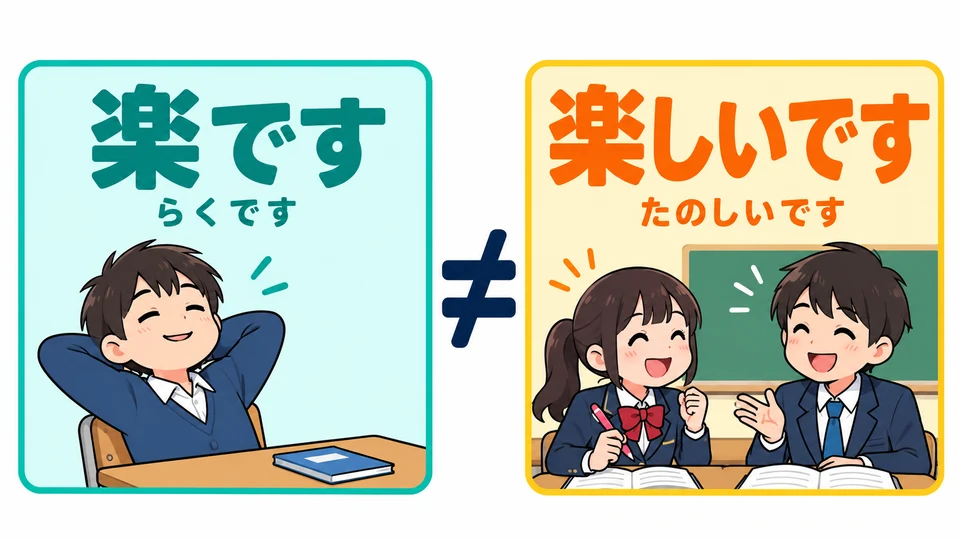
Here, 「楽です」 means easy or requiring little effort. In the previous sentence, 「楽しいです」 means fun or enjoyable. Their meanings differ.
Example sentences
- 学校gakkouはwa楽しいですtanoshiidesuが、ga塾jukuはwaつまらないです。tsumaranaidesu
School is fun, but cram school is boring.
- 月曜getsuyou
In a conversation

- A学校はどうですか。
A: How is school?
- B学校は楽しいですが、宿題は多いです。
B: School is fun, but there's a lot of homework.
Check yourself
Level 1 · Recognise
Which sentence is correct?
Level 1 · Recognise
Listen and choose the meaning
Level 2 · Build
Put the words in order
On weekdays I wake up at 6, but on weekends I sleep until 9.
Level 3 · Use
What goes in the blank?
学校は 宿題は多いです。
School is fun, but there is a lot of homework.
More grammar in this theme
- 〜は〜ですが、〜は〜ですcontrasting two topics