〜ています~te imasu
Te imasu (〜ています) means “repeated everyday habit”.
I go jogging every morning.
Use 「〜ています」 with time words such as 毎朝 or 毎週末 to describe a regular habit, even when you are not doing it now.
In the course
How it works
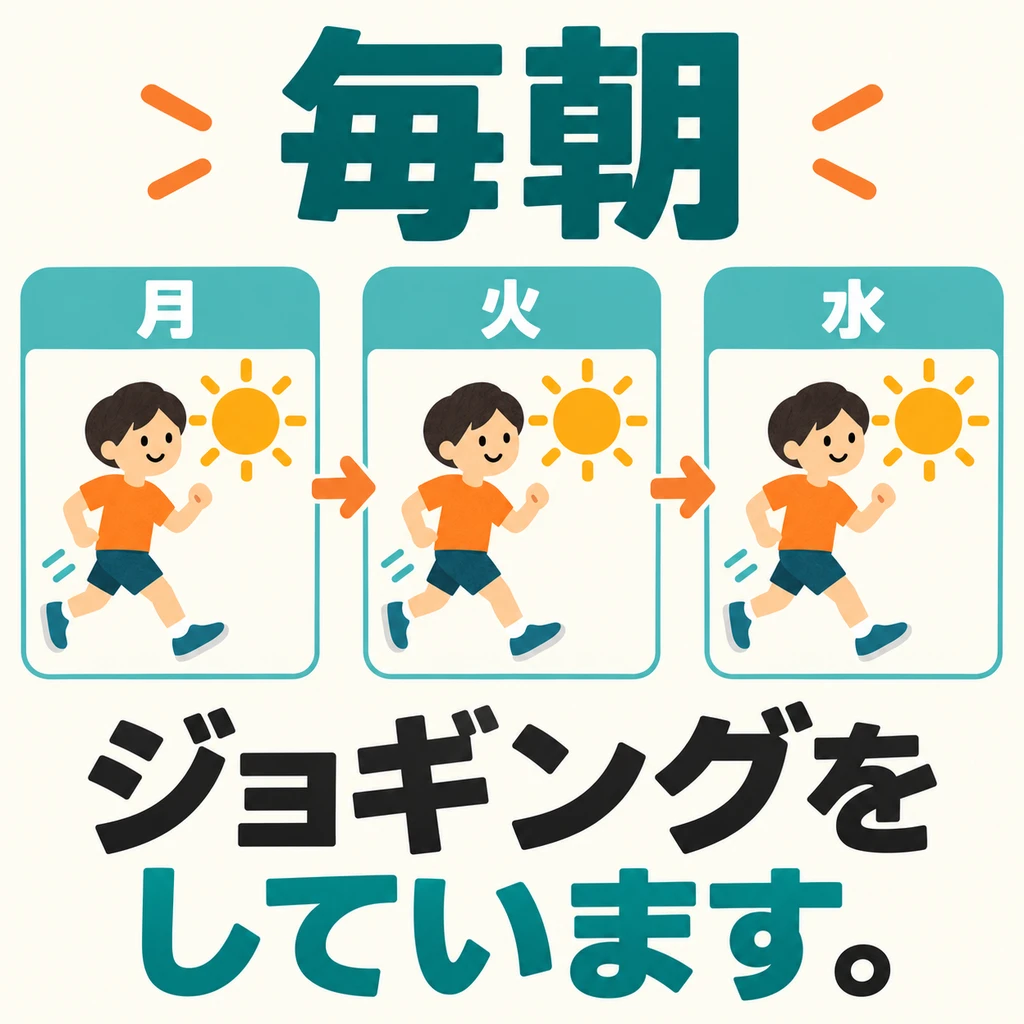
Look at the three mornings: the same action repeats. 「ています」 can also describe everyday habits.
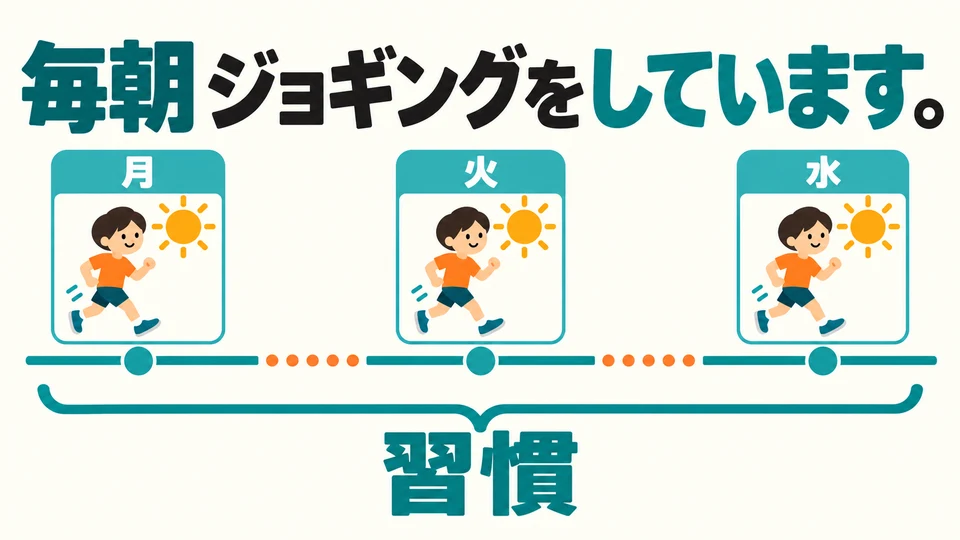
It is the habit that continues. There can be breaks between actions; you do not do it nonstop.
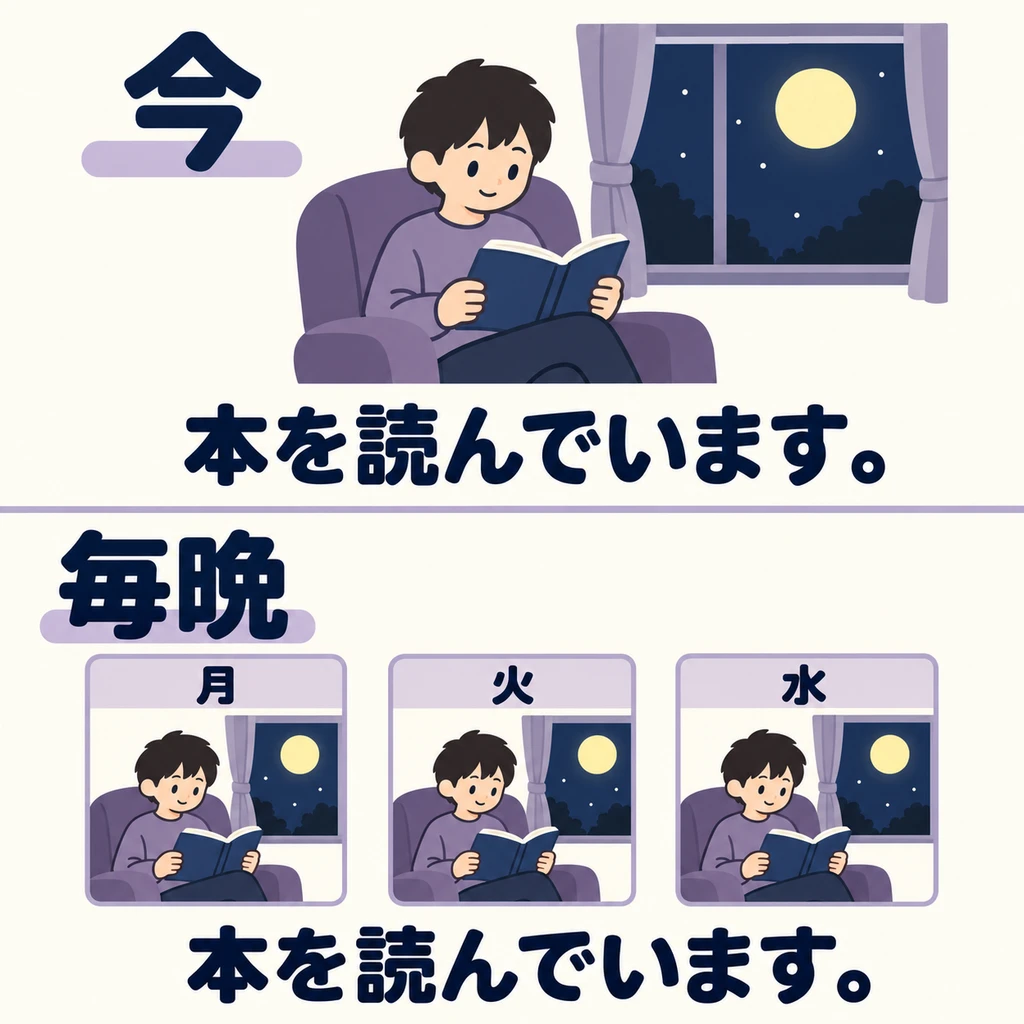
Both say 「本を読んでいます」. Look at 「今」 and 「毎晩」 to distinguish an action happening now from a regular habit.
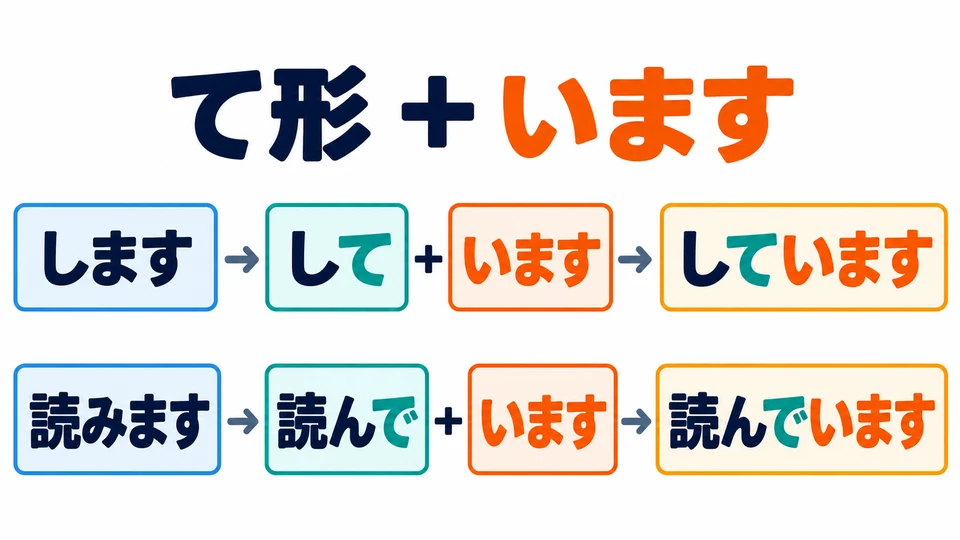
The form is still verb て-form + います. 「します」 becomes 「して」, and 「読みます」 becomes 「読んで」.
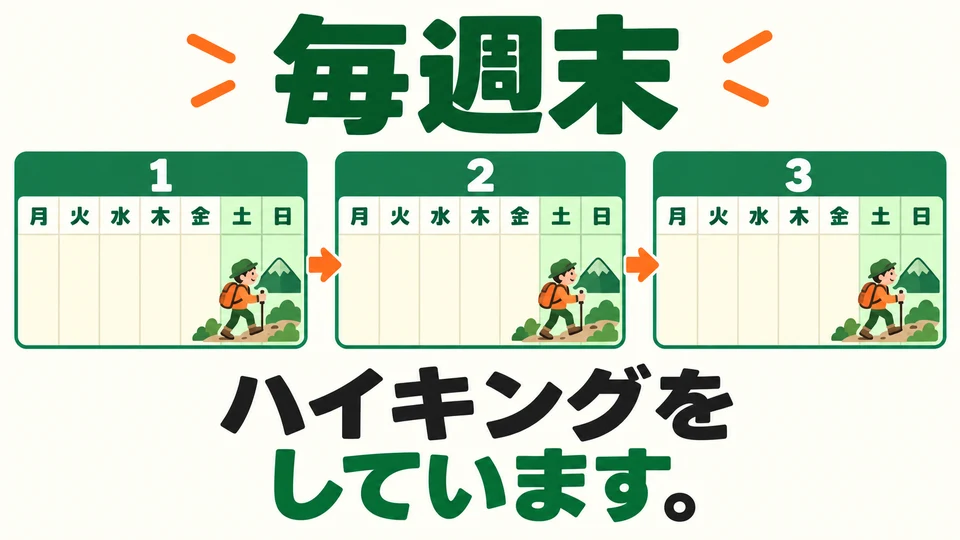
In the example, 「毎週末」 means it repeats every weekend. A habit need not be daily; it can be weekly too.
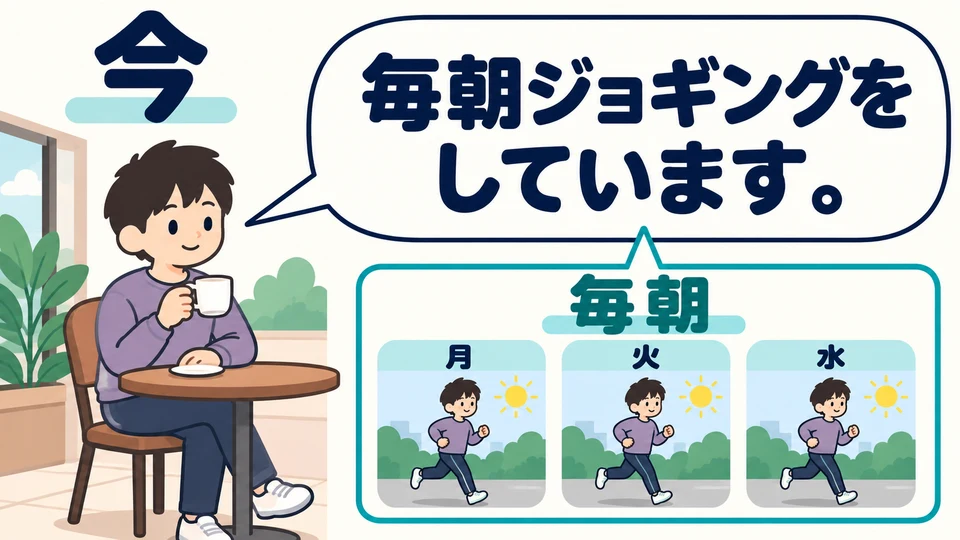
You can say 「毎朝ジョギングをしています」 to describe this habit even if you are not jogging right now.
Example sentences
- 毎朝maiasaジョギングjoginguをoしshiてteいます。imasu
I go jogging every morning.
- 毎週末maishuumatsuハイキングhaikinguをo
In a conversation

- A毎日何をしていますか。
A: What do you do every day?
- B朝 6 時に起きて、ジョギング
Check yourself
Level 1 · Recognise
Which sentence is correct?
Level 1 · Recognise
Listen and choose the meaning
Level 2 · Build
Put the words in order
I shop at the supermarket every day.
Level 3 · Use
What goes in the blank?
週末にゴミを 。
I take out the trash on weekends.
More grammar in this theme
- 〜ていますrepeated everyday habit