
Japanese grammar · ≈ JLPT N5 · Beginner 2
〜のとき、〜ました~no toki, ~mashita
something done at that time
Add 「〜のとき」 after a noun to name a period, then use 「〜ました」 to say what you did during it.
How it works
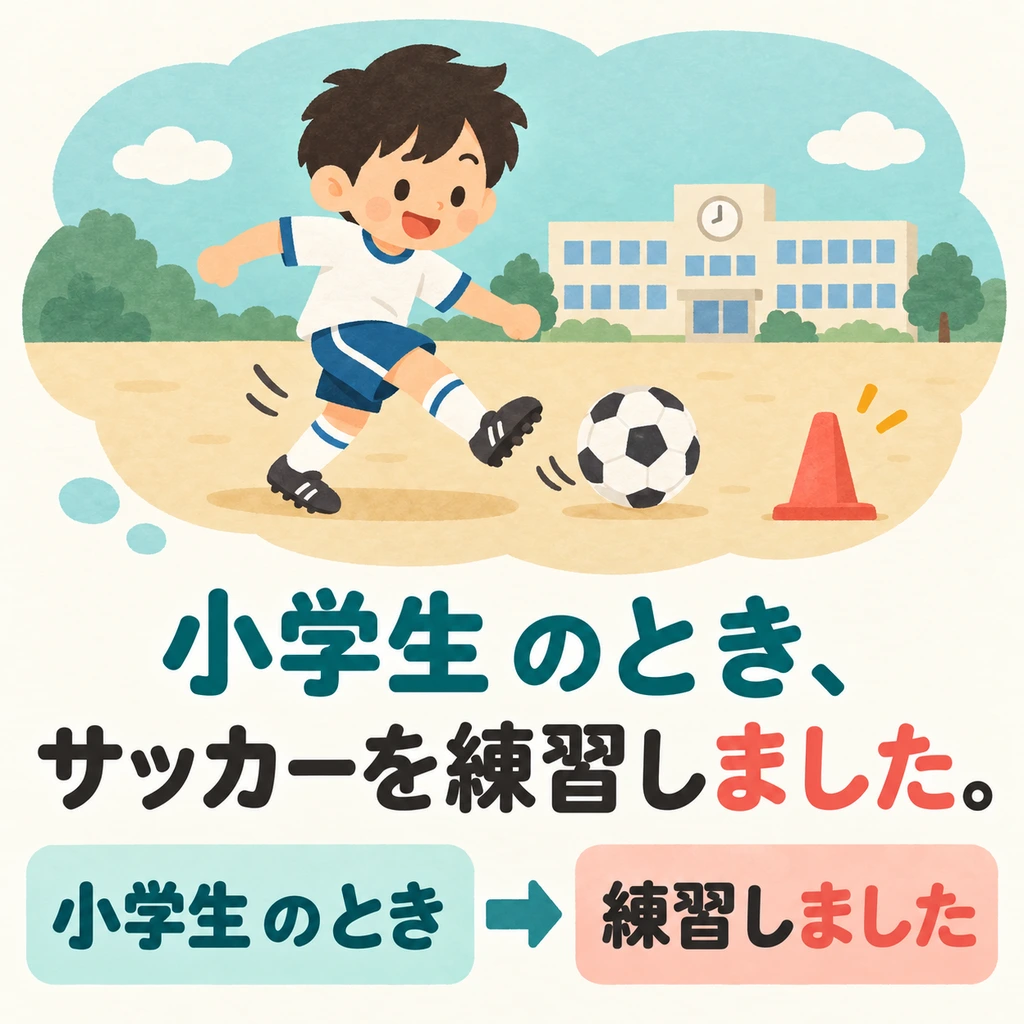
When did he practice soccer? 「とき」 takes us back to his elementary school days.
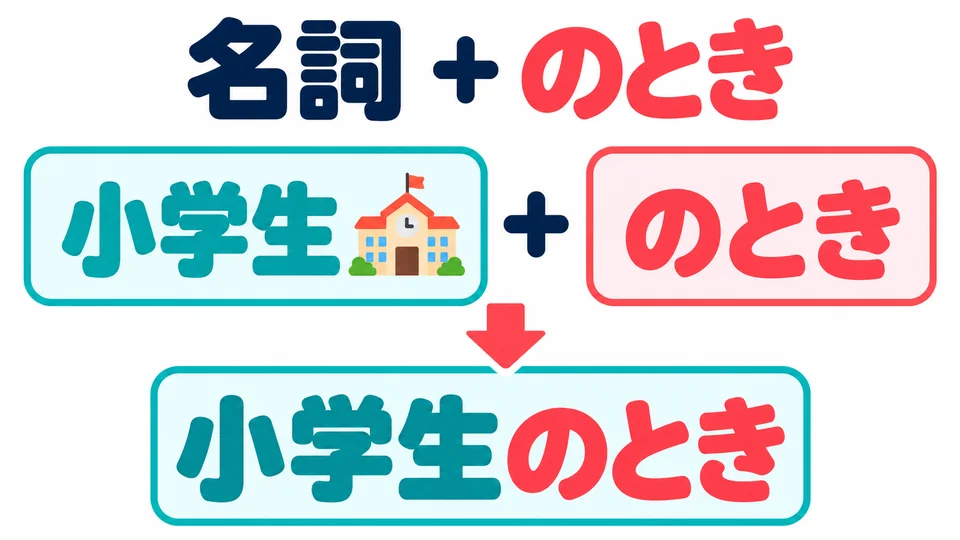
Add 「のとき」 after a noun: 「小学生のとき」 means “when I was in elementary school.”
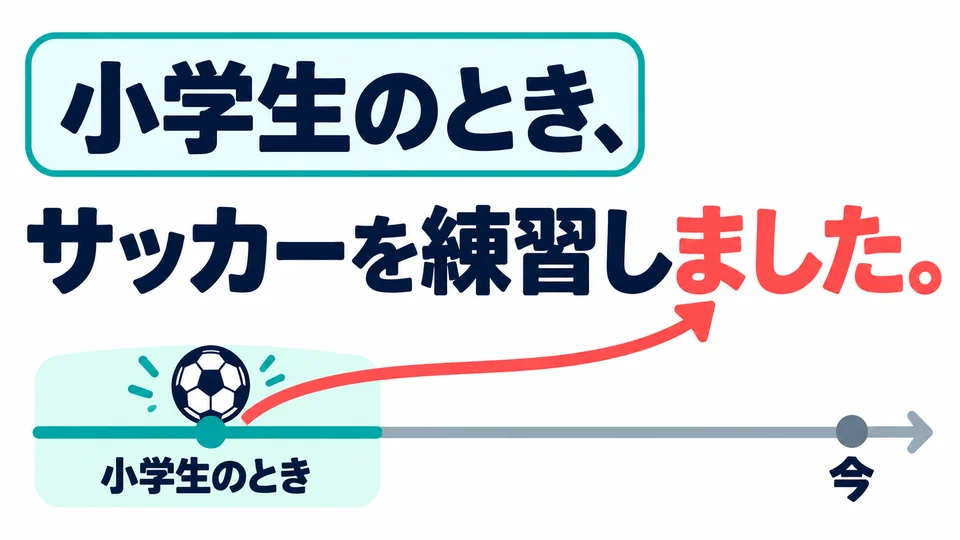
The second half uses 「Vました」 to describe something done during that time.
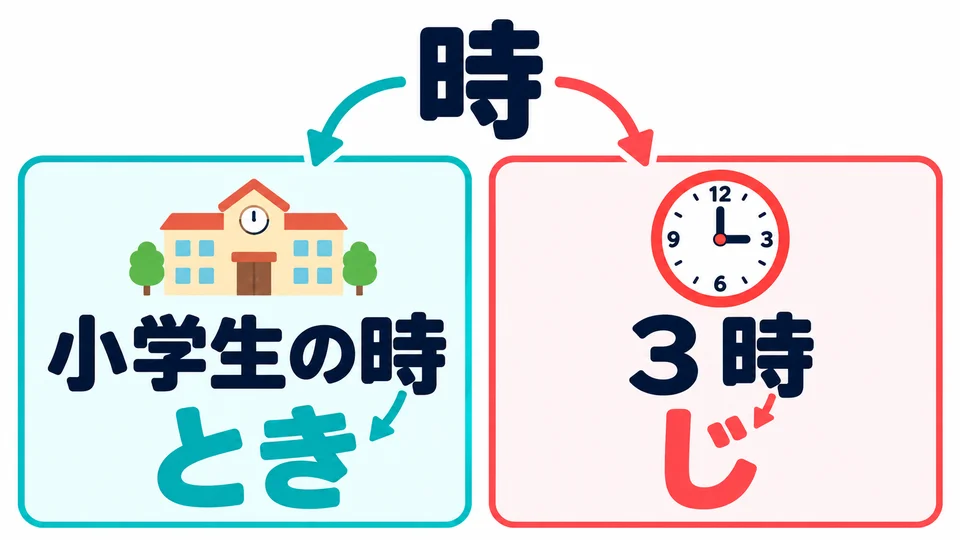
In these examples, 「時」 is read 「とき」, not 「じ」 as when telling the time.
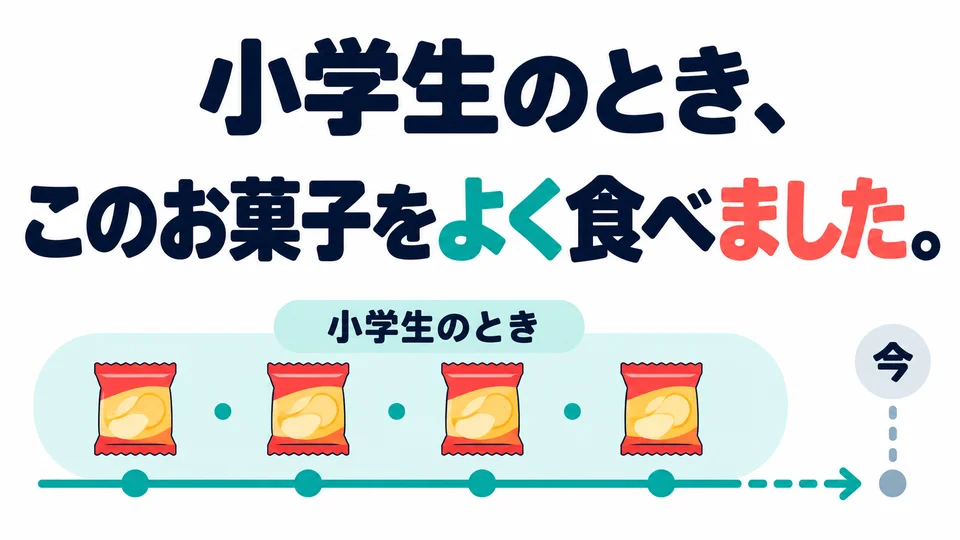
In the snack example, 「よく」 means “often.” The past tense can also describe things done repeatedly in the past.
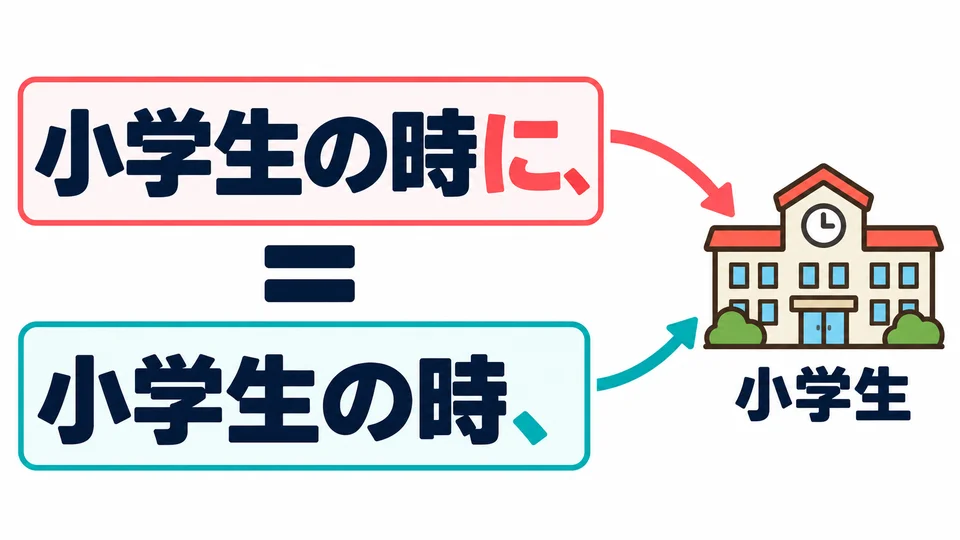
In the question, 「時に」 also refers to elementary school days. Leaving out 「に」 here keeps that meaning.
Example sentences
- 小学生shougakuseiのno時、tokiこのkonoお菓子okashiをoよくyoku食べました。tabemashita
When I was in elementary school, I often ate this snack.
In a conversation

- A小学生の時、何をしていましたか。
A: What were you doing when you were in elementary school?
- Bサッカーを練習し
Check yourself
Level 1 · Recognise
Which sentence is correct?
Level 1 · Recognise
Listen and choose the meaning
Level 2 · Build
Put the words in order
When I was in elementary school, I practiced soccer.
Level 3 · Use
What goes in the blank?
子ども 母にお菓子をくれました。
When I was a child, (someone) gave my mother sweets.
More grammar in this theme
- 〜のとき、〜ましたsomething done at that time