Japanese grammar · ≈ JLPT N5 · Beginner 2
〜ことができます~koto ga dekimasu
can do an action
Use 「〜ことができます」 to describe an ability, placing the action in dictionary form before こと.
How it works
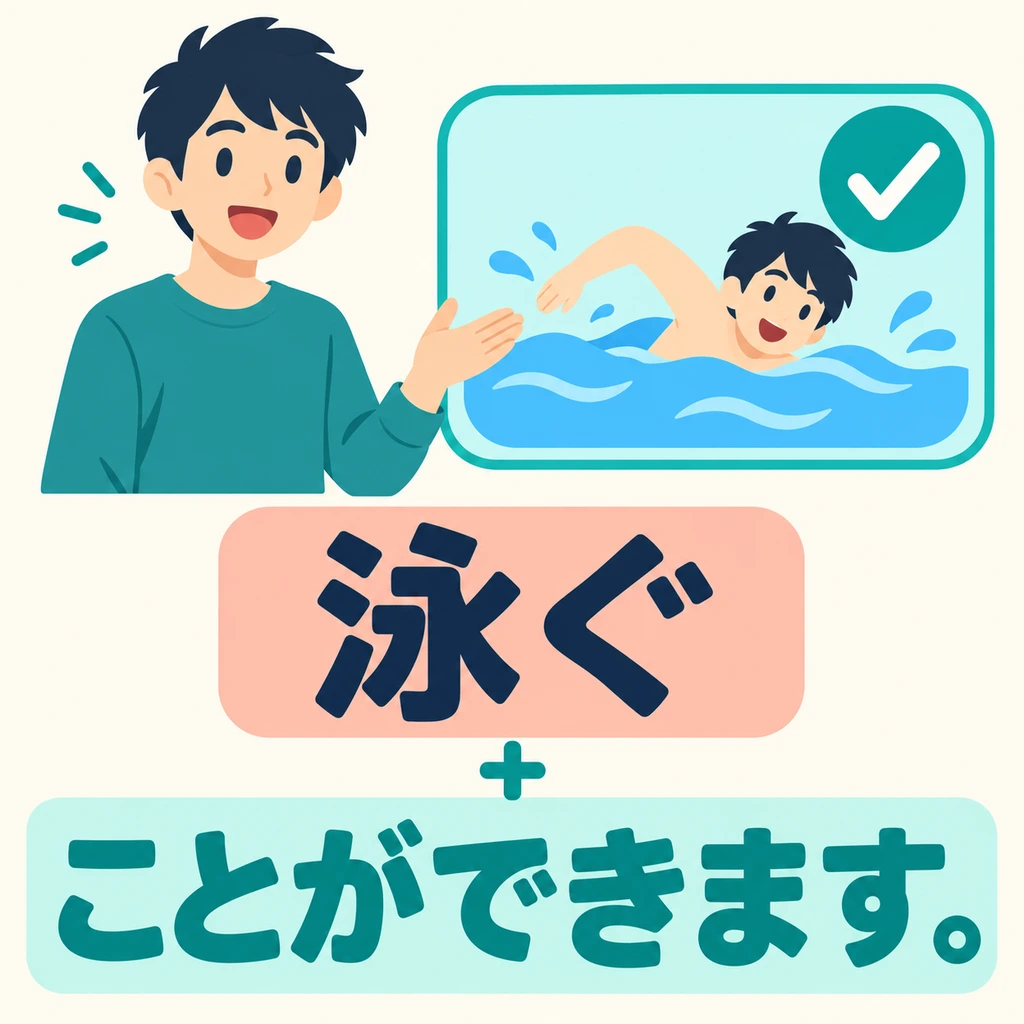
Look at the picture: he can swim. Use this pattern to describe your abilities when saying what you can do.
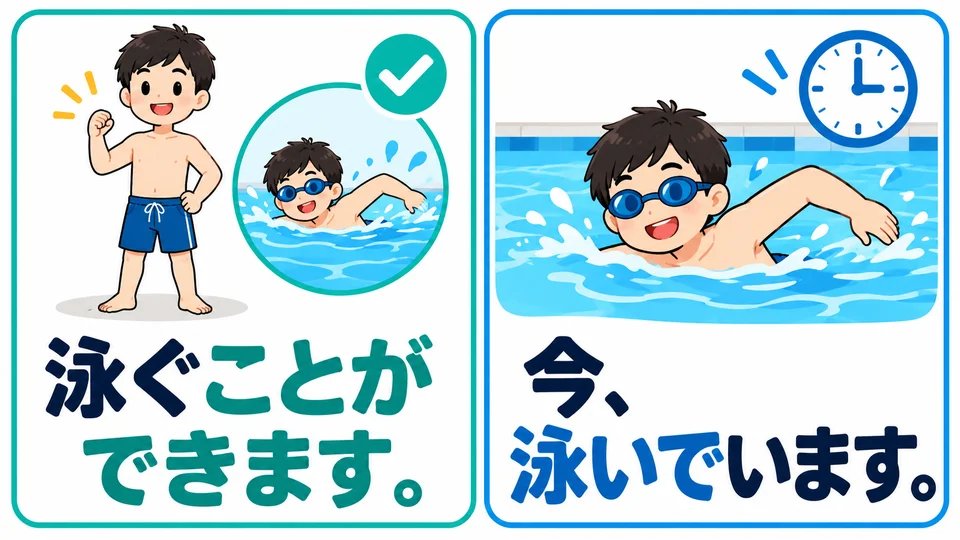
This describes the ability to swim. It does not mean he is swimming at the moment of speaking.
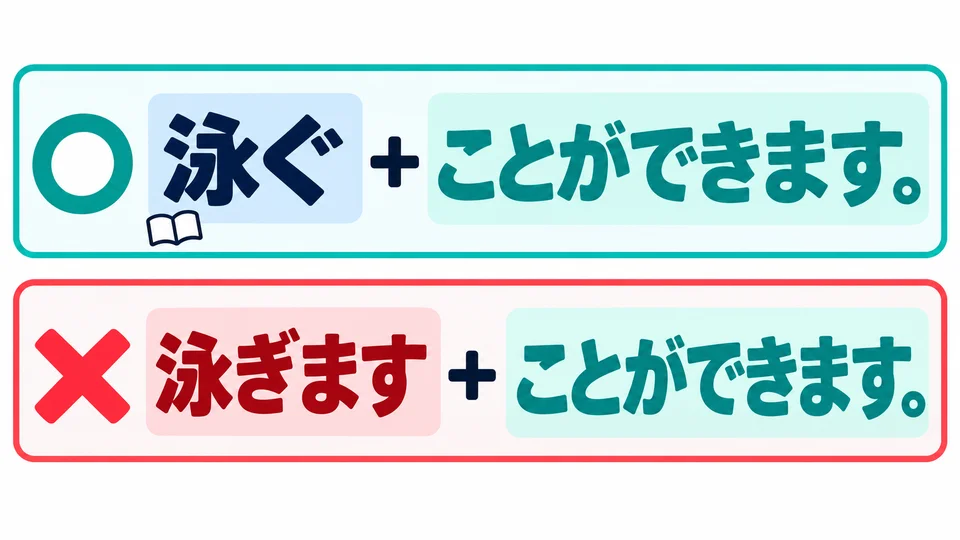
Before 「こと」, use the dictionary form 「泳ぐ」. You cannot attach it directly to 「泳ぎます」.
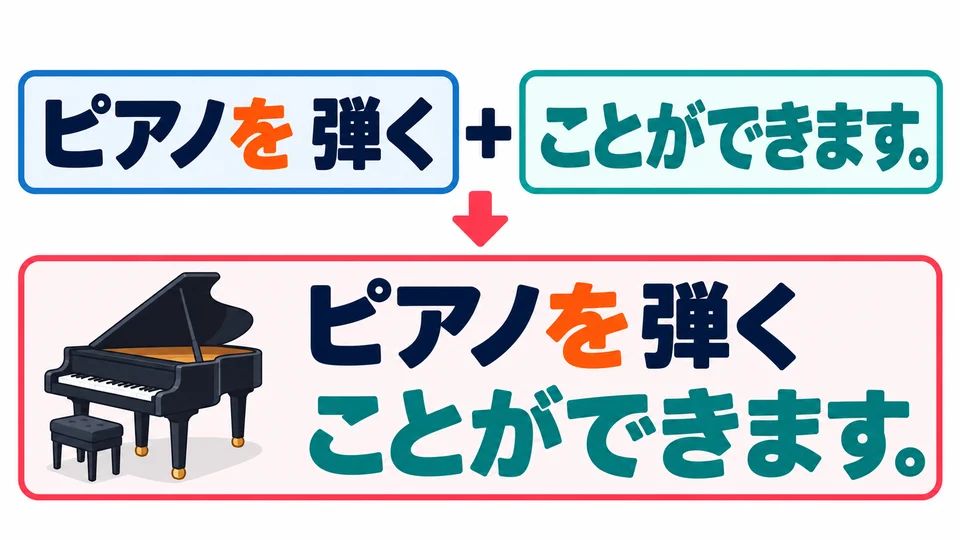
First give the complete action, then add 「ことができます」. Keep the particles within the action phrase.
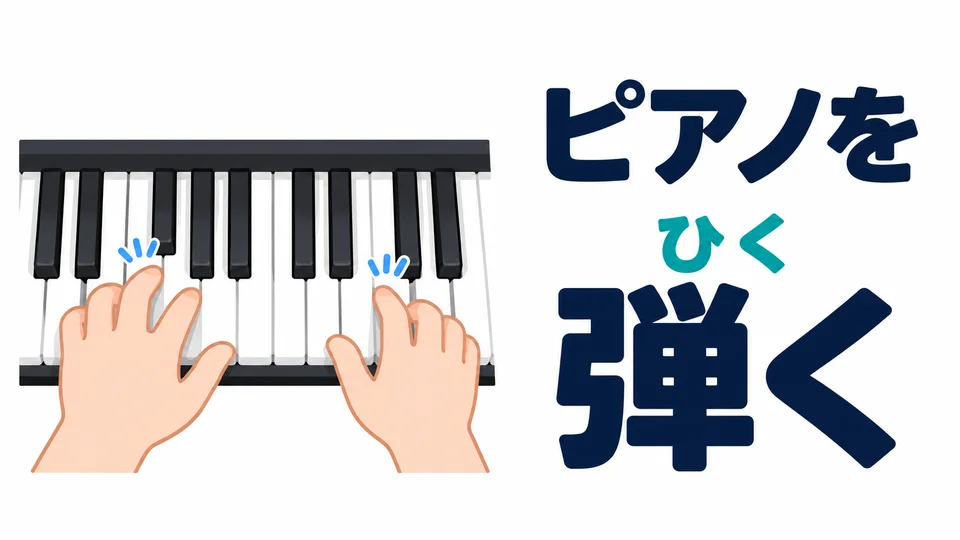
In the piano example, 「弾く」 is read 「ひく」. Here it means to play a musical instrument.
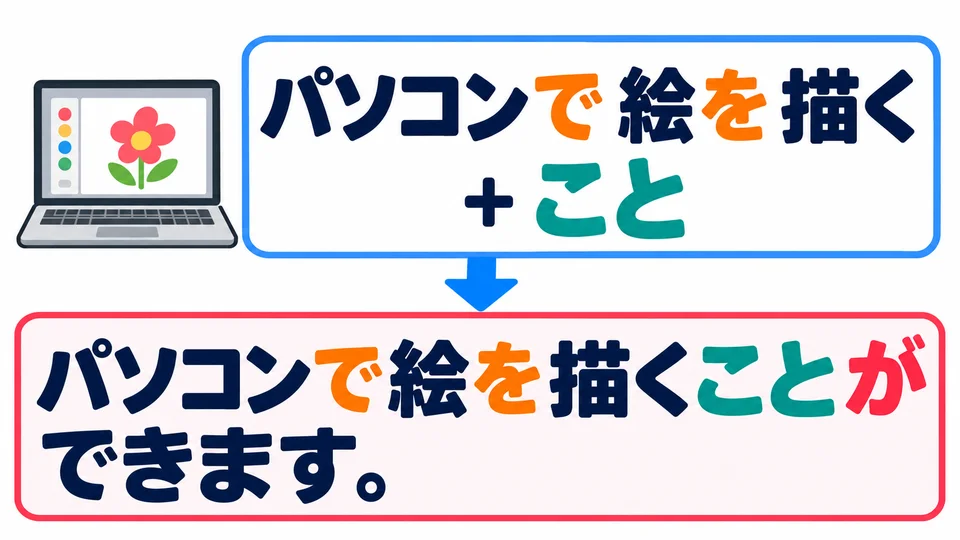
In the computer example, keep 「で」 and 「を」. 「が」 comes after the complete action phrase plus 「こと」.
Example sentences
- ピアノpianoをo弾くhikuことkotoがgaできます。dekimasu
I can play the piano.
- パソコンpasokonでde
In a conversation

- A何を作ることができますか。
A: What can you make?
- B料理を作ることができます。
Check yourself
Level 1 · Recognise
Which sentence is correct?
Level 1 · Recognise
Listen and choose the meaning
Level 2 · Build
Put the words in order
I can swim.
Level 3 · Use
What goes in the blank?
ピアノを できます。
I can play the piano.
More grammar in this theme
- 〜ことができますcan do an action