6 course lineup
Not a grammar table. A map of when to use it.
A grammar list is useful when learning Japanese. But memorizing a list from top to bottom does not tell a beginner which expression to use in a real exchange.
In JPEDLAB, learners meet vocabulary inside a theme, learn the grammar needed for that situation, then use it in quizzes and AI speaking practice. The course is not a shelf of knowledge. It is an order of use.
Early N5
Beginner 1
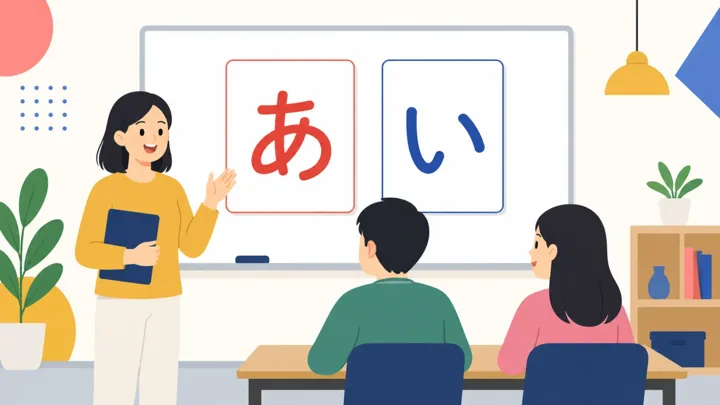
Start with hiragana, katakana, self-introduction, going out, and daily life. The goal is to speak in short sentences about yourself and simple plans.
8
Themes
25
Chapters
76
Grammar
Theme direction
Writing systems, self-introduction, going out, daily life, hometowns, days off, appointments, directions, and requests
Target outcome
Talk briefly about your name, country, work, plans, and familiar actions.

Late N5 to early N4
Beginner 2
Work with family, friends, hobbies, daily life, health, recommendations, and habits so you can describe yourself and your surroundings in more detail.
7
Themes
21
Chapters
52
Grammar
Theme direction
Family, friends, hobbies, working together, daily routines, injuries, illness, recommendations, habits, and manners
Target outcome
Explain your own situation and the people around you, then keep a simple exchange going.

N4
Beginner 3
Move into shops, restaurants, future goals, city introductions, travel plans, visits, and helping situations. Practice polite exchanges with reasons and conditions.
11
Themes
23
Chapters
81
Grammar
Theme direction
New life, shops and restaurants, future goals, city introductions, travel plans, visits, and helping others
Target outcome
Use requests, reasons, conditions, and polite explanations in slightly longer exchanges.

Early N3
Intermediate 1
Use local activities, health, town observation, customs, news, and environmental change to explain information and daily problems in your own words.
8
Themes
23
Chapters
86
Grammar
Theme direction
Local activities, health habits, observing a town, customs and gifts, news, and environmental change
Target outcome
Explain information you heard, changes in your life, and practical problems around you.

Late N3 to early N2
Intermediate 2
Practice facility use, emergency actions, geography, climate, intergenerational exchange, and emotional expression so your explanations fit the situation.
5
Themes
24
Chapters
73
Grammar
Theme direction
Using facilities, emergency safety actions, geography and climate, intergenerational exchange, and feelings
Target outcome
Explain situations, reasons, requests, and feelings in a way that fits the listener.

Around N2
Intermediate 3
Expand into richer Japanese expression, travel information, trends, education, science, technology, and society. Learn to state opinions with reasons and comparisons.
5
Themes
25
Chapters
64
Grammar
Theme direction
Richer expression, travel information, trends, school systems, educational experience, science, technology, and society
Target outcome
Talk about social topics with reasons, comparisons, and your own viewpoint.


Coming next
Advanced 1-3 and side content will extend the path.
The current core connects Beginner 1 through Intermediate 3 with themes, vocabulary, grammar, quizzes, AI speaking practice, and teacher review. Advanced courses and side content will expand the range of learning needs JPEDLAB can support.
View course listPut the flow that teachers usually supply into the product.
Textbooks such as Minna no Nihongo are powerful in a classroom because a teacher expands each grammar point, example, and drill into level-appropriate conversation.
In self-study or online learning, that teacher-supplied flow is often missing. JPEDLAB builds it into the product: themes introduce vocabulary, grammar builds sentences, quizzes trigger recall, AI practice creates output, and teacher review checks the result.
Beginner courses move from self-introduction to daily exchanges
At the beginner level, jumping to difficult expressions too early is less useful than building basic expressions with clear situations. The courses cover self-introduction, daily life, shopping, directions, requests, and travel plans.
Intermediate courses move from short sentences to explanation
Intermediate learners need to add reasons, conditions, comparisons, and opinions. JPEDLAB expands from daily information to social topics and brings N3-N2 level Japanese closer to actual use.
Vocabulary, grammar, quizzes, and speaking stay on one route
Each theme introduces the vocabulary you need, then connects it to grammar, comprehension quizzes, speaking practice, and teacher review. The flow is designed so self-study does not end with passive understanding.
N5, N4, N3, and N2 are used as learning-stage guides
This page uses N5, N4, N3, and N2 as approximate learning stages, not as a mock-test curriculum. The focus is using vocabulary and grammar in real situations.
How to use JPEDLAB as an AI Japanese learning course
JPEDLAB is not an AI Japanese course that simply opens a free chat window. AI is used as a practice tool that increases output, while the curriculum controls what the learner should use.
Beginner
26 themes・69 chapters
Intermediate
18 themes・72 chapters
Grammar
432 points
Start learning
Start from your current level
Move from Beginner 1 to Intermediate 3 through vocabulary, grammar, AI practice, and teacher review on the same path.
FAQ
Who are the beginner Japanese courses for?
They are for learners building an N5 to N4 foundation. They fit learners who want to organize basic expressions for self-introduction, daily life, shops, requests, and travel.
What do the intermediate Japanese courses cover?
They cover explanation, reasons, conditions, comparisons, and opinion. The topics expand into local life, health, facilities, safety, travel, education, science, technology, and society, roughly around N3 to N2.
Can I use this for JLPT preparation?
It helps build vocabulary and grammar foundations, but it is not a mock-test-only product. The course connects what you learn to speaking and explanation.
How is this different from an AI chat Japanese app?
JPEDLAB prioritizes learning order over free AI conversation. Learners follow teacher-designed themes, vocabulary, grammar, quizzes, speaking practice, and teacher review.