JPEDLAB iconJPEDLAB
Save history

Create an account and play

Explore first, then save your progress whenever you are ready. No email address is required.

Start free
Read as articleCards
See the whole course›Beginner 1›Introduction to Japanese Writing

Japanese grammar · Beginner 1

濁音・半濁音dakuon~handakuon

Voiced and p-sound kana

Learn 「濁音・半濁音」 and how the marks change kana sounds, including b and p in the は row.

Start the interactive lessonIllustrated cards, audio and speaking practice

How it works

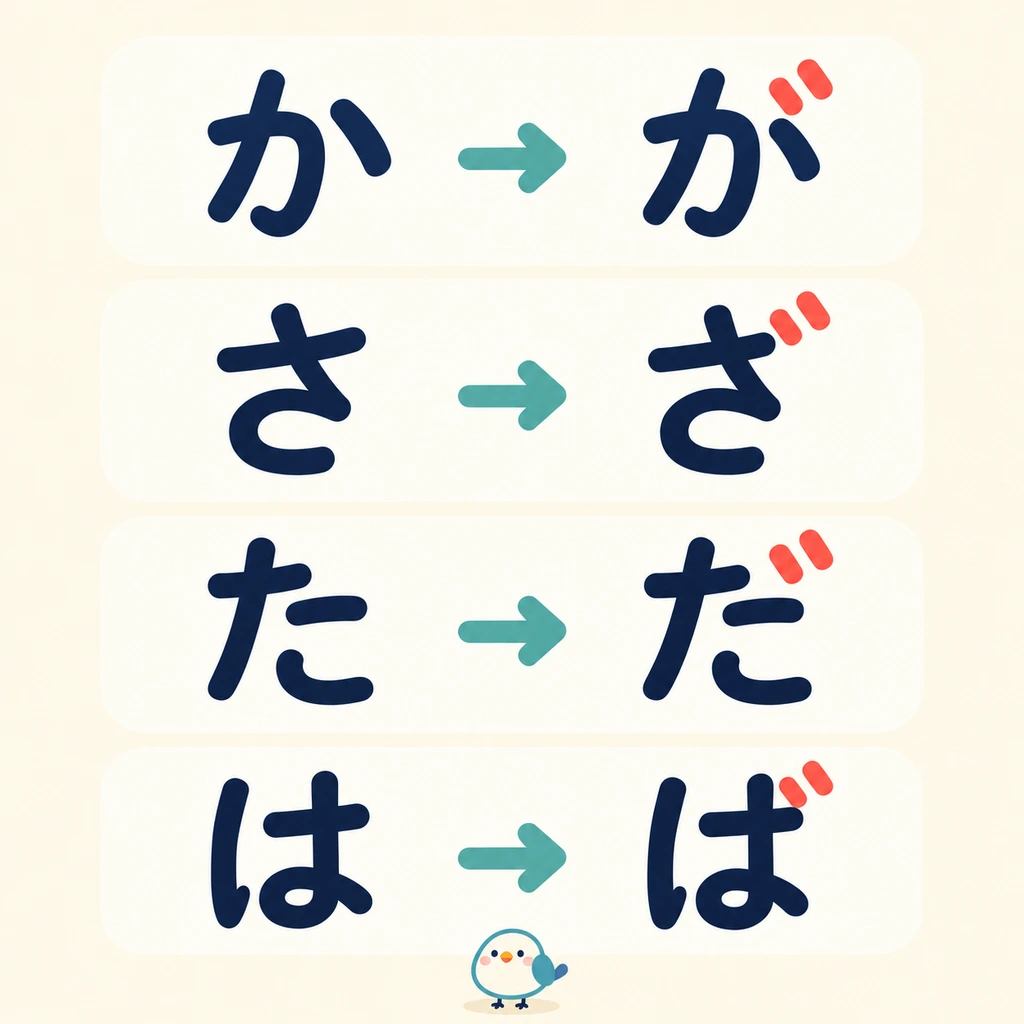
  1. Look at the two little strokes at the top right. This mark is called dakuten; adding it changes the kana’s sound.
    Look at the two little strokes at the top right. This mark is called dakuten; adding it changes the kana’s sound.

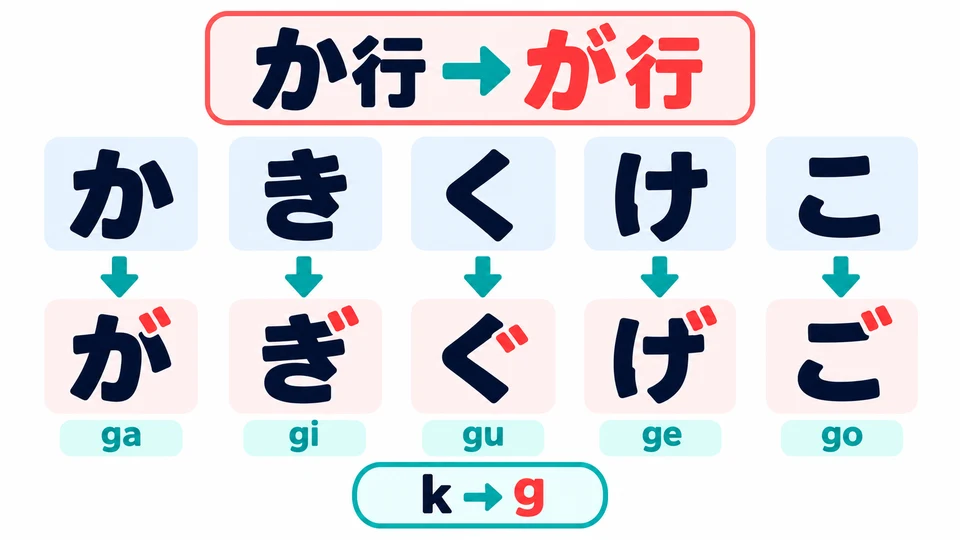
  2. Adding dakuten to the か row changes k to g. Try reading が・ぎ・ぐ・げ・ご.
    Adding dakuten to the か row changes k to g. Try reading が・ぎ・ぐ・げ・ご.

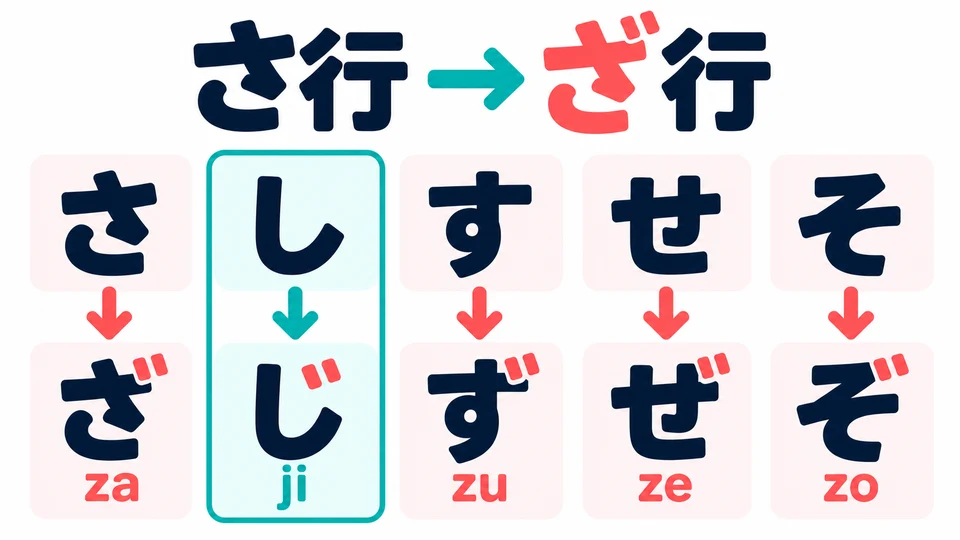
  3. With dakuten, most sounds in the さ row change to z. Note that し becomes じ, pronounced ji.
    With dakuten, most sounds in the さ row change to z. Note that し becomes じ, pronounced ji.

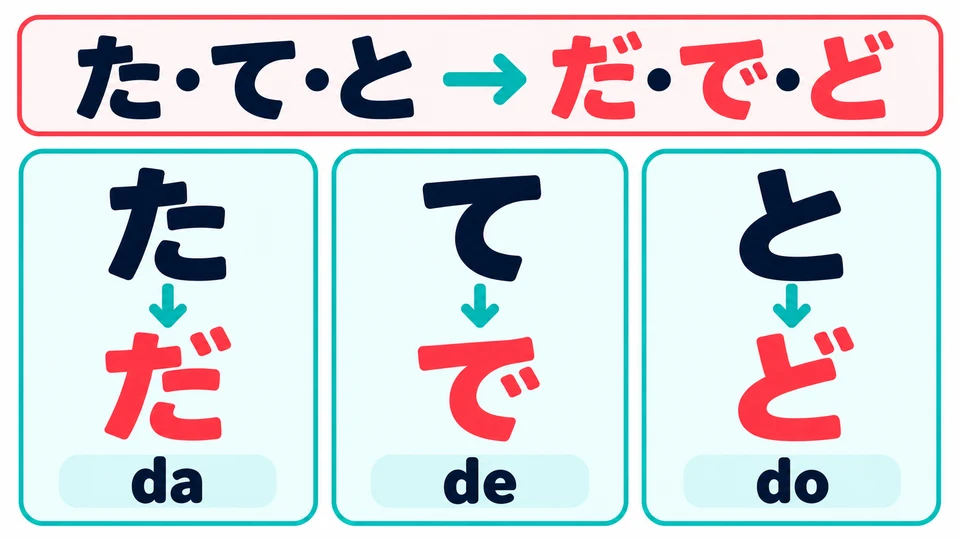
  4. Adding dakuten changes た・て・と to だ・で・ど, pronounced da・de・do.
    Adding dakuten changes た・て・と to だ・で・ど, pronounced da・de・do.

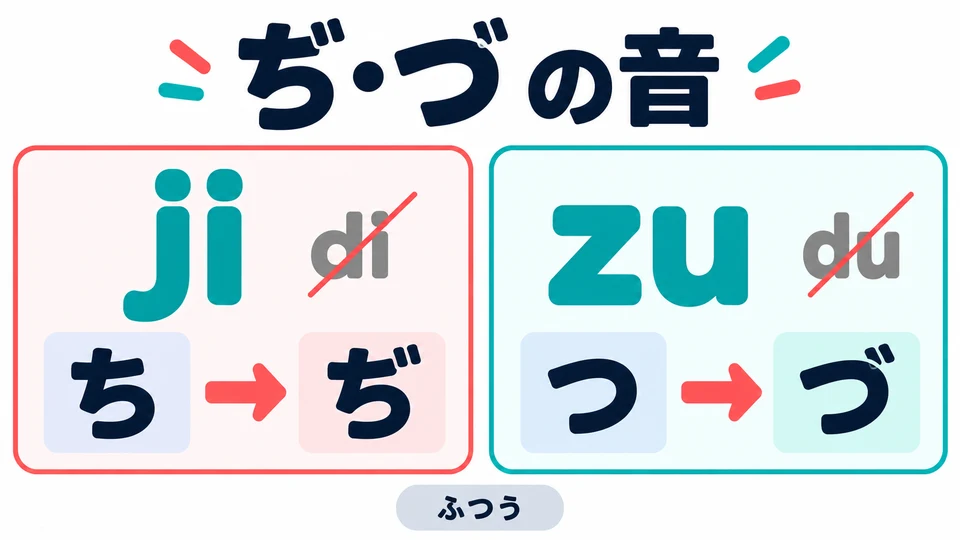
  5. With dakuten, ち and つ become ぢ and づ. They are usually pronounced ji and zu, not di and du.
    With dakuten, ち and つ become ぢ and づ. They are usually pronounced ji and zu, not di and du.

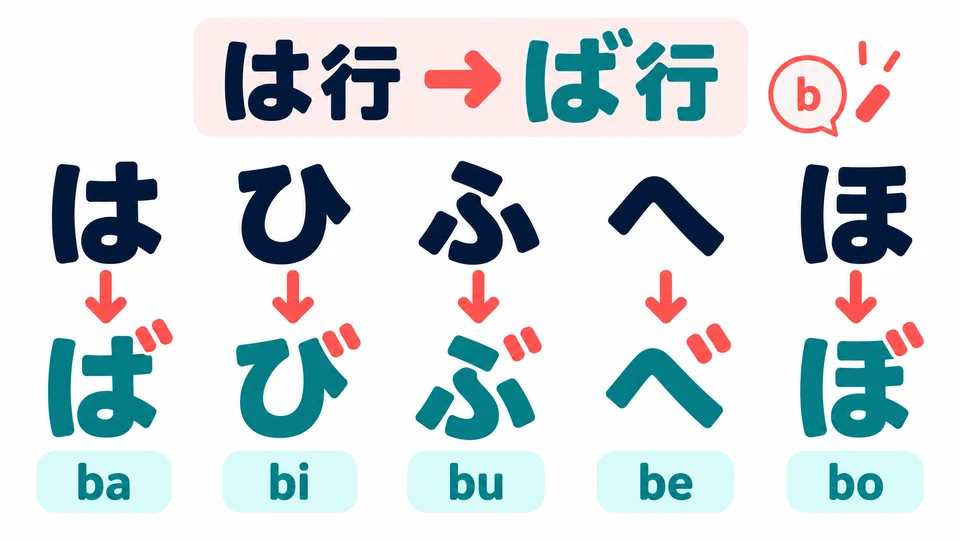
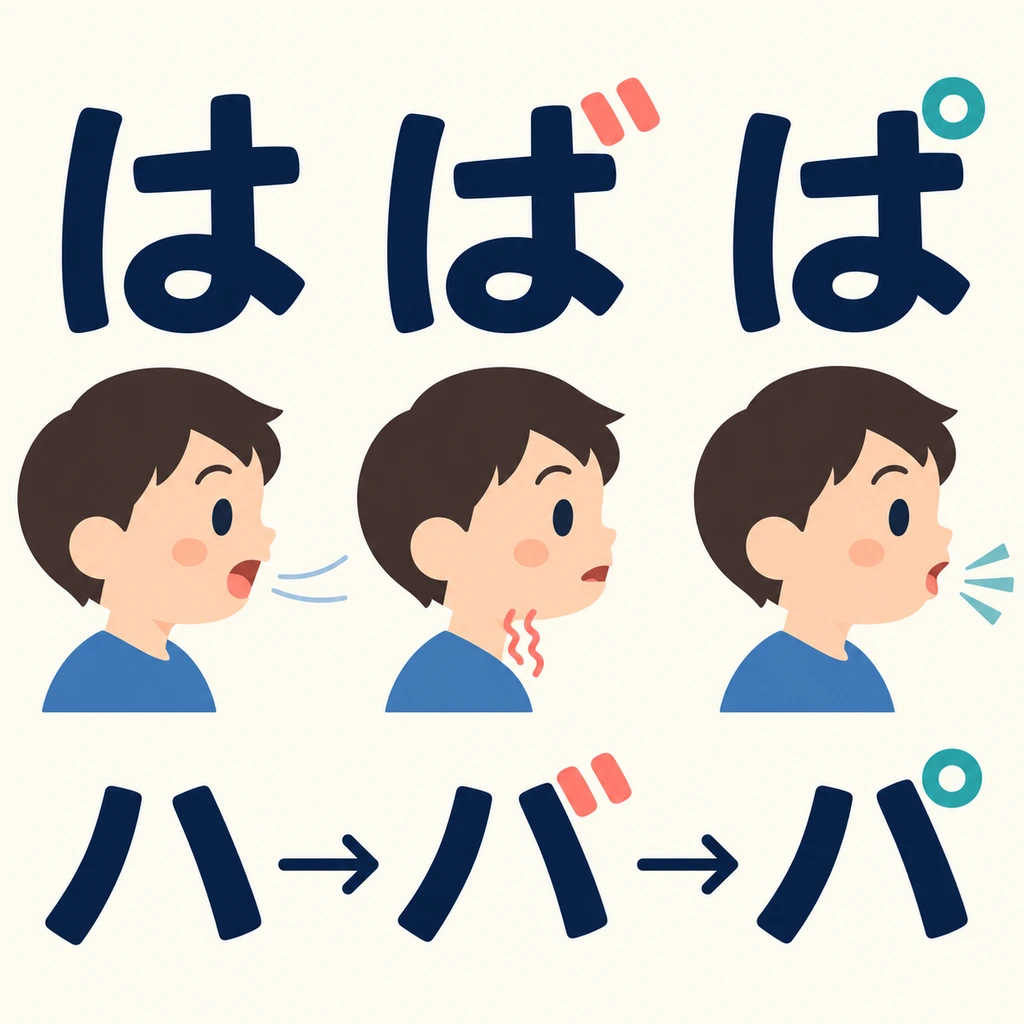
  6. Adding dakuten to the は row gives b sounds: ば・び・ぶ・べ・ぼ.
    Adding dakuten to the は row gives b sounds: ば・び・ぶ・べ・ぼ.

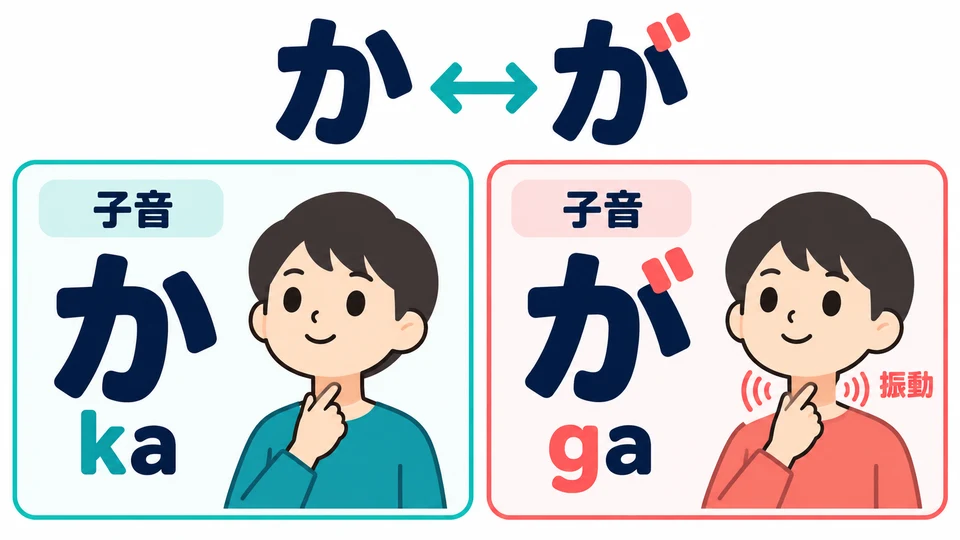
  7. Gently touch your throat and alternate between か and が. Feel your vocal cords vibrate when you say が.
    Gently touch your throat and alternate between か and が. Feel your vocal cords vibrate when you say が.

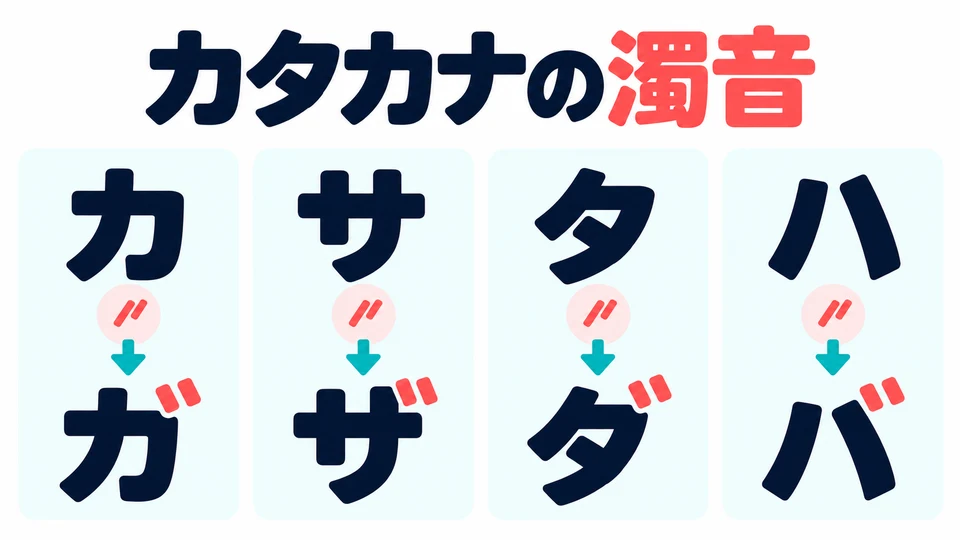
  8. Katakana can take dakuten too: カ→ガ、サ→ザ、タ→ダ、ハ→バ.
    Katakana can take dakuten too: カ→ガ、サ→ザ、タ→ダ、ハ→バ.

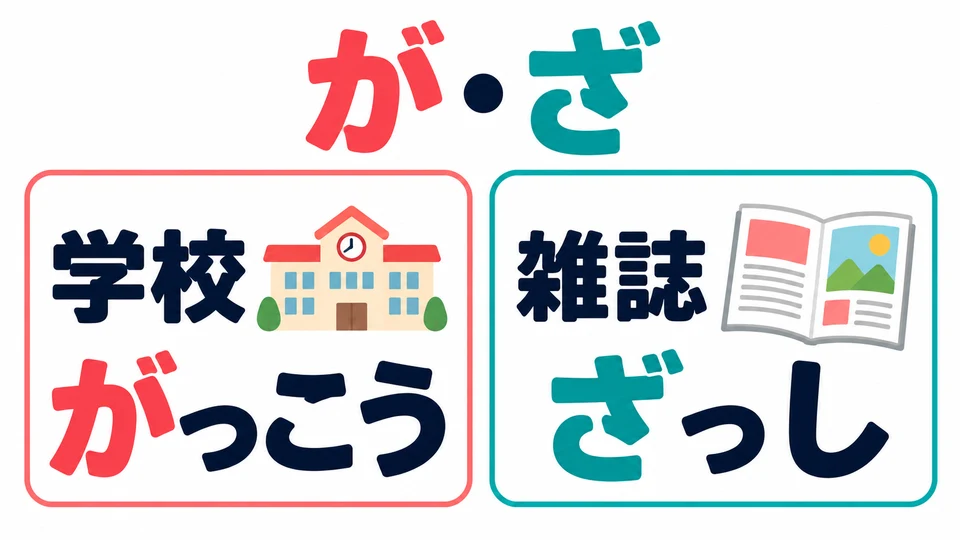
  9. Listen to the example words 学校 and 雑誌. Find が and ざ, and notice how dakuten changes the sound.
    Listen to the example words 学校 and 雑誌. Find が and ざ, and notice how dakuten changes the sound.

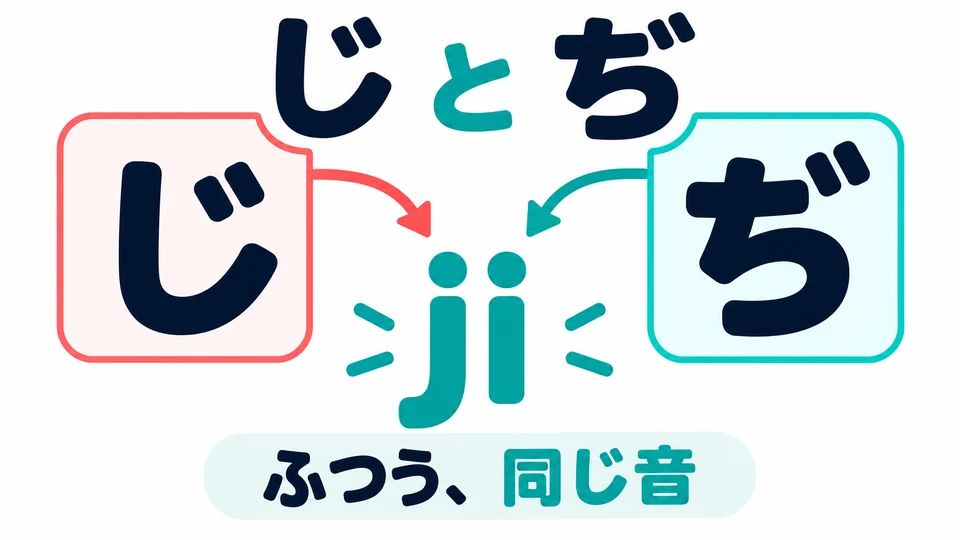
  10. In modern Japanese, じ and ぢ usually sound the same. Both are often written ji in romaji.
    In modern Japanese, じ and ぢ usually sound the same. Both are often written ji in romaji.

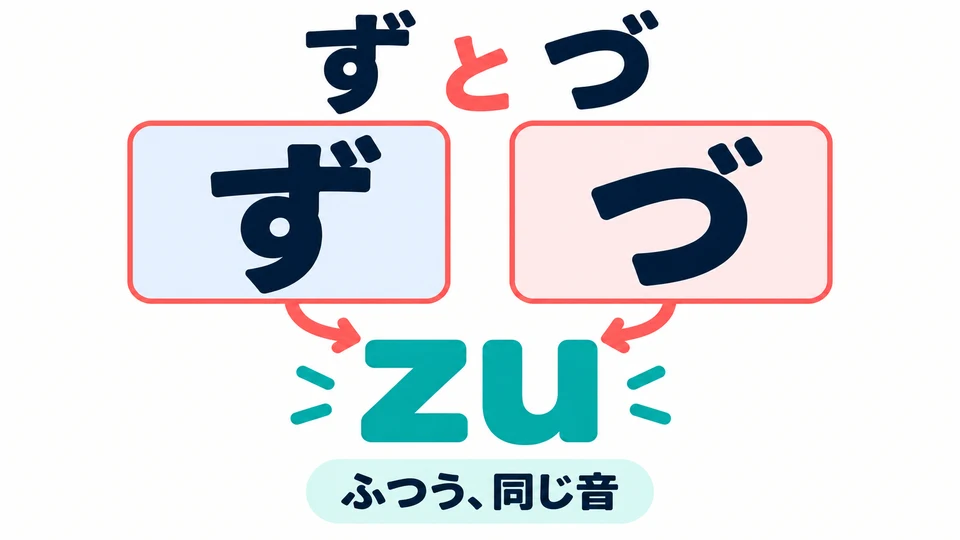
  11. In modern Japanese, ず and づ usually sound the same. Both are often written zu in romaji.

    In modern Japanese, ず and づ usually sound the same. Both are often written zu in romaji.
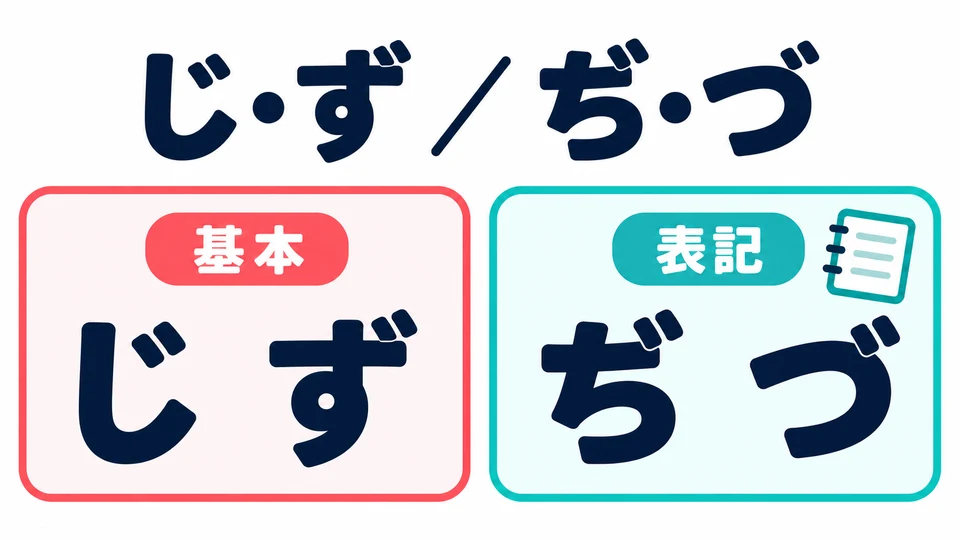
  12. First get familiar with the common じ and ず. When you meet ぢ and づ, learn their spelling with the whole word.
    First get familiar with the common じ and ず. When you meet ぢ and づ, learn their spelling with the whole word.

  13. Look at the top right: two strokes turn は into ば, while a small circle turns it into ぱ. The sounds differ too.
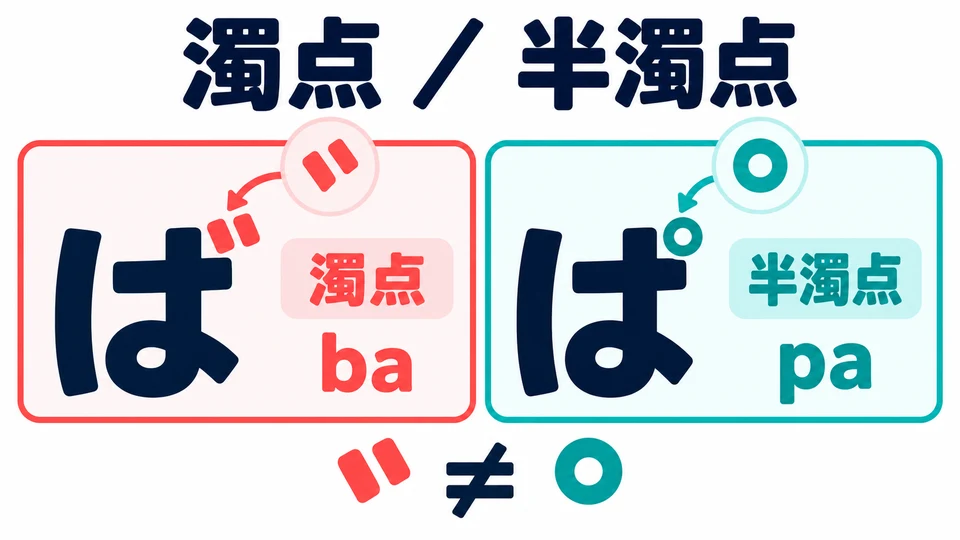
    Look at the top right: two strokes turn は into ば, while a small circle turns it into ぱ. The sounds differ too.

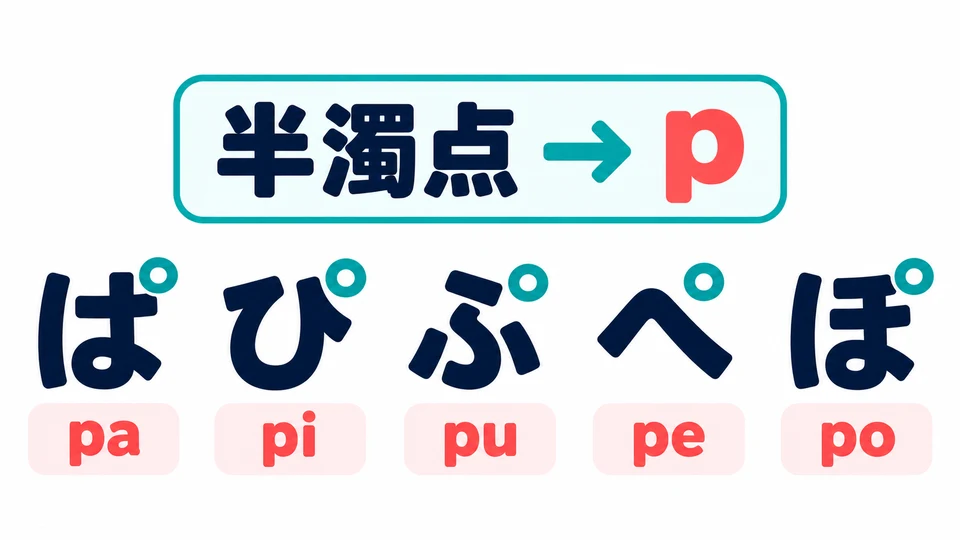
  14. The small circle is called handakuten. On the は row, it gives p sounds: ぱ・ぴ・ぷ・ぺ・ぽ.
    The small circle is called handakuten. On the は row, it gives p sounds: ぱ・ぴ・ぷ・ぺ・ぽ.

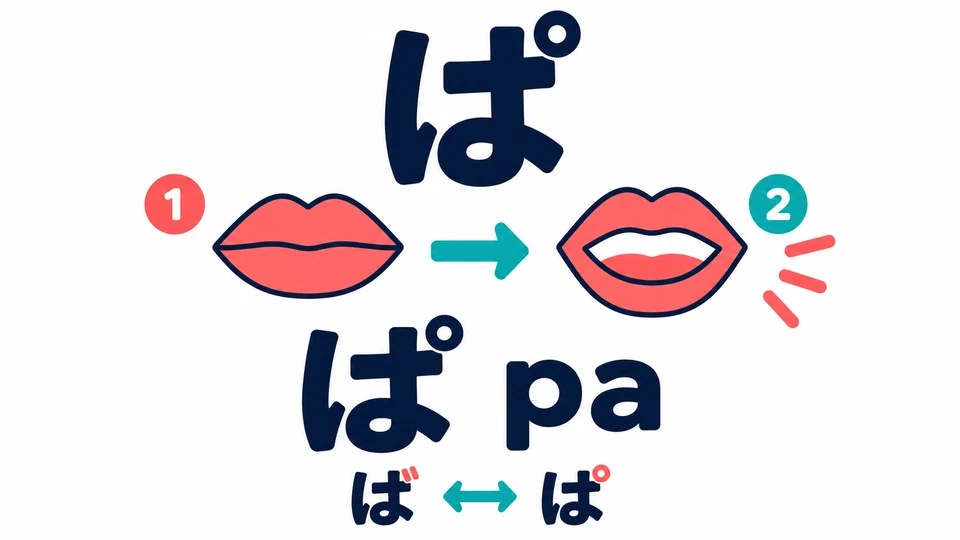
  15. To say ぱ, close your lips, then release them suddenly. Try comparing the sounds of ば and ぱ.
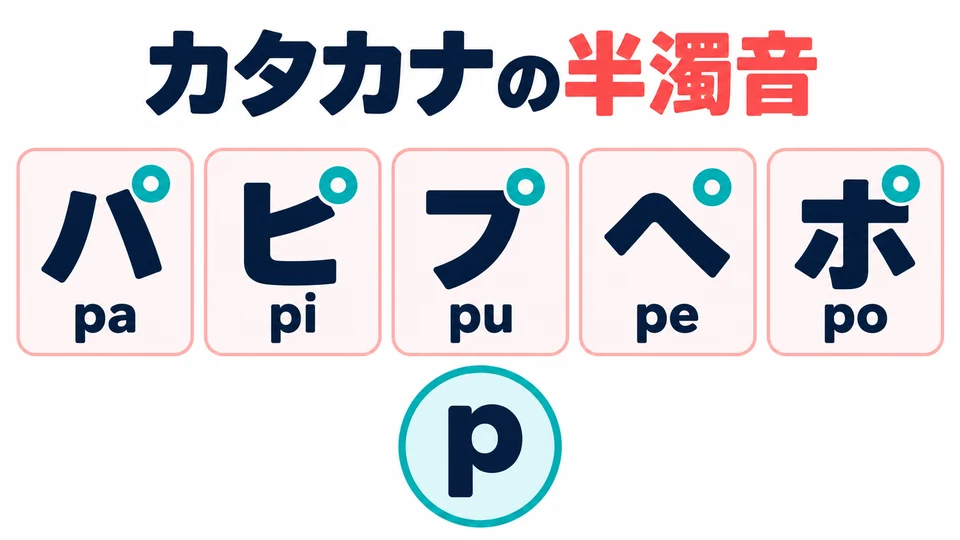
    To say ぱ, close your lips, then release them suddenly. Try comparing the sounds of ば and ぱ.

  16. Katakana with handakuten also has p sounds: パ・ピ・プ・ペ・ポ.
    Katakana with handakuten also has p sounds: パ・ピ・プ・ペ・ポ.

  17. Read パン and ペン and find the small circles. Listen for the p sound in pan and pen.
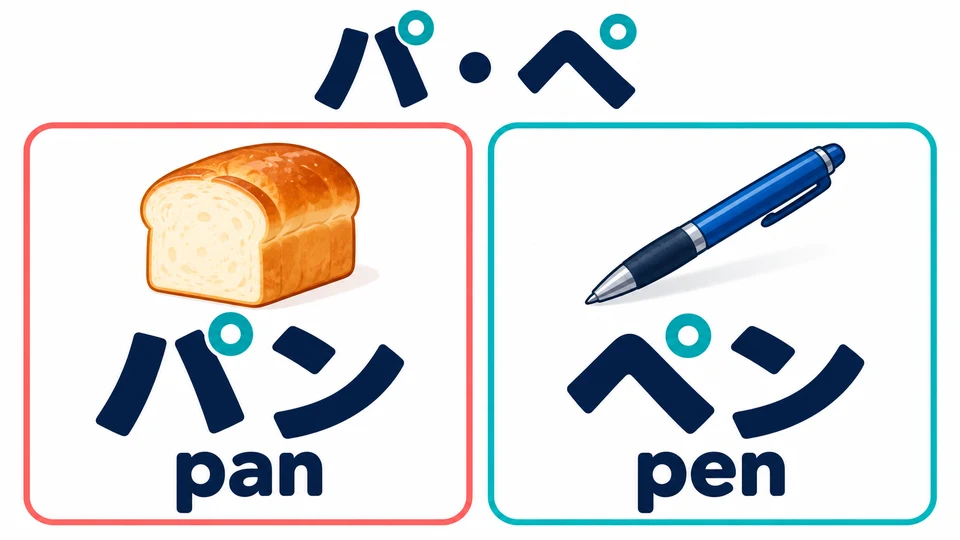
    Read パン and ペン and find the small circles. Listen for the p sound in pan and pen.

  18. The two strokes and the small circle are different marks. Look at ば and ぱ, identify the mark, then say the sound.

    The two strokes and the small circle are different marks. Look at ば and ぱ, identify the mark, then say the sound.

Example sentences

  • 学校がっこうgakkou

    school

  • 雑誌ざっしzasshi

    magazine

  • パンぱんpan

    bread

  • ペンぺんpen

More grammar in this theme

  • 濁音・半濁音Voiced and p-sound kana

Keep practising

Test your Japanese vocabulary12 adaptive questions, freeCheck your pronunciationRead aloud and get a scorePractise verb forms10-question conjugation quizSee the whole courseGrammar, vocabulary and quizzes by theme

pen

ひらがな あ行〜な行Hiragana sounds: a to na rows
ひらがな は行〜んHiragana sounds: ha row to n
カタカナ ア行〜ワ行Katakana sounds and loanwords
長音・促音Long vowels and consonant pauses
拗音(きゃ・きゅ・きょ)Blended sounds with small ゃゅょ
教室で使う表現Useful classroom expressions
Previousカタカナ ア行〜ワ行
Next長音・促音