
Japanese grammar · Beginner 1
教室で使う表現kyoushitsu de tsukau hyougen
Useful classroom expressions
Use 「教室で使う表現」 to follow class instructions, respond, ask for repetition, and thank your teacher.
How it works
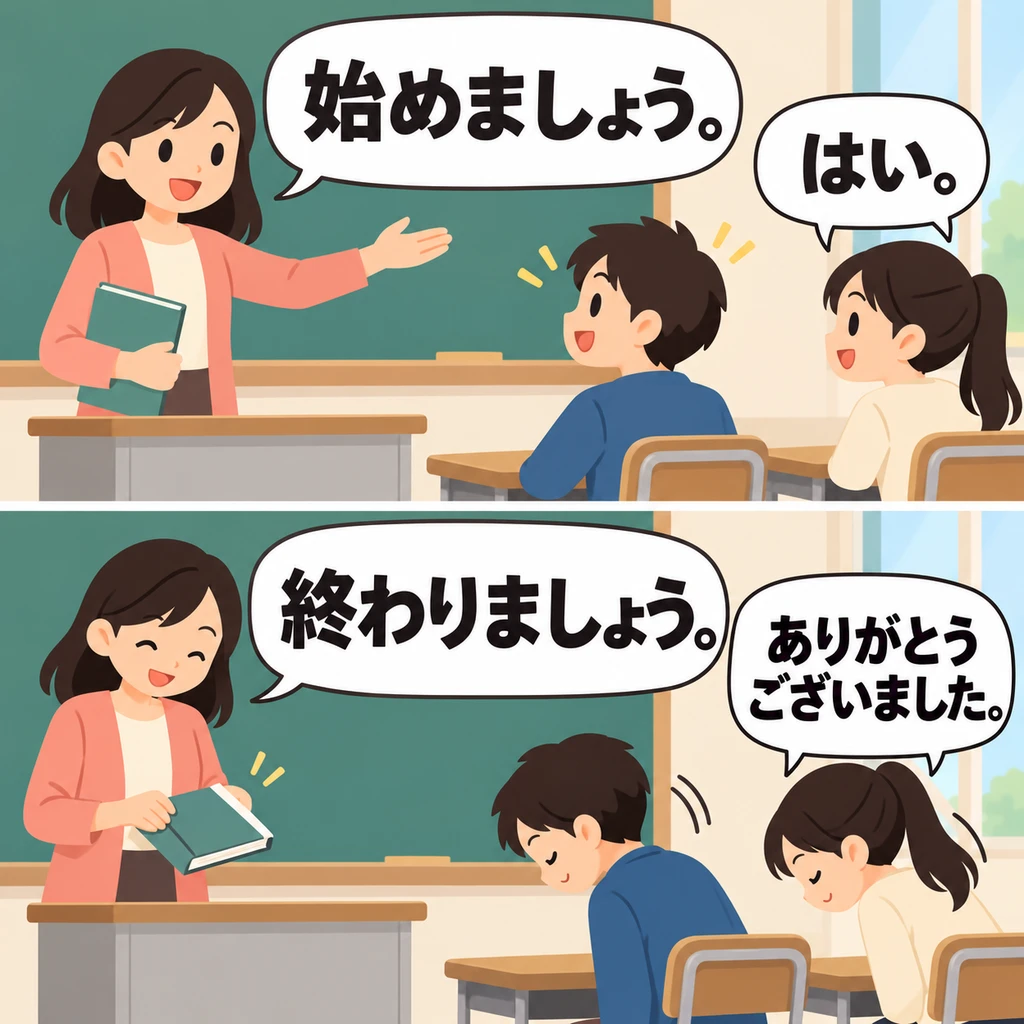
Classroom expressions help you follow the lesson. Start by understanding and responding; you do not need to speak perfectly right away.
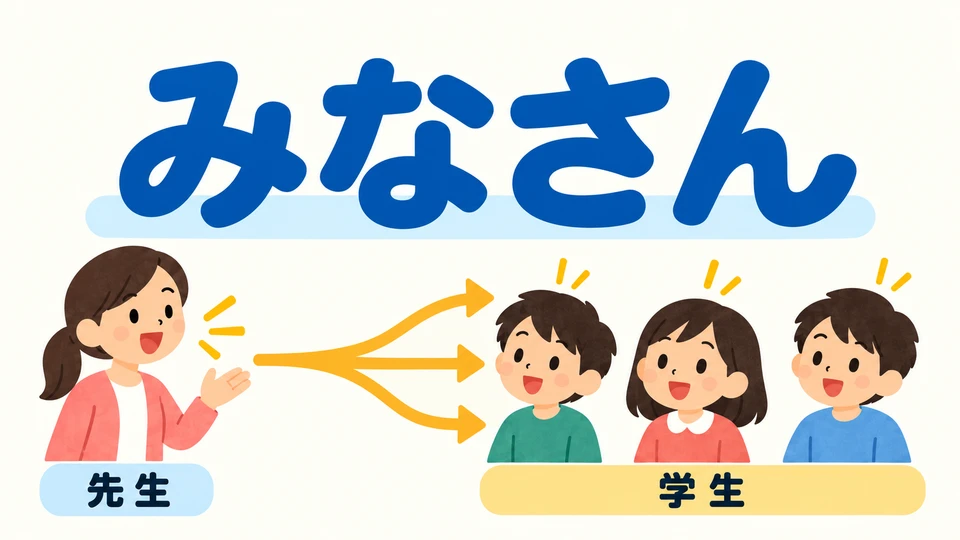
When the teacher says 「みなさん」, they are addressing the whole class. Get ready for the lesson when you hear the opening cue.
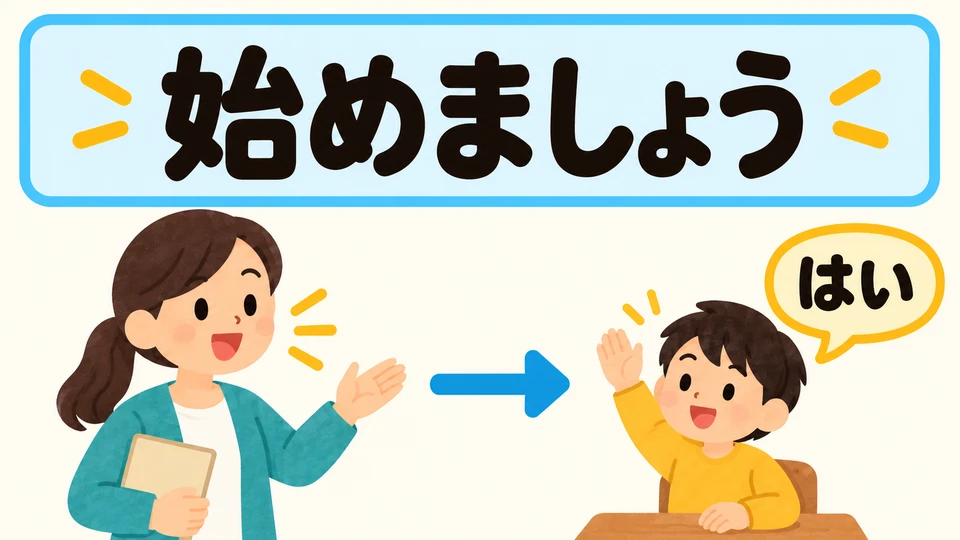
「始めましょう」 means “Let’s begin.” Students can answer 「はい」 to show they are ready.
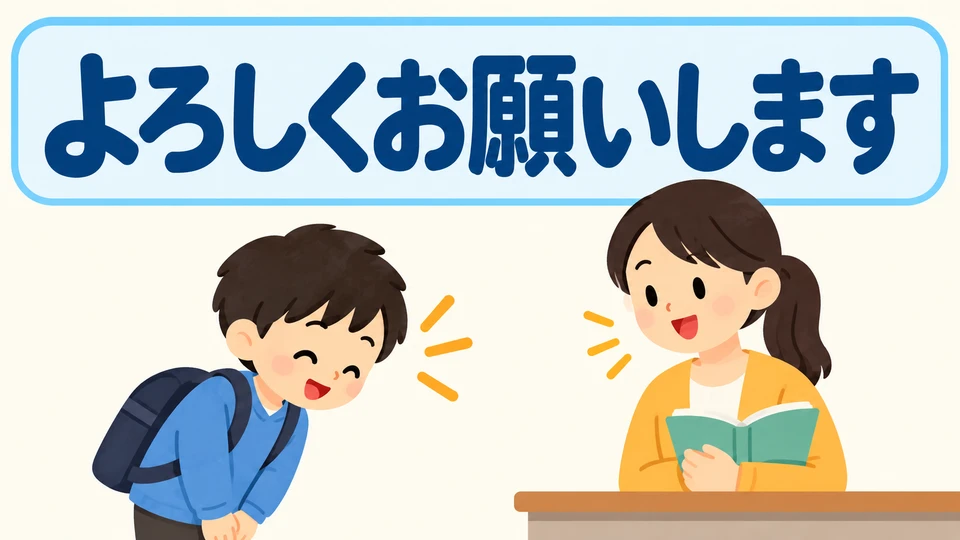
At the start of class, say 「よろしくお願いします」 to politely ask the teacher for their guidance.
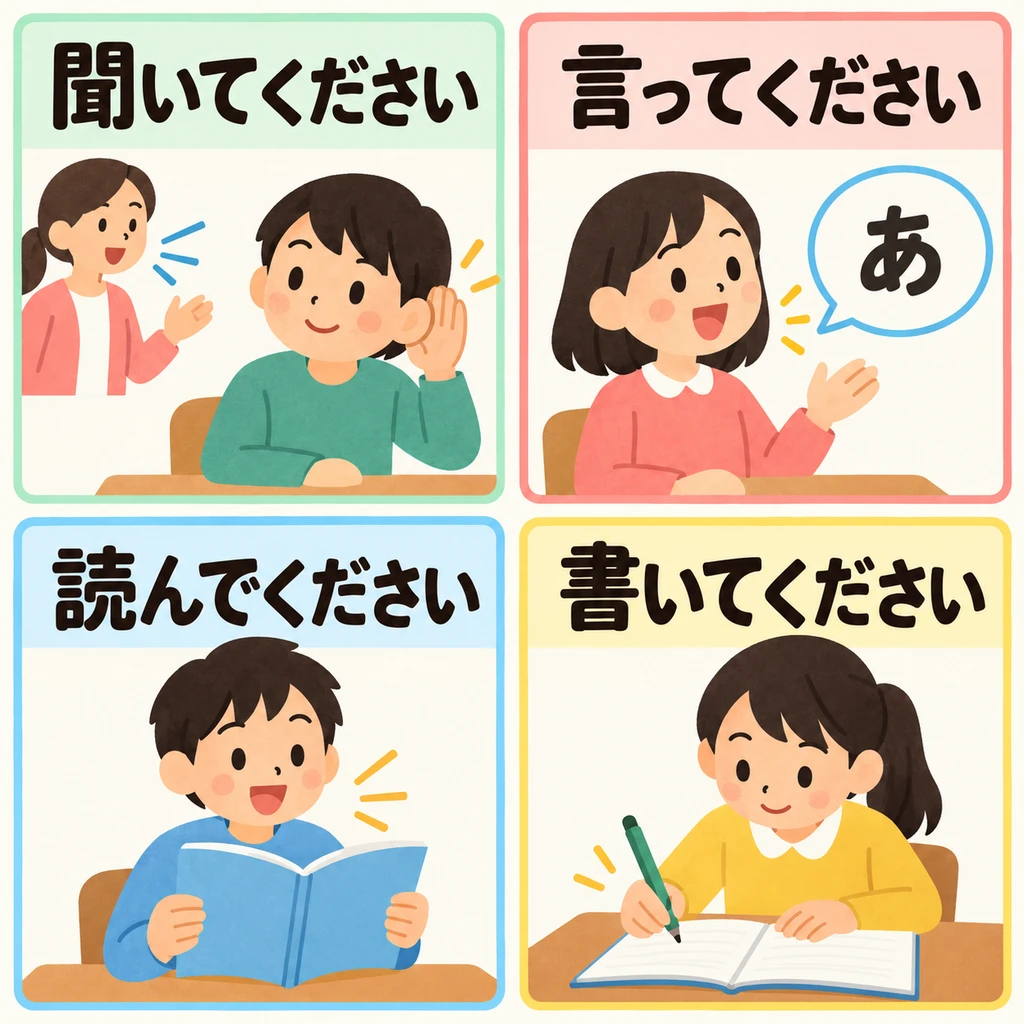
In the four pictures, which student is listening, speaking, reading, or writing? Learn each instruction’s sound together with its action.
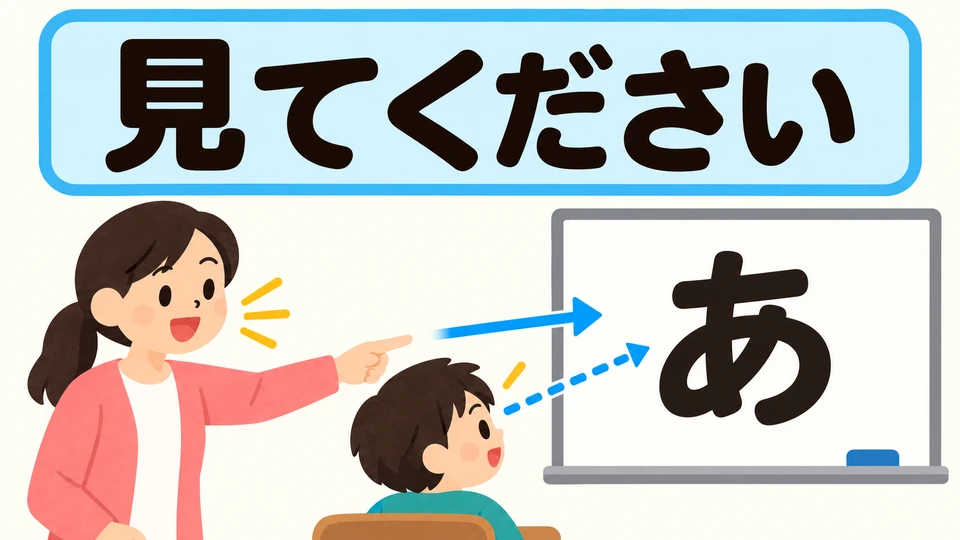
「見てください」 means “Please look.” Look where the teacher points.
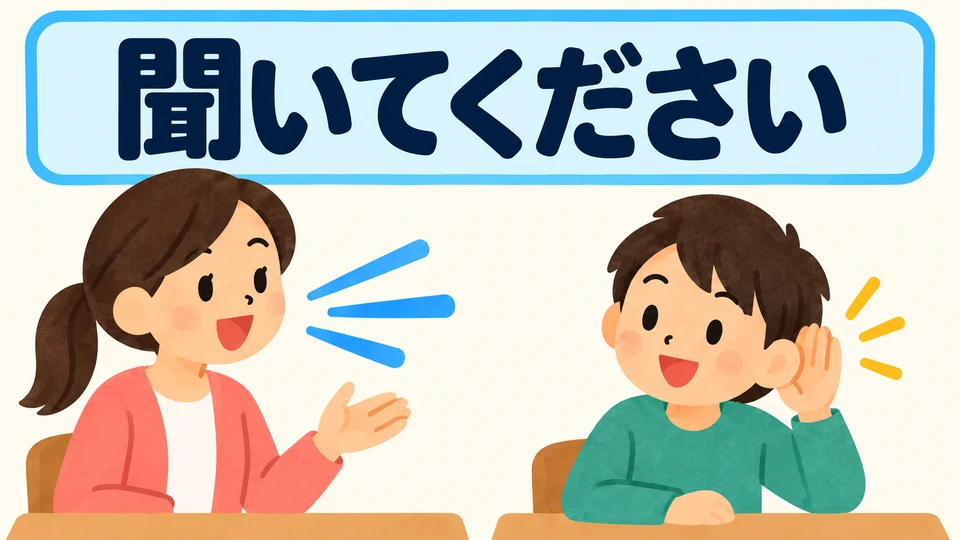
「聞いてください」 means “Please listen.” Focus on the teacher’s voice or the recording and listen carefully to the model.
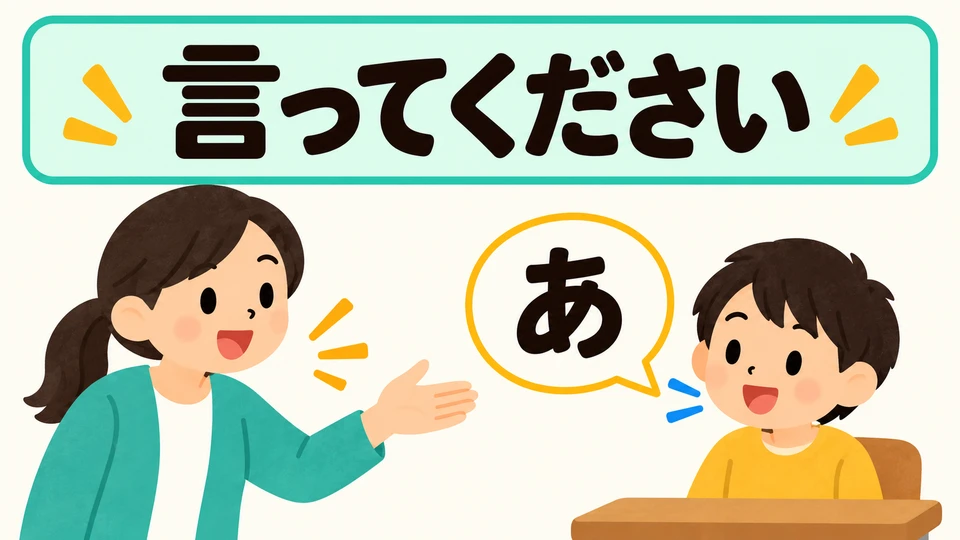
「言ってください」 means “Please say it.” When it is your turn to speak, say the word the teacher asks for.
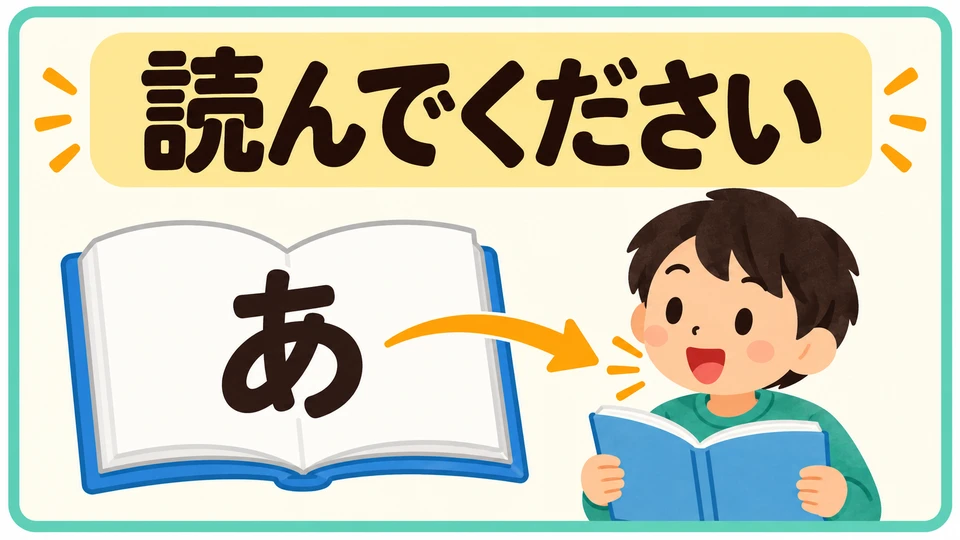
「読んでください」 means “Please read.” Look at the words in the book or on the board, then read them aloud.
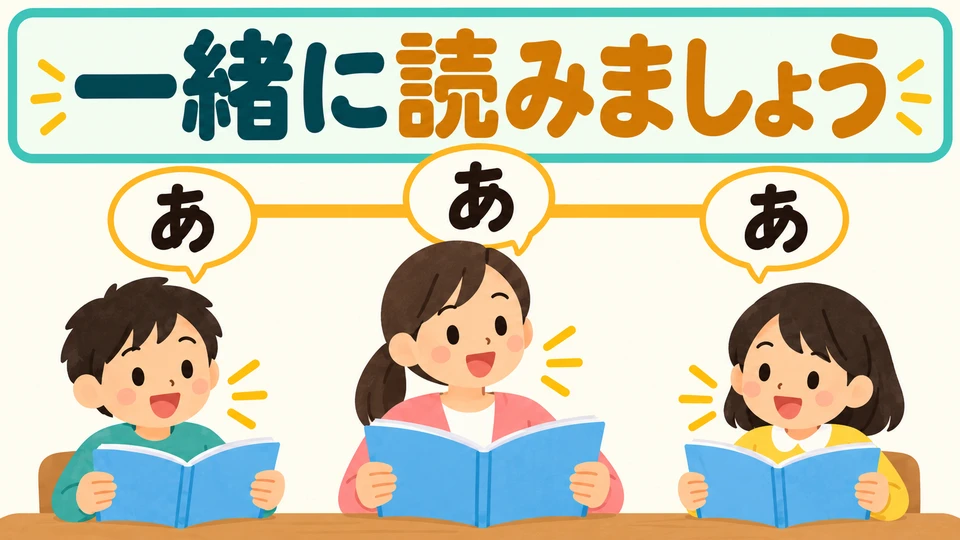
「一緒に読みましょう」 means “Let’s read together.” Read at the same time as the teacher and your classmates.
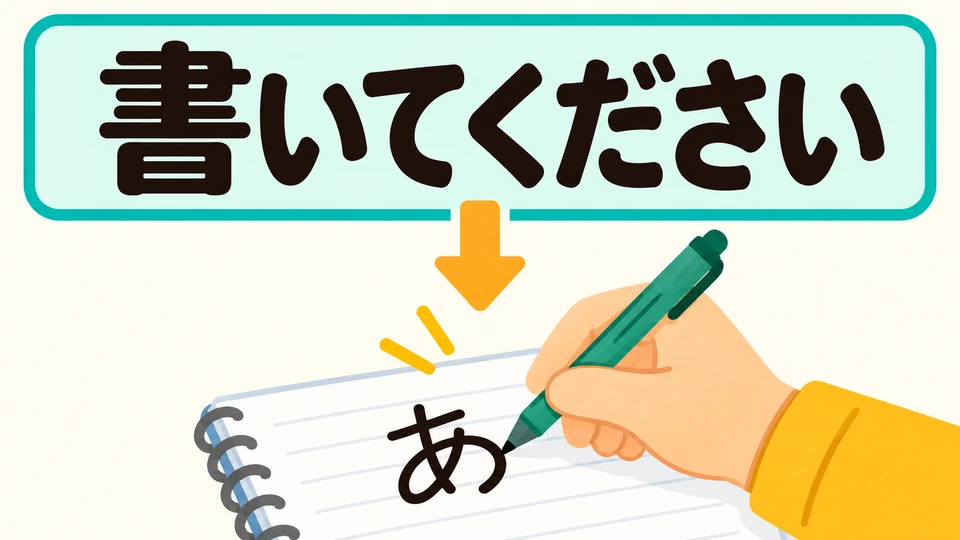
「書いてください」 means “Please write.” Take out your pen and notebook and write down the specified content.
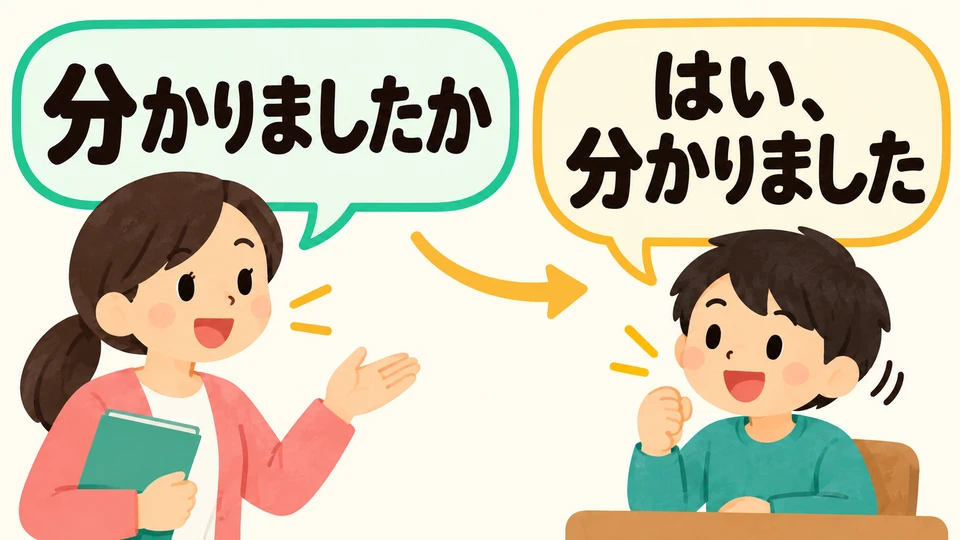
With 「分かりましたか」, the teacher checks whether you understood. If you did, answer 「はい、分かりました」.
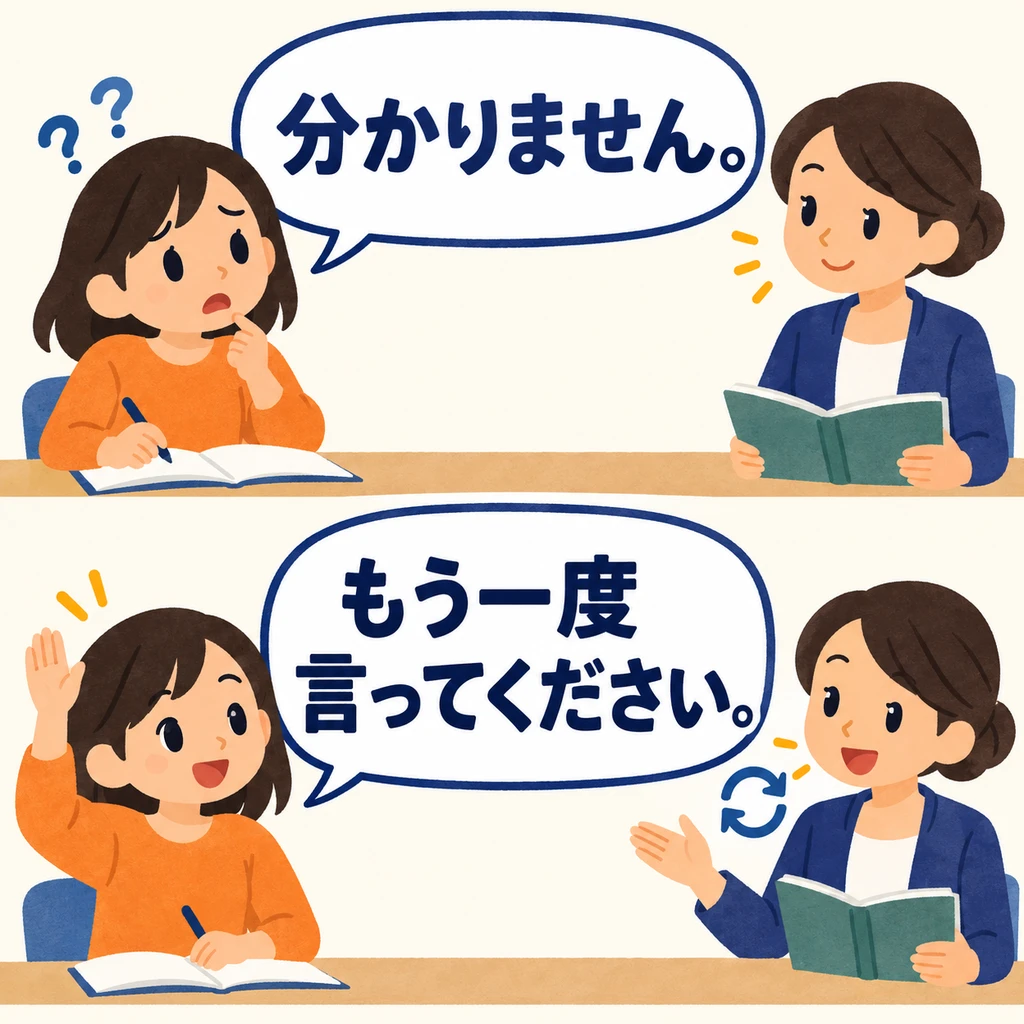
See how the student asks for help: say you do not understand, then ask the teacher to repeat. You do not have to pretend you understand.
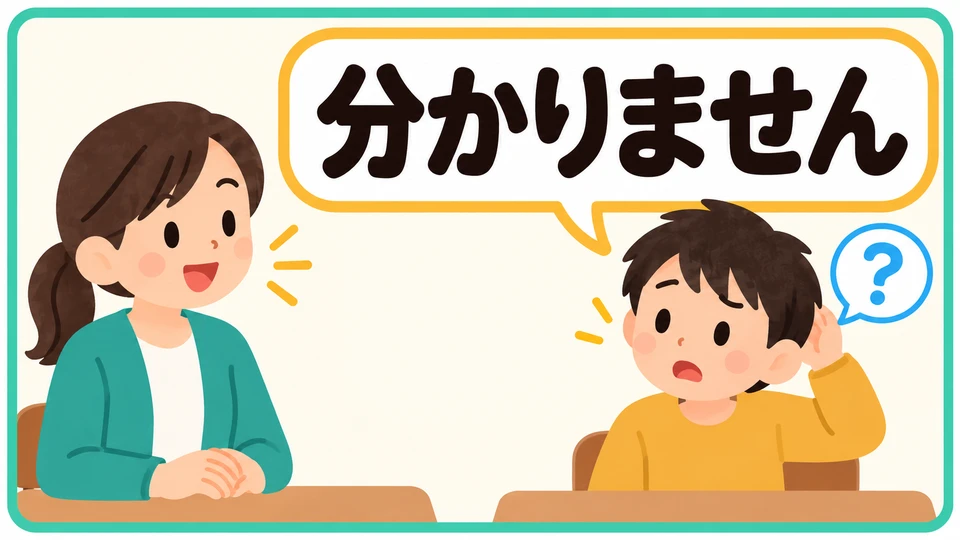
「分かりません」 means “I don’t understand.” You can say this even if you heard the sounds but did not understand the meaning.
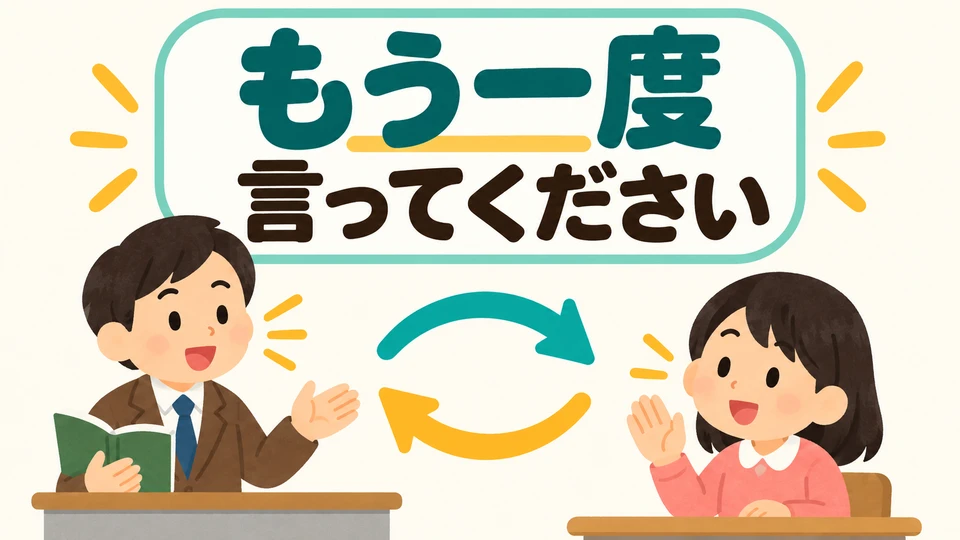
「もう一度言ってください」 means “Please say it again.” You can also use it to ask for help when you did not hear clearly.
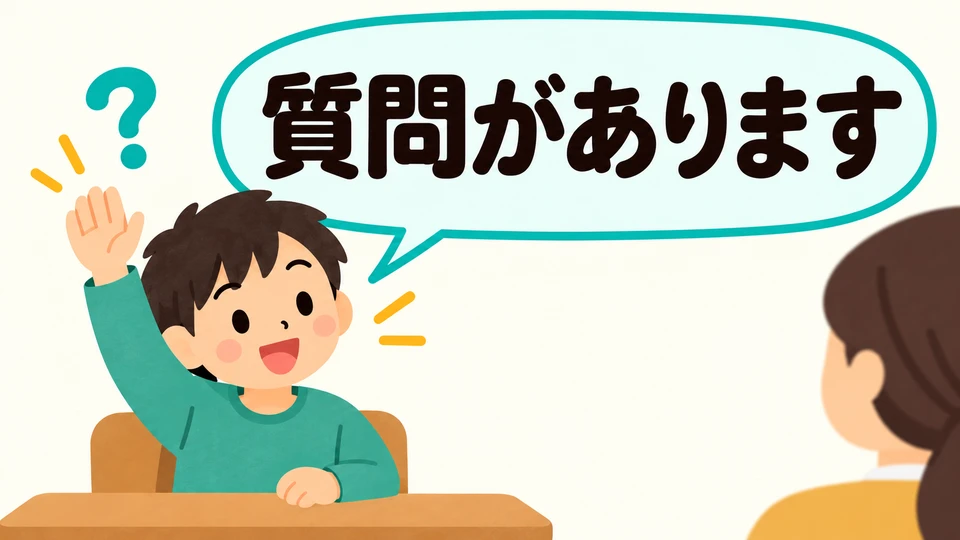
When you want to ask a question, raise your hand and say 「質問があります」 to let the teacher know.
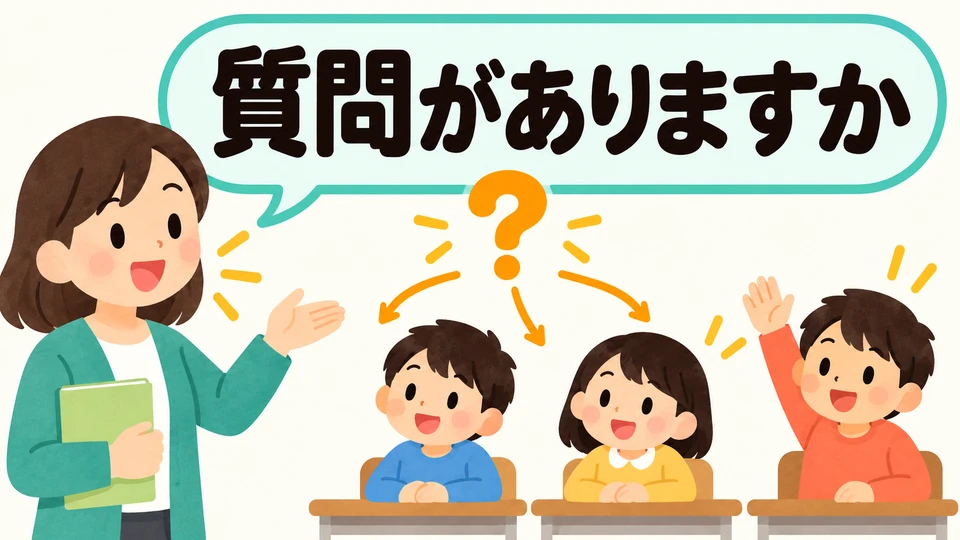
「質問がありますか」 asks whether anyone has a question. If something is unclear, speak up and tell the teacher.
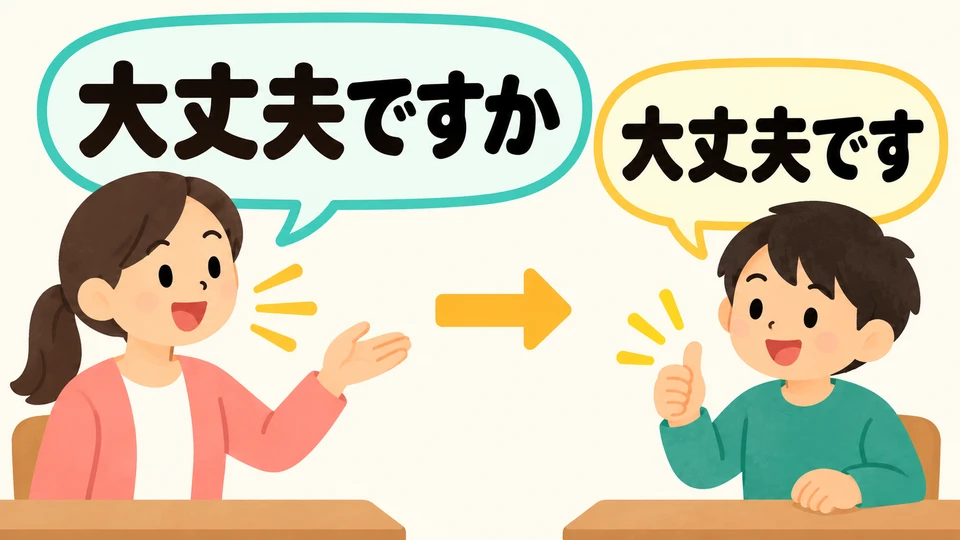
With 「大丈夫ですか」, the teacher checks whether everything is okay. If it really is, you can answer 「大丈夫です」.
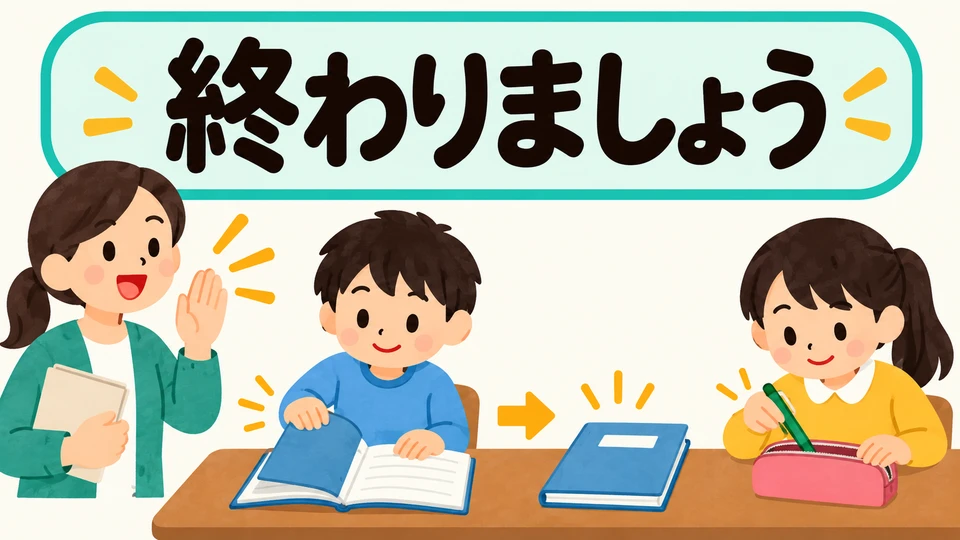
「終わりましょう」 signals that the lesson is over. After hearing it, put away your book and notebook.
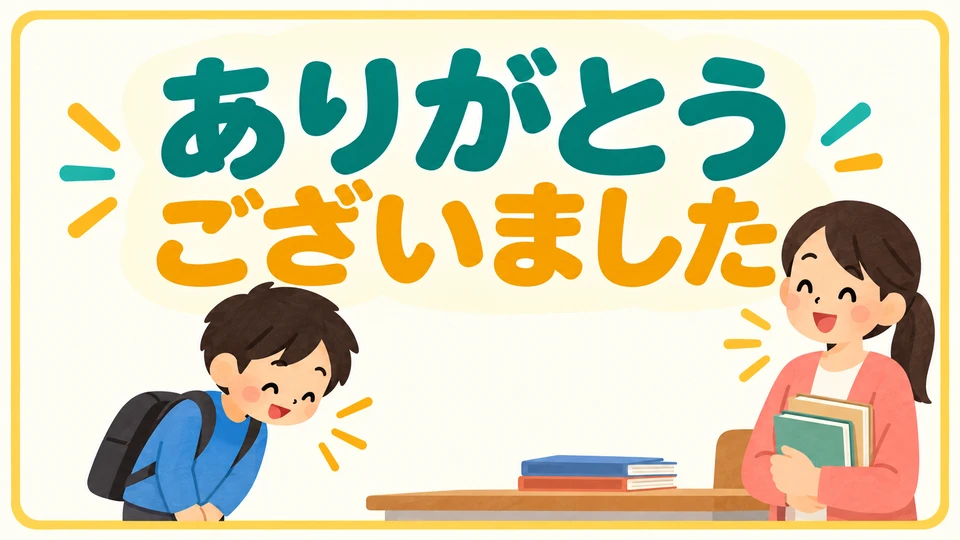
At the end of class, say 「ありがとうございました」 to thank the teacher for the lesson you just had.
Example sentences
- 先生sensei
teacher
- 学生gakusei
student
- みなさんminasan
everyone
- ノートnooto
In a conversation

- 先生始めましょう。
Teacher: Let’s begin.
- 学生よろしくお願いします。
Student: Thank you in advance.

- 先生見てください。
Teacher: Please look.
- 学生はい、分かりました。
More grammar in this theme
- 教室で使う表現Useful classroom expressions