JPEDLAB iconJPEDLAB
Save history

Create an account and play

Explore first, then save your progress whenever you are ready. No email address is required.

Start free
Read as articleCards
1/20

Look at the two little strokes at the top right. This mark is called dakuten; adding it changes the kana’s sound.

››

Lesson notes · Beginner 1

濁音・半濁音dakuon~handakuon

Voiced and p-sound kana

Learn 「濁音・半濁音」 and how the marks change kana sounds, including b and p in the は row.

How it works
  1. Look at the two little strokes at the top right. This mark is called dakuten; adding it changes the kana’s sound.
    Look at the two little strokes at the top right. This mark is called dakuten; adding it changes the kana’s sound.

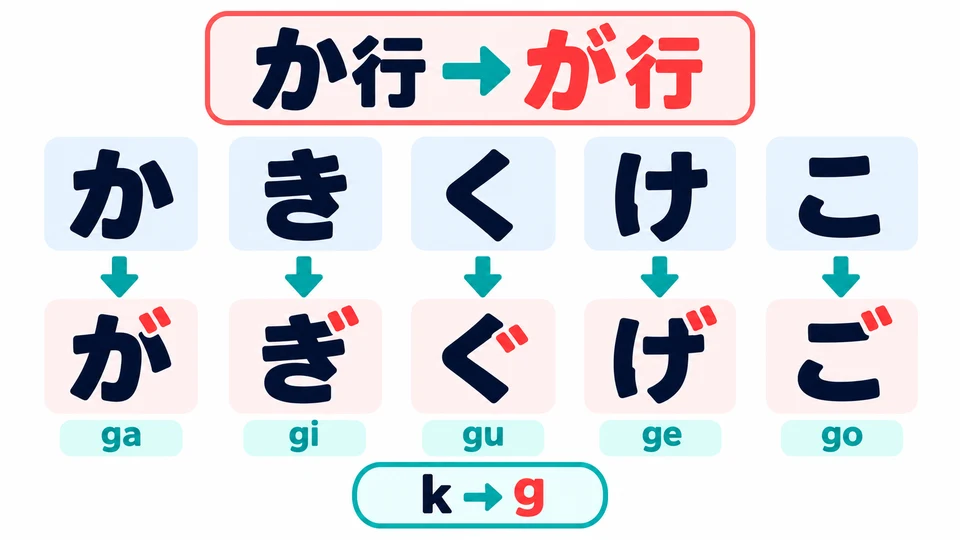
  2. Adding dakuten to the か row changes k to g. Try reading が・ぎ・ぐ・げ・ご.
    Adding dakuten to the か row changes k to g. Try reading が・ぎ・ぐ・げ・ご.

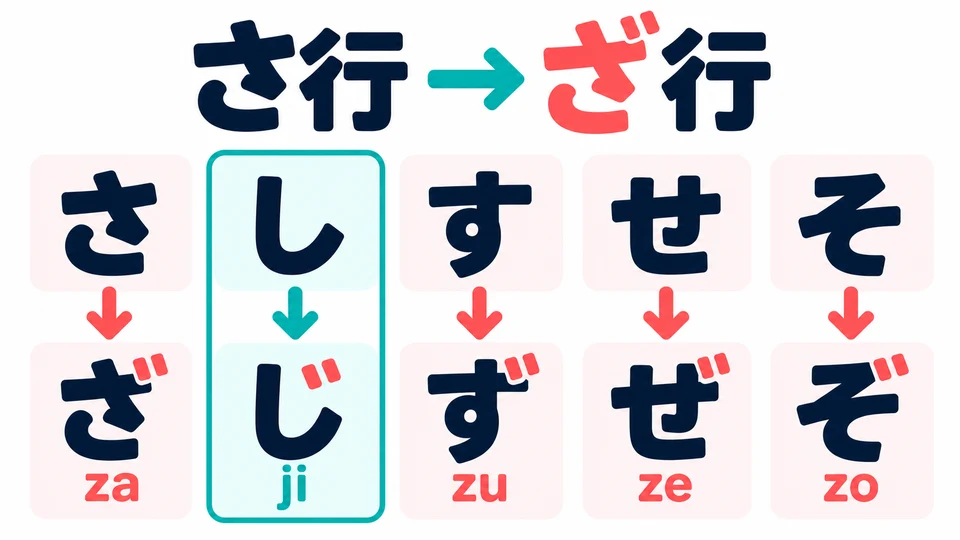
  3. With dakuten, most sounds in the さ row change to z. Note that し becomes じ, pronounced ji.
    With dakuten, most sounds in the さ row change to z. Note that し becomes じ, pronounced ji.

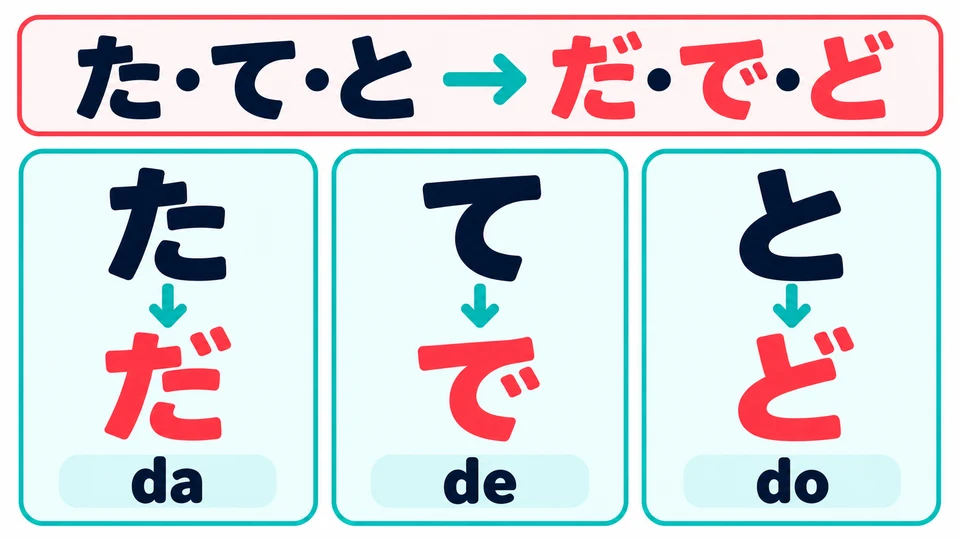
  4. Adding dakuten changes た・て・と to だ・で・ど, pronounced da・de・do.
    Adding dakuten changes た・て・と to だ・で・ど, pronounced da・de・do.

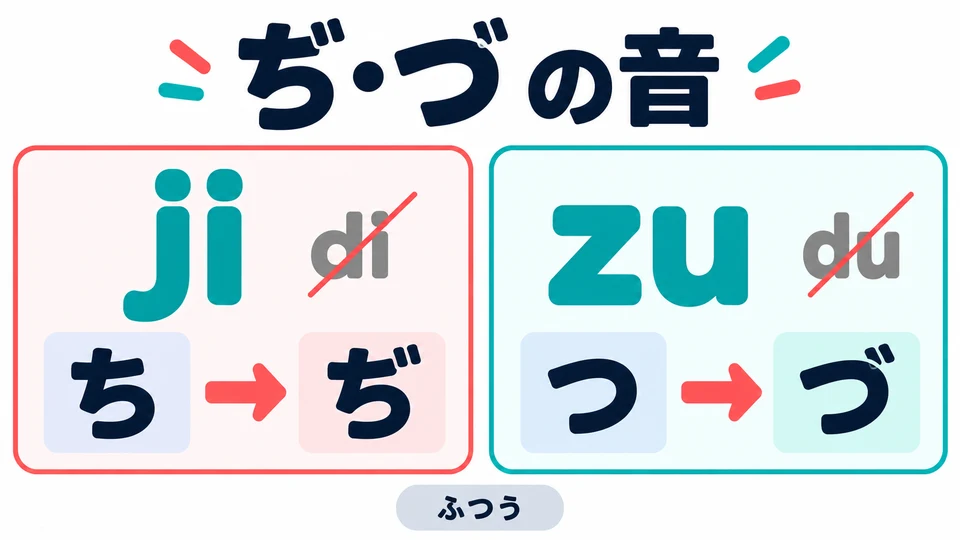
  5. With dakuten, ち and つ become ぢ and づ. They are usually pronounced ji and zu, not di and du.
    With dakuten, ち and つ become ぢ and づ. They are usually pronounced ji and zu, not di and du.

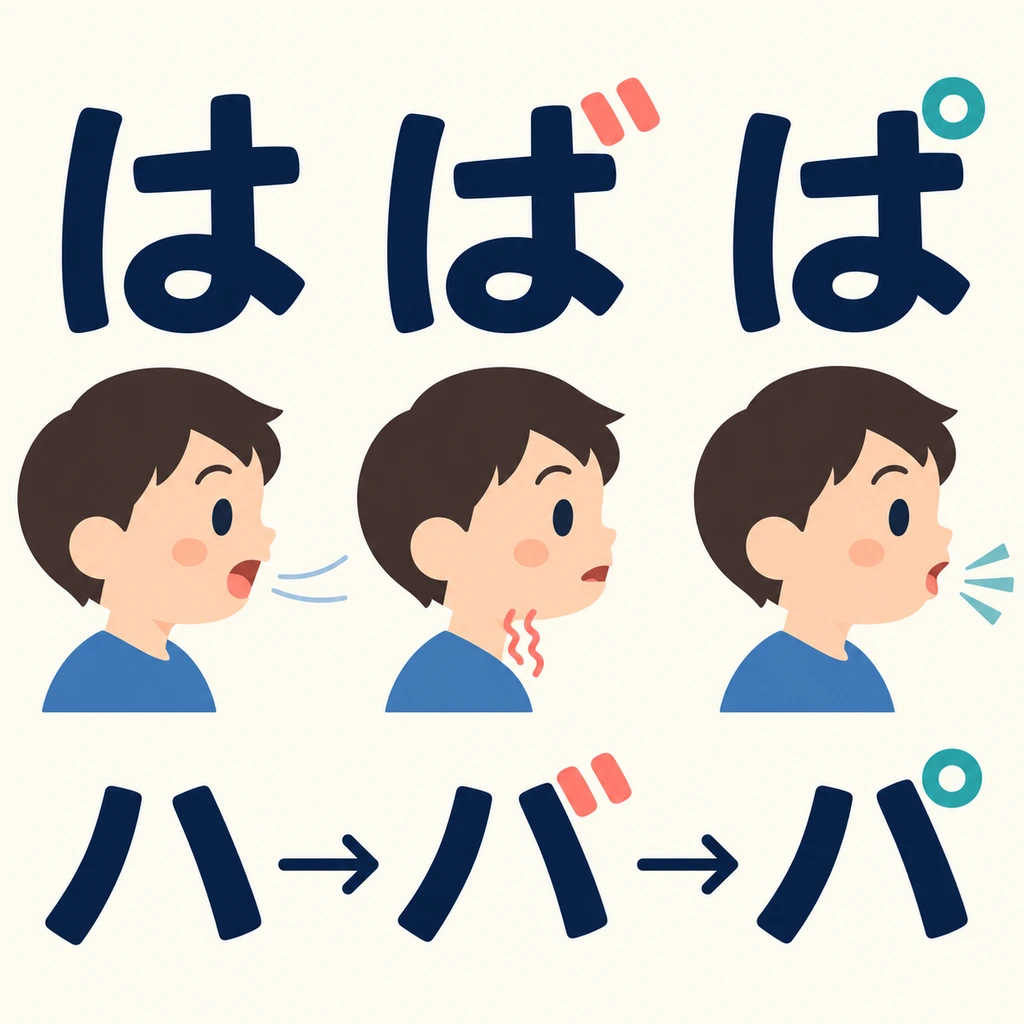
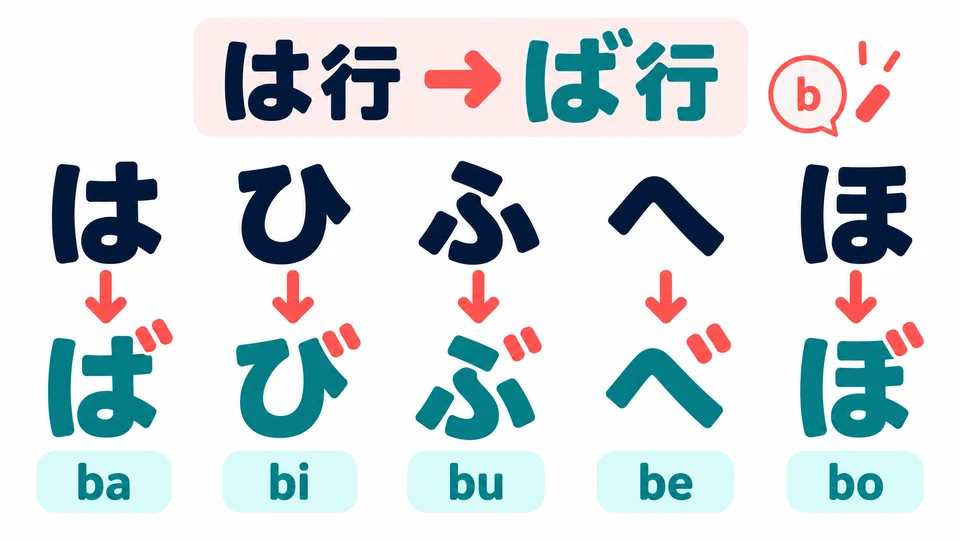
  6. Adding dakuten to the は row gives b sounds: ば・び・ぶ・べ・ぼ.
    Adding dakuten to the は row gives b sounds: ば・び・ぶ・べ・ぼ.
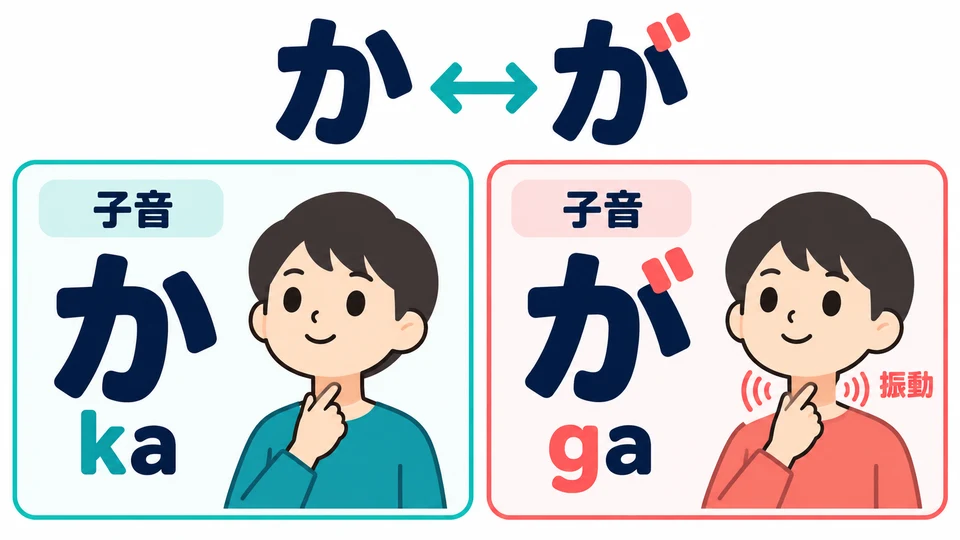
  • Gently touch your throat and alternate between か and が. Feel your vocal cords vibrate when you say が.

    Gently touch your throat and alternate between か and が. Feel your vocal cords vibrate when you say が.

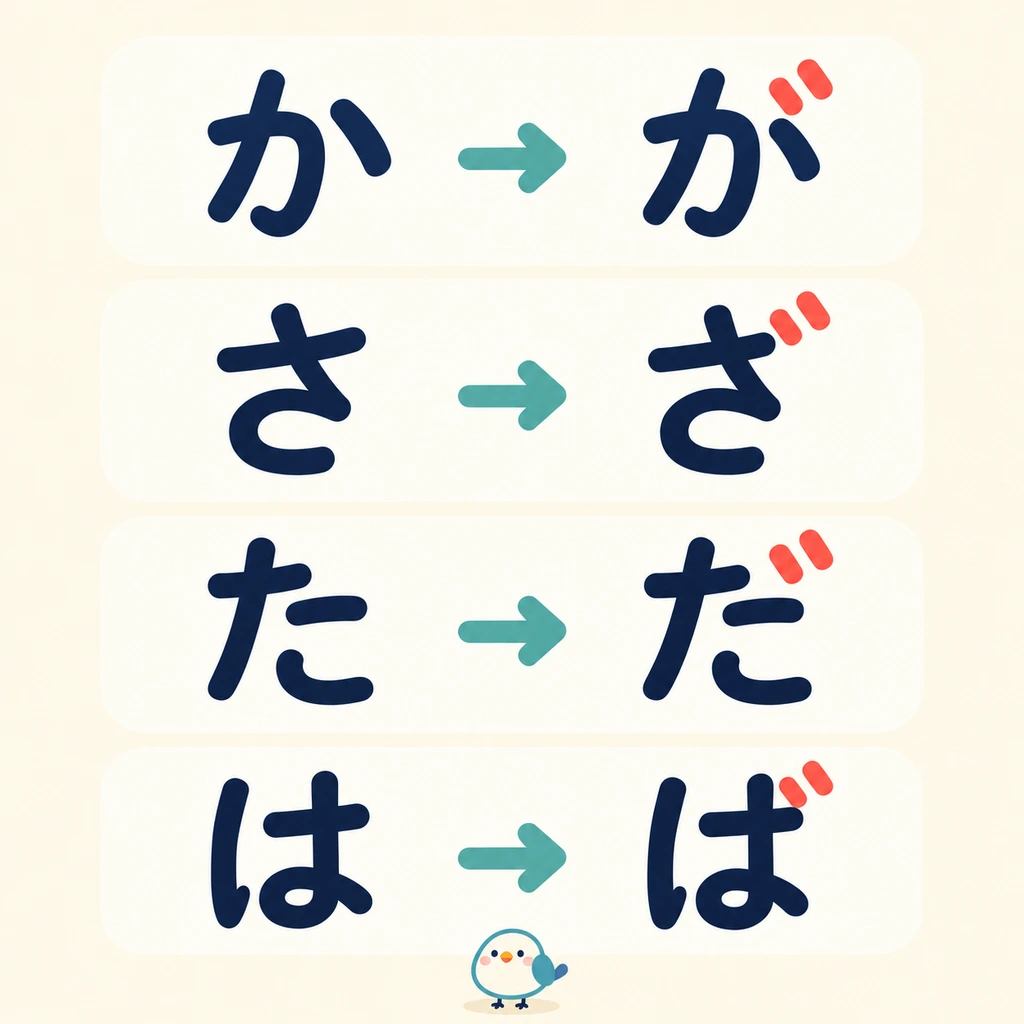
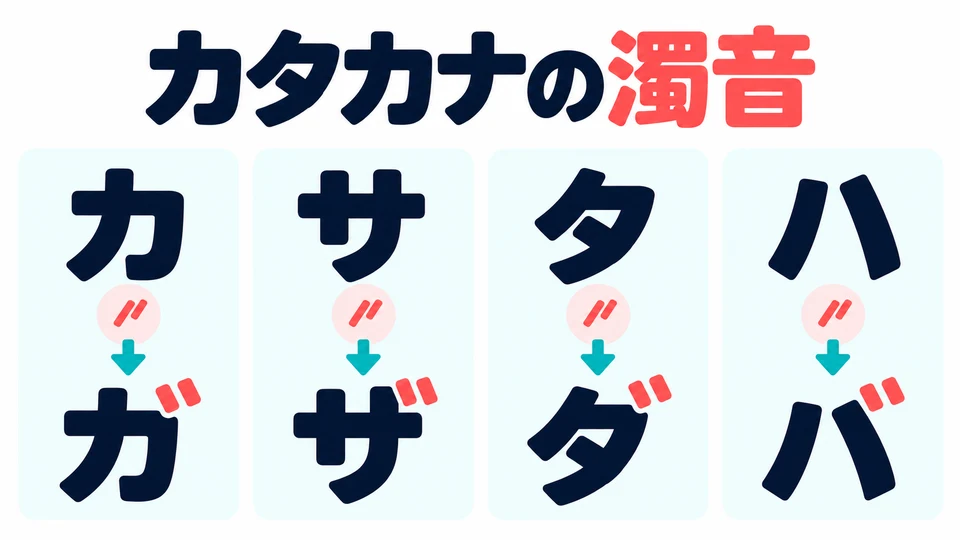
  • Katakana can take dakuten too: カ→ガ、サ→ザ、タ→ダ、ハ→バ.

    Katakana can take dakuten too: カ→ガ、サ→ザ、タ→ダ、ハ→バ.

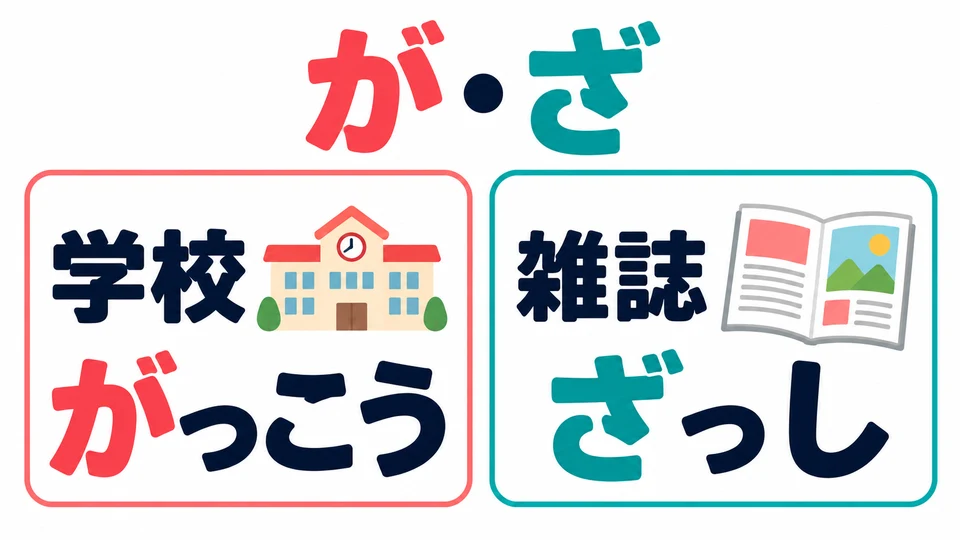
  • Listen to the example words 学校 and 雑誌. Find が and ざ, and notice how dakuten changes the sound.

    Listen to the example words 学校 and 雑誌. Find が and ざ, and notice how dakuten changes the sound.

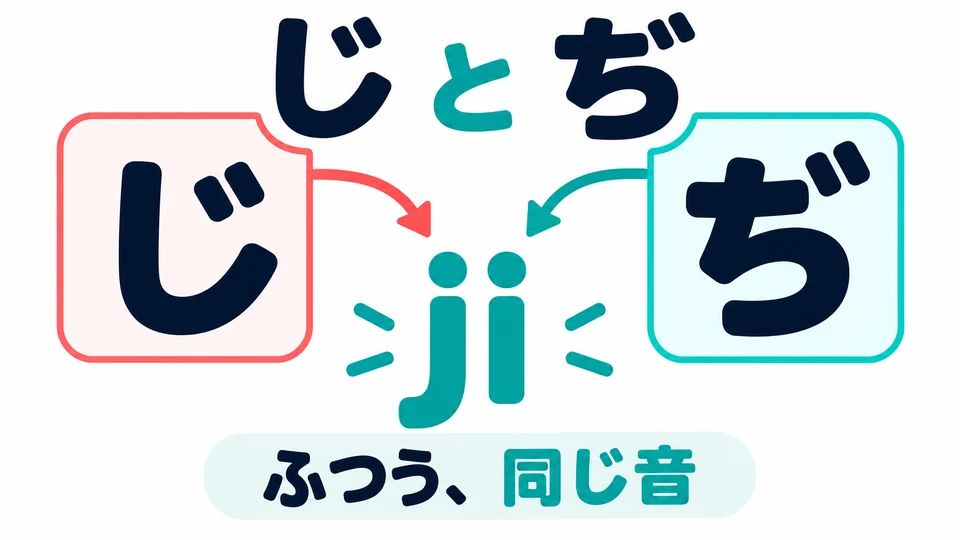
  • In modern Japanese, じ and ぢ usually sound the same. Both are often written ji in romaji.

    In modern Japanese, じ and ぢ usually sound the same. Both are often written ji in romaji.

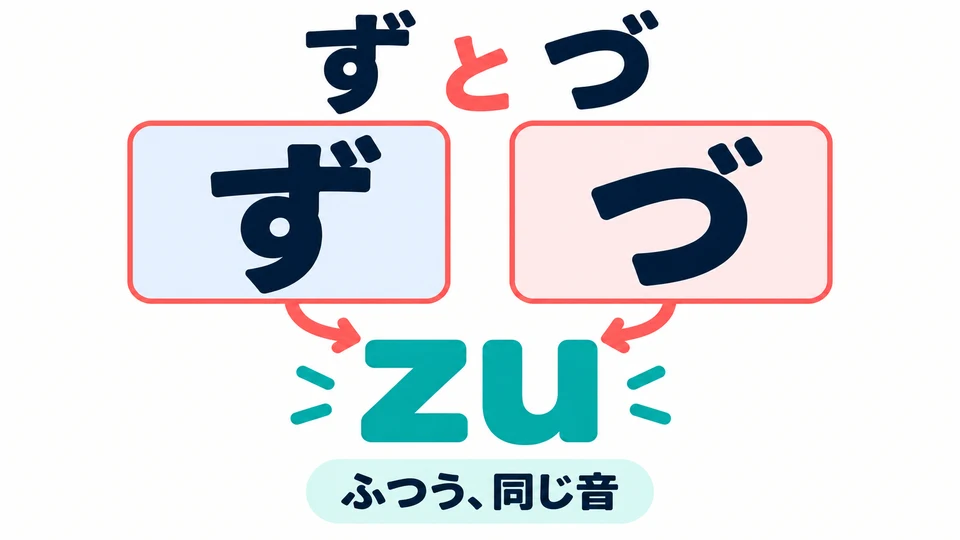
  • In modern Japanese, ず and づ usually sound the same. Both are often written zu in romaji.

    In modern Japanese, ず and づ usually sound the same. Both are often written zu in romaji.

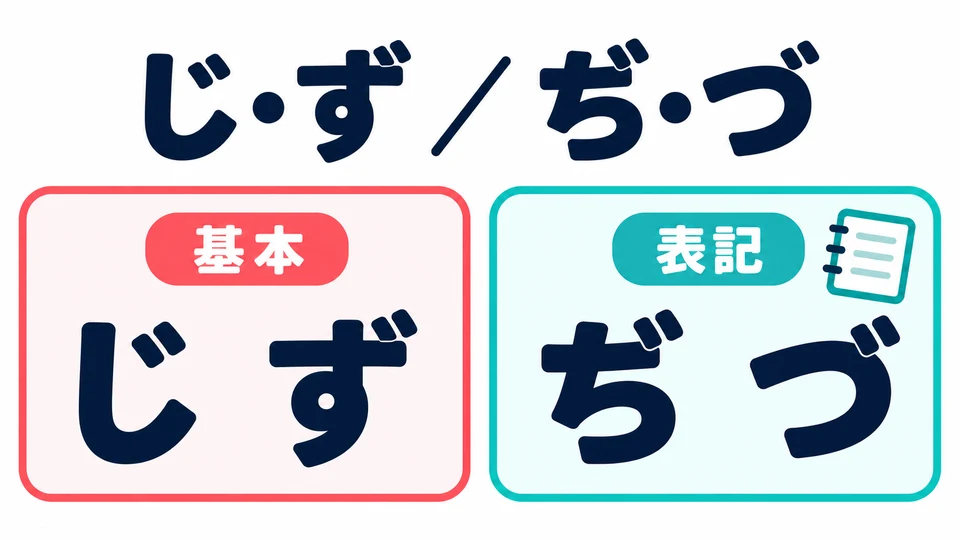
  • First get familiar with the common じ and ず. When you meet ぢ and づ, learn their spelling with the whole word.

    First get familiar with the common じ and ず. When you meet ぢ and づ, learn their spelling with the whole word.

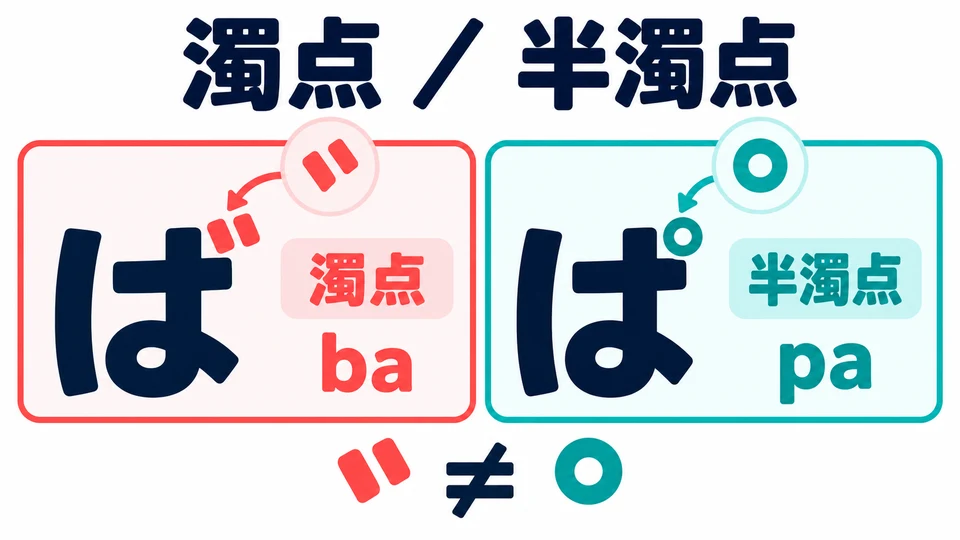
  • Look at the top right: two strokes turn は into ば, while a small circle turns it into ぱ. The sounds differ too.

    Look at the top right: two strokes turn は into ば, while a small circle turns it into ぱ. The sounds differ too.

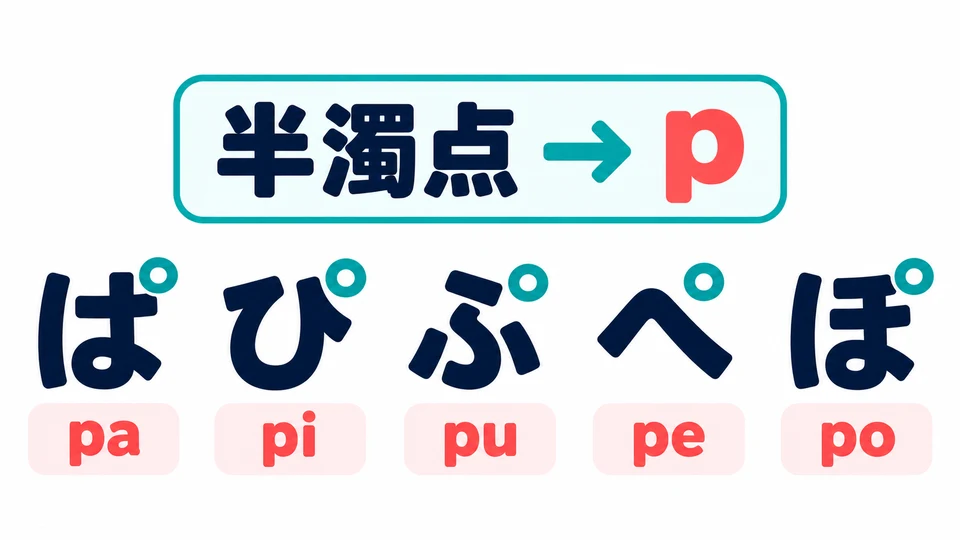
  • The small circle is called handakuten. On the は row, it gives p sounds: ぱ・ぴ・ぷ・ぺ・ぽ.

    The small circle is called handakuten. On the は row, it gives p sounds: ぱ・ぴ・ぷ・ぺ・ぽ.

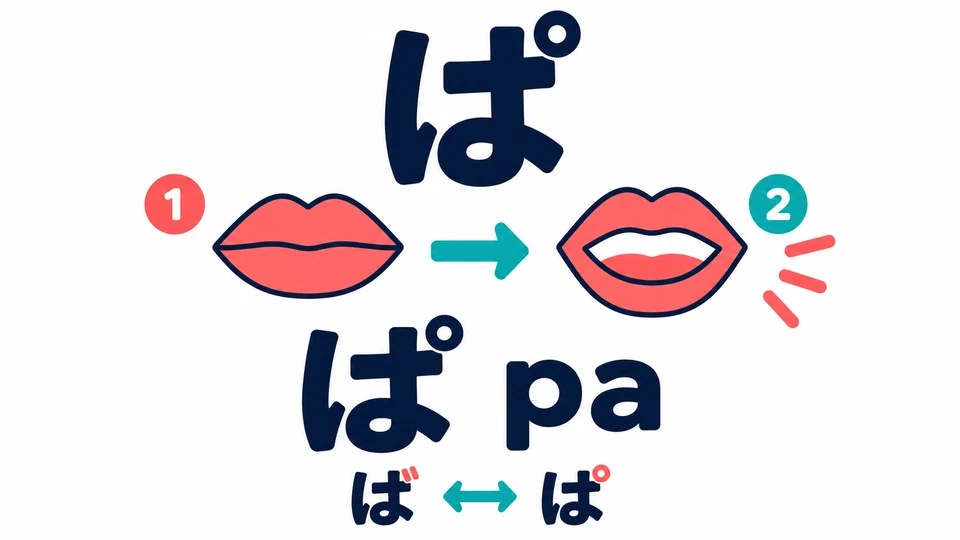
  • To say ぱ, close your lips, then release them suddenly. Try comparing the sounds of ば and ぱ.

    To say ぱ, close your lips, then release them suddenly. Try comparing the sounds of ば and ぱ.

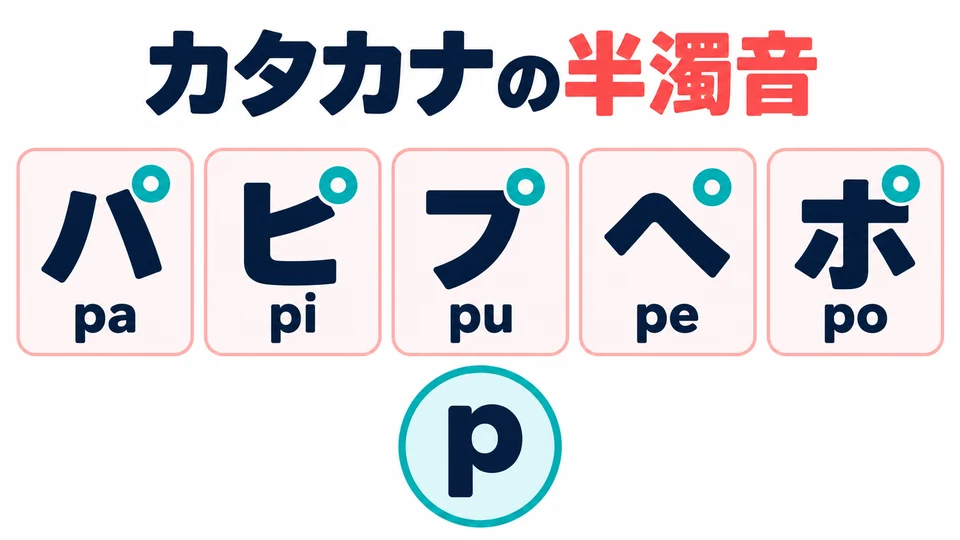
  • Katakana with handakuten also has p sounds: パ・ピ・プ・ペ・ポ.

    Katakana with handakuten also has p sounds: パ・ピ・プ・ペ・ポ.

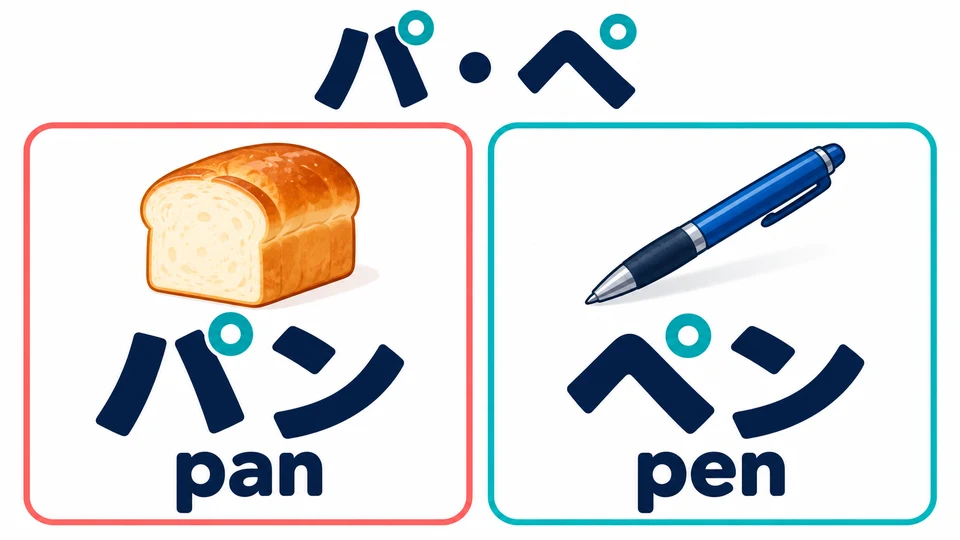
  • Read パン and ペン and find the small circles. Listen for the p sound in pan and pen.

    Read パン and ペン and find the small circles. Listen for the p sound in pan and pen.

  • The two strokes and the small circle are different marks. Look at ば and ぱ, identify the mark, then say the sound.

    The two strokes and the small circle are different marks. Look at ば and ぱ, identify the mark, then say the sound.

  • Example sentences

    • 学校がっこうgakkou

      school

    • 雑誌ざっしzasshi

      magazine

    • パンぱんpan

      bread

    • ペンぺんpen

      pen

    More grammar in this theme

    • ひらがな あ行〜な行Hiragana sounds: a to na rows
    • ひらがな は行〜んHiragana sounds: ha row to n
    • カタカナ ア行〜ワ行Katakana sounds and loanwords
    • 濁音・半濁音Voiced and p-sound kana
    • 長音・促音Long vowels and consonant pauses
    • 拗音(きゃ・きゅ・きょ)Blended sounds with small ゃゅょ
    • 教室で使う表現Useful classroom expressions
    Previousカタカナ ア行〜ワ行Next長音・促音

    Keep practising

    Test your Japanese vocabulary12 adaptive questions, freeCheck your pronunciationRead aloud and get a scorePractise verb forms10-question conjugation quizSee the whole courseGrammar, vocabulary and quizzes by theme
    See the whole course
    Beginner 1
    Introduction to Japanese Writing