JPEDLAB iconJPEDLAB
Save history

Create an account and play

Explore first, then save your progress whenever you are ready. No email address is required.

Start free
Read as articleCards
See the whole course›Beginner 1›Directions & Requests

Japanese grammar · ≈ JLPT N5 · Beginner 1

〜てください~te kudasai

polite request to do

Attach ください to a verb in the て form to politely ask or instruct someone to do the action.

Start the interactive lessonIllustrated cards, audio and speaking practiceTake the quiz
Pattern
〜てください
Romaji
~te kudasai
JLPT (approx.)
≈ N5
Course level
Beginner 1
Theme
Directions & Requests

How it works

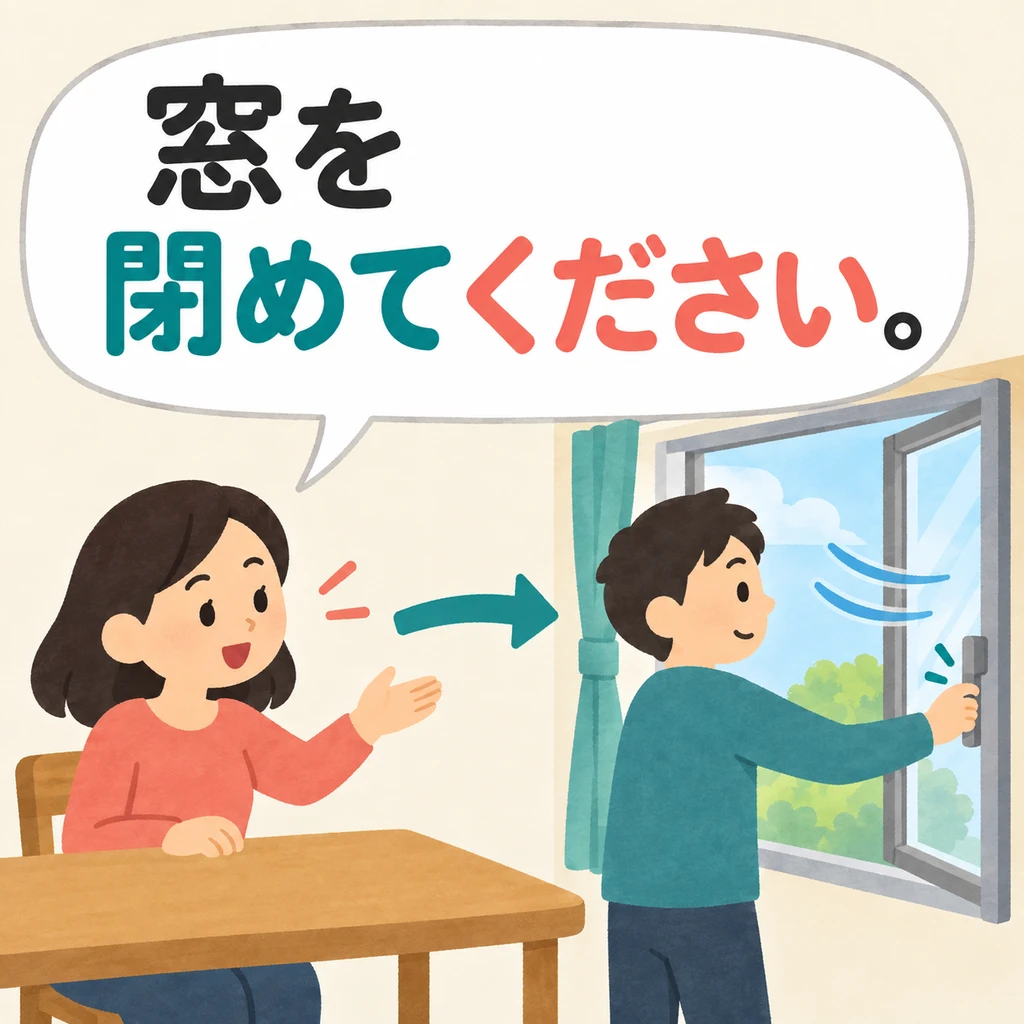
  1. It is windy. Who will close the window? The speaker uses this pattern to ask the listener to do the action.
    It is windy. Who will close the window? The speaker uses this pattern to ask the listener to do the action.

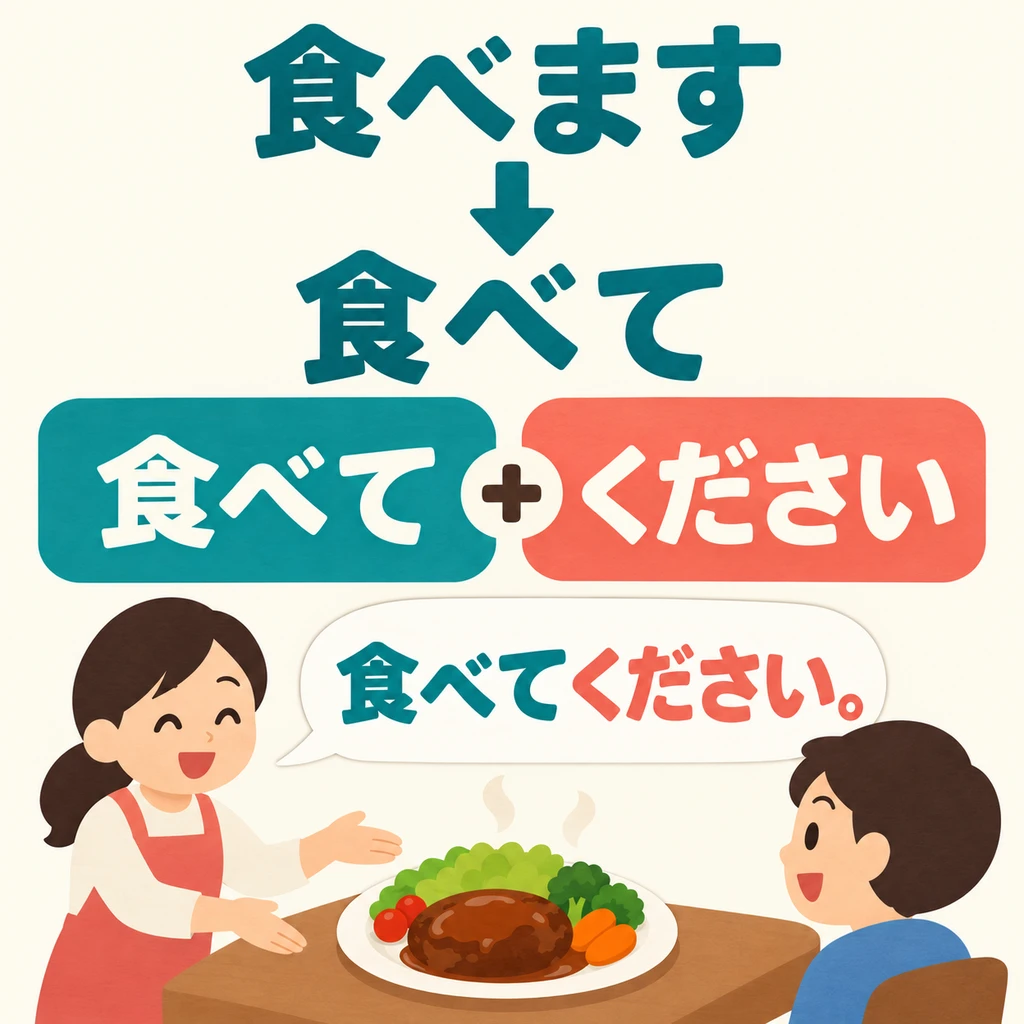
  2. Put the verb in the て form, then add ください to politely ask someone to do something.
    Put the verb in the て form, then add ください to politely ask someone to do something.

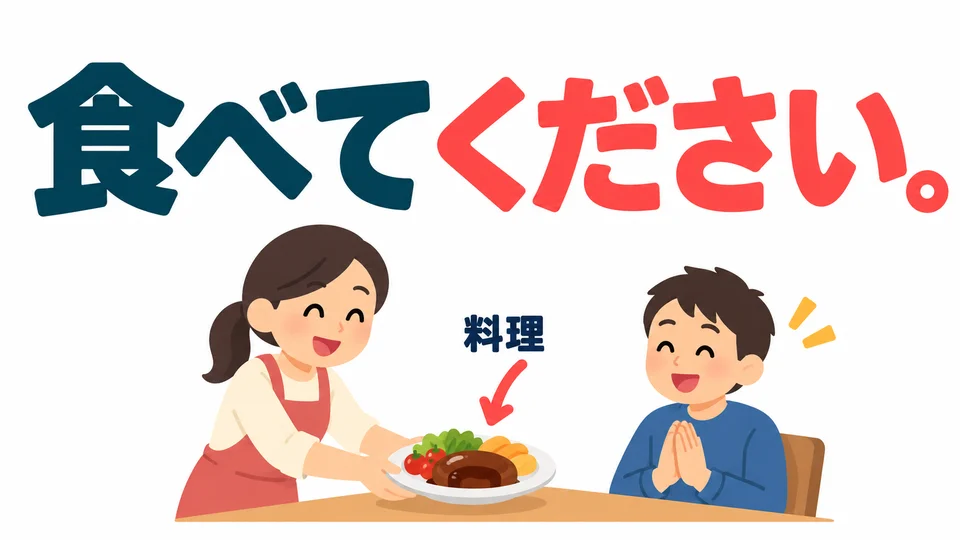
  3. You can also say 「食べてください」 to invite a guest to start eating.
    You can also say 「食べてください」 to invite a guest to start eating.

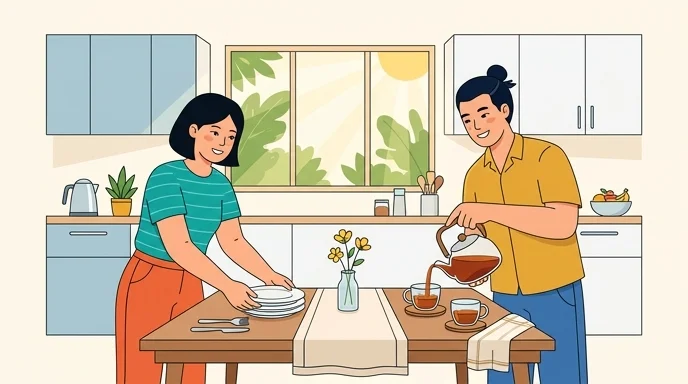
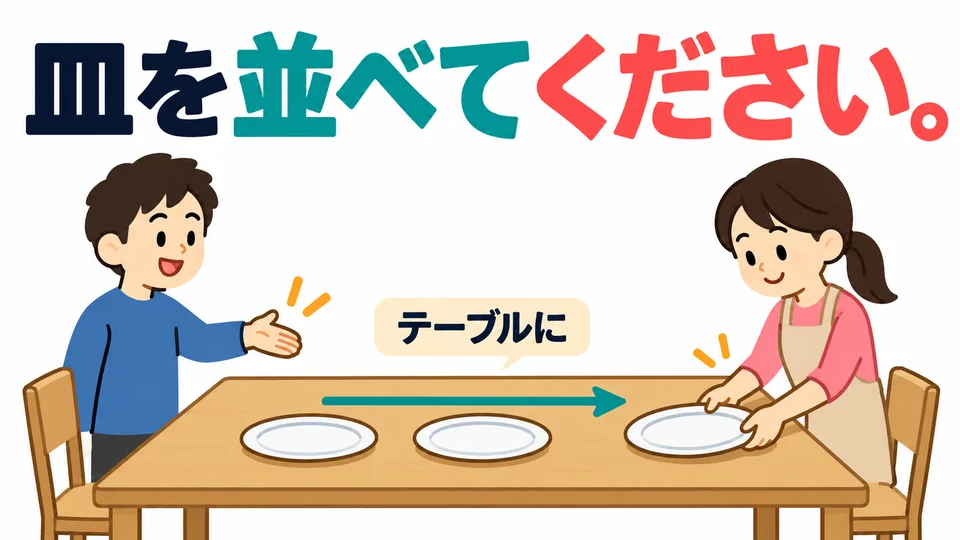
  4. When setting the table, you can use this pattern to politely instruct someone to arrange the plates.
    When setting the table, you can use this pattern to politely instruct someone to arrange the plates.

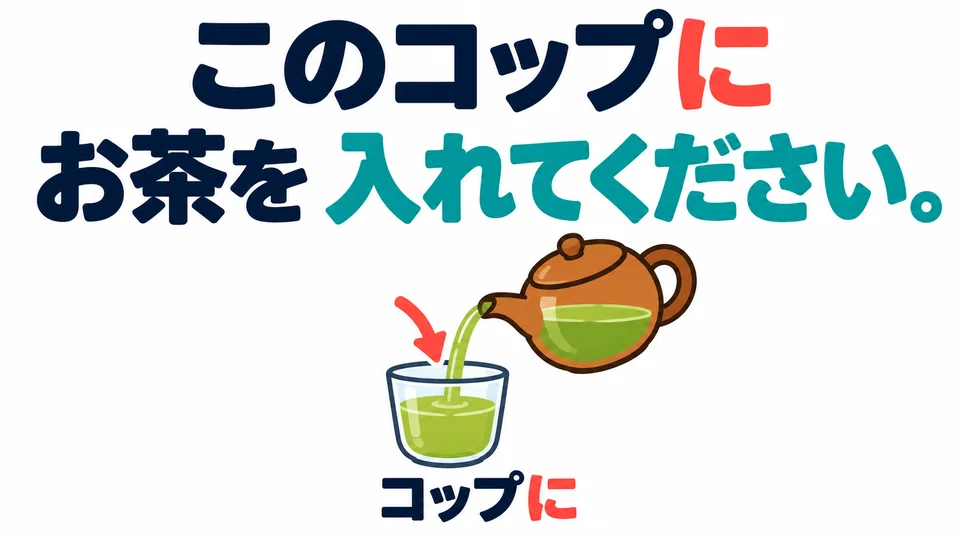
  5. To ask someone to pour tea, say 「入れてください」. The cup is where the tea goes.
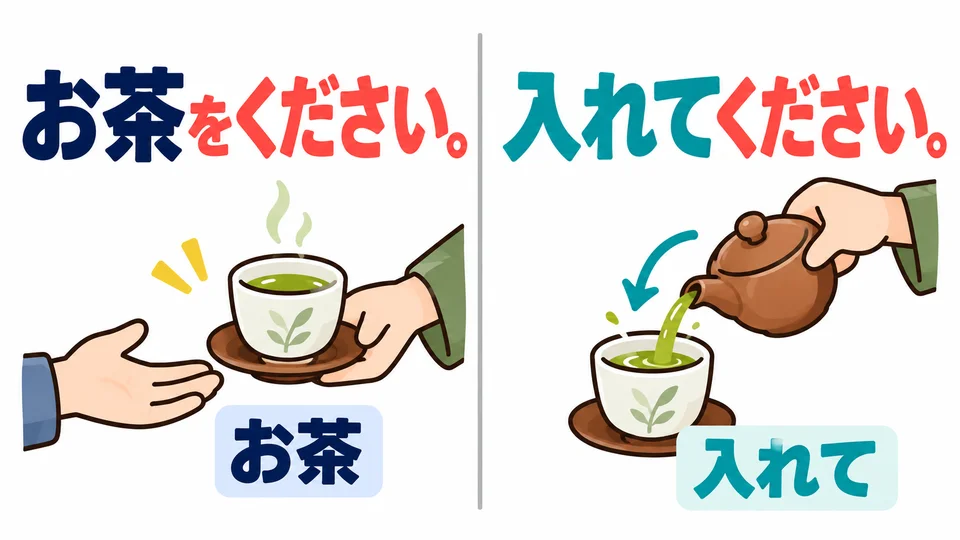
    To ask someone to pour tea, say 「入れてください」. The cup is where the tea goes.

  6. 「お茶をください」 asks for tea; 「入れてください」 asks someone to pour it.
    「お茶をください」 asks for tea; 「入れてください」 asks someone to pour it.

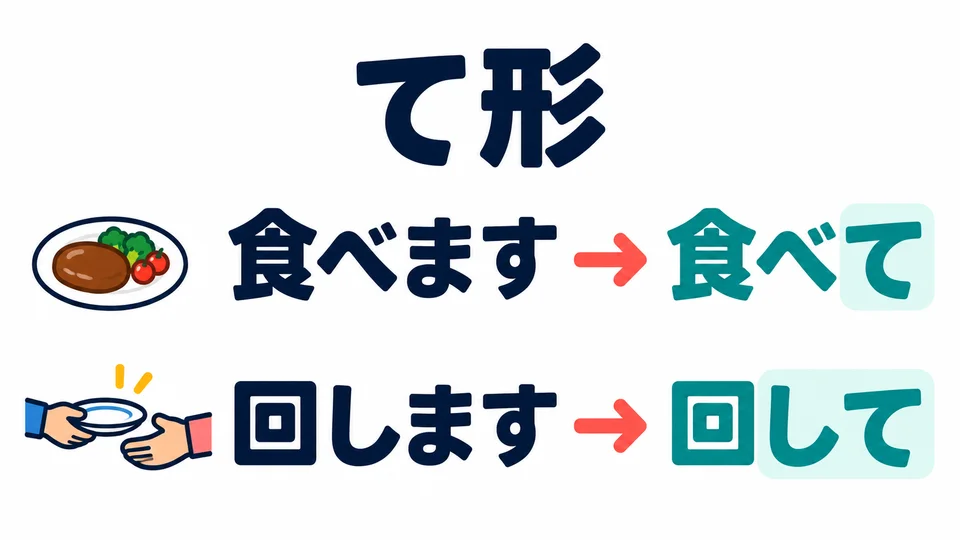
  7. The examples contain 「食べて」 and 「回して」. Verbs do not all change in the same way to make the て form.
    The examples contain 「食べて」 and 「回して」. Verbs do not all change in the same way to make the て form.

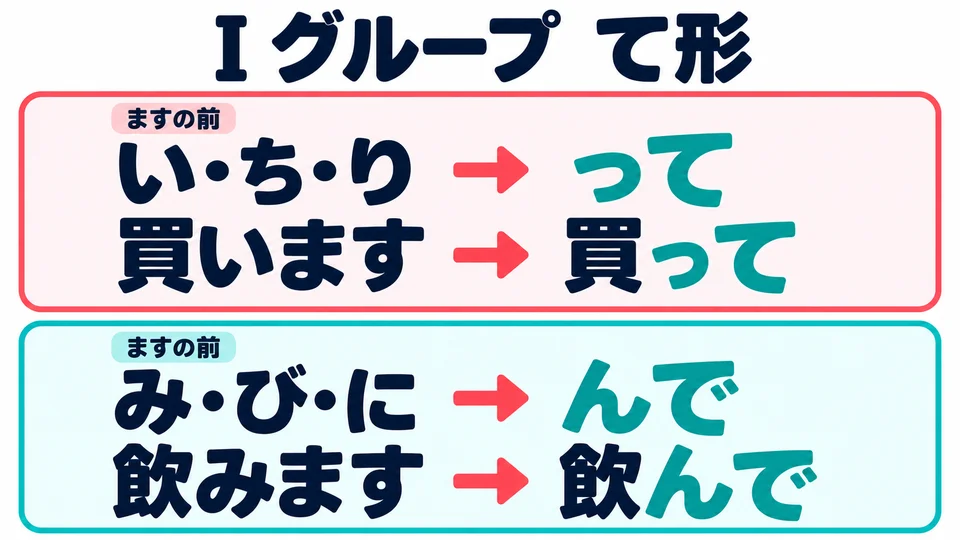
  8. Check the group first. Group I changes depend on the kana before 「ます」 (see the image). Keep the small 「っ」 and the voicing marks on 「で」.
    Check the group first. Group I changes depend on the kana before 「ます」 (see the image). Keep the small 「っ」 and the voicing marks on 「で」.

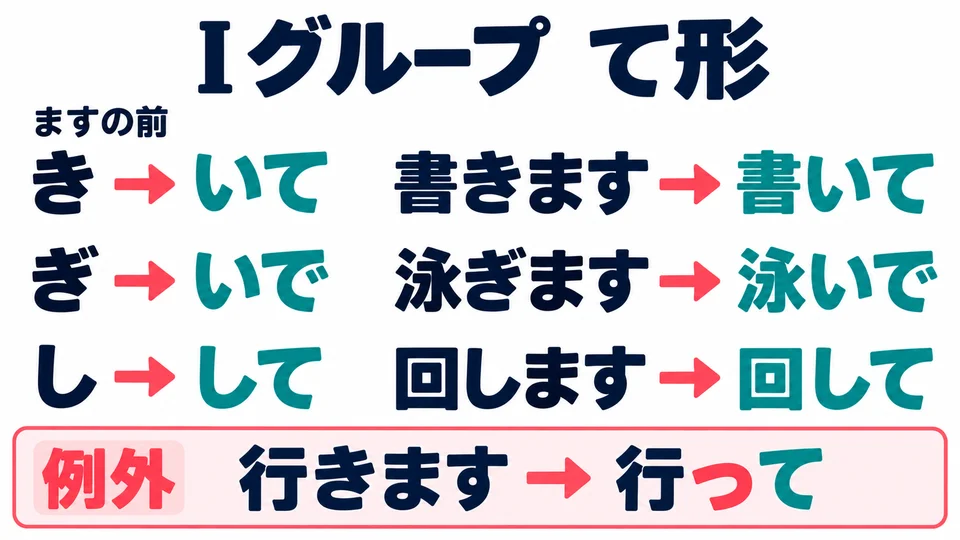
  9. See the image for other Group I changes. 「行きます」 is an exception: it becomes 「行って」. Adding 「ください」 after the て form makes a request.
    See the image for other Group I changes. 「行きます」 is an exception: it becomes 「行って」. Adding 「ください」 after the て form makes a request.

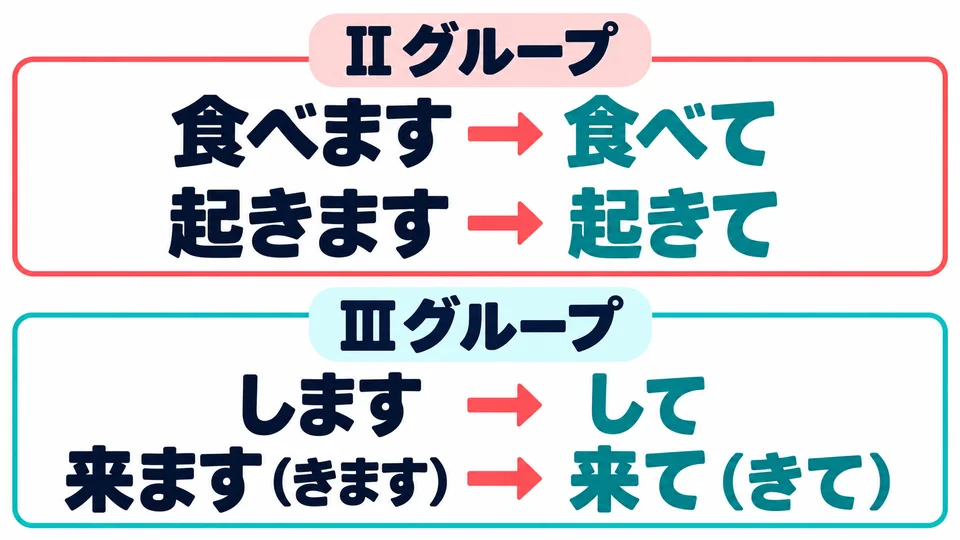
  10. For Group II, remove 「ます」 and add 「て」; see the image for Group III. Learn the group first: 「起きます」 is Group II, so do not apply Group I rules.
    For Group II, remove 「ます」 and add 「て」; see the image for Group III. Learn the group first: 「起きます」 is Group II, so do not apply Group I rules.

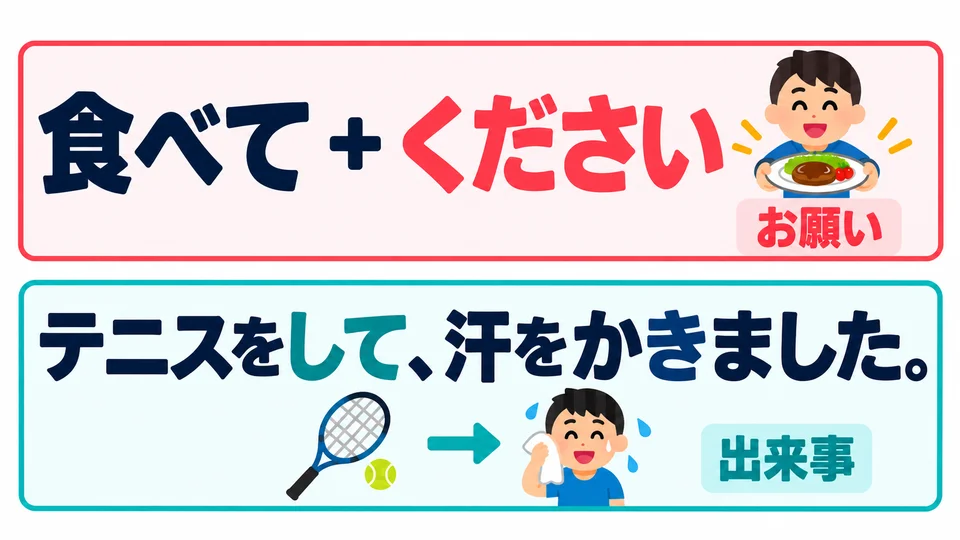
  11. The tennis sentence has no ください; it simply describes what happened. A て form does not always signal a request.

    The tennis sentence has no ください; it simply describes what happened. A て form does not always signal a request.

Example sentences

  • 食べたべtabeてteください。くださいkudasai

    Please eat.

  • このkono料理りょうりryouriをo回しまわしmawashiてteください。くださいkudasai

In a conversation

  • A
    テーブルてーぶるに皿さらを並べならべてください。ください

    A: Please line up the plates on the table.

  • B
    はい、はい分かりました。わかりましたいくつ並べますならべますか。か

    B: Okay, I understand. How many should I line up?

Check yourself

  1. Which sentence is correct?

    1. 皿を並べてください。
    2. 皿を並ぶてください。
    3. 皿を並べください。
    4. 皿を並べきてください。
    Show answer

    Answer: A 皿を並べてください。

  2. Which sentence is correct?

    1. 窓を閉めてください。
    2. 窓を閉みてください。
    3. 窓を閉めでください。
    4. 窓を閉めきください。
    Show answer

    Answer: A 窓を閉めてください。

  3. Which sentence is correct?

    1. お茶を飲んでください。
    2. お茶を飲みてください。
    3. お茶を飲んでくだざい。
    4. お茶を飲みください。
    Show answer

    Answer: A お茶を飲んでください。

More grammar in this theme

  • 〜てくださいpolite request to do

Keep practising

Test your Japanese vocabulary12 adaptive questions, freeCheck your pronunciationRead aloud and get a scorePractise verb forms10-question conjugation quizSee the whole courseGrammar, vocabulary and quizzes by theme

Please pass this dish.

  • テニスてにすtenisuをoしshiて、てte汗あせaseをoかきました。かきましたkakimashita

    I played tennis and worked up a sweat.

  • A
    このコップこっぷにお茶おちゃを入れいれてください。ください

    A: Please pour tea into this glass.

  • B
    はい、はい分かりました。わかりました温かいですあたたかいですか、か冷たいですつめたいですか。か

    B: Okay, I understand. Hot or cold?

    • A
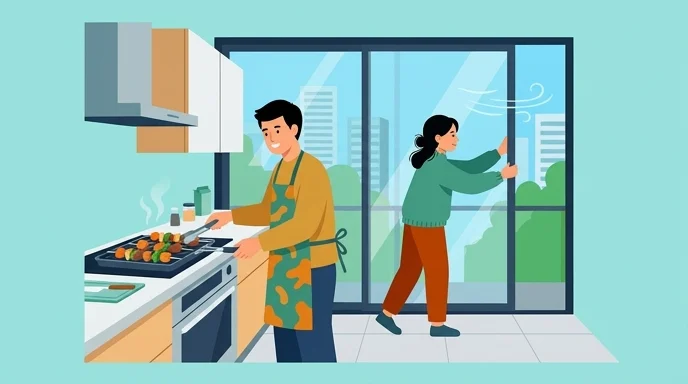
      肉にくを焼いやいてください。ください

      A: Please grill the meat.

    • B
      はい、はい分かりました。わかりましたどのくらい焼きますやきますか。か

      B: Okay, I understand. How long should I grill it?

    • A
      窓まどを閉めしめてください。ください風かぜが強いです。つよいです

      A: Please close the window. The wind is strong.

    • B
      はい、はい分かりました。わかりました

      B: Okay, I understand.

    • A
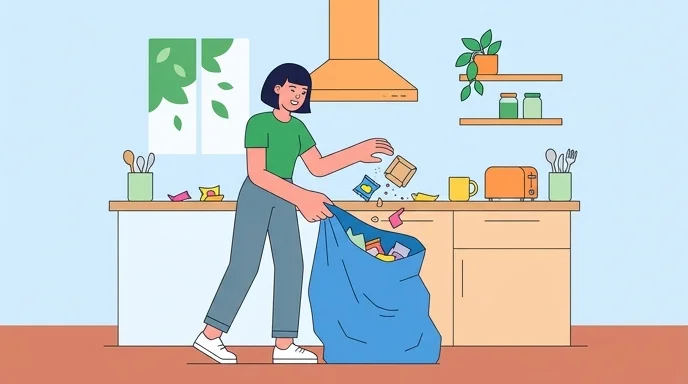
      ゴミごみをゴミ袋ごみぶくろに入れいれてください。ください

      A: Please put the trash in the trash bag.

    • B
      はい、はい今、いま片付けます。かたづけます

      B: Okay, I'll clean it up now.

    Take the quiz
    〜は〜にありますwhere an object is located
    〜は〜にいますwhere a person or animal is
    〜に〜があります/いますwhat is present at a place
    〜で〜ますtool or means used
    〜方way to do something
    どの〜/どれwhich one or which item
    〜ていますaction in progress
    〜ましょうかoffer or suggestion
    まだあります/もうありませんstill left or all gone
    誰が〜ますかask who does it
    Previous〜に〜があります/います
    Next〜で〜ます