JPEDLAB iconJPEDLAB
Save history

Create an account and play

Explore first, then save your progress whenever you are ready. No email address is required.

Start free
Read as articleCards
1/12

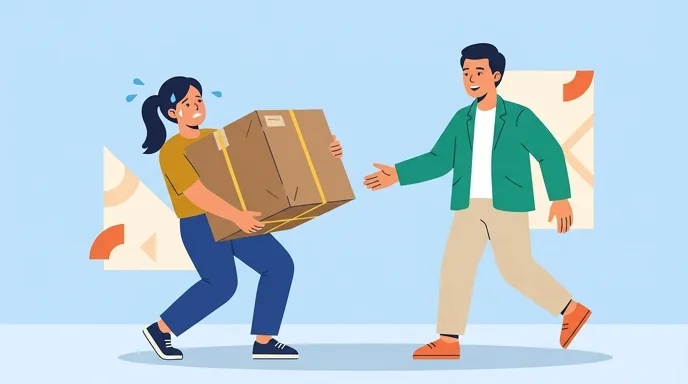
Seeing someone carrying something heavy, you offer to help. Think: who will do the helping?

››

Lesson notes · ≈ JLPT N5 · Beginner 1

〜ましょうか~mashou ka

offer or suggestion

Use 「〜ましょうか」 to offer help or suggest doing something together, then invite the other person's response.

How it works
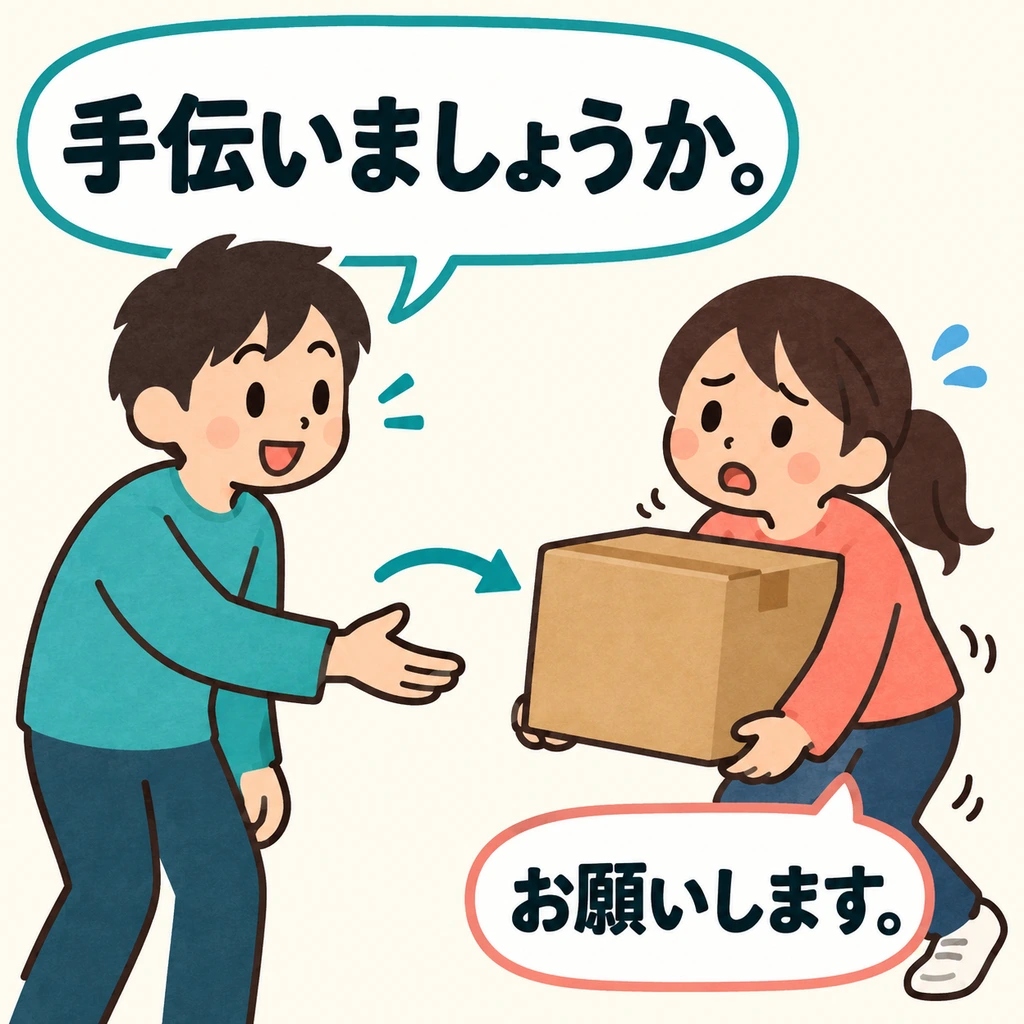
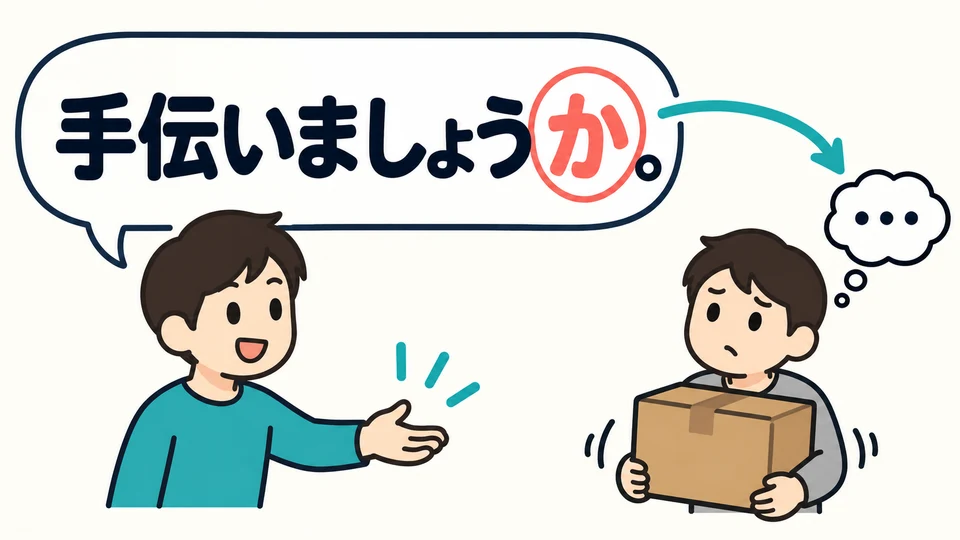
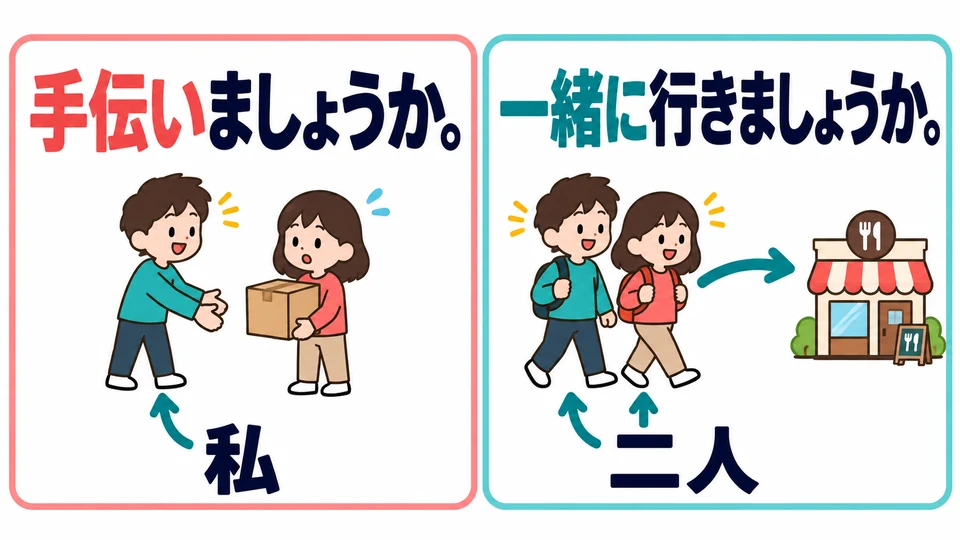
  1. Seeing someone carrying something heavy, you offer to help. Think: who will do the helping?
    Seeing someone carrying something heavy, you offer to help. Think: who will do the helping?

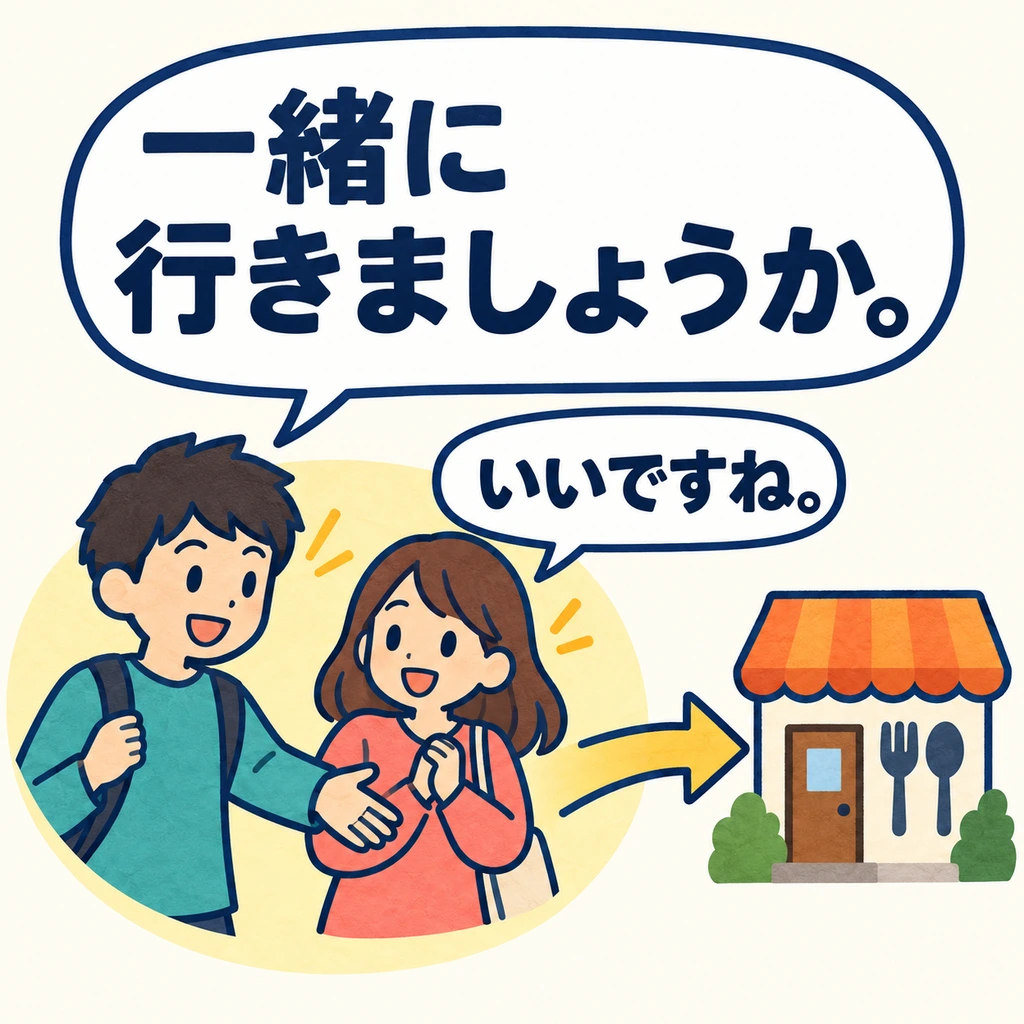
  2. You can also suggest doing something together. The arrow beside the two people shows them going to the restaurant together.
    You can also suggest doing something together. The arrow beside the two people shows them going to the restaurant together.

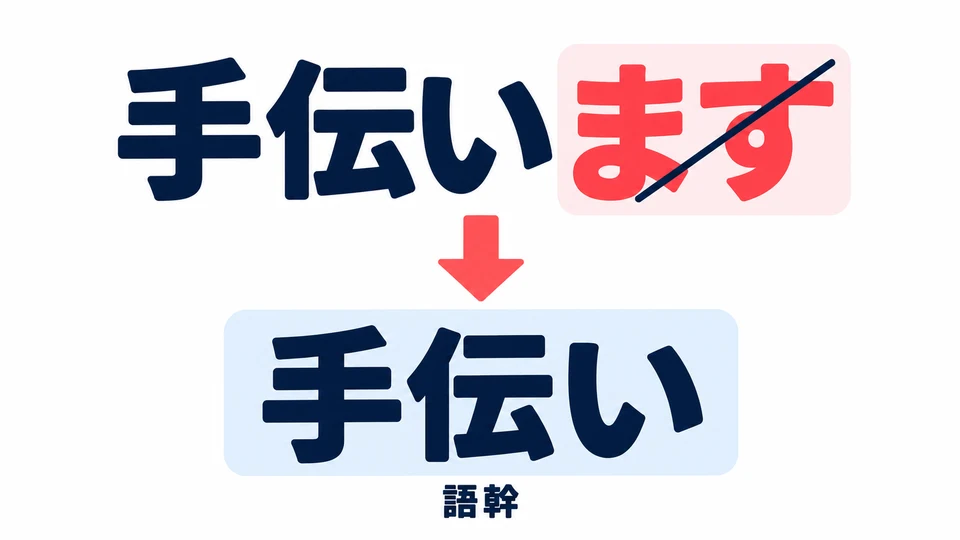
  3. First remove 「ます」 from the verb: 手伝います→手伝い. This is the verb stem.
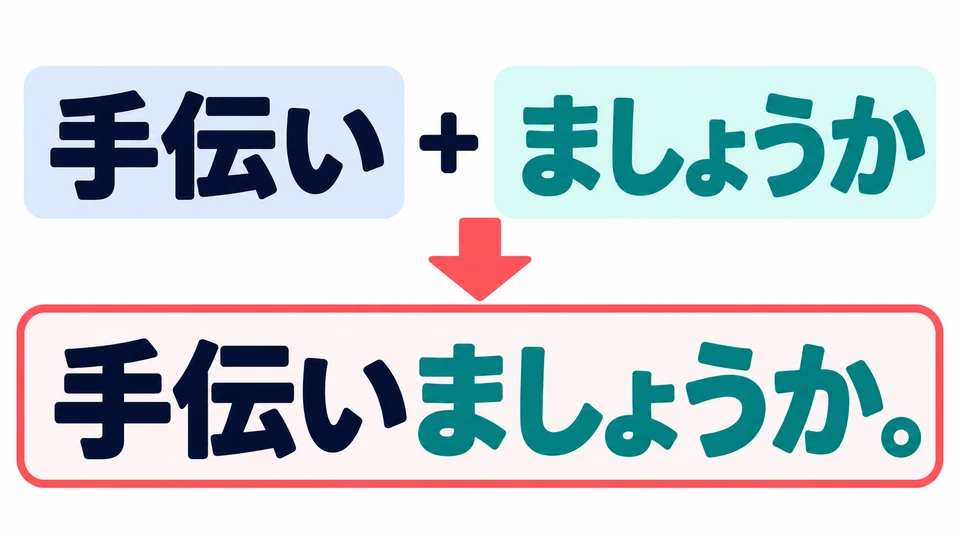
    First remove 「ます」 from the verb: 手伝います→手伝い. This is the verb stem.

  4. Add 「ましょうか」 to the stem: 手伝い→手伝いましょうか.
    Add 「ましょうか」 to the stem: 手伝い→手伝いましょうか.

  5. The final 「か」 asks what the other person would like. After making your suggestion, wait for their answer.
    The final 「か」 asks what the other person would like. After making your suggestion, wait for their answer.
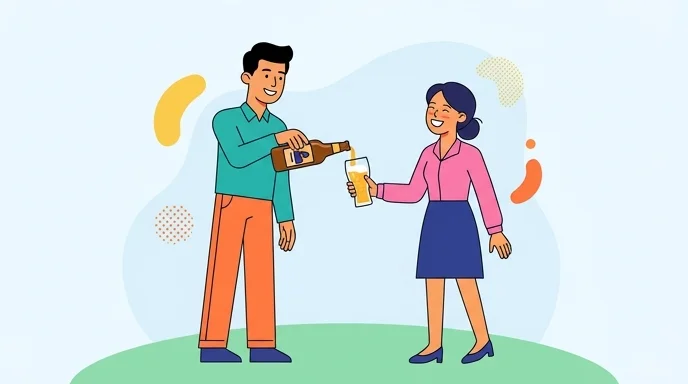
  6. In these examples, the speaker offers to help; going together involves both people. Use the situation to understand the meaning.

In these examples, the speaker offers to help; going together involves both people. Use the situation to understand the meaning.

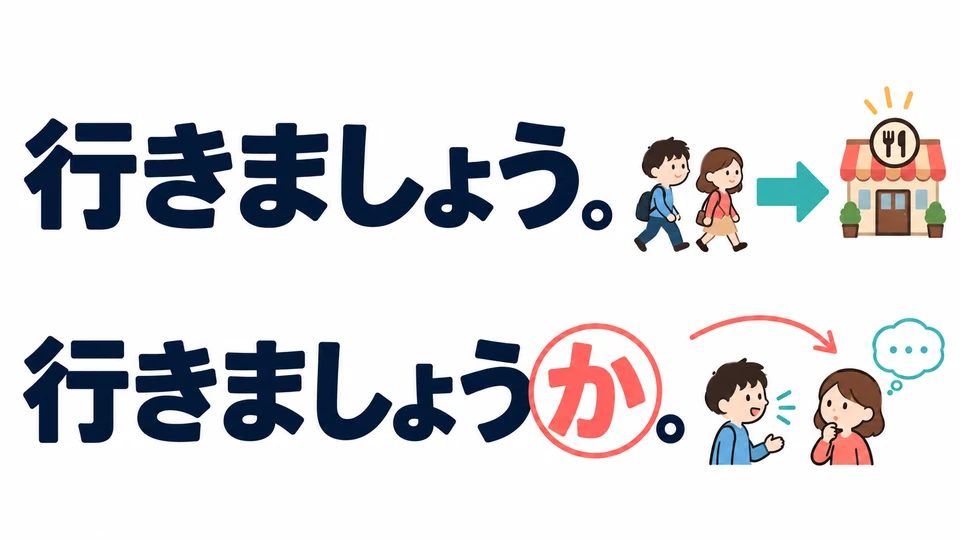
  • 「行きましょう」 directly suggests going together. Adding 「か」 asks the other person what they think first.

    「行きましょう」 directly suggests going together. Adding 「か」 asks the other person what they think first.

  • Example sentences

    • 手伝いましょうてつだいましょうtetsudaimashouか。かka

      Shall I help?

    • 一緒いっしょishshoにni行きましょういきましょうikimashouか。かka

      Shall we go together?

    In a conversation

    • A
      ビールびーるを注ぎましょうそそぎましょうか。か

      A: Shall I pour some beer?

    • B
      ありがとうございます。ございますお願いおねがいします。します

      B: Thank you. I'd appreciate that.

    • A
      重いおもい荷物にもつですね。ね手伝いましょうてつだいましょうか。か

      A: That's a heavy load. Shall I help?

    • B
      すみません。すみませんお願いおねがいします。します

      B: Excuse me. I'd appreciate that.

    • A
      駅えきの近くちかくに新しいあたらしいレストランれすとらんがあります。あります今度、こんど行きましょういきましょうか。か

      A: There's a new restaurant near the station. Shall we go sometime?

    • B
      いいですね。ね

    Check yourself

    1. Level 1 · Recognise

      Which sentence is correct?

    2. Level 1 · Recognise

      Listen and choose the meaning

    3. Level 2 · Build

      Put the words in order

      Shall I pour the beer?

    4. Level 3 · Use

      What goes in the blank?

      このかばんを 。

      Shall I carry this bag?

    More grammar in this theme

    • 〜は〜にありますwhere an object is located
    • 〜は〜にいますwhere a person or animal is
    • 〜に〜があります/いますwhat is present at a place
    • 〜てくださいpolite request to do
    • 〜で〜ますtool or means used
    • 〜方way to do something
    • どの〜/どれwhich one or which item
    • 〜ていますaction in progress
    • 〜ましょうかoffer or suggestion
    • まだあります/もうありませんstill left or all gone
    • 誰が〜ますかask who does it
    Previous〜ていますNextまだあります/もうありません

    Keep practising

    Test your Japanese vocabulary12 adaptive questions, freeCheck your pronunciationRead aloud and get a scorePractise verb forms10-question conjugation quizSee the whole courseGrammar, vocabulary and quizzes by theme
    See the whole course
    Beginner 1
    Directions & Requests
    行きましょう。いきましょう

    B: Sounds good. Let's go.