
Japanese grammar · ≈ JLPT N5 · Beginner 1
まだあります/もうありませんmada arimasu / mou arimasen
still left or all gone
Use 「まだあります」 when some remains and 「もうありません」 when none is left.
How it works
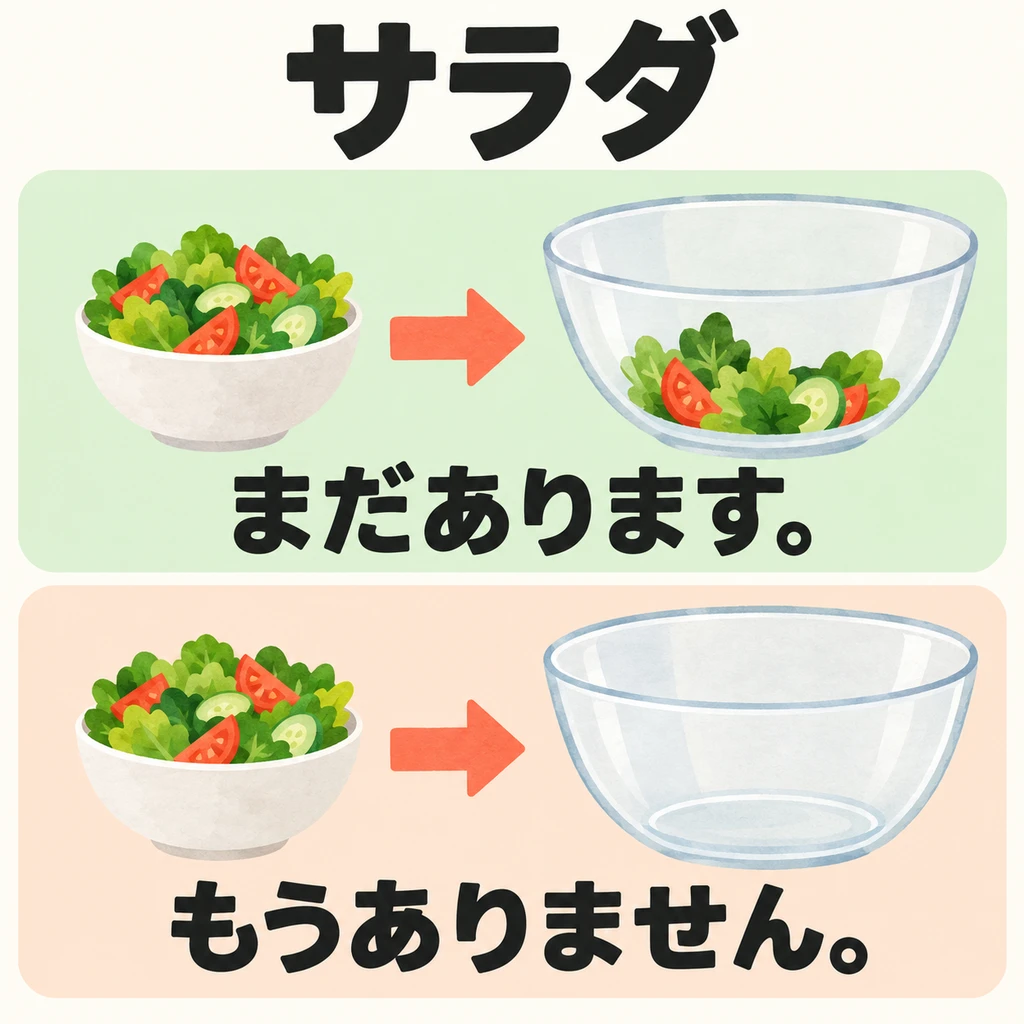
Look at how the full bowl of salad changes: focus on whether anything that was there before is still left now.
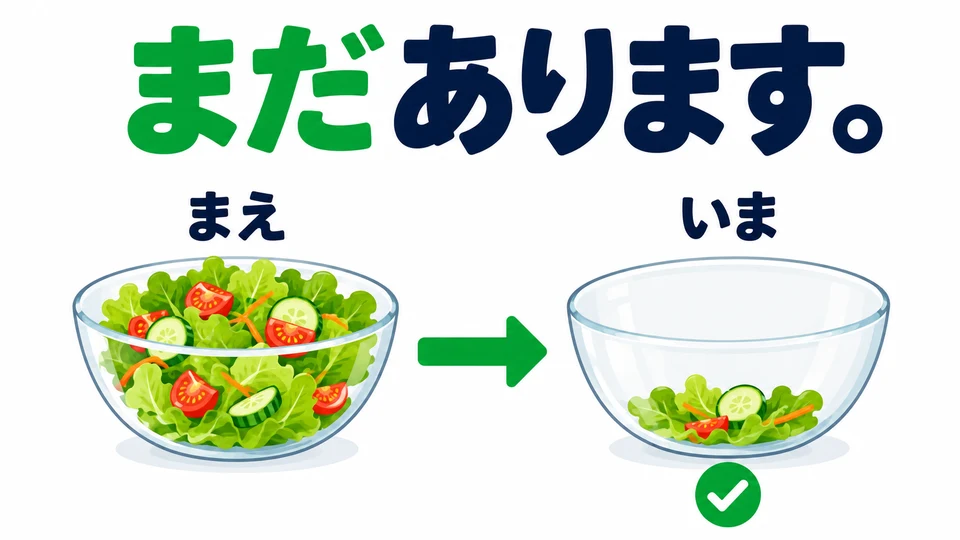
「まだあります」 means some is still left now: the state of having something continues.
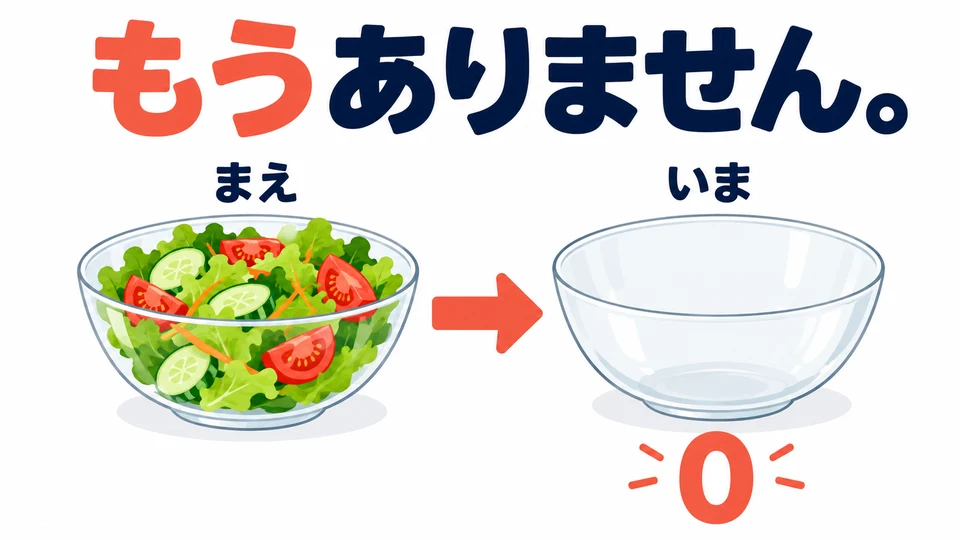
「もうありません」 means there was some before, but now none is left: the remaining amount is zero.

In the example, 「まだあります」 is used even with only about 500 yen left: it means some remains, not necessarily a lot.
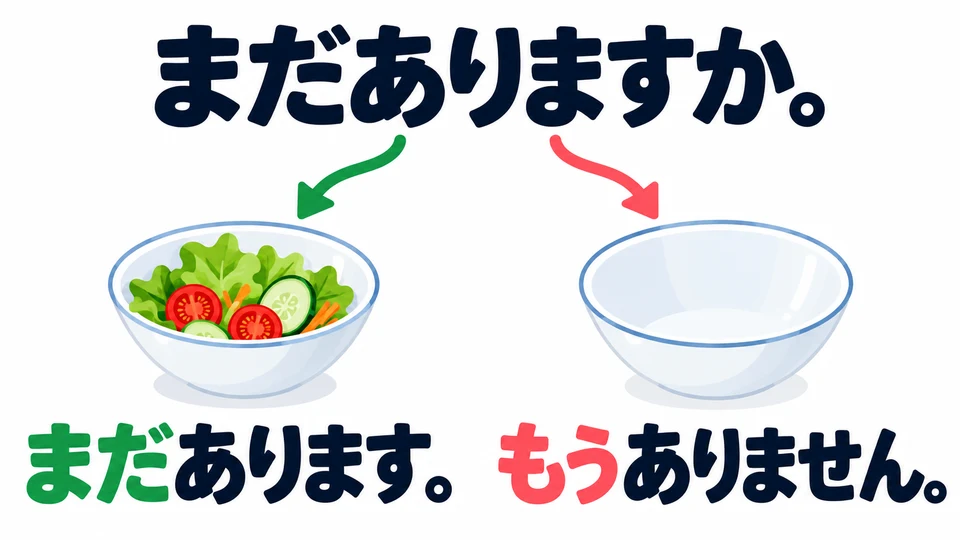
Asking 「まだありますか」 checks whether any is still left. Choose your answer according to what actually remains.
Example sentences
- サラダsaradaはwaまだmadaありますarimasuか。ka
Is there any salad left?
- もうmouありません。arimasen
There isn't any left.
In a conversation

- Aサラダはまだありますか。
A: Is there any salad left?
- Bもうありません。新しいサラダを作りましょう。
B: There isn't any left. Let's make a new salad.
Check yourself
Level 1 · Recognise
Which sentence is correct?
Level 1 · Recognise
Listen and choose the meaning
Level 2 · Build
Put the words in order
Is there still salad?
Level 3 · Use
What goes in the blank?
チケット ありますか。
Are there still tickets?
More grammar in this theme
- まだあります/もうありませんstill left or all gone