JPEDLAB iconJPEDLAB
Save history

Create an account and play

Explore first, then save your progress whenever you are ready. No email address is required.

Start free
Read as articleCards
1/18

おばさん means “aunt,” and おばあさん means “grandma.” Just one extra beat makes the listener hear a different word.

››

Lesson notes · Beginner 1

長音・促音chouon~sokuon

Long vowels and consonant pauses

With 「長音・促音」, hold a vowel for a beat or pause for a beat at small っ.

How it works
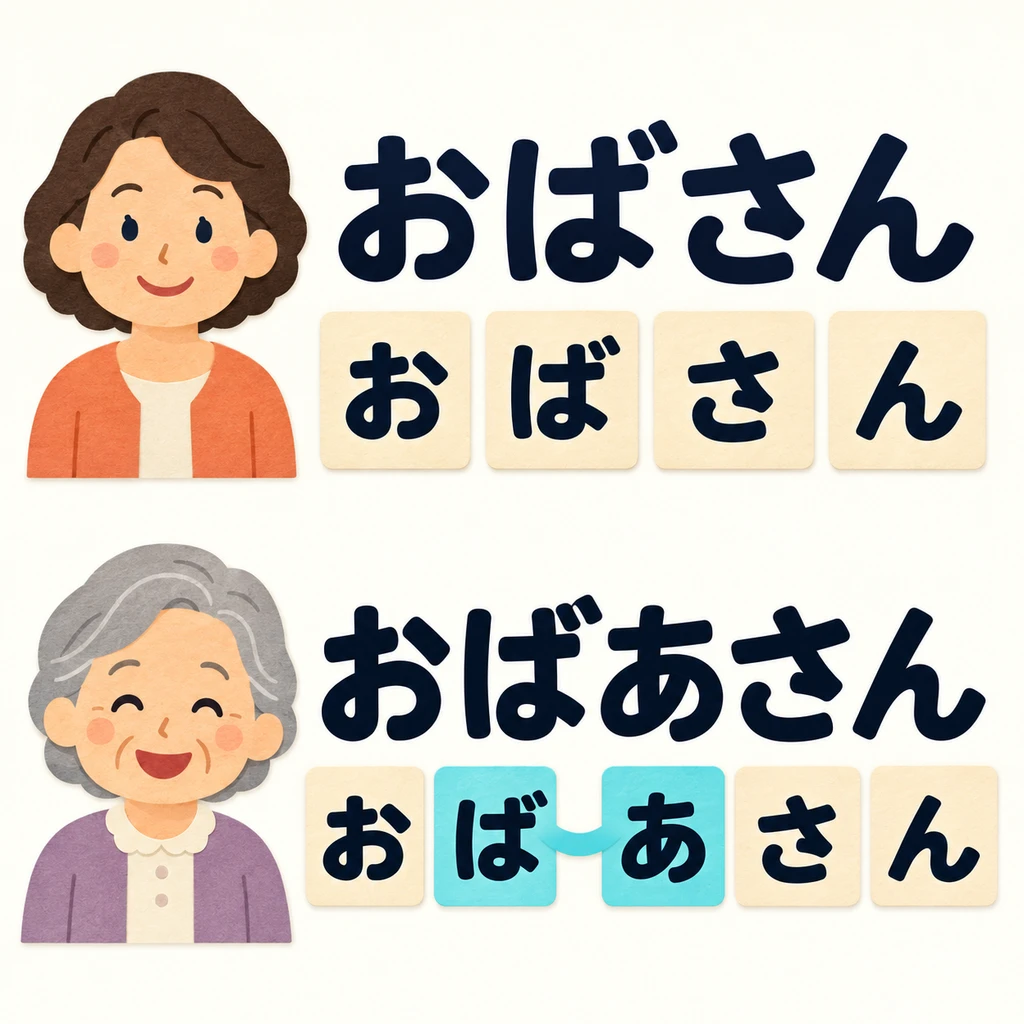
  1. おばさん means “aunt,” and おばあさん means “grandma.” Just one extra beat makes the listener hear a different word.
    おばさん means “aunt,” and おばあさん means “grandma.” Just one extra beat makes the listener hear a different word.

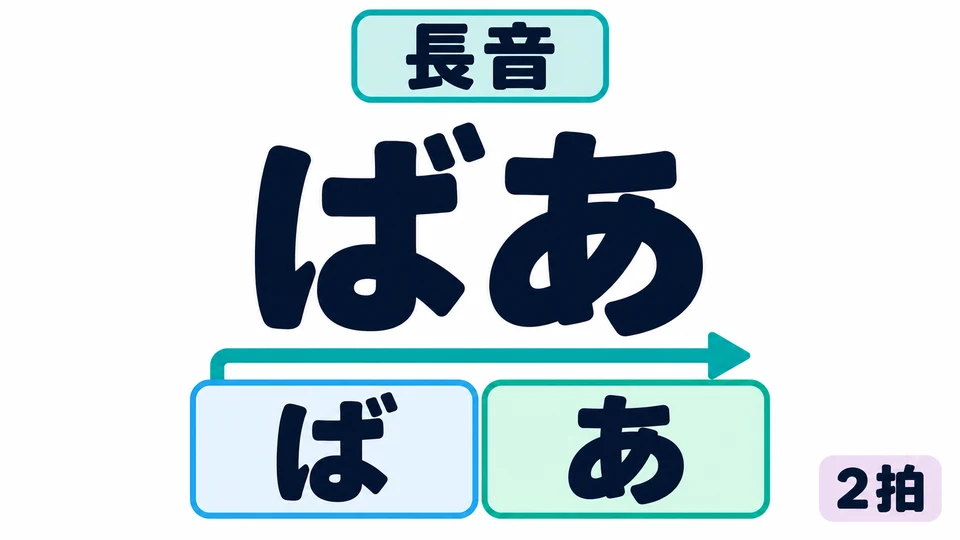
  2. A long vowel lasts for two beats without a break. In 「ばあ」, hold the あ sound; do not pause in the middle.
    A long vowel lasts for two beats without a break. In 「ばあ」, hold the あ sound; do not pause in the middle.

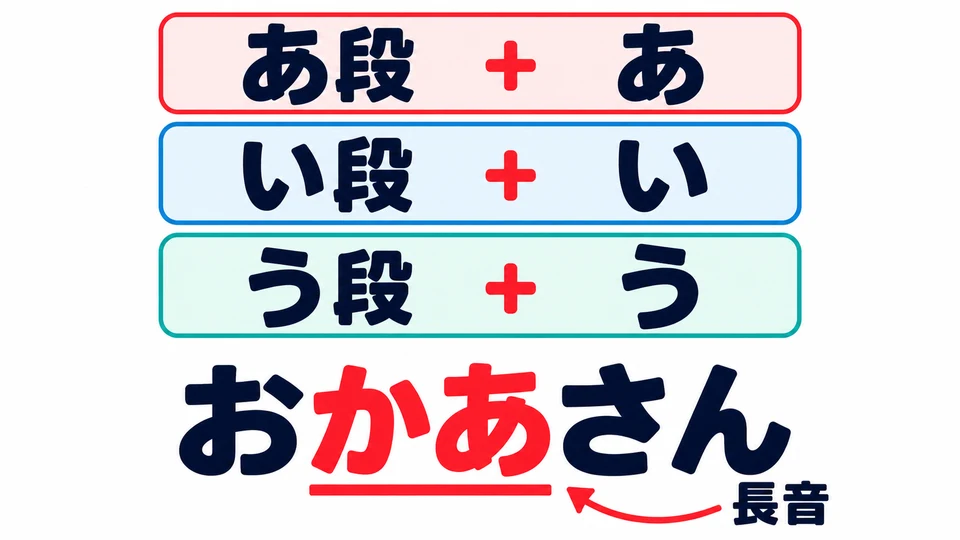
  3. In hiragana, the same vowel is often added: あ after the あ row, い after the い row, and う after the う row. Hold the あ in おかあさん.
    In hiragana, the same vowel is often added: あ after the あ row, い after the い row, and う after the う row. Hold the あ in おかあさん.

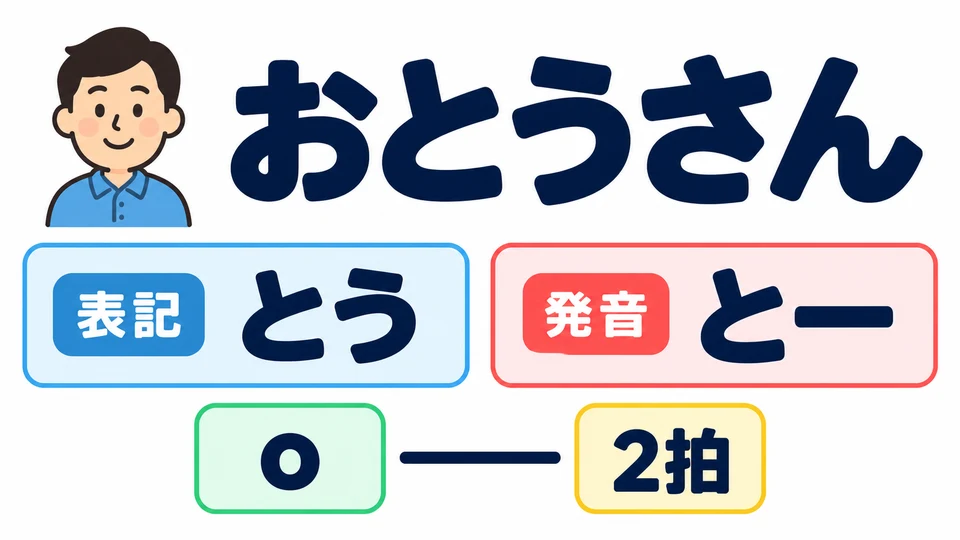
  4. お父さん is written おとうさん. 「とう」 is usually pronounced continuously as とー, without saying う separately.
    お父さん is written おとうさん. 「とう」 is usually pronounced continuously as とー, without saying う separately.

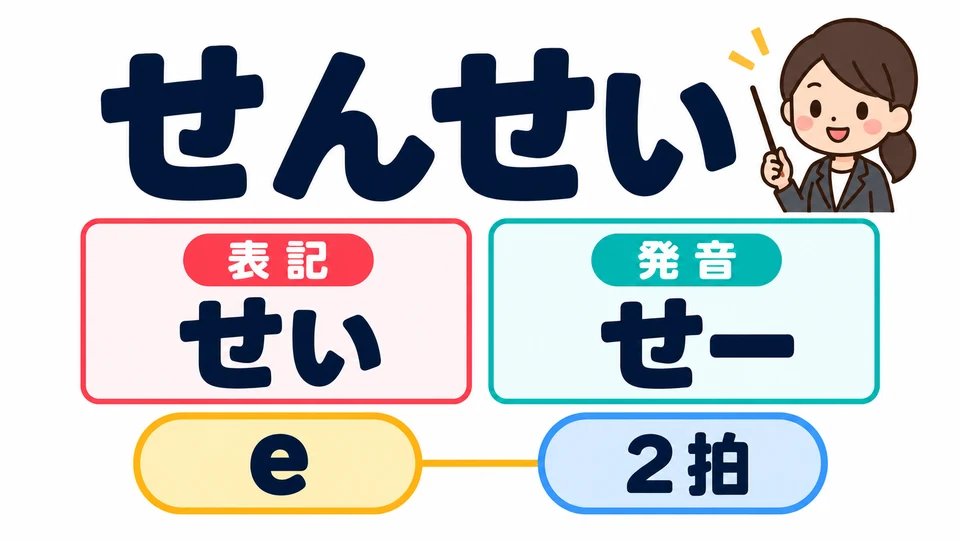
  5. 先生 is written せんせい. In natural speech, 「せい」 often sounds like せー, with the え sound held longer.
    先生 is written せんせい. In natural speech, 「せい」 often sounds like せー, with the え sound held longer.
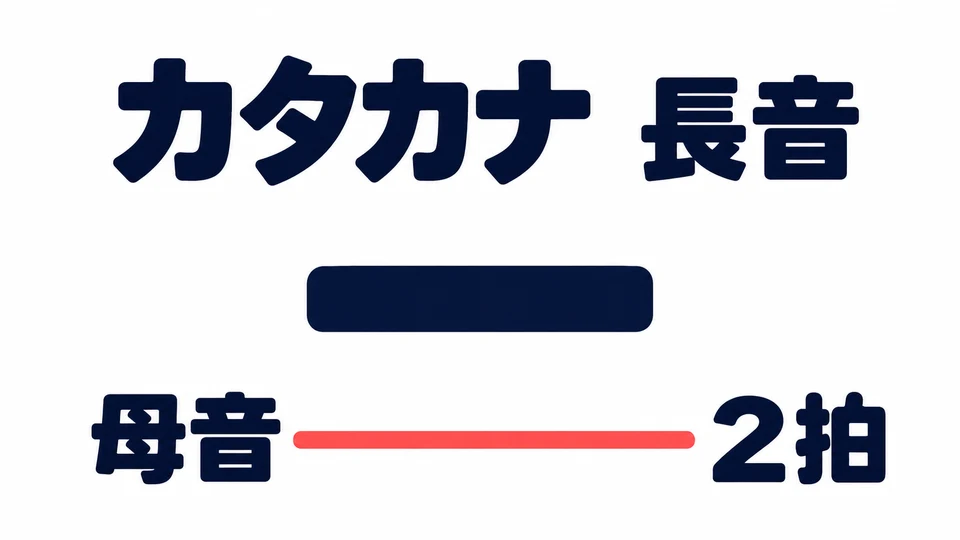
In katakana, long vowels are written with 「ー」. It lengthens the preceding vowel and has no fixed sound of its own.

In katakana, long vowels are written with 「ー」. It lengthens the preceding vowel and has no fixed sound of its own.

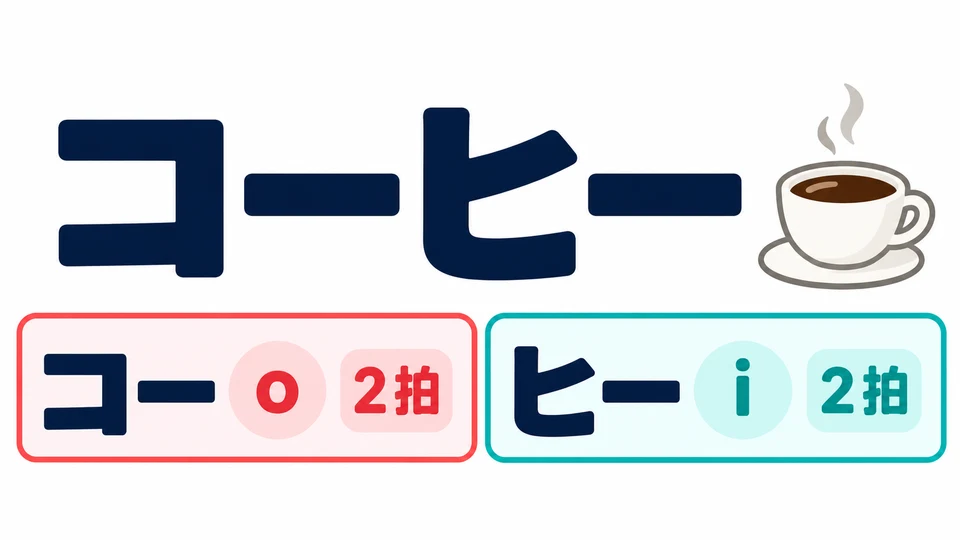
  • In コーヒー, コー lengthens o and ヒー lengthens i. Look at the kana before 「ー」 to know which vowel to hold.

    In コーヒー, コー lengthens o and ヒー lengthens i. Look at the kana before 「ー」 to know which vowel to hold.

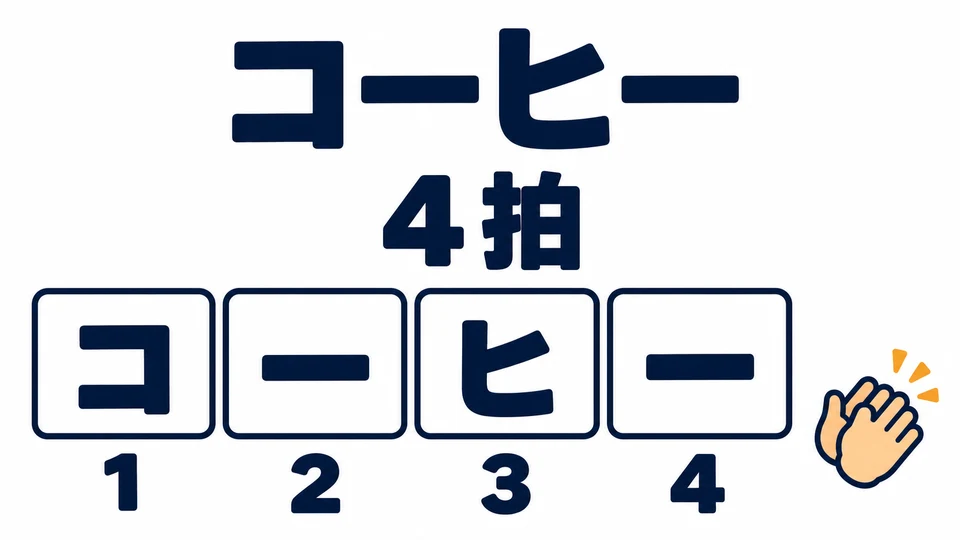
  • コーヒー divides into コ・ー・ヒ・ー: four beats. Clap evenly; each long-vowel mark takes one beat too.

    コーヒー divides into コ・ー・ヒ・ー: four beats. Clap evenly; each long-vowel mark takes one beat too.

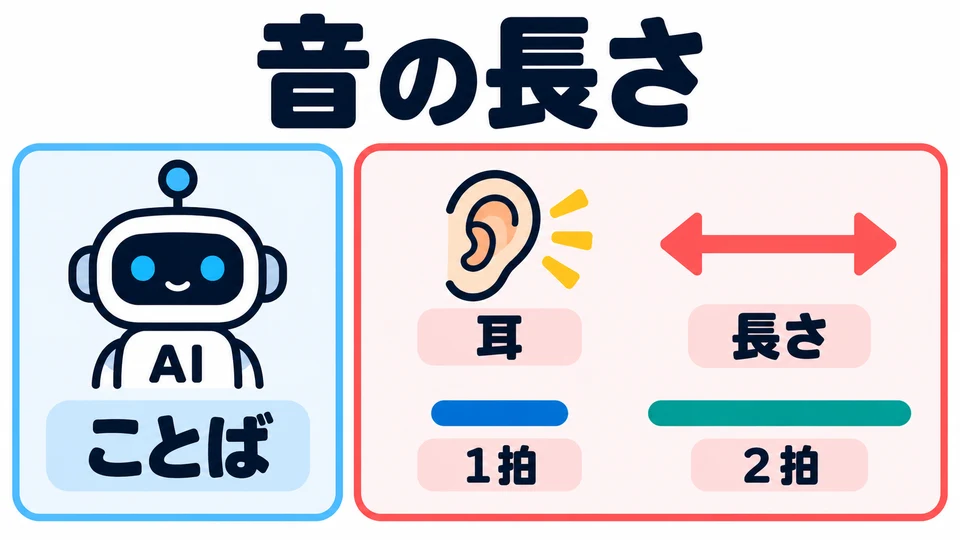
  • When practicing long vowels, listen to how long the sound lasts. AI recognizing the right word does not mean your vowel lengths are already correct.

    When practicing long vowels, listen to how long the sound lasts. AI recognizing the right word does not mean your vowel lengths are already correct.

  • In this lesson, you can submit your pronunciation using “Human teacher assessment.” A teacher will reply within 48 hours to help check your long vowels.

    In this lesson, you can submit your pronunciation using “Human teacher assessment.” A teacher will reply within 48 hours to help check your long vowels.

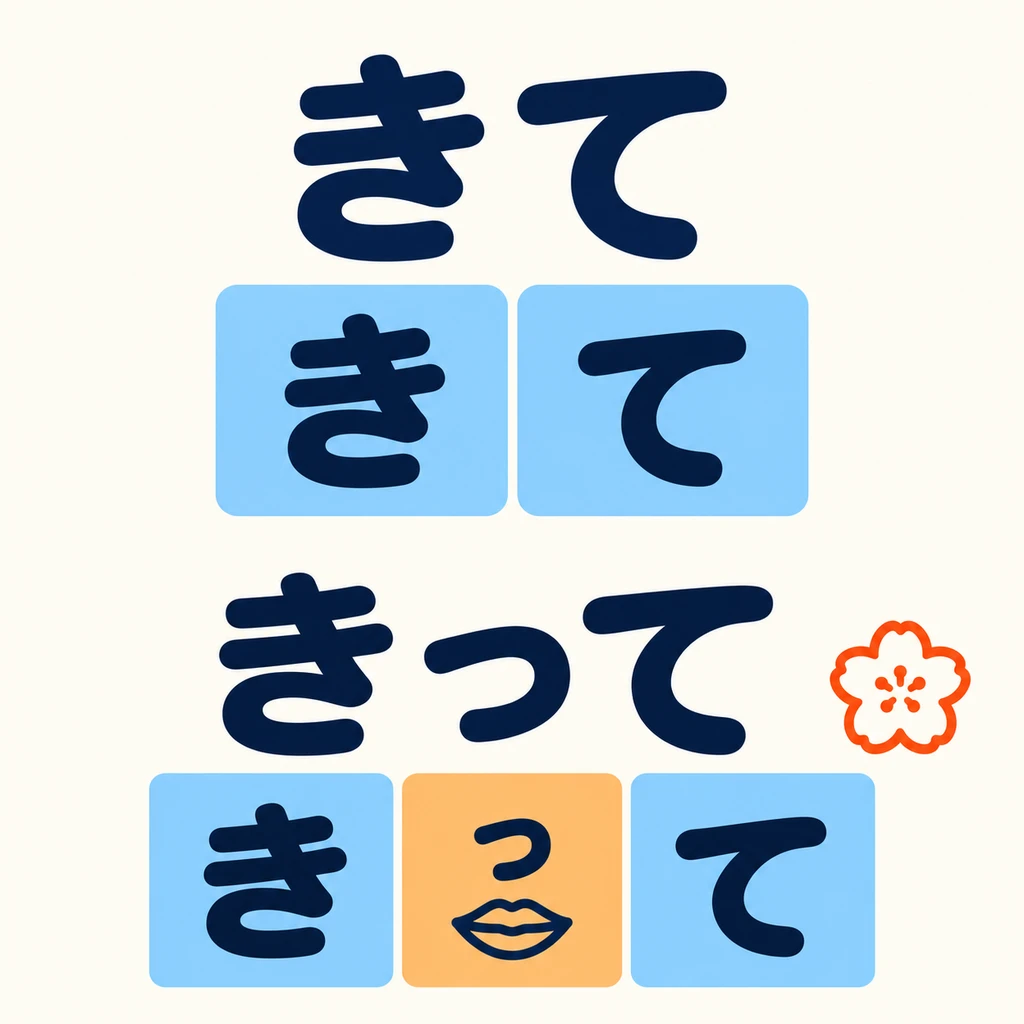
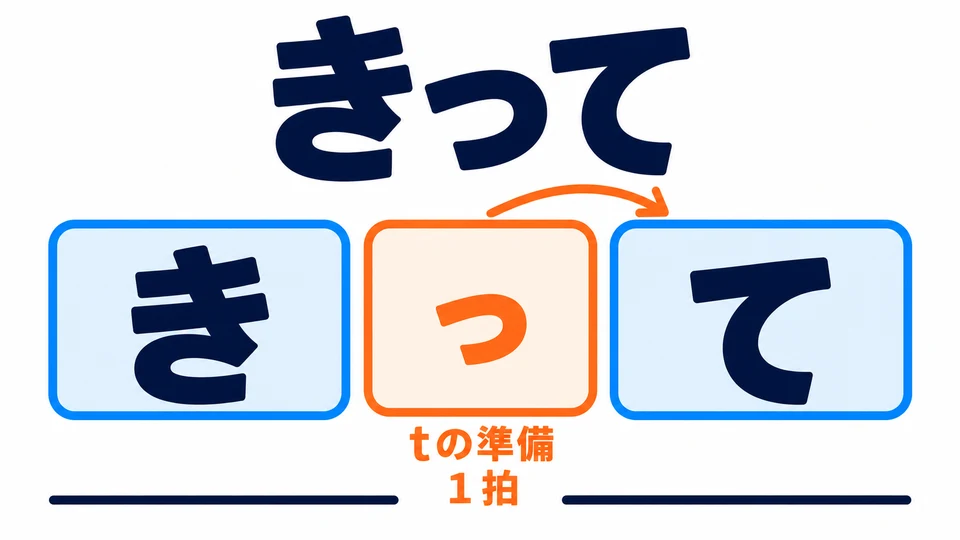
  • きて has two beats; きって has three. Small っ adds one beat: briefly stop the airflow before saying て.

    きて has two beats; きって has three. Small っ adds one beat: briefly stop the airflow before saying て.

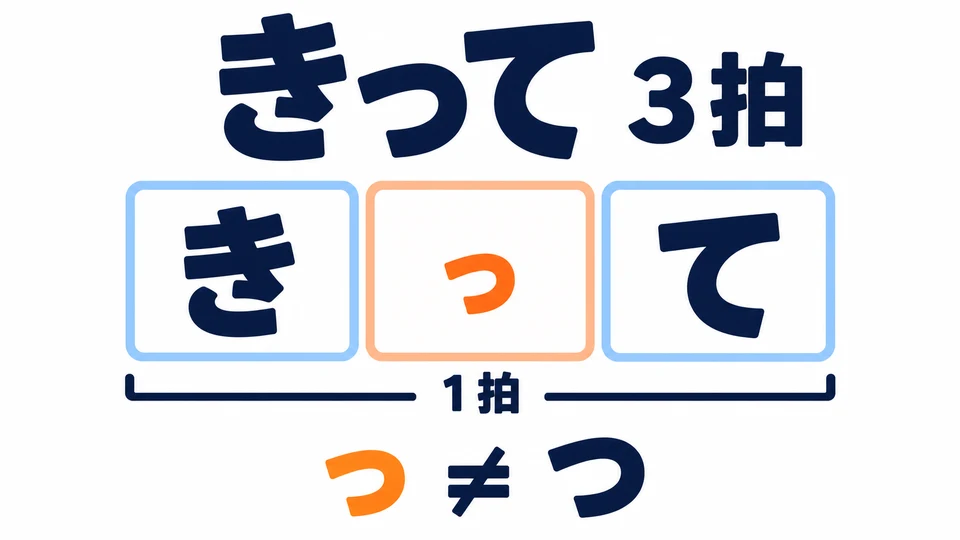
  • Do not pronounce small っ as つ or add a vowel. Say きって as き・one-beat pause・て, keeping the gap in the middle.

    Do not pronounce small っ as つ or add a vowel. Say きって as き・one-beat pause・て, keeping the gap in the middle.

  • For きって, after き, prepare to say t and hold for one beat, then say て clearly. Simply saying て louder is not enough.

    For きって, after き, prepare to say t and hold for one beat, then say て clearly. Simply saying て louder is not enough.

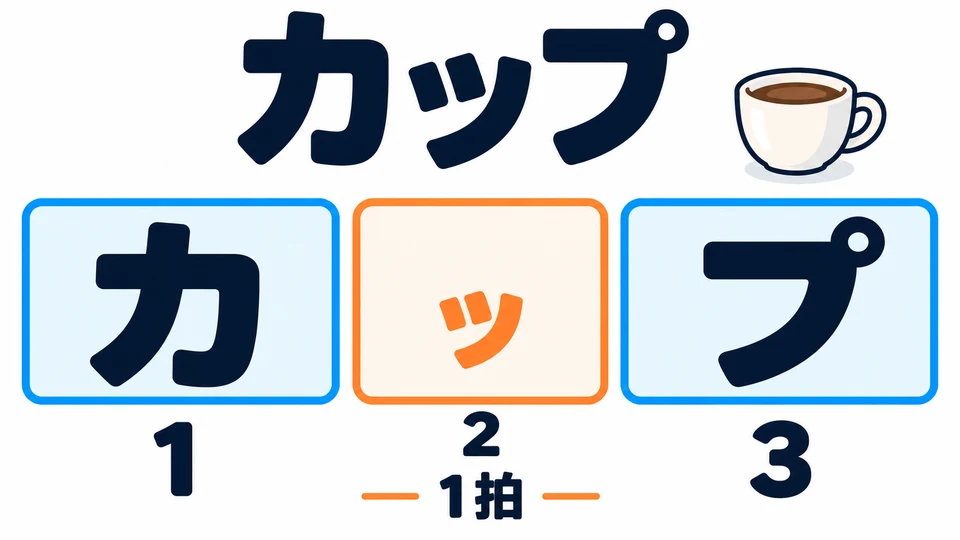
  • Katakana uses small ッ for this consonant pause. カップ divides into カ・ッ・プ: three beats. Pause for one beat before プ too.

    Katakana uses small ッ for this consonant pause. カップ divides into カ・ッ・プ: three beats. Pause for one beat before プ too.

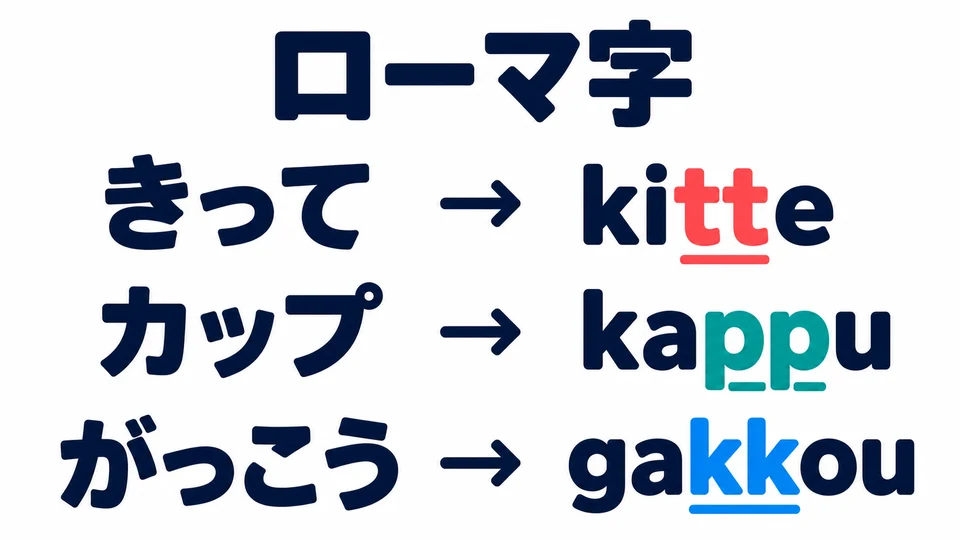
  • Romaji usually doubles the consonant after small っ: きって is kitte, カップ is kappu, and がっこう is gakkou.

    Romaji usually doubles the consonant after small っ: きって is kitte, カップ is kappu, and がっこう is gakkou.

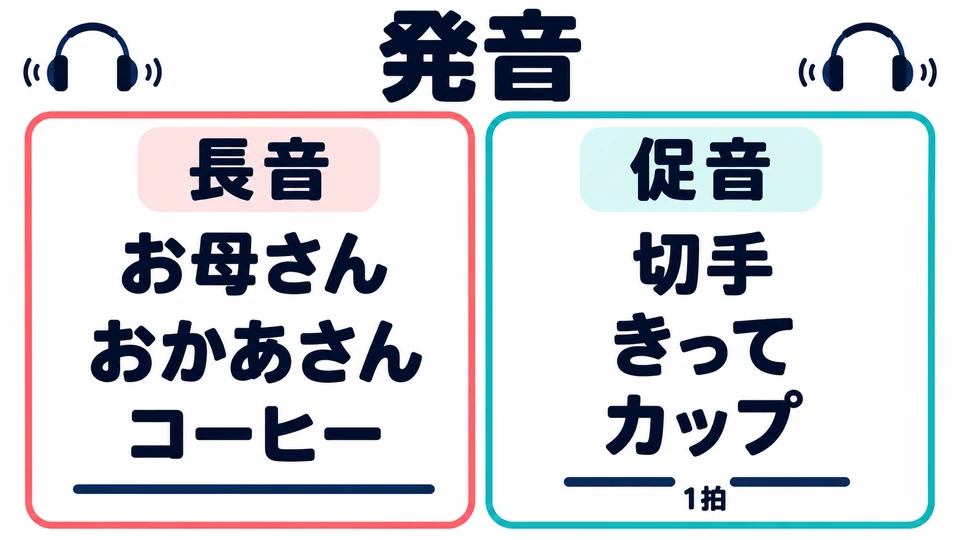
  • Listen to the audio, then repeat お母さん, コーヒー, 切手, and カップ. Keep long vowels flowing; for small っ or ッ, pause for one beat first.

    Listen to the audio, then repeat お母さん, コーヒー, 切手, and カップ. Keep long vowels flowing; for small っ or ッ, pause for one beat first.

  • Example sentences

    • お母さんおかあさんokaasan

      mother

    • コーヒーこーひーkoohii

      coffee

    • 切手きってkitte

      stamp

    • カップかっぷkappu

      cup

    More grammar in this theme

    • ひらがな あ行〜な行Hiragana sounds: a to na rows
    • ひらがな は行〜んHiragana sounds: ha row to n
    • カタカナ ア行〜ワ行Katakana sounds and loanwords
    • 濁音・半濁音Voiced and p-sound kana
    • 長音・促音Long vowels and consonant pauses
    • 拗音(きゃ・きゅ・きょ)Blended sounds with small ゃゅょ
    • 教室で使う表現Useful classroom expressions
    Previous濁音・半濁音Next拗音(きゃ・きゅ・きょ)

    Keep practising

    Test your Japanese vocabulary12 adaptive questions, freeCheck your pronunciationRead aloud and get a scorePractise verb forms10-question conjugation quizSee the whole courseGrammar, vocabulary and quizzes by theme
    See the whole course
    Beginner 1
    Introduction to Japanese Writing