JPEDLAB iconJPEDLAB
Save history

Create an account and play

Explore first, then save your progress whenever you are ready. No email address is required.

Start free
Read as articleCards
1/20

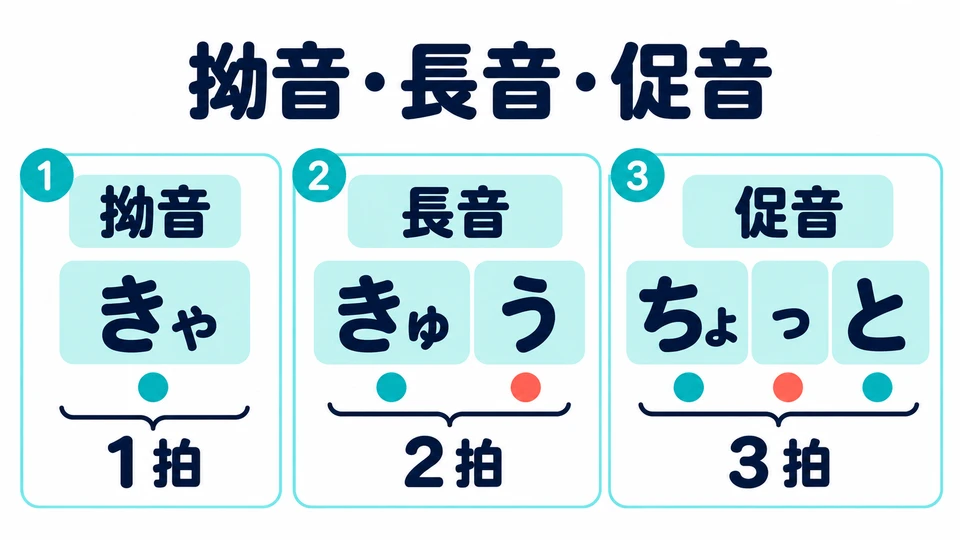
When you see small 「ゃ・ゅ・ょ」, blend it with the kana before it. This is called yōon.

››

Lesson notes · Beginner 1

拗音(きゃ・きゅ・きょ)youon (kya~kyu~kyo)

Blended sounds with small ゃゅょ

With 「拗音」, blend small 「ゃ・ゅ・ょ」 with the kana before them into one beat; then check for a long vowel or pause.

How it works
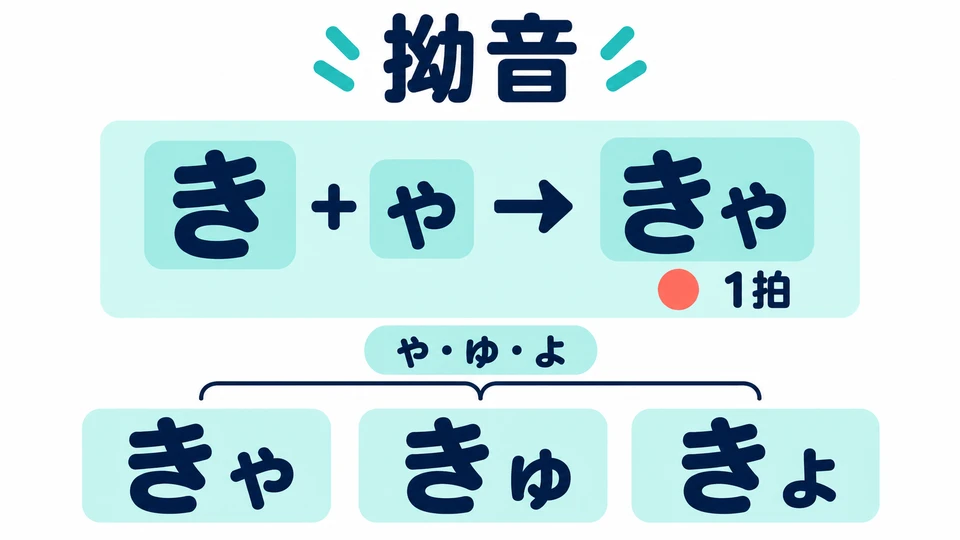
  1. When you see small 「ゃ・ゅ・ょ」, blend it with the kana before it. This is called yōon.
    When you see small 「ゃ・ゅ・ょ」, blend it with the kana before it. This is called yōon.

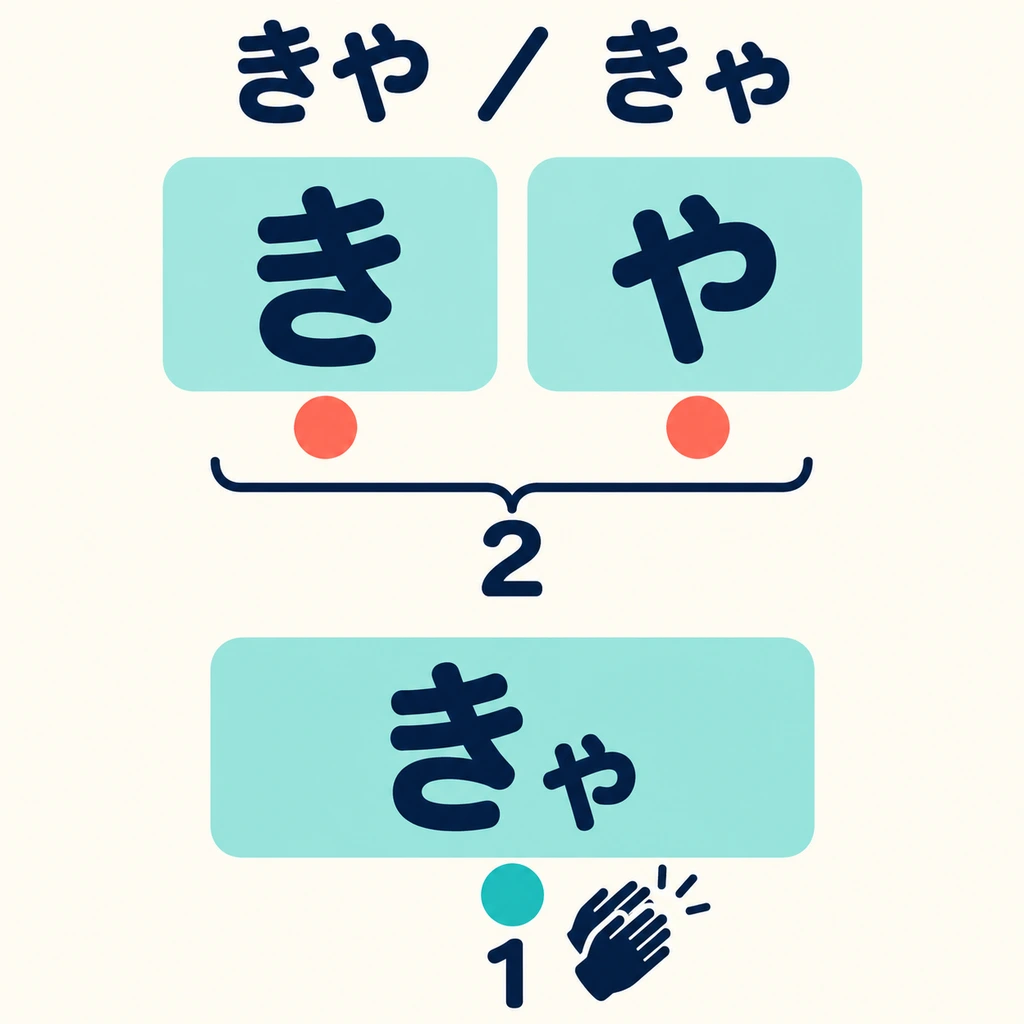
  2. Clap along with the dots: 「きや」 with a full-size 「や」 takes two beats; 「きゃ」 with a small 「ゃ」 takes one.
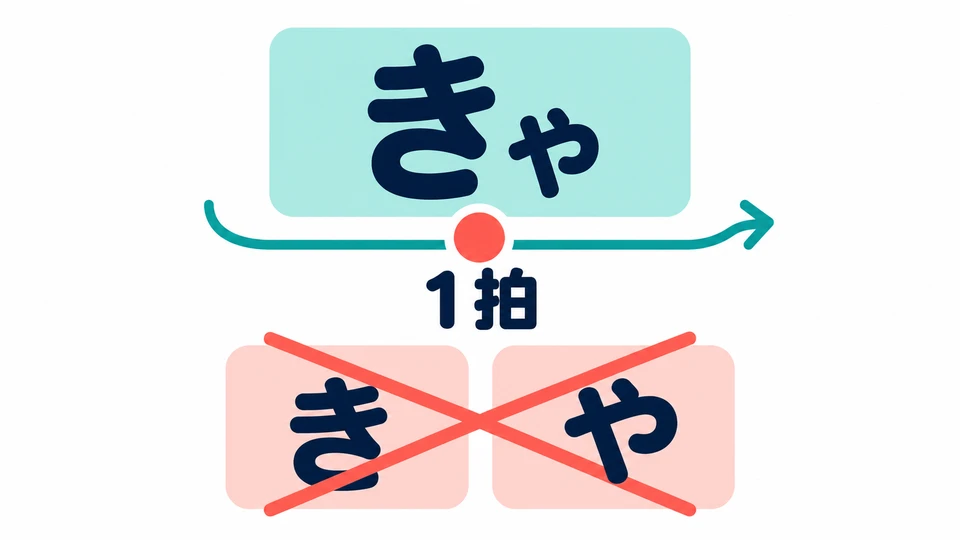
    Clap along with the dots: 「きや」 with a full-size 「や」 takes two beats; 「きゃ」 with a small 「ゃ」 takes one.

  3. For 「きゃ」, do not finish 「き」 and then say 「や」. Blend them without a pause.
    For 「きゃ」, do not finish 「き」 and then say 「や」. Blend them without a pause.

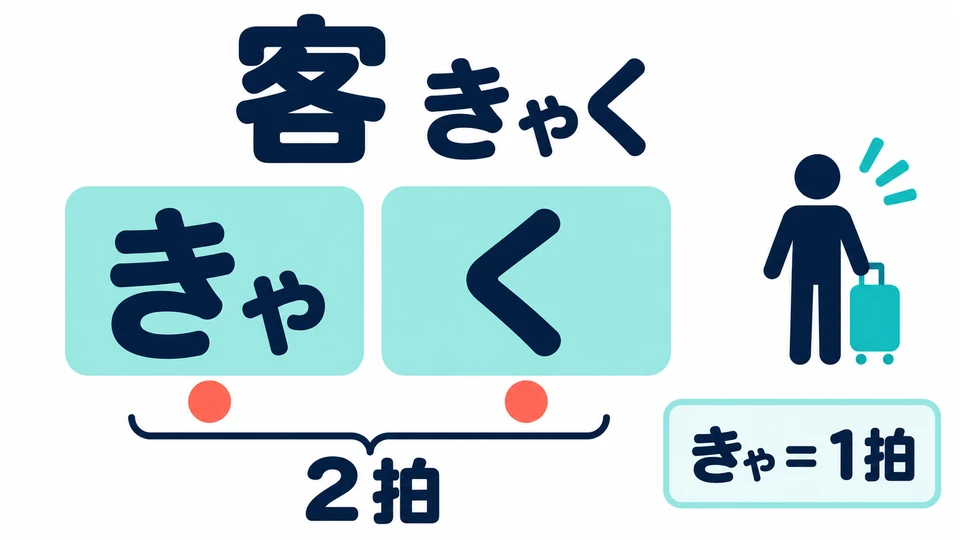
  4. 「客(きゃく)」 means “guest.” Blend 「きゃ」 into one sound; the whole word takes two beats.
    「客(きゃく)」 means “guest.” Blend 「きゃ」 into one sound; the whole word takes two beats.

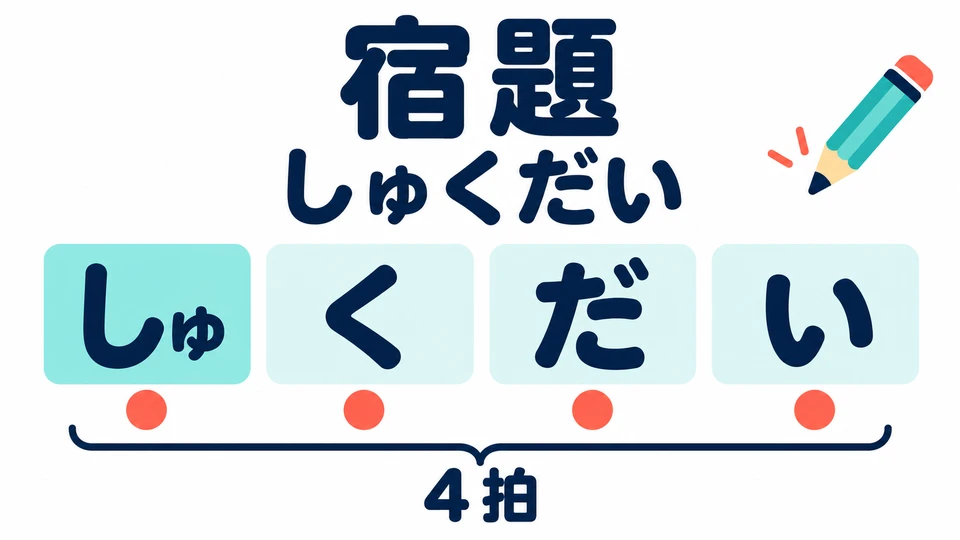
  5. 「宿題(しゅくだい)」 means “homework.” Blend 「しゅ」; do not split it into 「し・ゆ」.
    「宿題(しゅくだい)」 means “homework.” Blend 「しゅ」; do not split it into 「し・ゆ」.
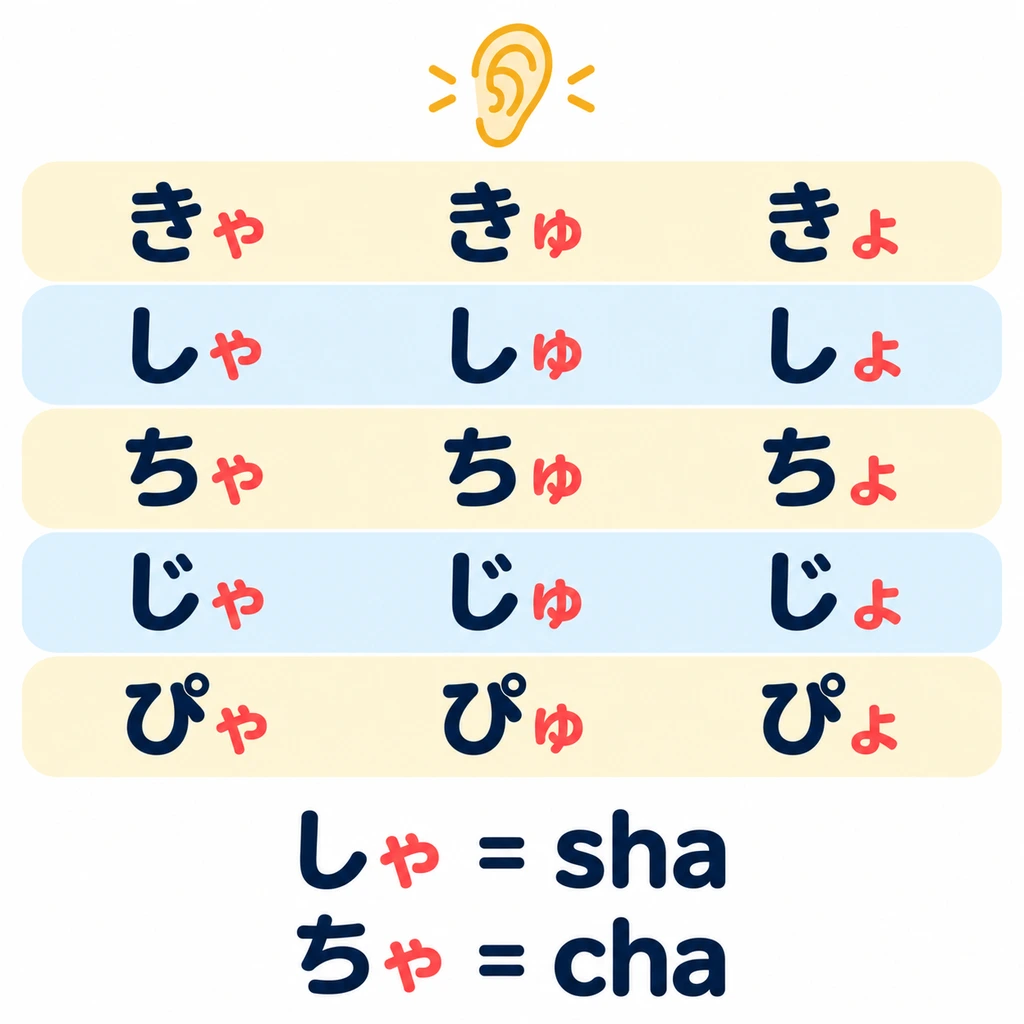
  6. This course writes 「しゃ」 as sha and 「ちゃ」 as cha in romaji. Match these spellings to the sounds.

This course writes 「しゃ」 as sha and 「ちゃ」 as cha in romaji. Match these spellings to the sounds.
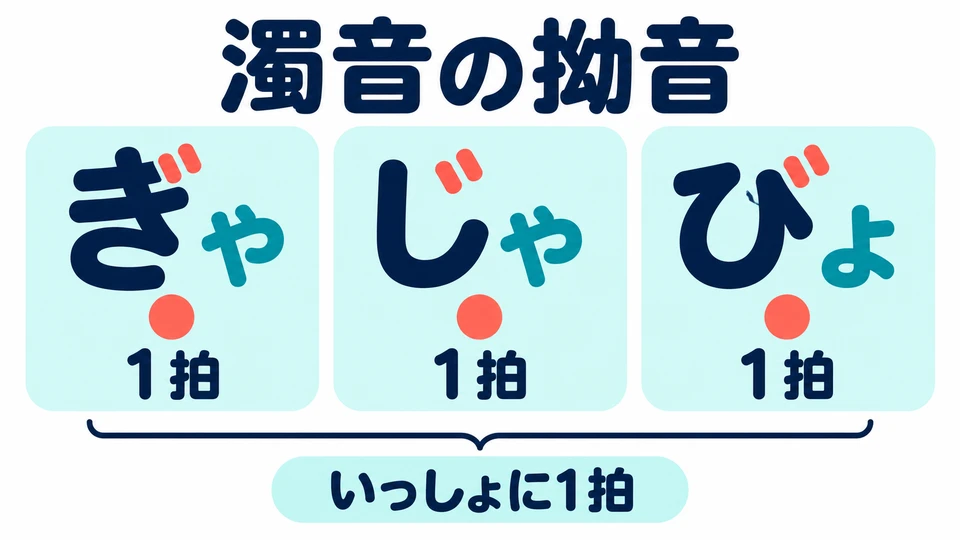
  • Kana with voicing marks can form yōon too, as in 「ぎゃ・じゃ・びょ」. Each still blends into one beat.

    Kana with voicing marks can form yōon too, as in 「ぎゃ・じゃ・びょ」. Each still blends into one beat.

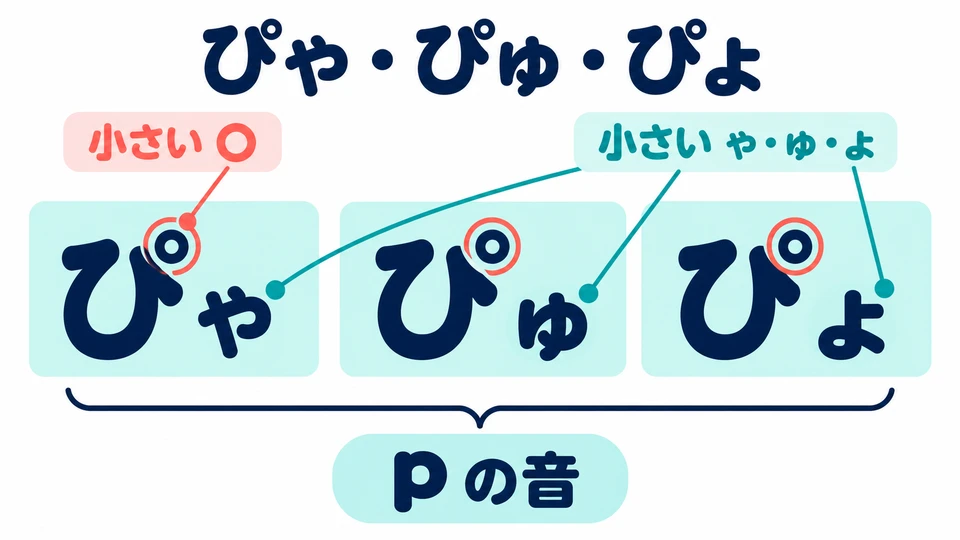
  • 「ぴゃ・ぴゅ・ぴょ」 start with a p sound. Look carefully at both the small circle and the small kana.

    「ぴゃ・ぴゅ・ぴょ」 start with a p sound. Look carefully at both the small circle and the small kana.

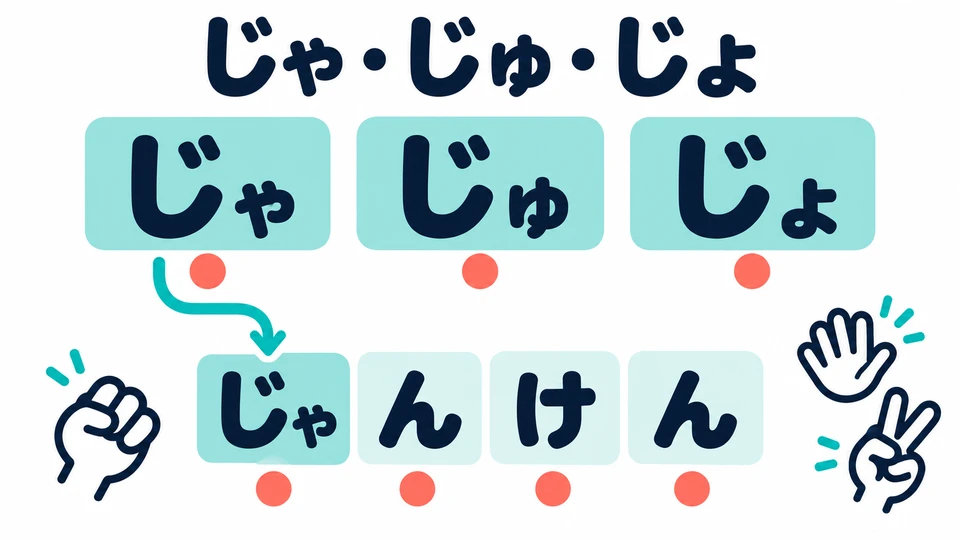
  • 「じゃ・じゅ・じょ」 are common. 「じゃんけん」, “rock-paper-scissors,” starts with 「じゃ」.

    「じゃ・じゅ・じょ」 are common. 「じゃんけん」, “rock-paper-scissors,” starts with 「じゃ」.

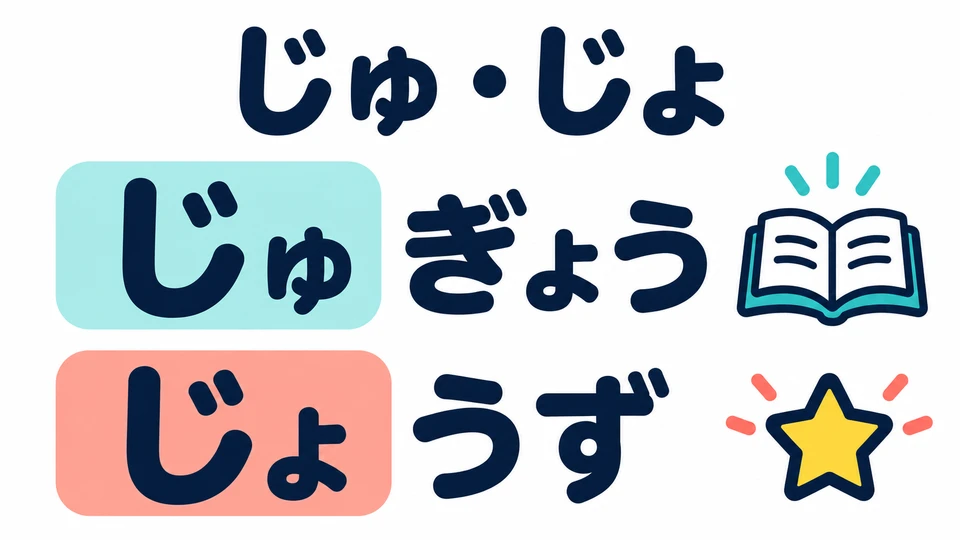
  • You can also find 「じゅ・じょ」 in 「じゅぎょう」, “class,” and 「じょうず」, “good at something.”

    You can also find 「じゅ・じょ」 in 「じゅぎょう」, “class,” and 「じょうず」, “good at something.”

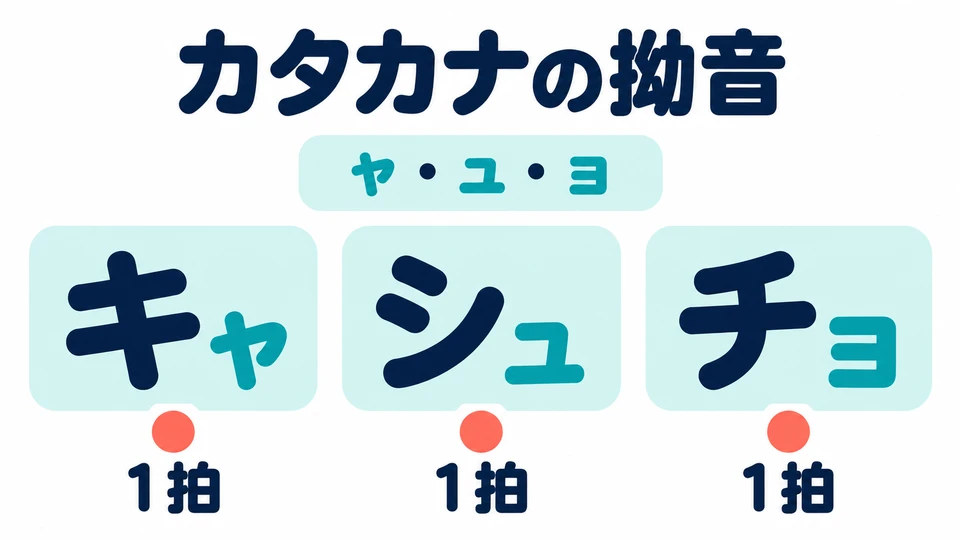
  • Katakana also uses small 「ャ・ュ・ョ」. Blend 「キャ・シュ・チョ」 in the same way.

    Katakana also uses small 「ャ・ュ・ョ」. Blend 「キャ・シュ・チョ」 in the same way.

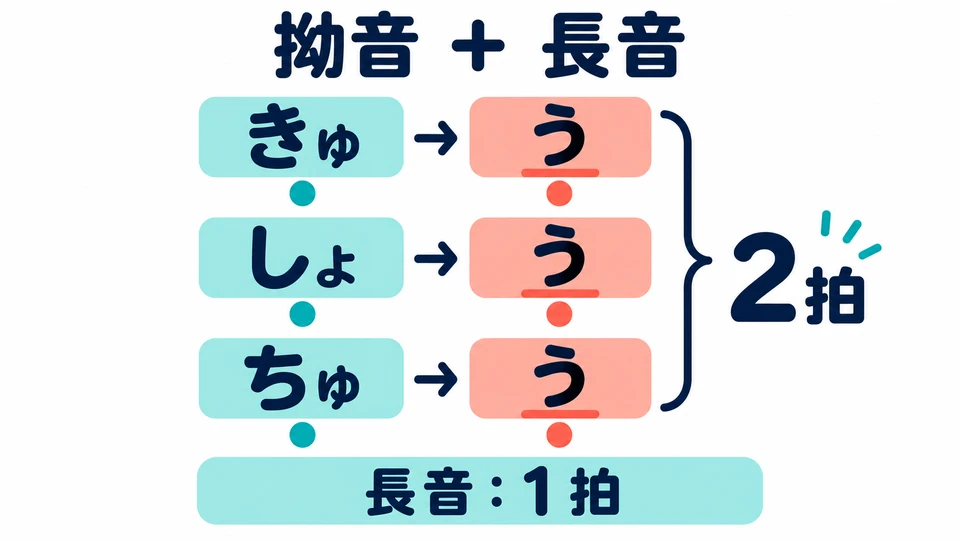
  • A long vowel can follow yōon. In 「きゅう・しょう・ちゅう」, hold the vowel for one extra beat.

    A long vowel can follow yōon. In 「きゅう・しょう・ちゅう」, hold the vowel for one extra beat.

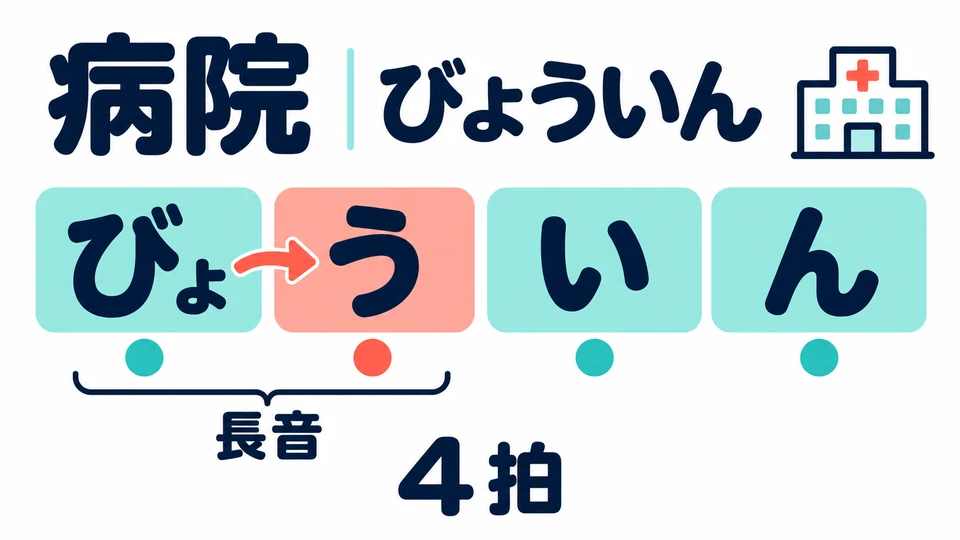
  • 「病院(びょういん)」 means “hospital.” A long vowel follows 「びょ」, so do not cut it short.

    「病院(びょういん)」 means “hospital.” A long vowel follows 「びょ」, so do not cut it short.

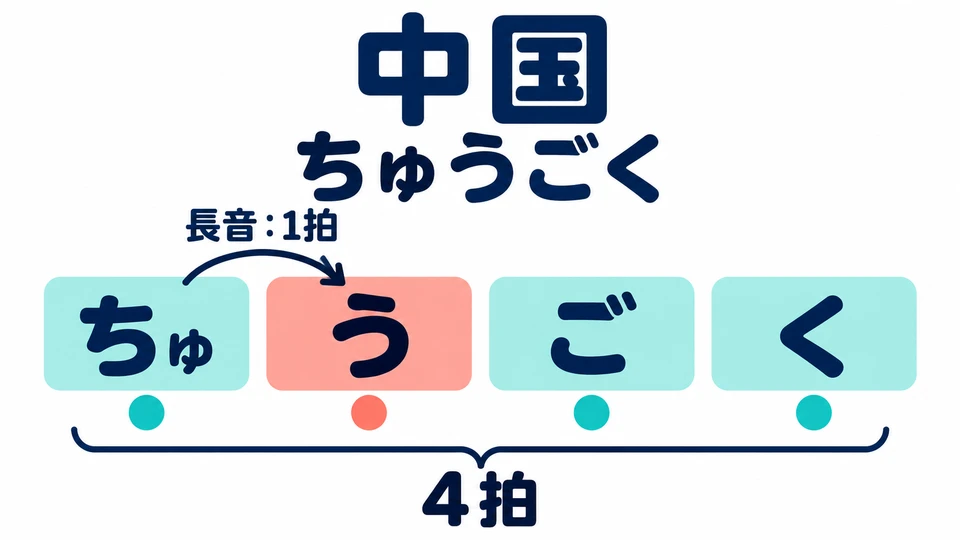
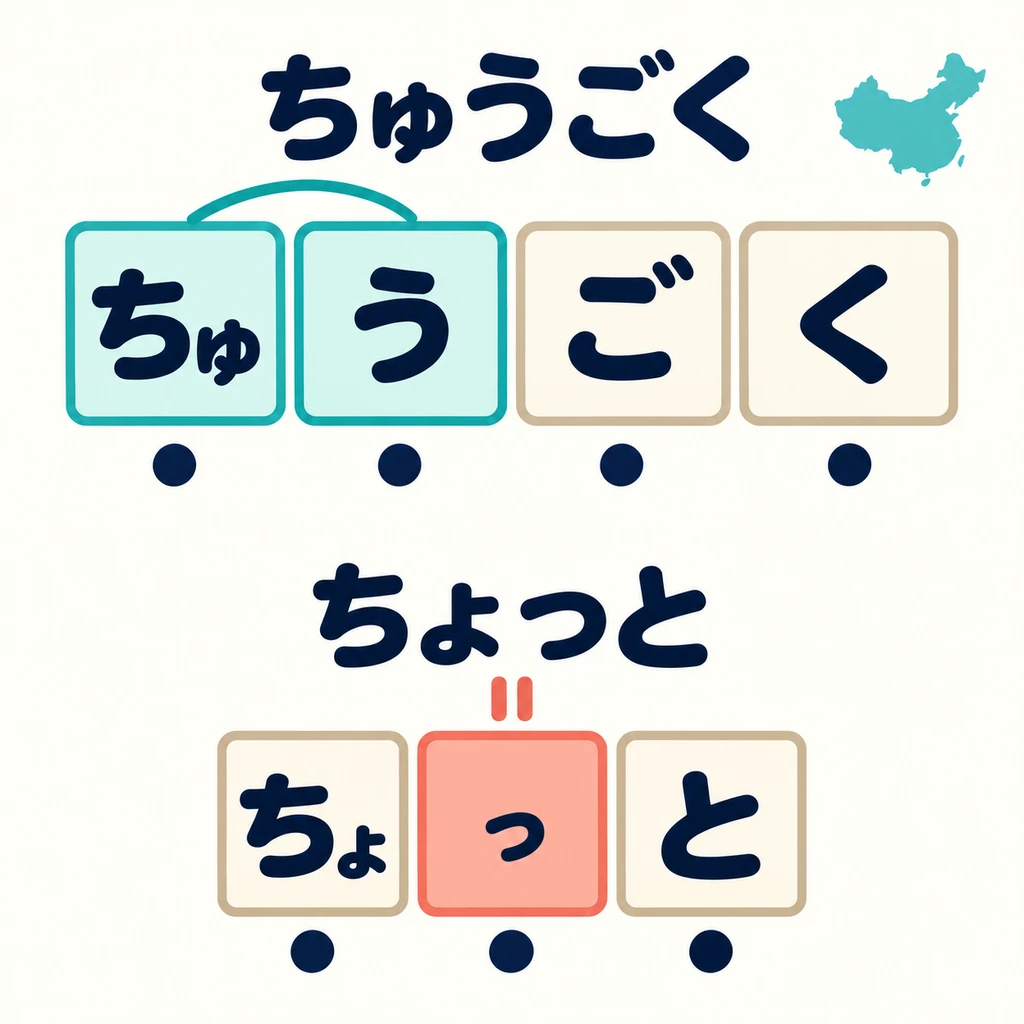
  • In 「中国(ちゅうごく)」, “China,” blend 「ちゅ」, then lengthen it by one beat. Do not skip 「う」.

    In 「中国(ちゅうごく)」, “China,” blend 「ちゅ」, then lengthen it by one beat. Do not skip 「う」.

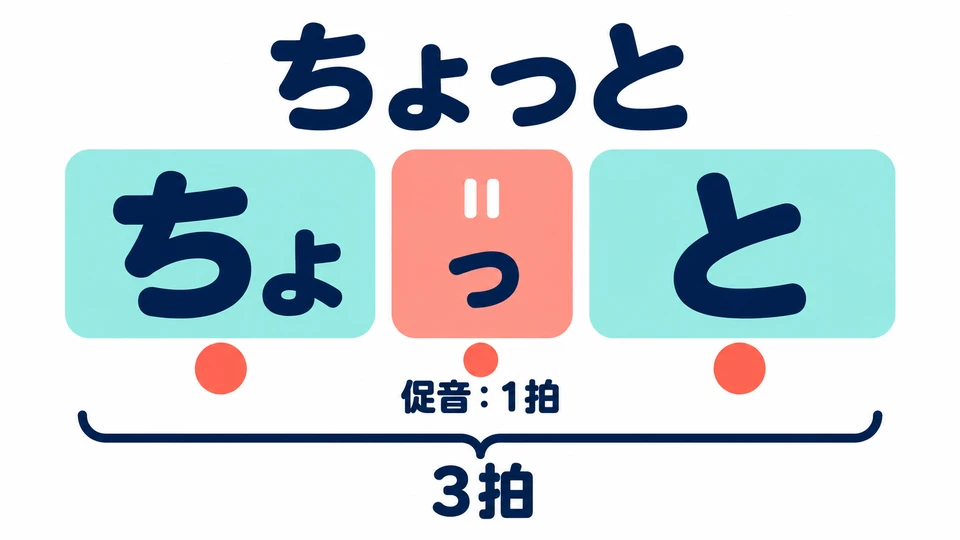
  • A small 「っ」 can also follow yōon. In 「ちょっと」, pause for one beat after 「ちょ」, then say 「と」.

    A small 「っ」 can also follow yōon. In 「ちょっと」, pause for one beat after 「ちょ」, then say 「と」.

  • Follow the dots: each box is one beat. Lengthening and pauses each take a beat; keep every beat.

    Follow the dots: each box is one beat. Lengthening and pauses each take a beat; keep every beat.

  • When reading a new word, first find small 「ゃ・ゅ・ょ」, then check for a long vowel or small 「っ」 after it.

    When reading a new word, first find small 「ゃ・ゅ・ょ」, then check for a long vowel or small 「っ」 after it.

  • Example sentences

    • 客きゃくkyaku

      guest / customer

    • 宿題しゅくだいshukudai

      homework

    • じゃんけんjanken

      rock-paper-scissors

    • 病院びょういんbyouin

      hospital

    • 中国ちゅうごくchuugoku

      China

    • ちょっとchotto

      a little

    More grammar in this theme

    • ひらがな あ行〜な行Hiragana sounds: a to na rows
    • ひらがな は行〜んHiragana sounds: ha row to n
    • カタカナ ア行〜ワ行Katakana sounds and loanwords
    • 濁音・半濁音Voiced and p-sound kana
    • 長音・促音Long vowels and consonant pauses
    • 拗音(きゃ・きゅ・きょ)Blended sounds with small ゃゅょ
    • 教室で使う表現Useful classroom expressions
    Previous長音・促音Next教室で使う表現

    Keep practising

    Test your Japanese vocabulary12 adaptive questions, freeCheck your pronunciationRead aloud and get a scorePractise verb forms10-question conjugation quizSee the whole courseGrammar, vocabulary and quizzes by theme
    See the whole course
    Beginner 1
    Introduction to Japanese Writing