ここ・そこ・あそこ・どこkoko / soko / asoko / doko
Koko / soko / asoko / doko (ここ・そこ・あそこ・どこ) means “place words by distance”.
This is the kitchen.
Use 「どこ」 to ask where a place is; answer with 「ここ・そこ・あそこ」 according to its distance from the speaker and listener.
In the course
How it works
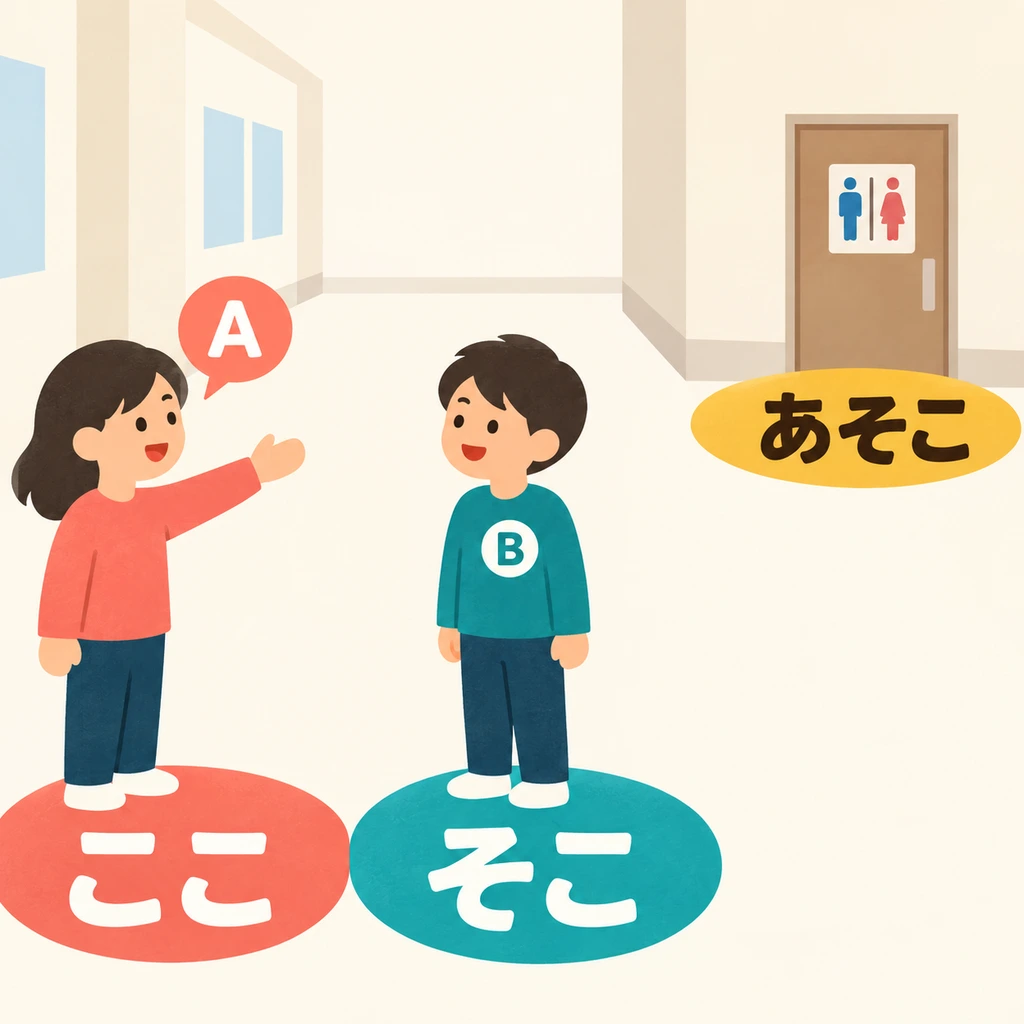
These words refer to places. Look at the picture from A’s point of view as A speaks: who is each place near?
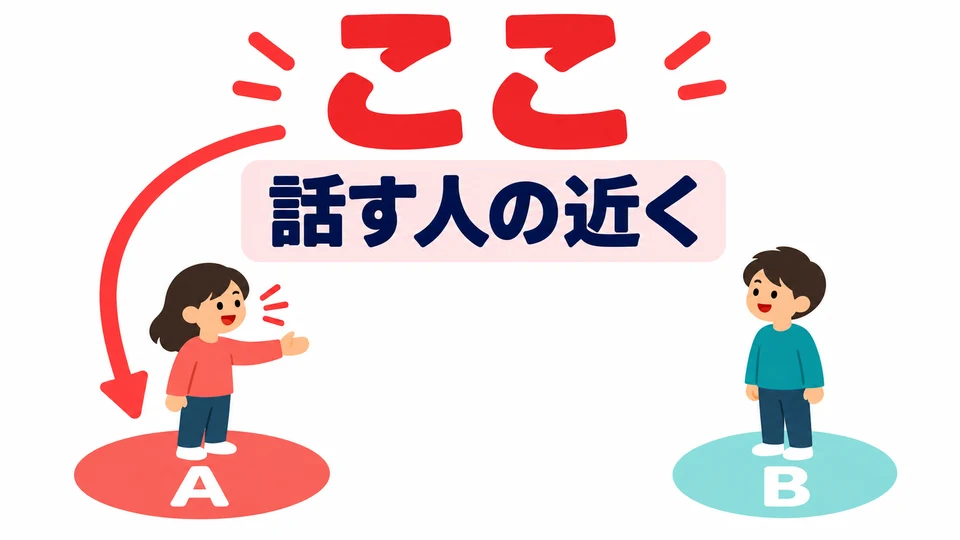
Use 「ここ」 for a place near the speaker. The red area under A’s feet is “here.”
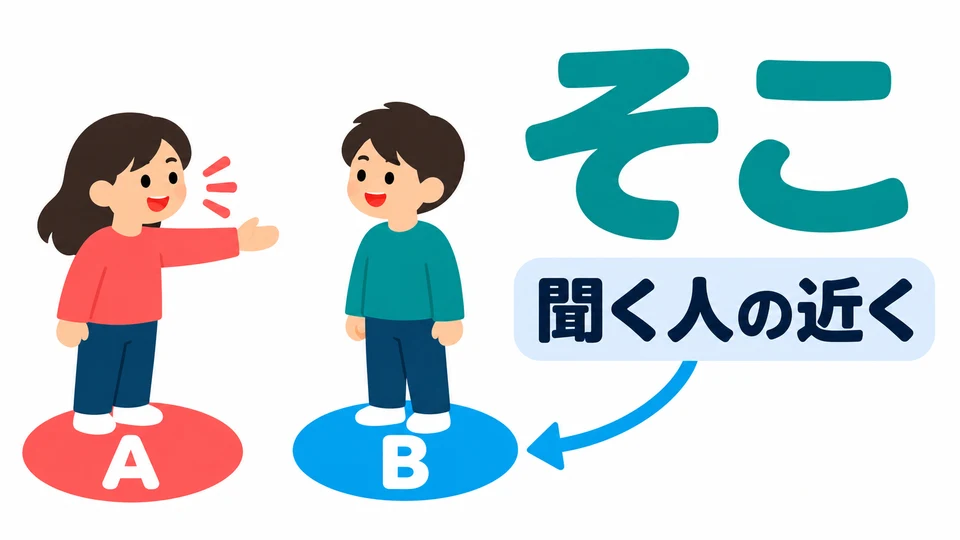
Use 「そこ」 for a place near the listener. A points to the blue area under B’s feet and says “there.”
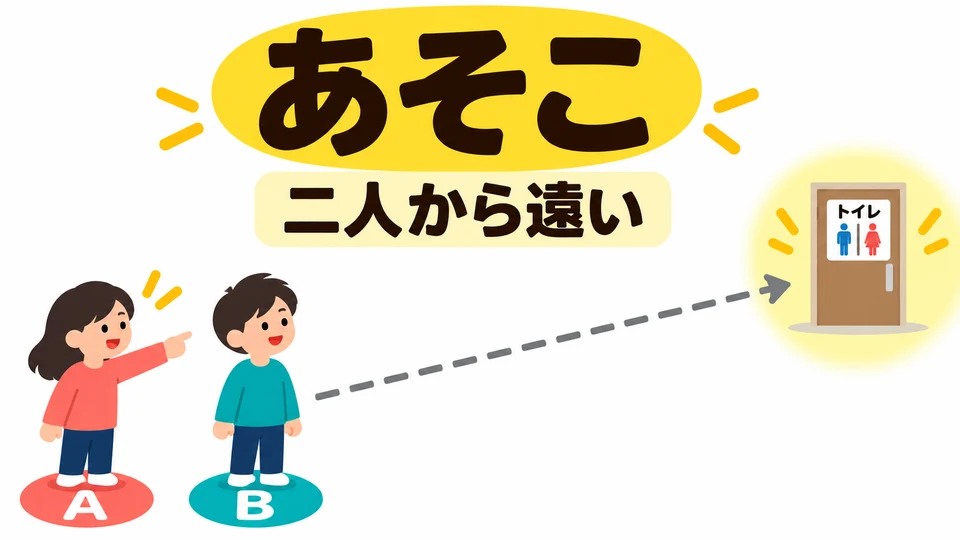
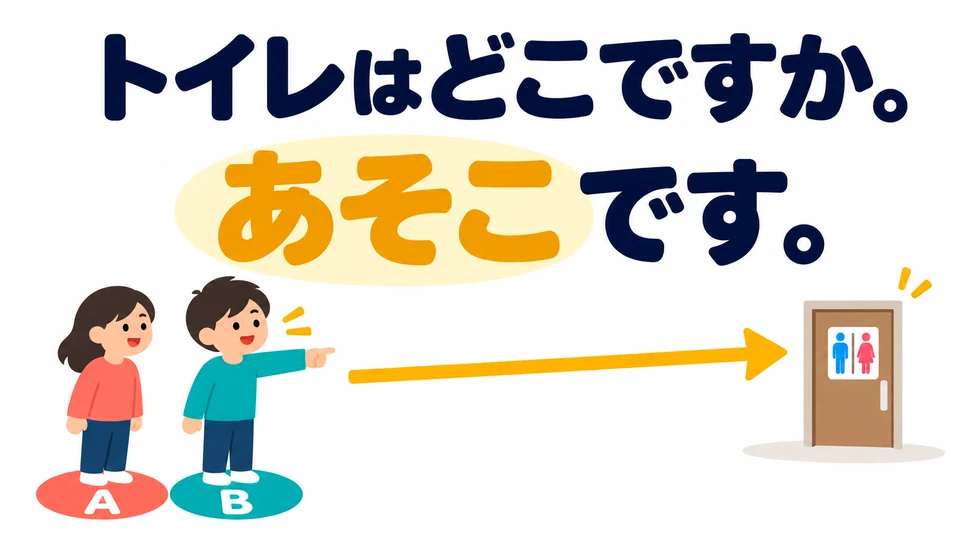
Use 「あそこ」 for a place far from both the speaker and the listener. The restroom in the distance fits this category.
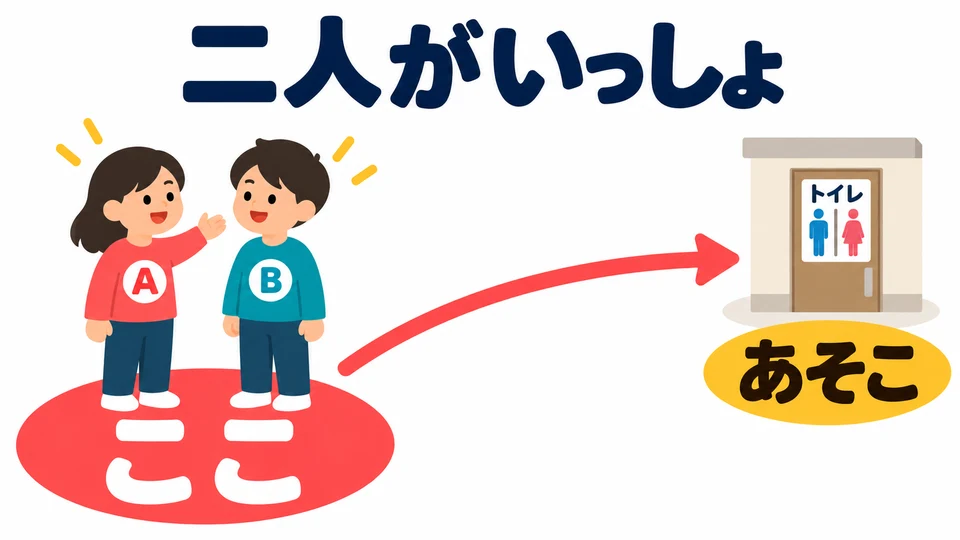
When two people stand together, use 「ここ」 for the nearby area they share and 「あそこ」 for a place far away.
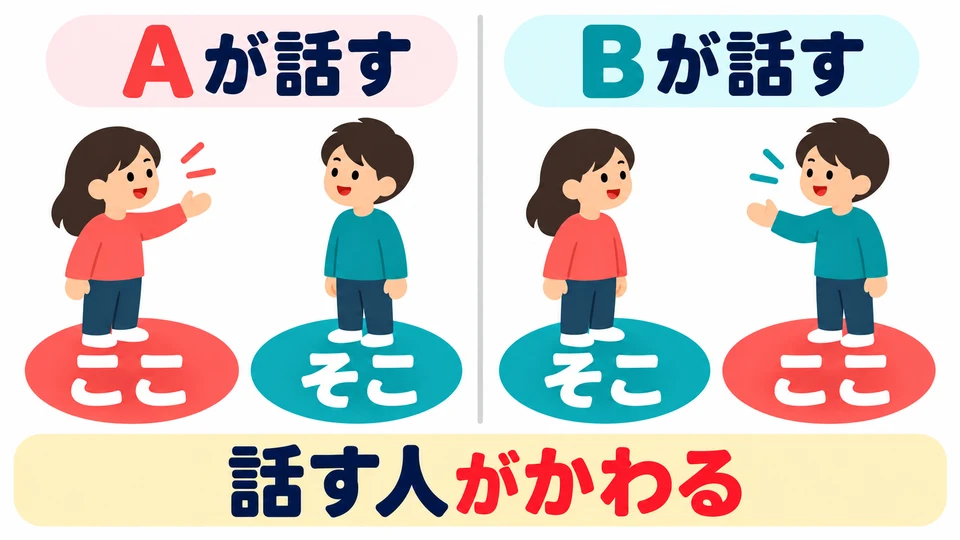
When B becomes the speaker, the area near B is 「ここ」. These words depend on who is speaking; they are not fixed place names.
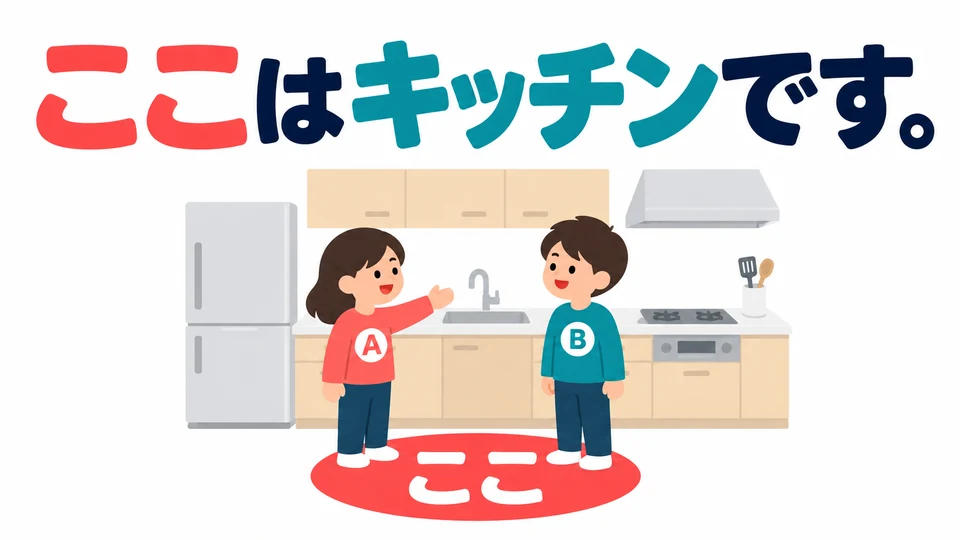
To introduce the place in front of you, say 「ここはキッチンです。」 This means “This is the kitchen.”
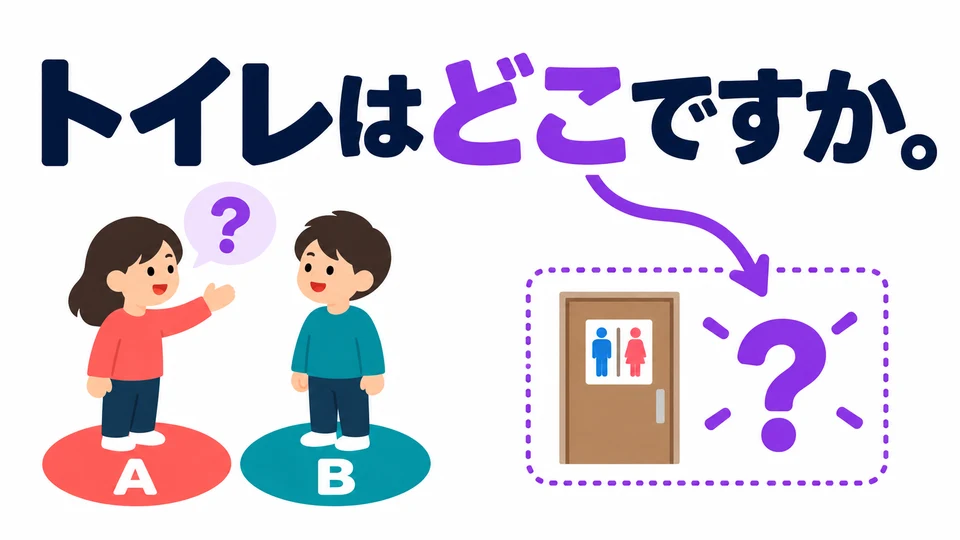
Use 「どこ」 to ask about a place you don’t know. 「トイレはどこですか。」 asks “Where is the restroom?”
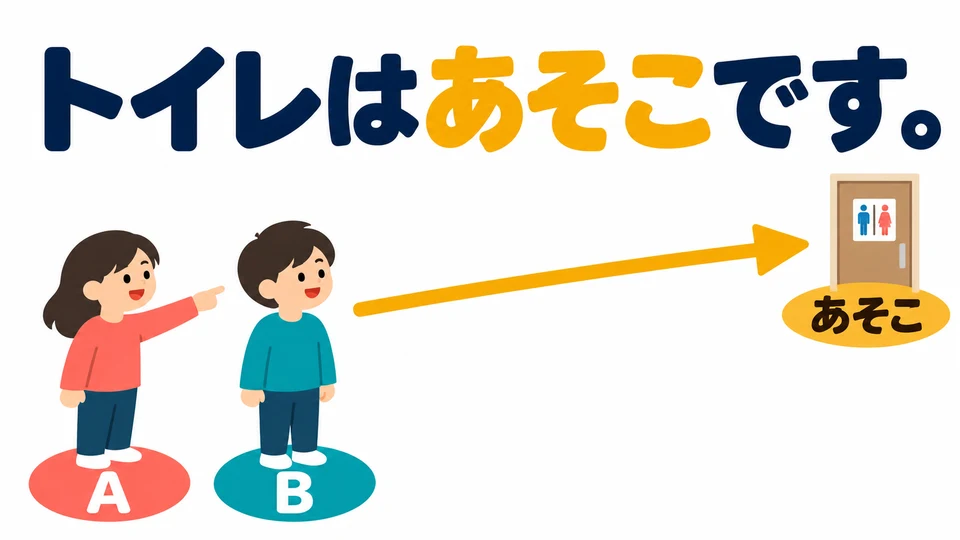
Example sentences
- ここkokoはwaキッチンkitchinです。desu
This is the kitchen.
- トイレtoireはwaあそこasokoです。desu
The restroom is over there.
In a conversation

- Aトイレはどこですか。
A: Where is the restroom?
- Bこちらです。
B: This way.
- Aあ、ここですね。
Check yourself
Level 1 · Recognise
Which sentence is correct?
Level 1 · Recognise
Listen and choose the meaning
Level 2 · Build
Put the words in order
This is the kitchen.
Level 3 · Use
What goes in the blank?
野菜売り場 です。
The vegetable section is on the first basement floor.
More grammar in this theme
- ここ・そこ・あそこ・どこplace words by distance