
Japanese grammar · ≈ JLPT N5 · Beginner 1
〜は(い/な形容詞)です~ wa (i / na keiyoushi) desu
describe a place with adjectives
Use い- or な-adjectives with 「です」 to describe a place politely.
How it works
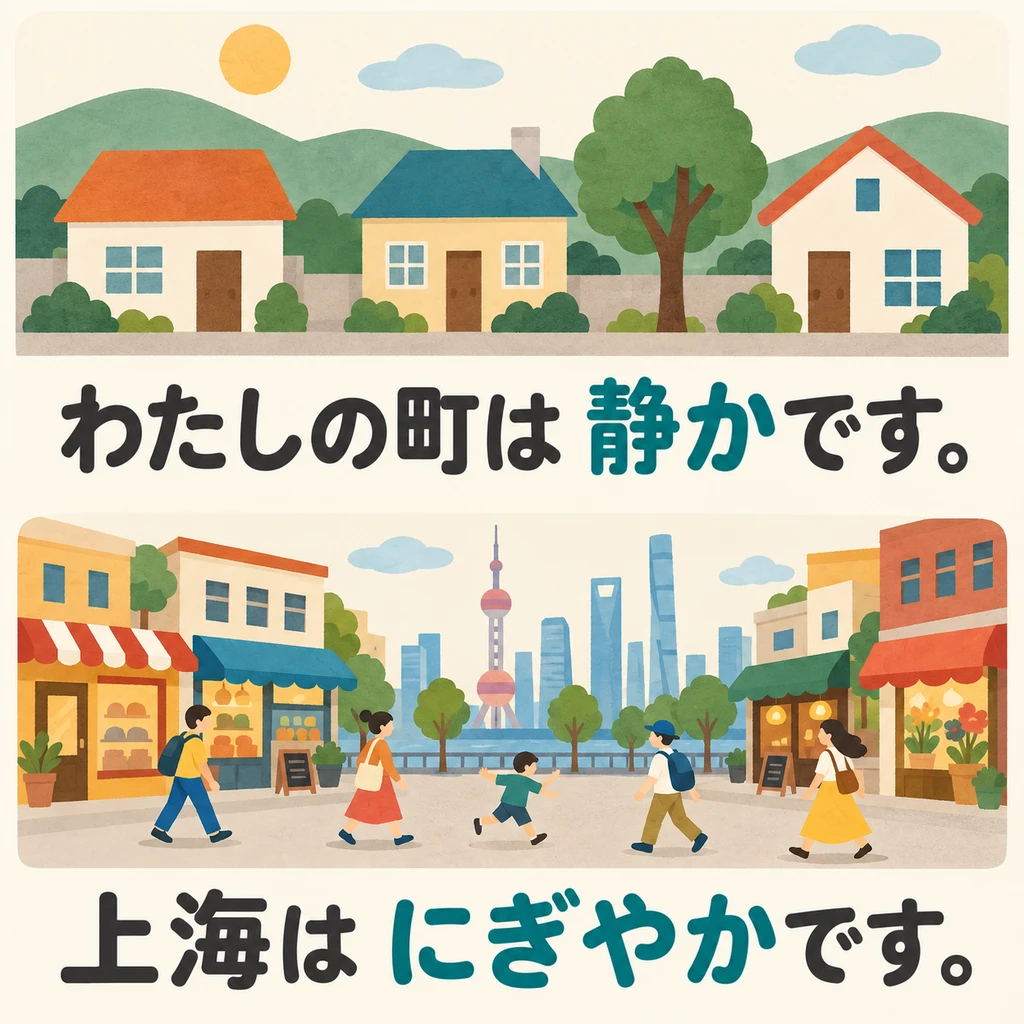
Look at how the two towns differ. 「は」 introduces the topic; what follows describes the town.
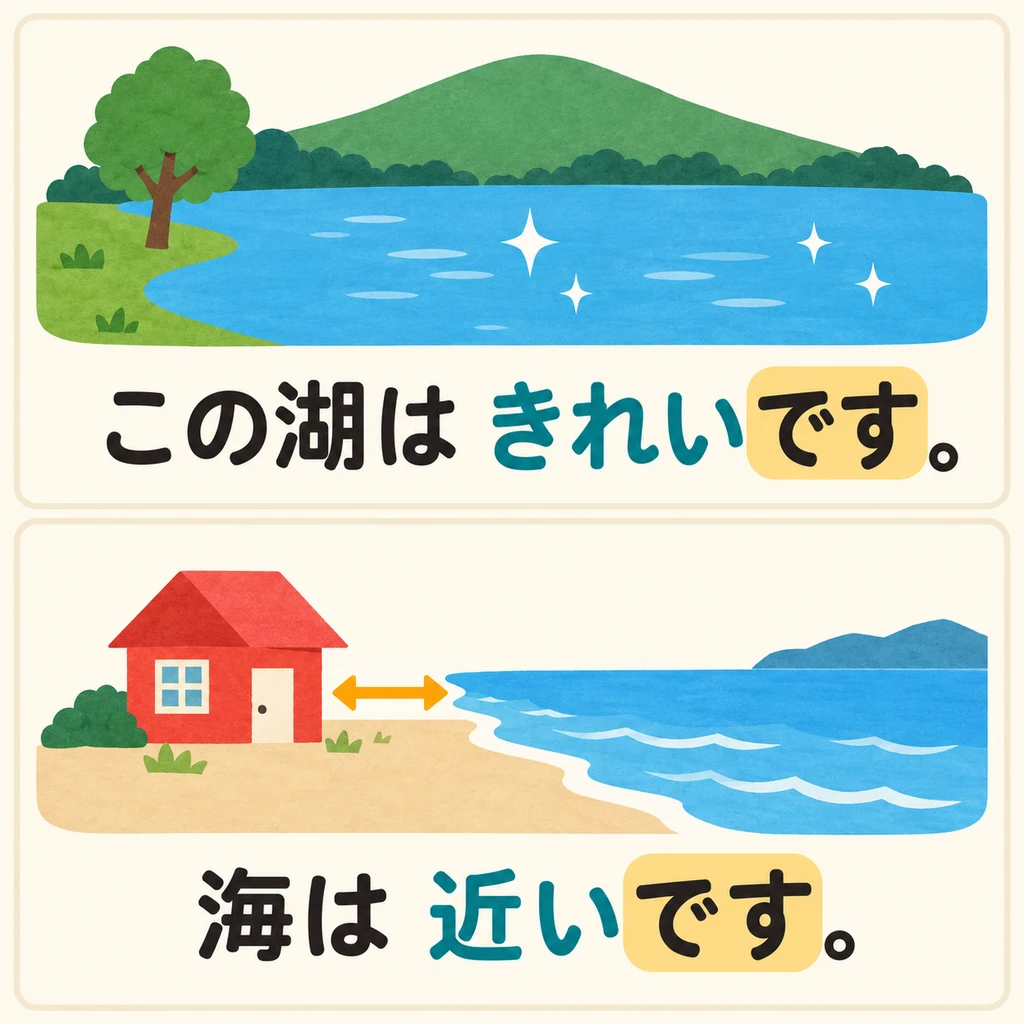
The lake is beautiful, and the sea is nearby. Both types of adjective can end a sentence with 「です」 for a polite description.
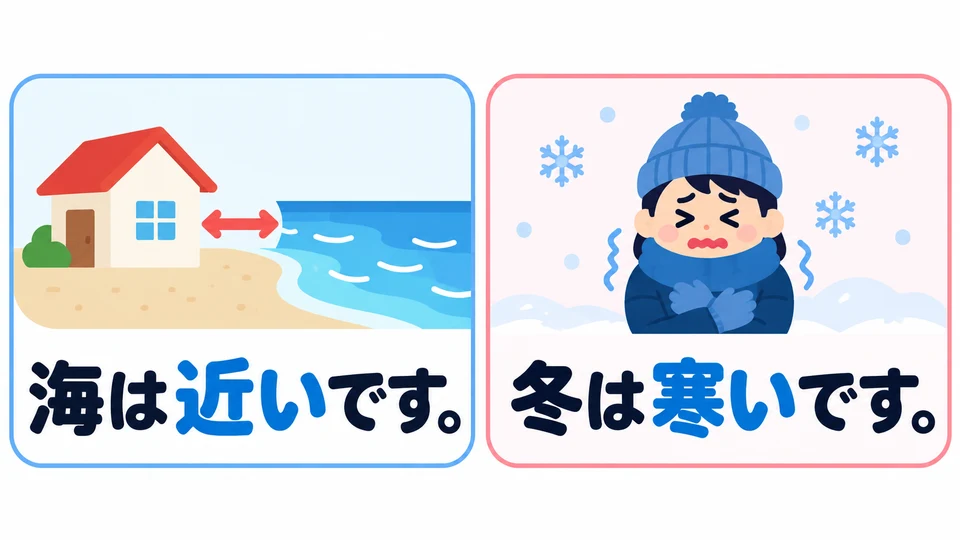
Adjectives describe both characteristics and states. 「近い」 describes distance, and 「寒い」 describes how cold it is.
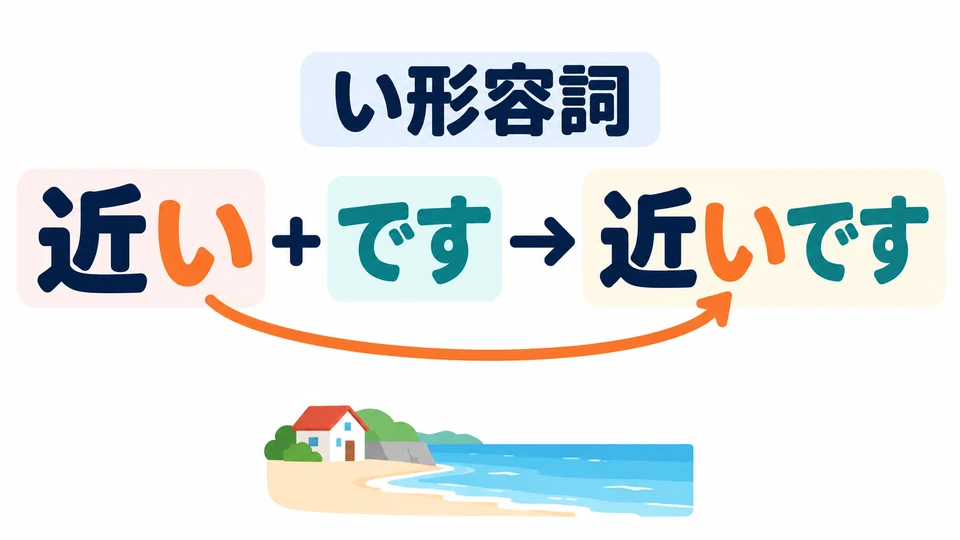
「近い」 is an い-adjective. To describe a present characteristic, keep the final 「い」 and add 「です」.
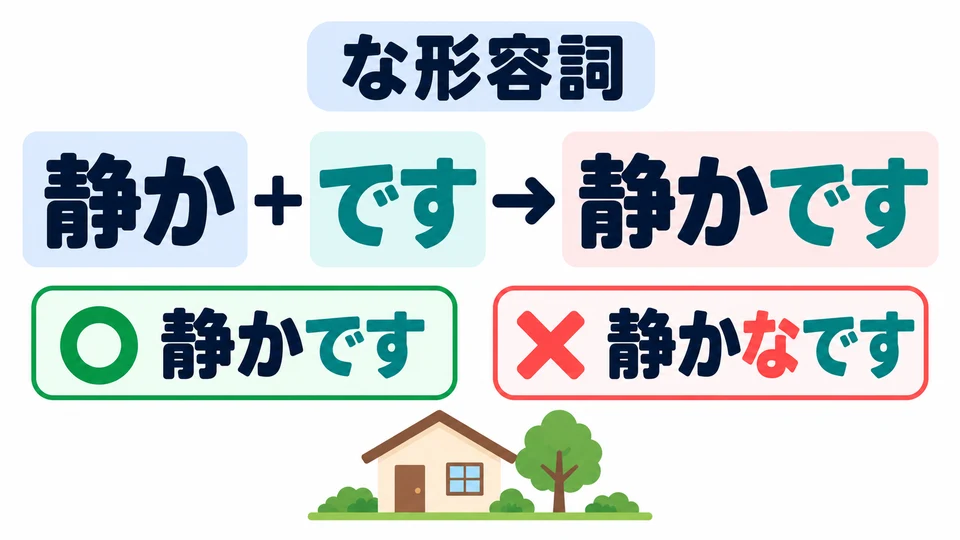
「静か」 is a な-adjective. At the end of a sentence, say 「静かです」. Do not add 「な」 here.
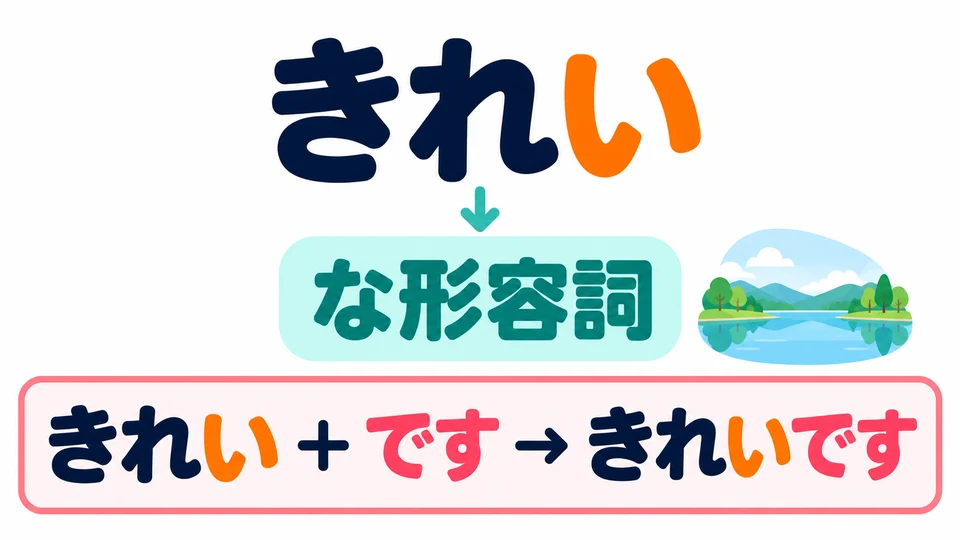
Although 「きれい」 ends in 「い」, it is a な-adjective. Learn each word together with its adjective type.
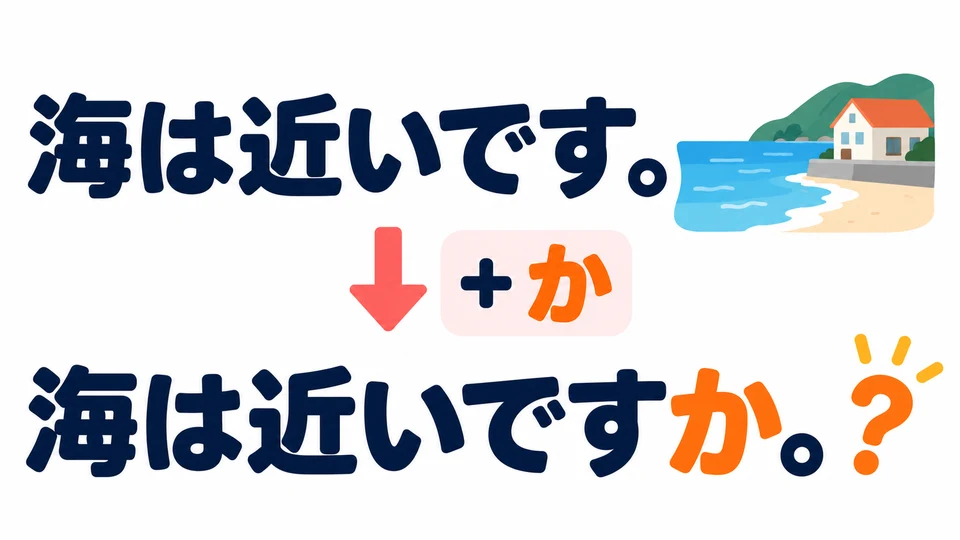
To check a characteristic, add 「か」 at the end: 海は近いですか。This means “Is the sea nearby?”
Example sentences
- 日本nipponはwa綺麗です。kireidesu
Japan is beautiful.
- 上海shanhaiはwa賑やかです。nigiyakadesu静かじゃshizukaja
In a conversation

- Aあなたの町はにぎやかですか。
A: Is your town lively?
- Bいいえ。わたしの町はあまりにぎやかでは
Check yourself
Level 1 · Recognise
Which sentence is correct?
Level 1 · Recognise
Listen and choose the meaning
Level 2 · Build
Put the words in order
Tokyo is lively.
Level 3 · Use
What goes in the blank?
上海 です。静かじゃありません。
Shanghai is lively. It's not quiet.
More grammar in this theme
- 〜は(い/な形容詞)ですdescribe a place with adjectives