Japanese grammar · ≈ JLPT N5 · Beginner 2
〜てもいいですか~te mo ii desu ka
asking for permission
Use 「〜てもいいですか」 before acting to ask whether the other person permits you to do something.
How it works
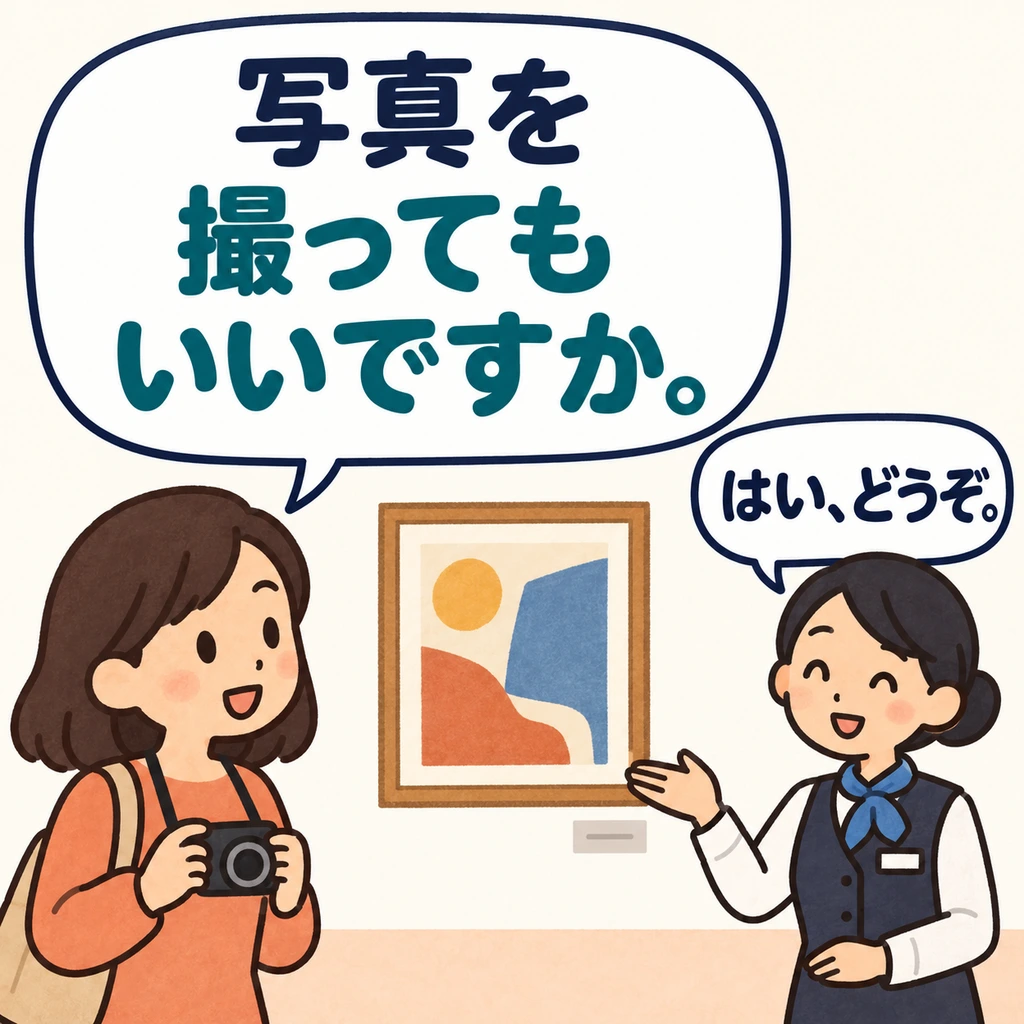
The camera is still lowered. First, ask the staff member. Use this question before taking action.
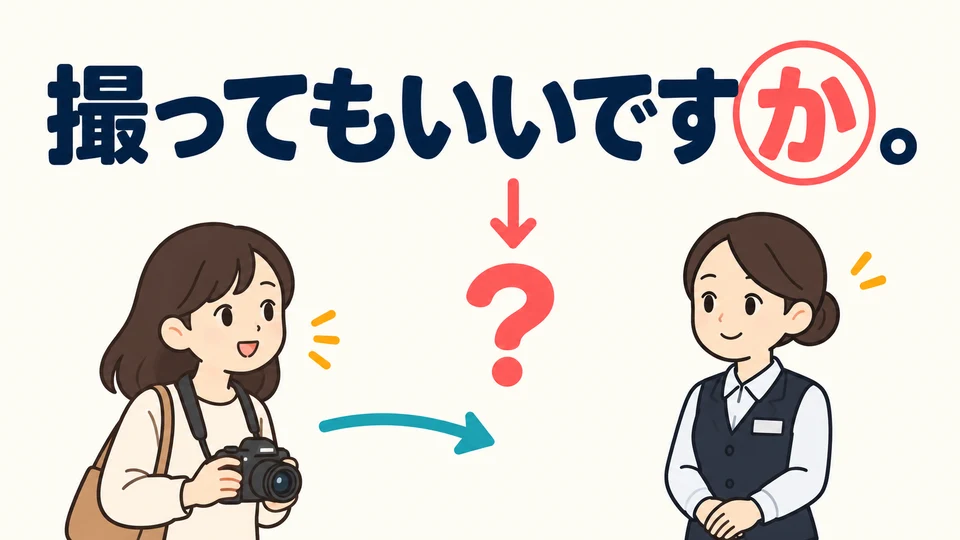
When you want to do something, first ask the other person for permission. Adding 「か」 at the end makes it a question asking permission.
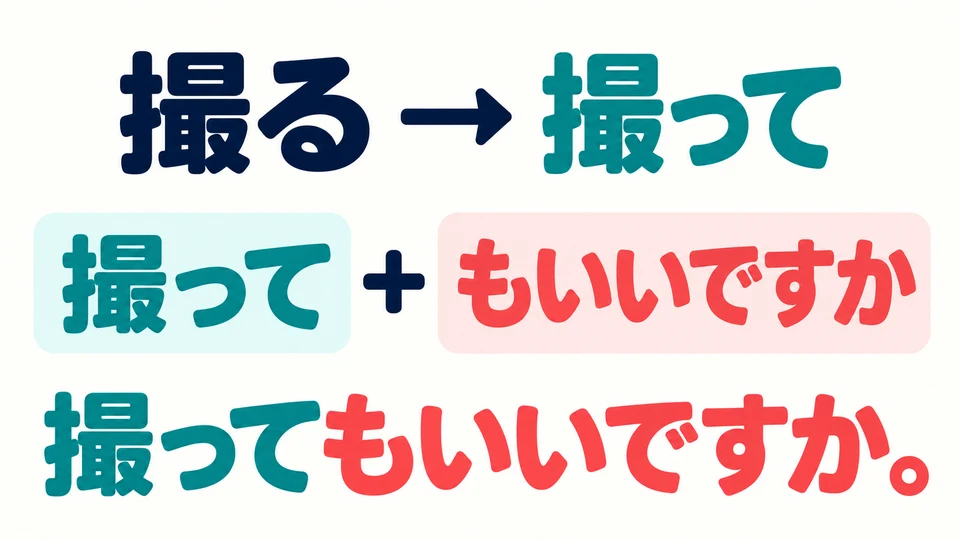
Put the verb in the て-form, then add 「もいいですか」. For example, 「撮る」 becomes 「撮って」.
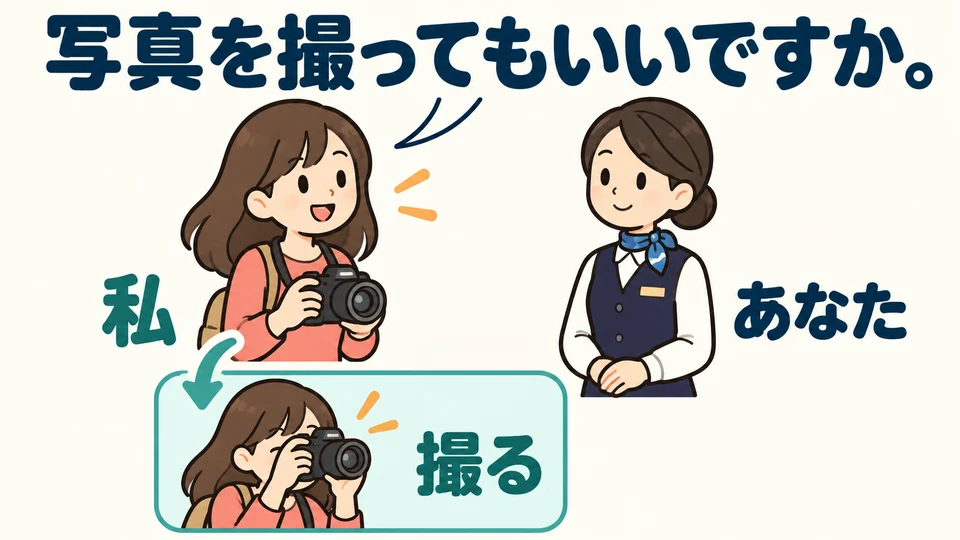
In the examples, taking a photo and going inside are actions the speaker wants to do. The speaker is not asking the other person to do them.
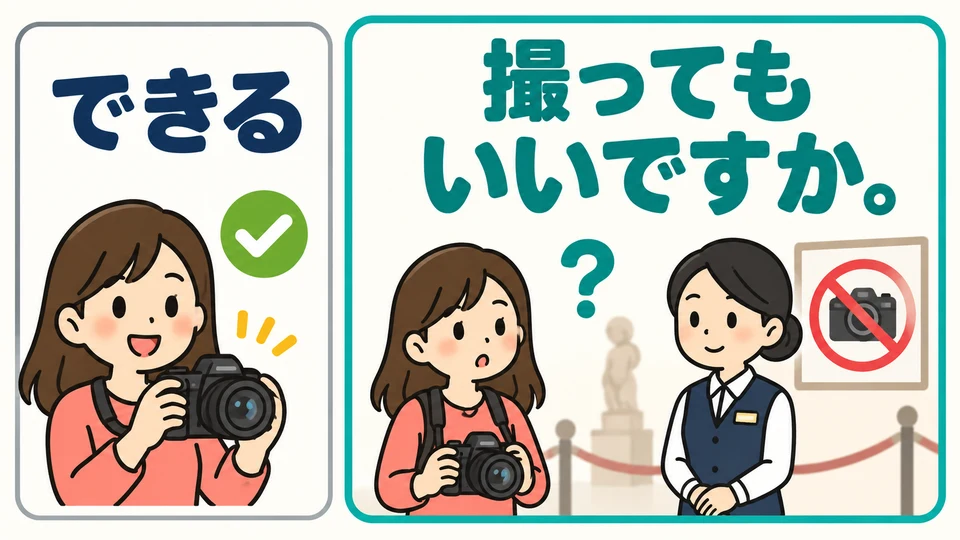
Even if you know how to take photos, you may not be allowed to. Here, you ask about permission, not ability.
Example sentences
- 写真shashinをo撮っtotてteもmoいいですiidesuか。ka
May I take a photo?
- 中naka
In a conversation
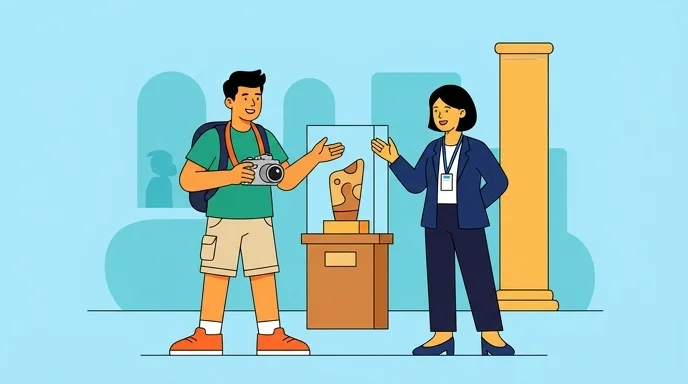
- Aすみません、ここで写真を撮ってもいいですか。
A: Excuse me, may I take a photo here?
- Bはい、撮っても
Check yourself
Level 1 · Recognise
Which sentence is correct?
Level 1 · Recognise
Listen and choose the meaning
Level 2 · Build
Put the words in order
May I take a photo?
Level 3 · Use
What goes in the blank?
このドア もいいですか。
May I enter through this door?
More grammar in this theme
- 〜てもいいですかasking for permission