Japanese grammar · ≈ JLPT N5 · Beginner 2
〜が〜ています~ga ~te imasu
current action or state
Use 「〜が〜ています」 to describe what is happening now or the current state of something you observe.
How it works
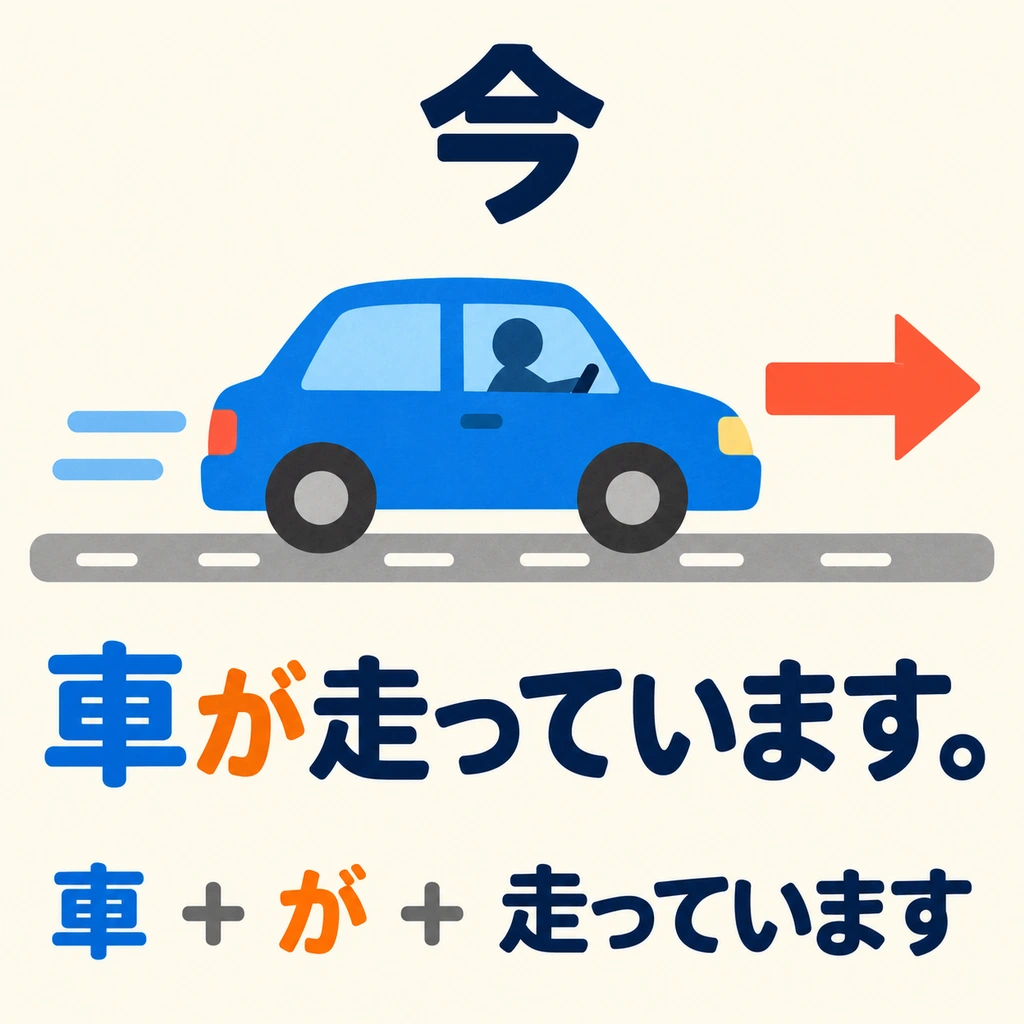
When you see a car moving in front of you, use this pattern to tell someone what is happening now.
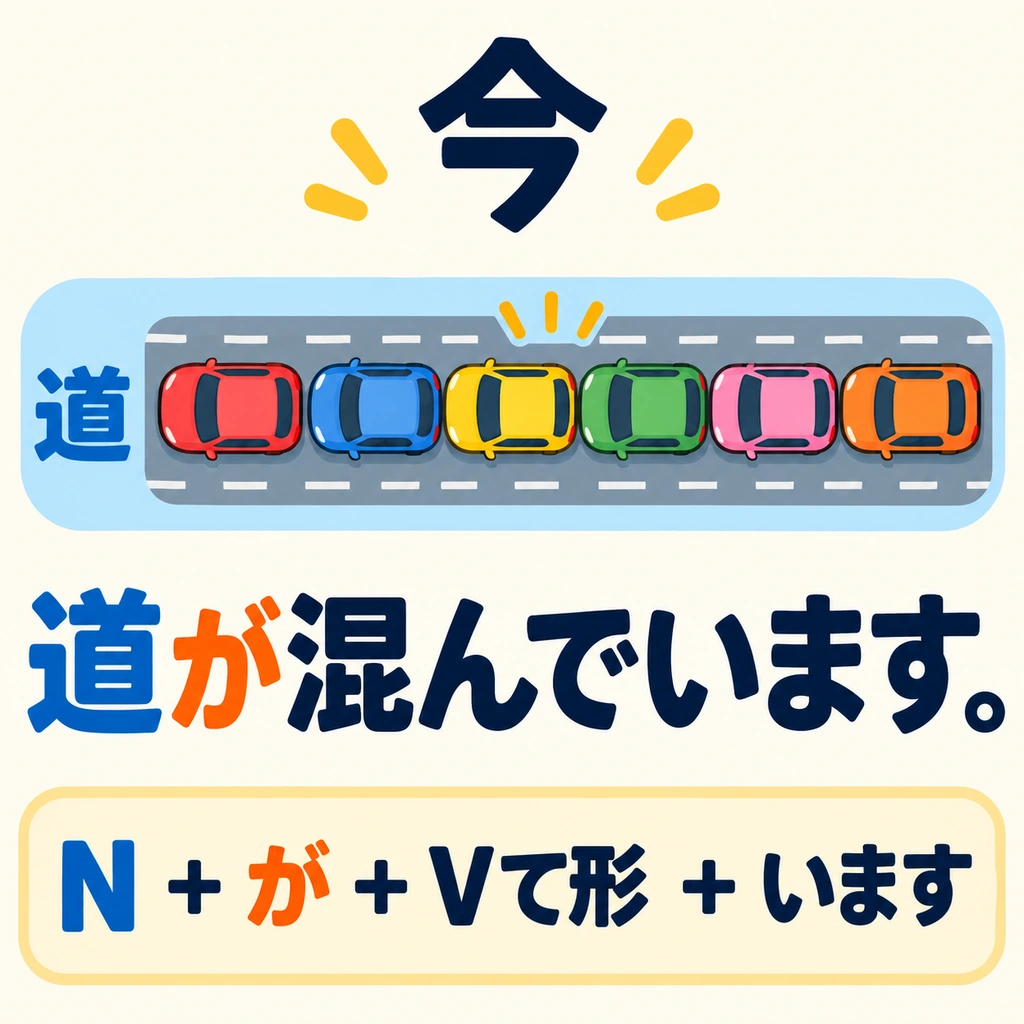
A congested road is also a scene you see now. 「ています」 can describe a state, too.
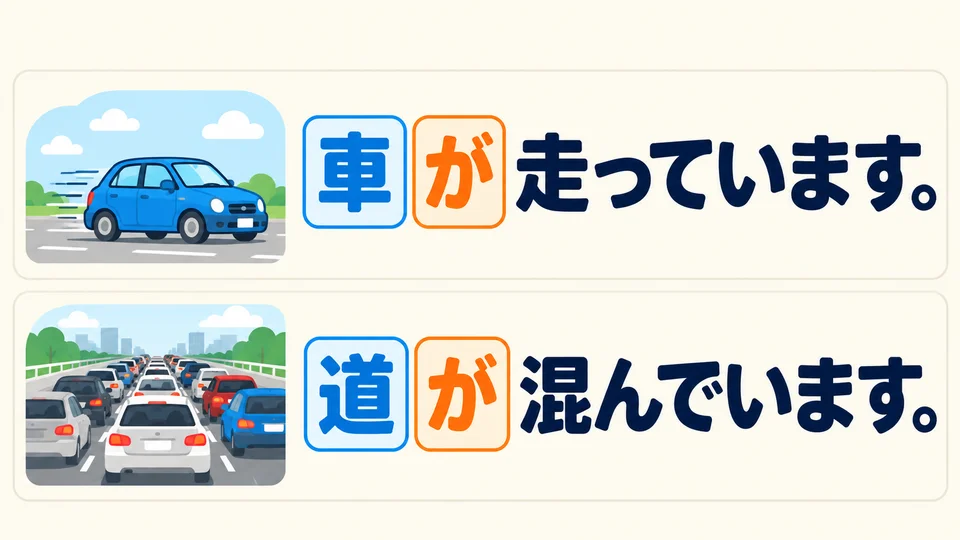
Put what you are describing before 「が」: for a moving car, say 「車が」; for a congested road, say 「道が」.
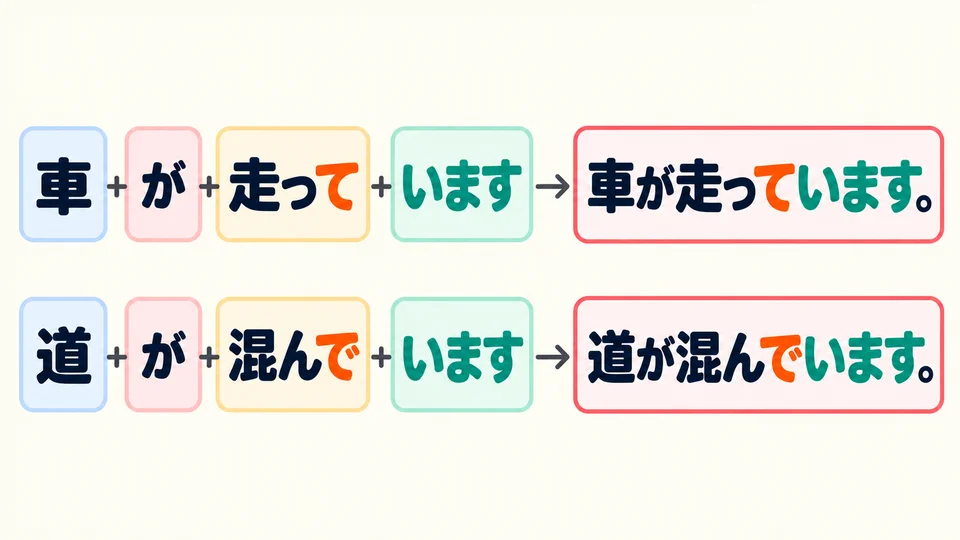
Follow it with 「が+verb in て-form+います」. If the て-form ends in 「で」, keep 「で」.
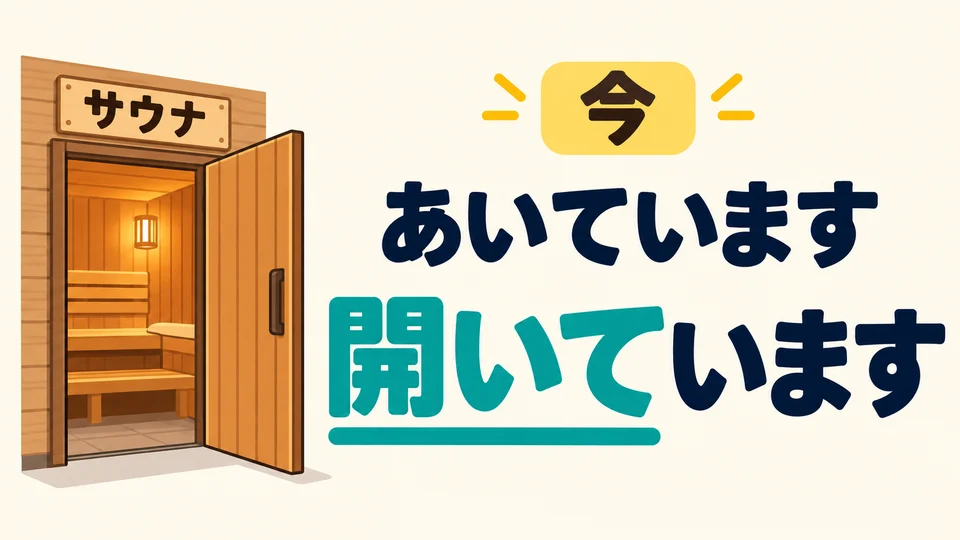
In the dialogue, 「開いています」 is read 「あいています」 and tells you that the sauna is open now.
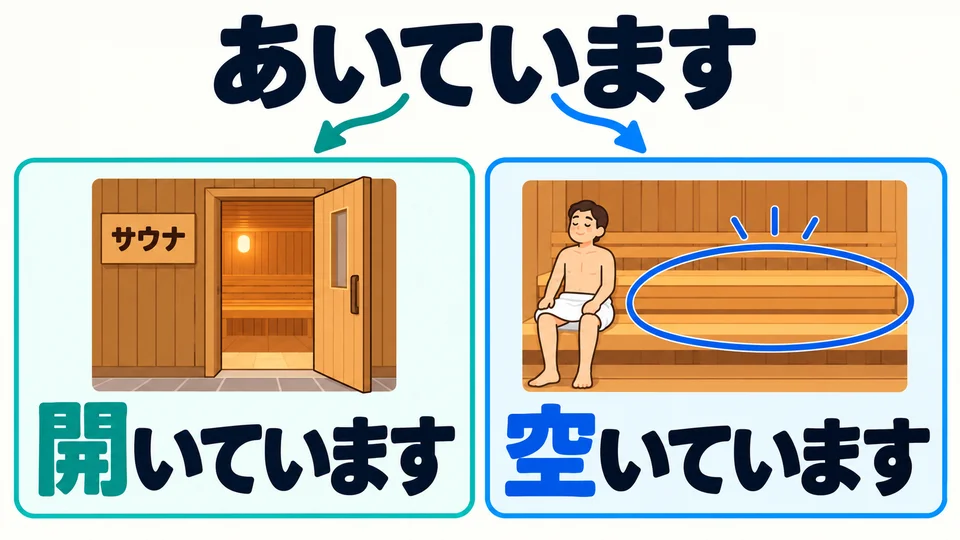
「開いて」 means open; 「空いて」 means there is space available. When they sound the same, use the context to understand them.
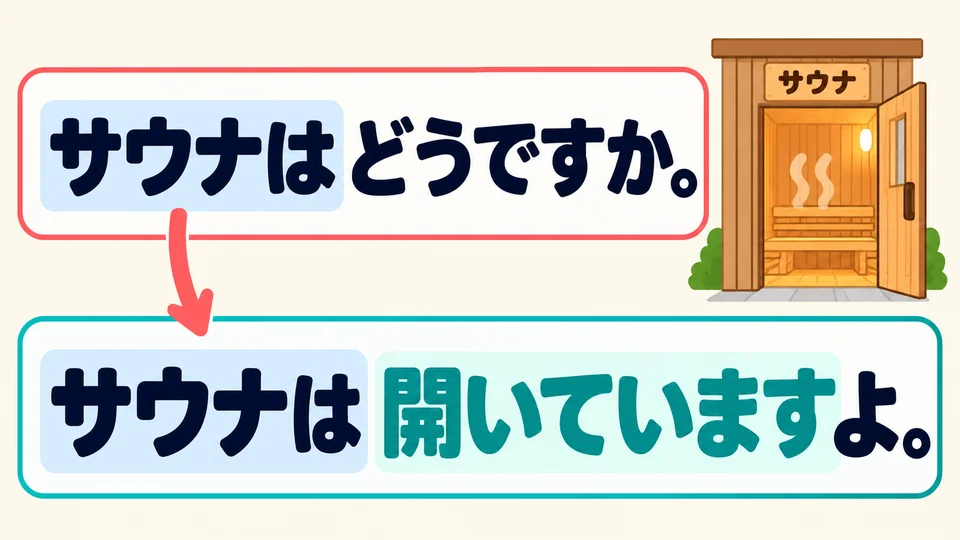
The other person has already asked about the sauna, so 「サウナは」 continues that topic. The reply still describes the current situation.
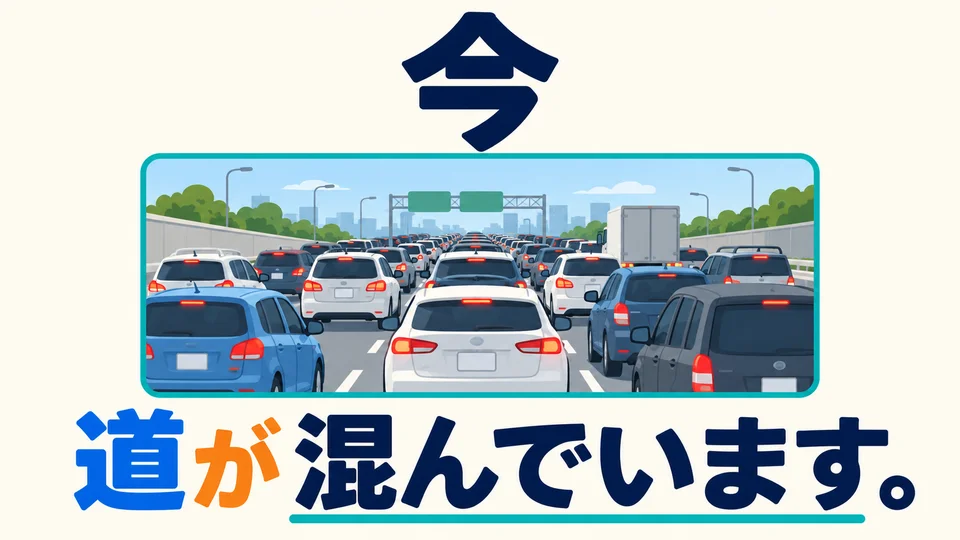
In the example, 「混んでいます」 means the road is congested now; it does not have to mean it is becoming congested.
Example sentences
- 車kurumaがga走っhashiてteいます。imasu
Cars are running.
- 道michiがga混んkon
In a conversation
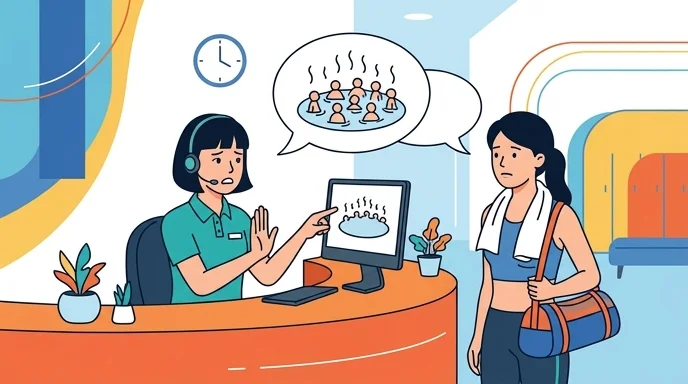
- Aスポーツセンターは空いていますか。
A: Is the sports center empty?
- Bいいえ、今温泉が混んでいます。
Check yourself
Level 1 · Recognise
Which sentence is correct?
Level 1 · Recognise
Listen and choose the meaning
Level 2 · Build
Put the words in order
The hot spring is crowded.
Level 3 · Use
What goes in the blank?
レストランが 。
The restaurant is closed.
More grammar in this theme
- 〜が〜ていますcurrent action or state