Japanese grammar · ≈ JLPT N4 · Beginner 2
〜なければなりません~nakereba narimasen
must do
Use this form to say an action is required by a rule, responsibility, or practical need.
How it works
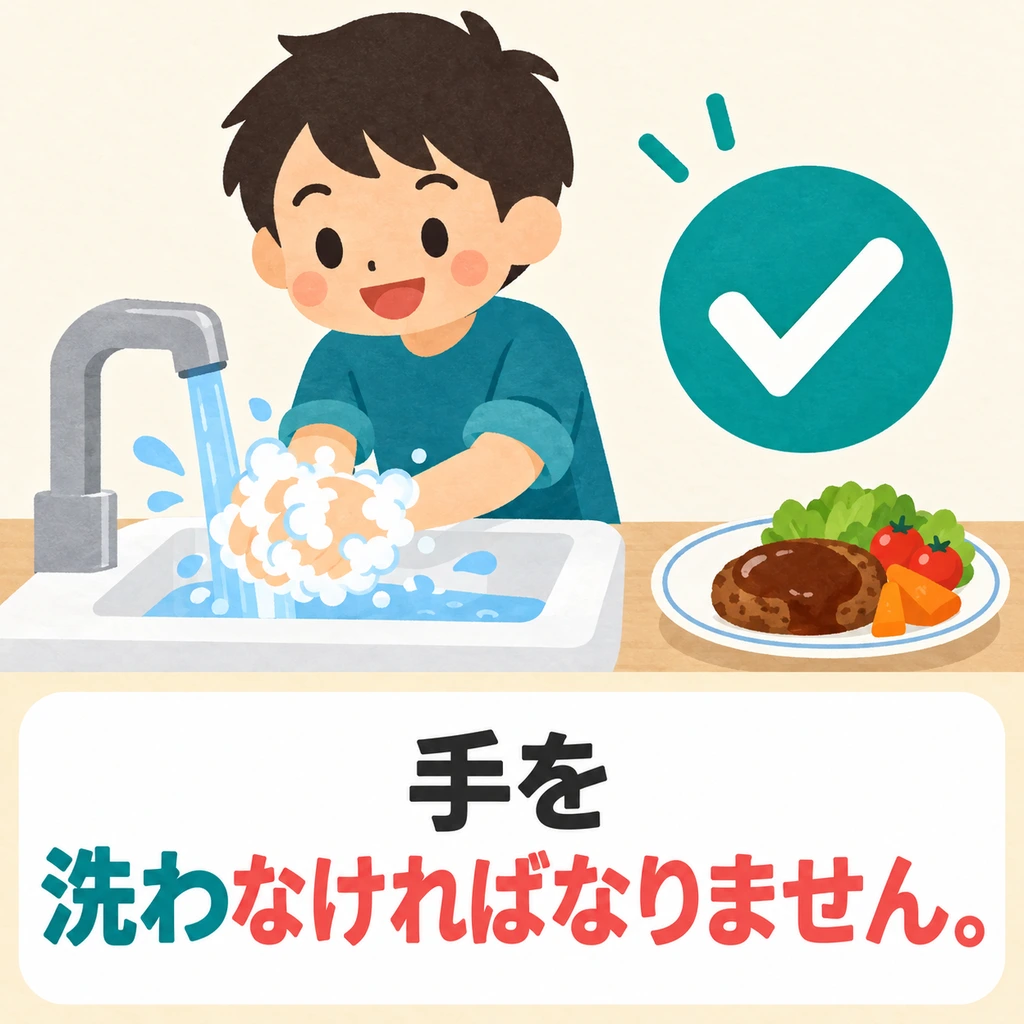
You need to wash your hands before eating. The sentence in the picture says this is something you must do.
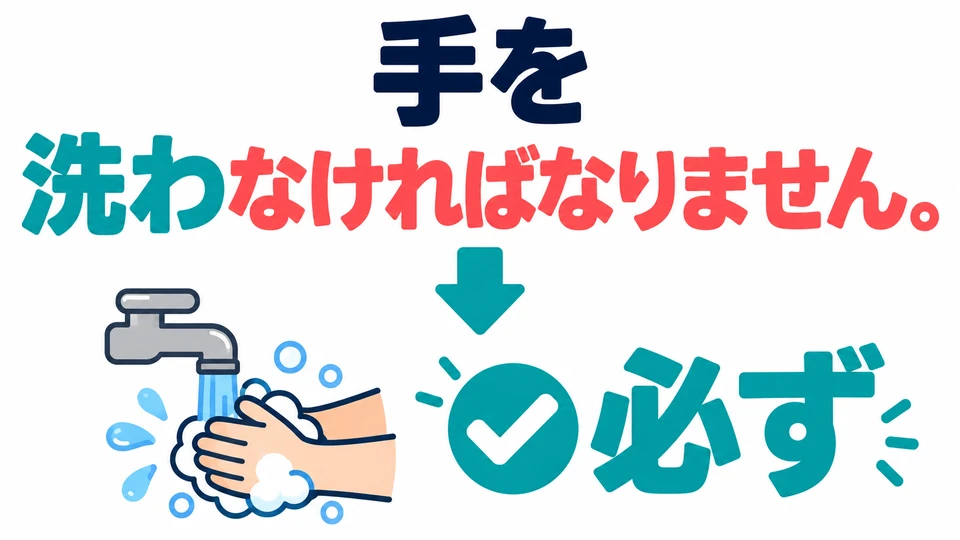
Although the sentence contains 「ない」 and 「ません」, the whole expression still means “must do.”
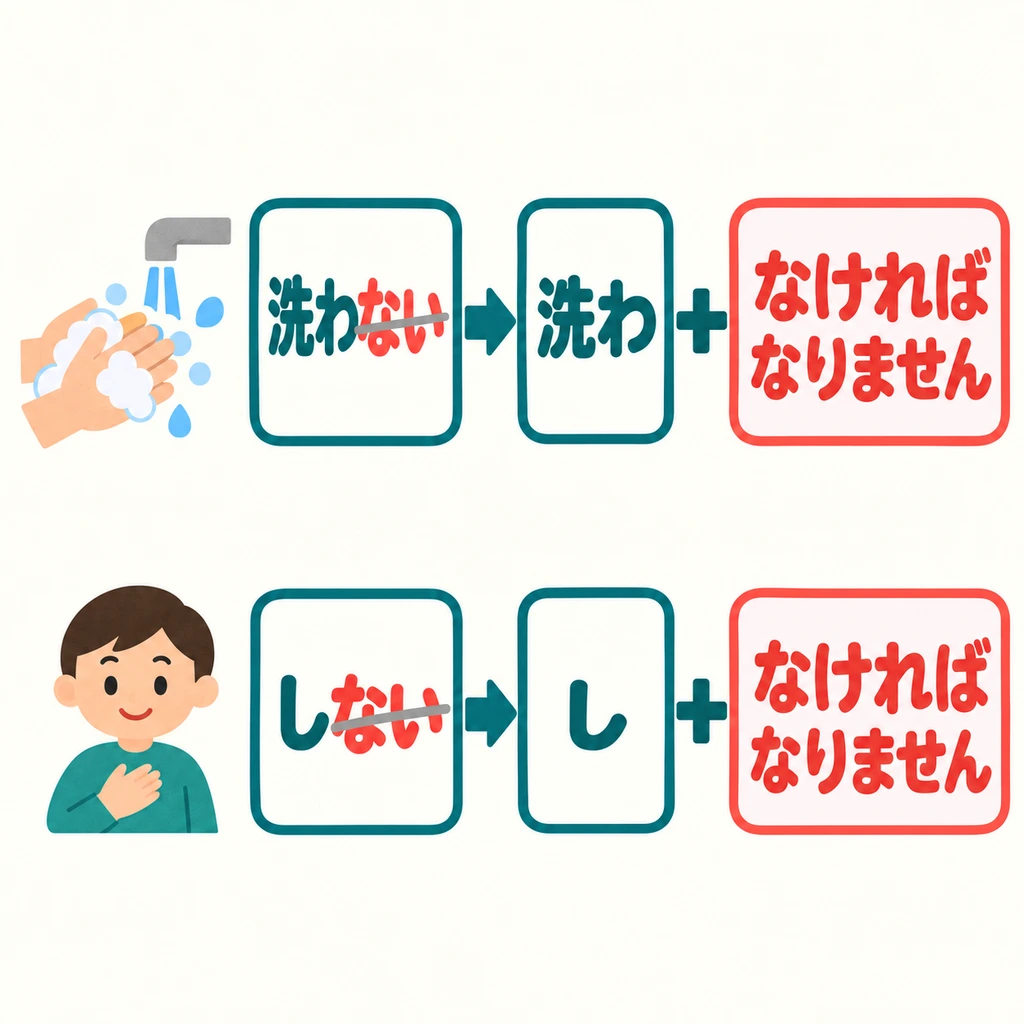
Remove the final 「ない」 from the verb’s ない form, then add 「なければなりません」.
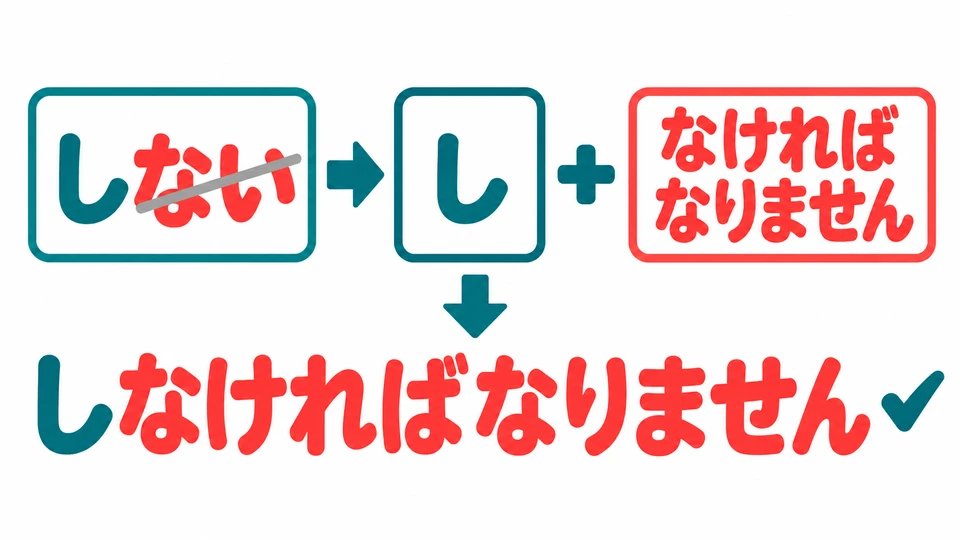
Removing 「ない」 from 「しない」 leaves 「し」, so it becomes 「しなければなりません」.
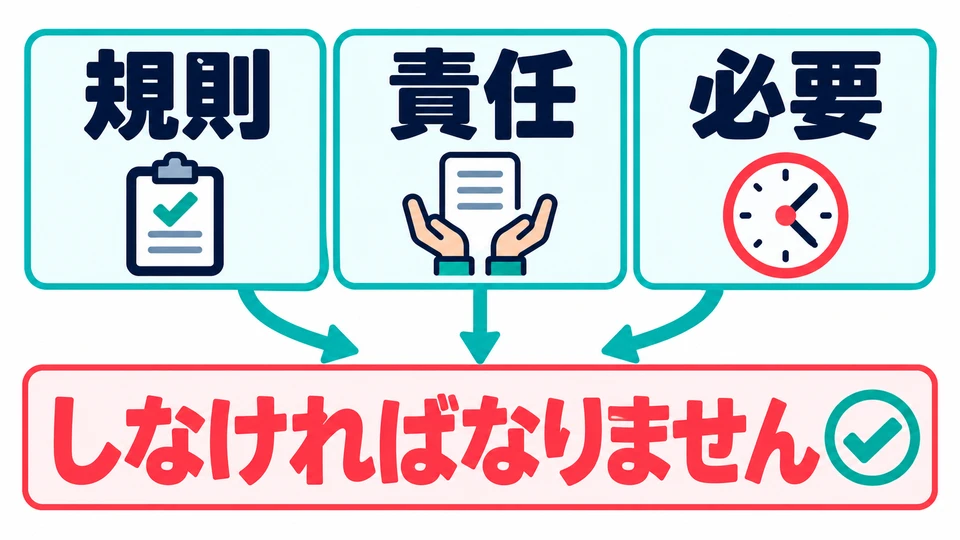
Rules, responsibilities, or practical needs can all make something a “must-do” action.
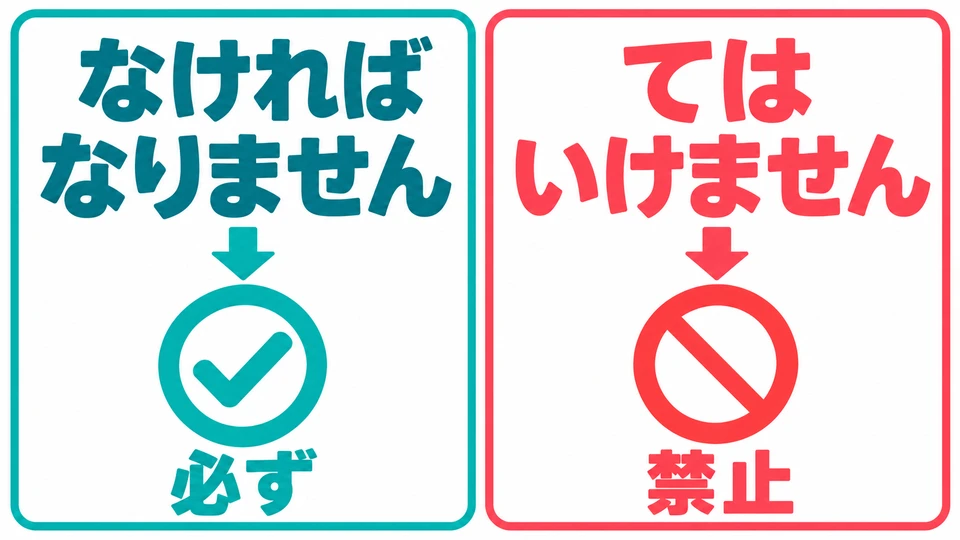
These two sentences require washing your hands and taking off your shoes. The 「てはいけません」 you learned earlier expresses a prohibition.
Example sentences
- 手teをo洗わなけれarawanakereばbaなりません。narimasen
You must wash your hands.
- 靴kutsuをo脱がなけれnuganakere
In a conversation
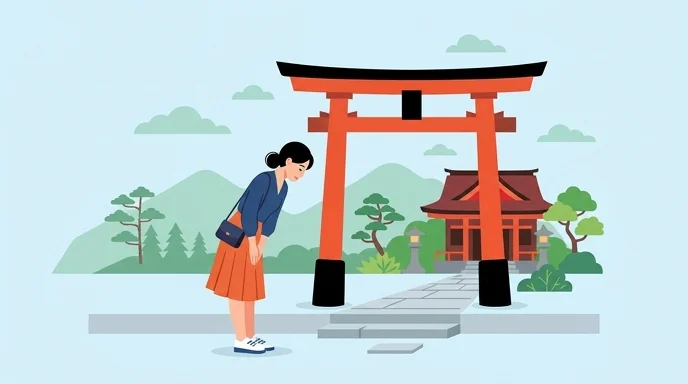
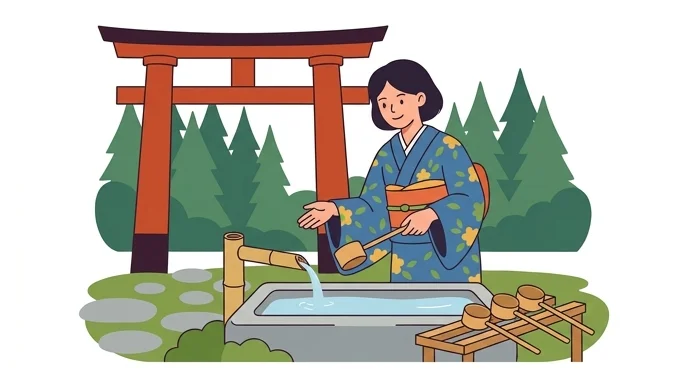
- A神社に行く時、何をしなければなりませんか。
A: What do you have to do when going to a shrine?
- B鳥居をくぐっ
Check yourself
Level 1 · Recognise
Which sentence is correct?
Level 1 · Recognise
Listen and choose the meaning
Level 2 · Build
Put the words in order
I must take medicine every day.
Level 3 · Use
What goes in the blank?
手を洗 。
You must wash your hands.
More grammar in this theme
- 〜なければなりませんmust do