
Japanese grammar · ≈ JLPT N4 · Beginner 2
〜なくてもいいです~nakute mo ii desu
do not have to
Use this form to say an action is optional; it does not forbid doing it.
How it works
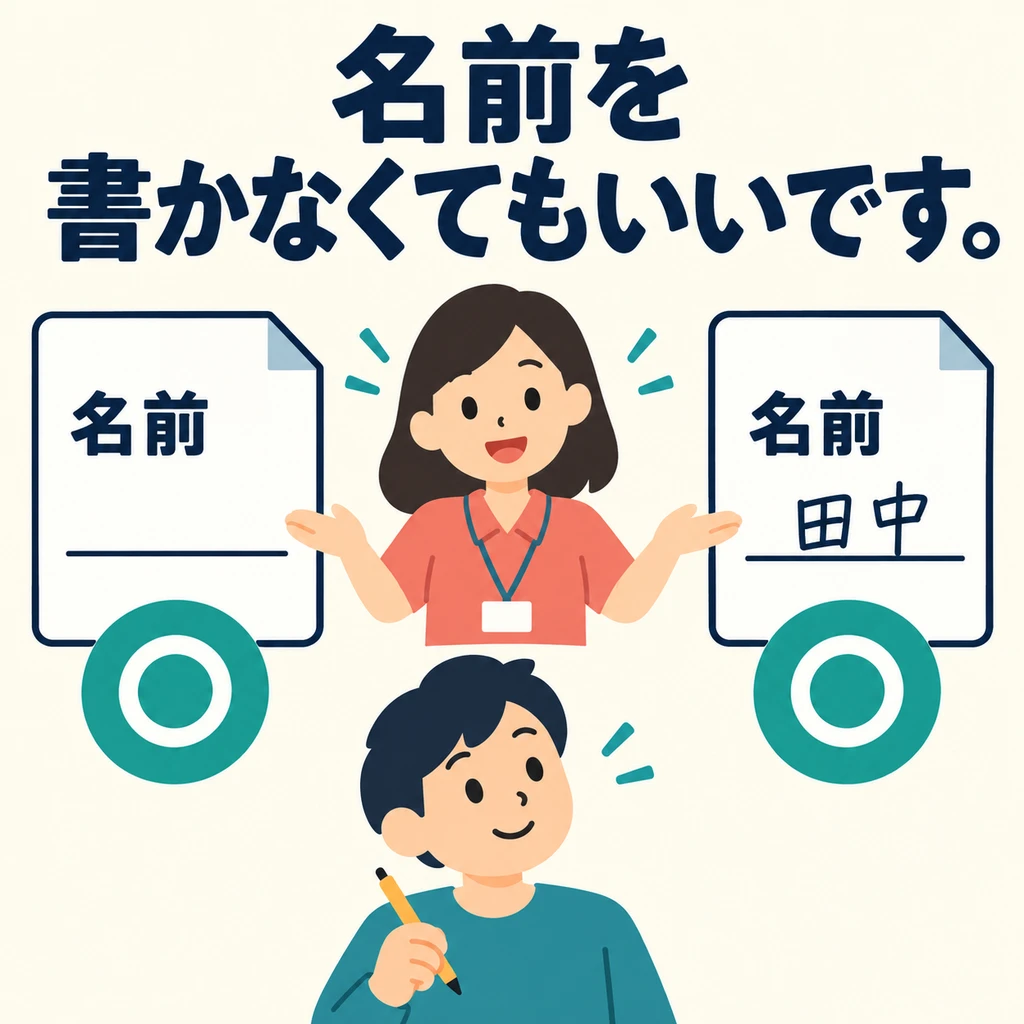
You can leave the name field blank or fill it in. This expression means you do not have to do something.
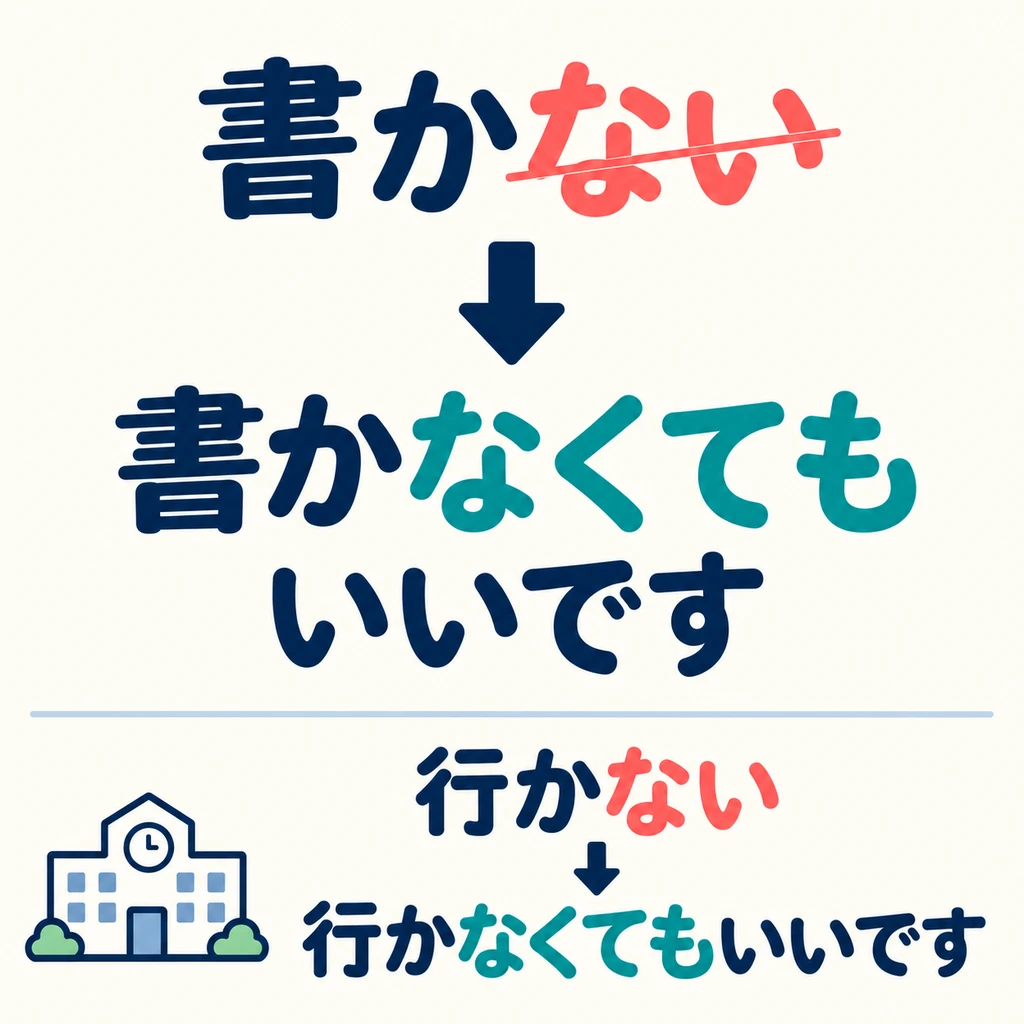
Replace the final 「ない」 in the ない form with 「なくてもいいです」. Do not simply add it after ない.
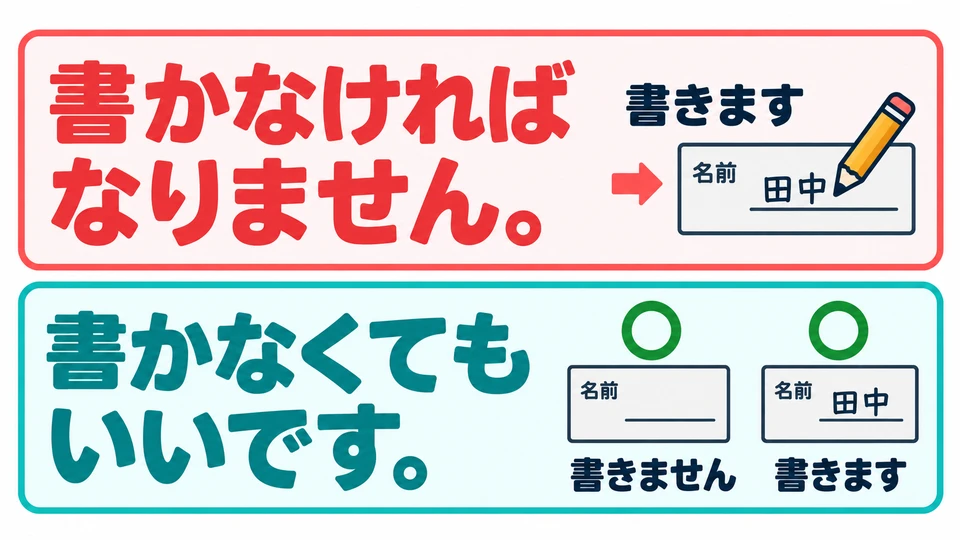
「なければなりません」 means you must do something; 「なくてもいいです」 means you do not have to.
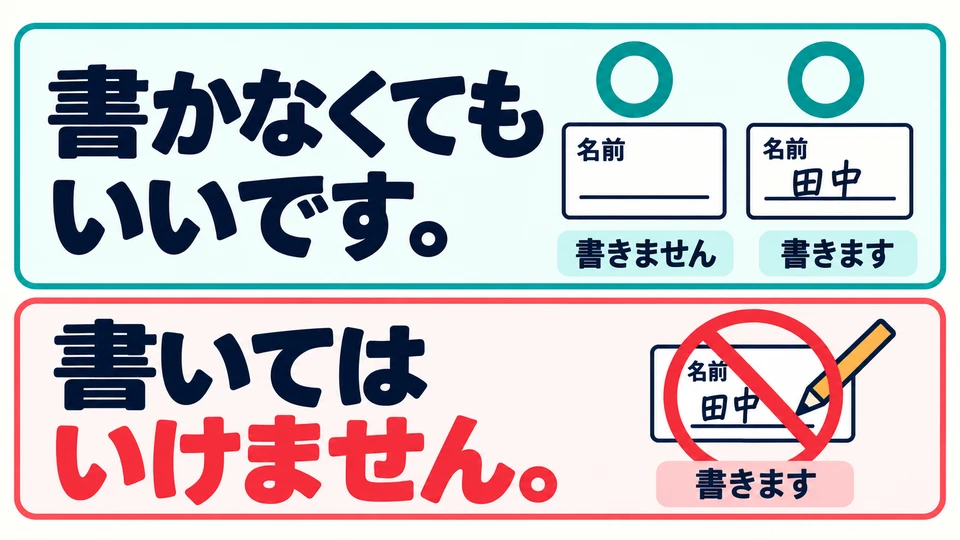
The example allows you to leave your name unwritten; writing it is still allowed. To forbid writing it, say 「書いてはいけません」.
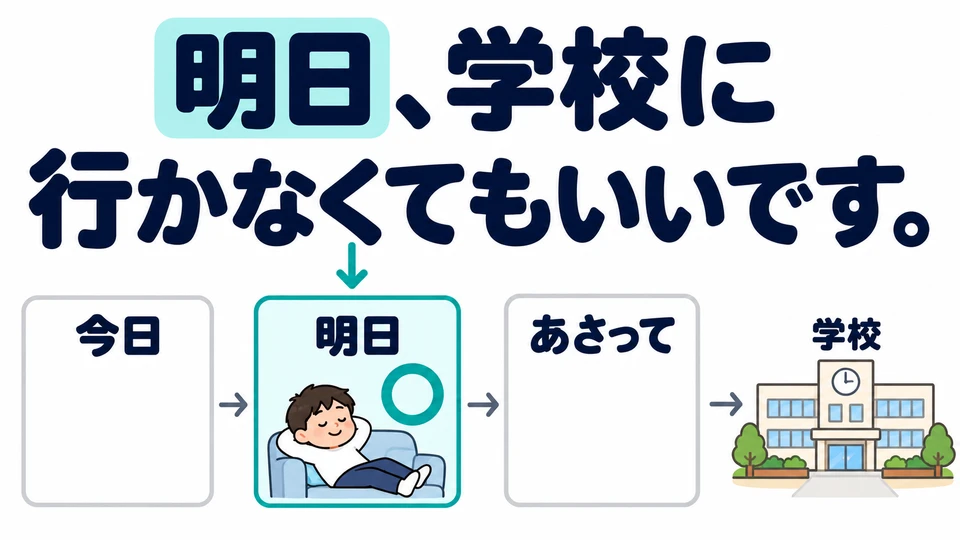
The example says you do not have to go to school tomorrow. It does not mean the school is closed or that you never have to go again.
Example sentences
- 名前namaeをo書かなくkakanakuてteもmoいいです。iidesu
You don't have to write your name.
- 明日、asu学校gakkou
In a conversation

- Aすみません、この表に全部記入しなければなりませんか。
A: Excuse me, do I have to fill out this entire form?
- Bいいえ、名前と
Check yourself
Level 1 · Recognise
Which sentence is correct?
Level 1 · Recognise
Listen and choose the meaning
Level 2 · Build
Put the words in order
You don't need to copy this document.
Level 3 · Use
What goes in the blank?
名前を いいです。
You don't have to write your name.
More grammar in this theme
- 〜なくてもいいですdo not have to