JPEdLab iconJPEdLab
Save history

Create an account and play

Explore first, then save your progress whenever you are ready. No email address is required.

Start free
  1. Japanese grammar
  2. JLPT N5 grammar
  3. 〜の〜

〜の〜~ no ~

No (〜の〜) means “Link nouns and show relationships”.

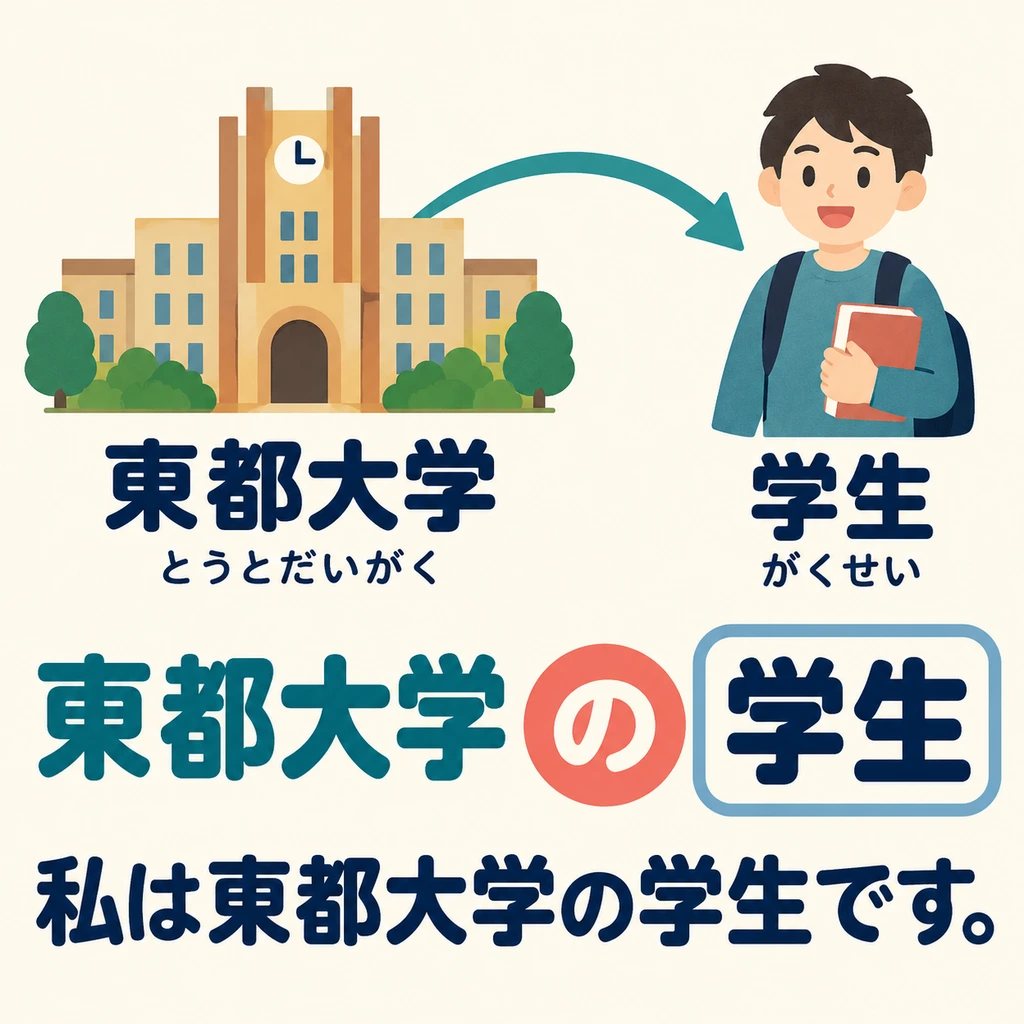
東都とうとtouto大学だいがくdaigakuのno学生がくせいgakusei

A student at Toto University

In 「〜の〜」, put extra information first and the main noun second to show affiliation, ownership, or origin.

In the course›

How it works

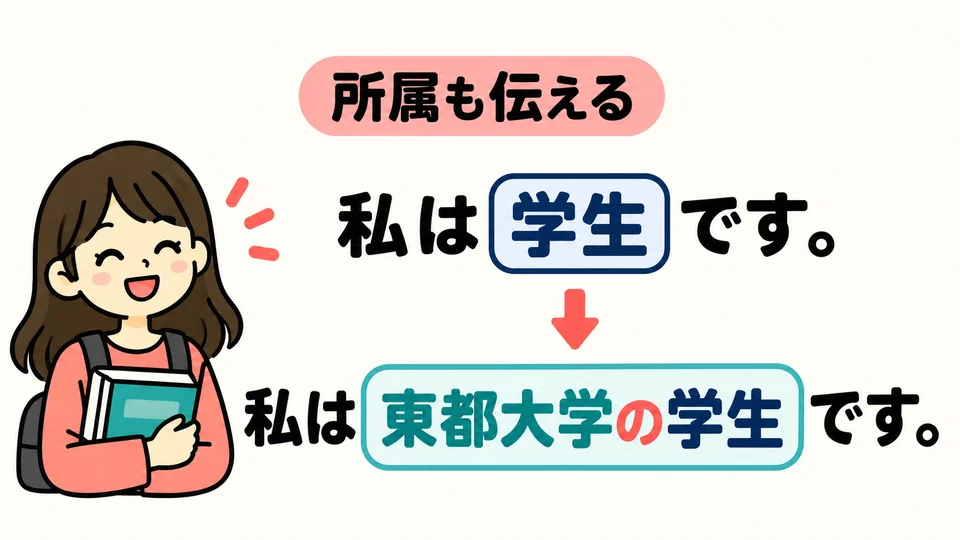
  1. Look at the student in the picture. When introducing yourself, you can also say which university you attend.
    Look at the student in the picture. When introducing yourself, you can also say which university you attend.

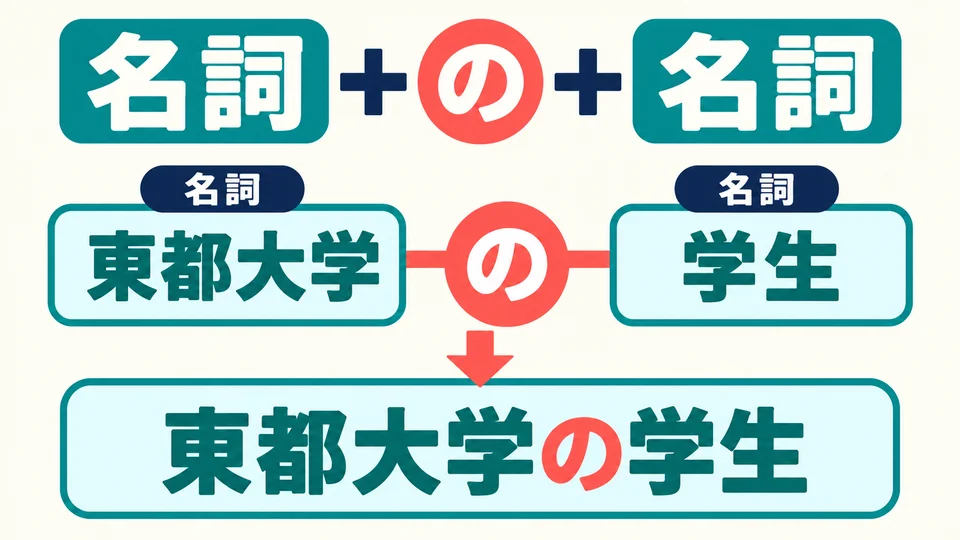
  2. 「の」 joins two nouns to form 「NのN」. Both the university name and “student” are nouns.
    「の」 joins two nouns to form 「NのN」. Both the university name and “student” are nouns.

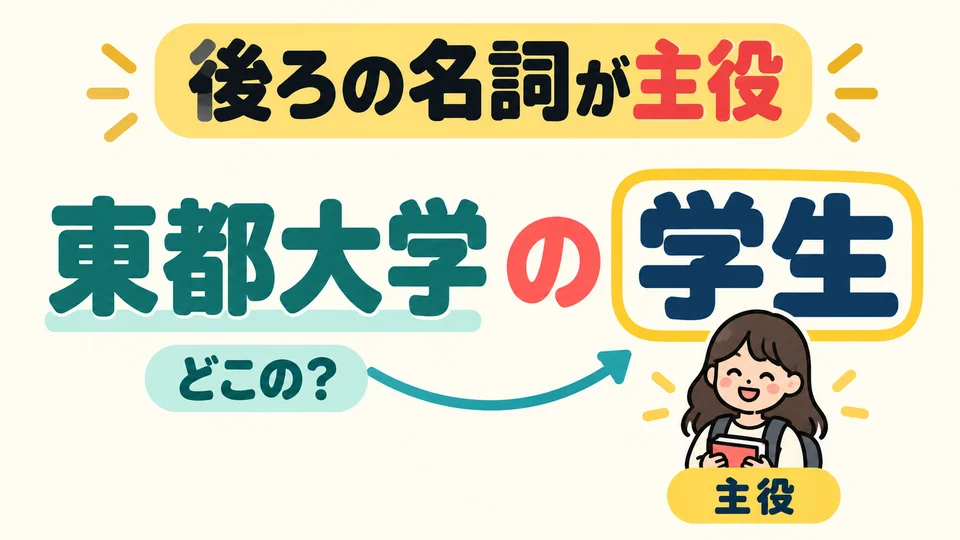
  3. The second noun is the main one. Here we are talking about a student; the university name before it tells us where the student studies.
    The second noun is the main one. Here we are talking about a student; the university name before it tells us where the student studies.

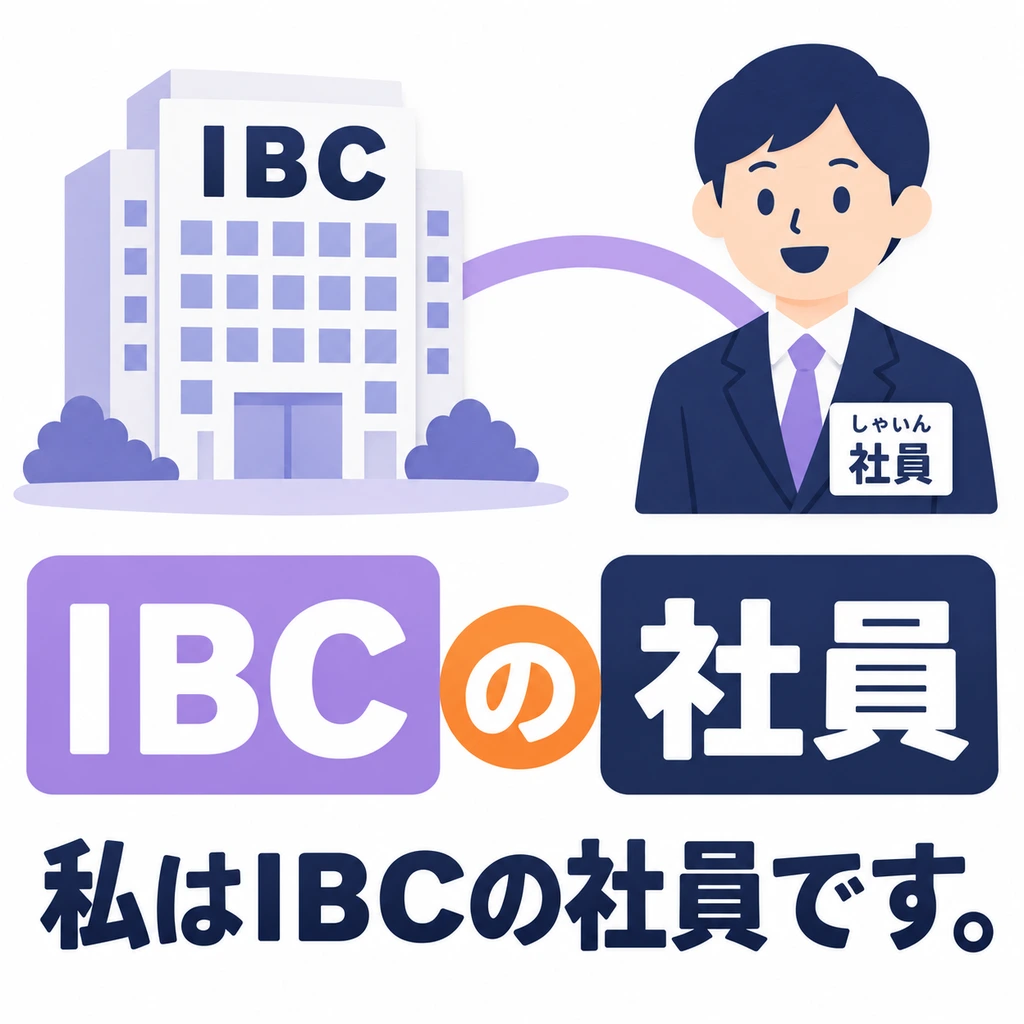
  4. It works the same way with a company and an employee: putting the company name first tells us which company the employee works for.
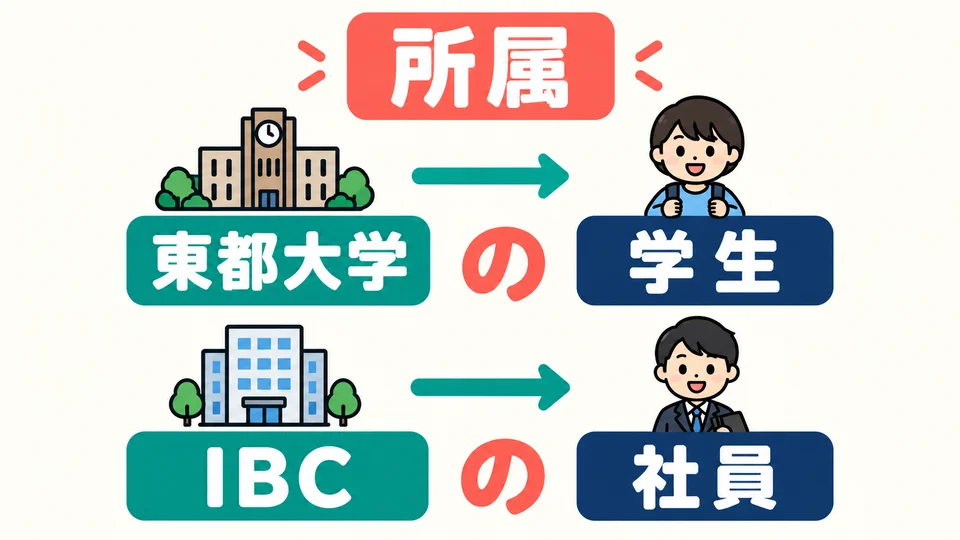
    It works the same way with a company and an employee: putting the company name first tells us which company the employee works for.

  5. 「の」 shows a relationship between nouns. A school and its students, or a company and its employees, show affiliation.
    「の」 shows a relationship between nouns. A school and its students, or a company and its employees, show affiliation.

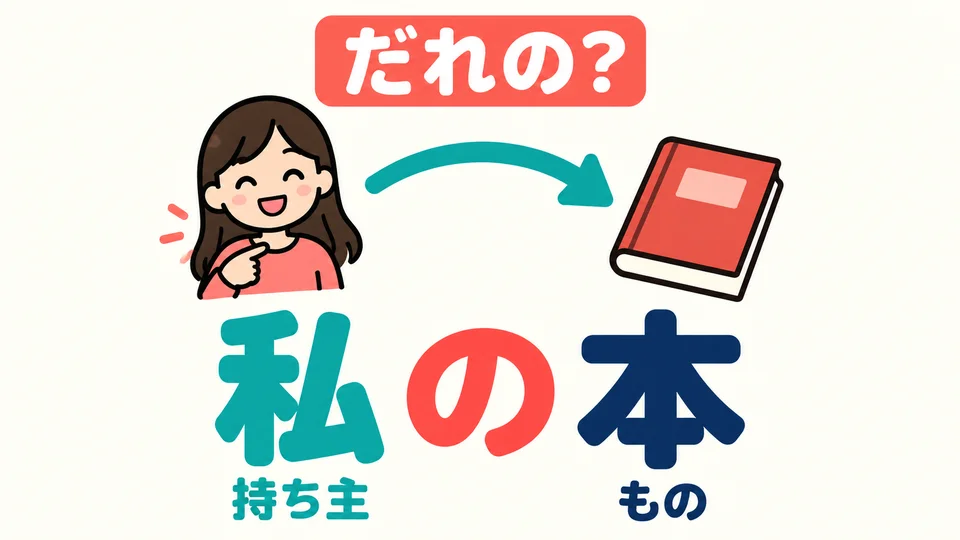
  6. These relationships also include ownership: the first noun can tell us who owns the thing named after it.
    These relationships also include ownership: the first noun can tell us who owns the thing named after it.

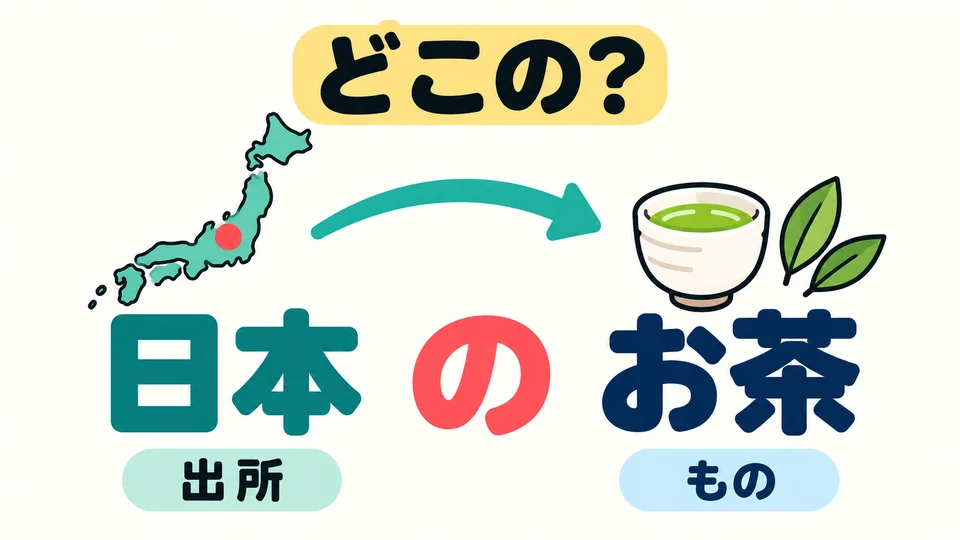
  7. The first noun can also show origin. You can use 「の」 to connect a thing with the place it comes from.
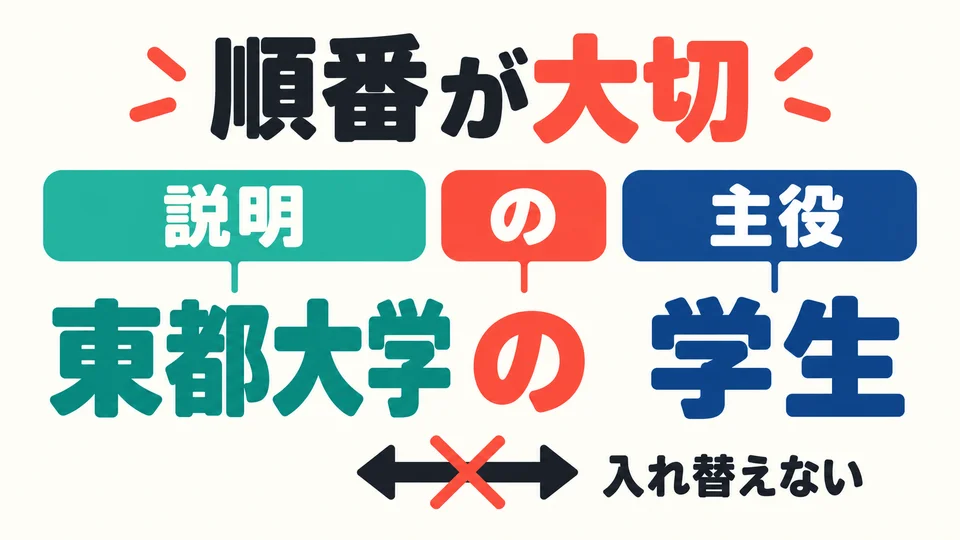
    The first noun can also show origin. You can use 「の」 to connect a thing with the place it comes from.

  8. Watch the order: extra information comes first, and the main noun comes second. You cannot freely swap the two nouns.

    Watch the order: extra information comes first, and the main noun comes second. You cannot freely swap the two nouns.

Example sentences

  • 東都とうとtouto大学だいがくdaigakuのno学生がくせいgakusei

    A student at Toto University

  • IBCあいびーしーibcのno社員しゃいんshain

    An employee of IBC

In a conversation

  • 山田
    初めまして、はじめまして私わたしはわ山田やまだです。です

    Yamada: Nice to meet you, I'm Yamada.

  • 佐藤
    初めまして、はじめまして山田さん。やまださん私わたしはわ佐藤さとうです。IBNですあいびーえぬ

Check yourself

  1. Level 1 · Recognise

    Which sentence is correct?

  2. Level 1 · Recognise

    Listen and choose the meaning

  3. Level 2 · Build

    Put the words in order

    A student at Toto University

  4. Level 3 · Use

    What goes in the blank?

    佐藤さんは IBC です。

    Ms./Mr. Sato is an employee at IBC.

More grammar in this theme

  • 〜の〜Link nouns and show relationships

More JLPT N5 grammar

Keep practising

Test your Japanese vocabulary12 adaptive questions, freeCheck your pronunciationRead aloud and get a scorePractise verb forms10-question conjugation quizSee the whole courseGrammar, vocabulary and quizzes by theme
  • Use 「NのN」 in the self-introduction sentences you have learned. State your role, then make clear where you belong.

    Use 「NのN」 in the self-introduction sentences you have learned. State your role, then make clear where you belong.

  • の
    社員しゃいん
    です。鈴木さんですすずきさん
    はわ
    エンジニアえんじにあ
    です
    か。か

    Sato: Nice to meet you, Yamada. I'm Sato. I work at IBN. Is Suzuki an engineer?

  • 鈴木
    いいえ、いいえエンジニアえんじにあじゃありません。じゃありません私わたしはわ教師きょうしです。です

    Suzuki: No, I'm not an engineer. I'm a teacher.

  • Beginner 1
    Self-Introduction
    More quizzesOpen this lesson’s quizzes in the course
    私は〜ですPolite self-introduction
    〜人ですState someone’s nationality
    〜ですか/〜じゃありませんCheck and deny a guessed job
    〜歳ですState someone’s age
    〜月〜日month and day
    いつasking when
    趣味は〜ですstating a hobby
    〜と〜joining two nouns
    〜も〜ですmatching information: too
    Previous〜ですか/〜じゃありません
    Next〜歳です
    See all 111
    〜はどこですかasking where something is
    〜は何階ですかasking which floor
    〜はいくらですかasking the price
    この〜・その〜・あの〜which item by distance
    〜をくださいpolite request for an item
    何の〜asking kind or contents
    どこの〜ask where from
    〜を〜くださいpolite request when ordering