JPEDLAB iconJPEDLAB
Save history

Create an account and play

Explore first, then save your progress whenever you are ready. No email address is required.

Start free
Read as articleCards
1/10

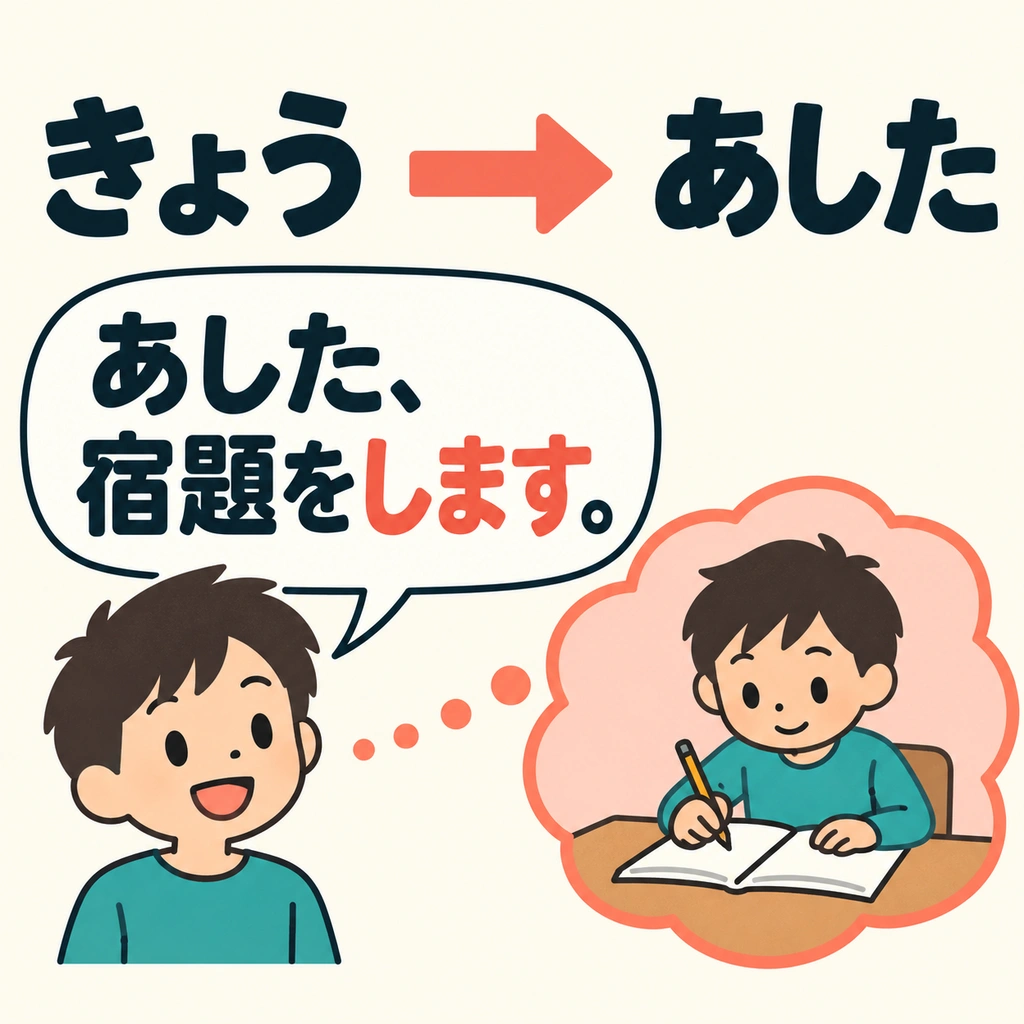
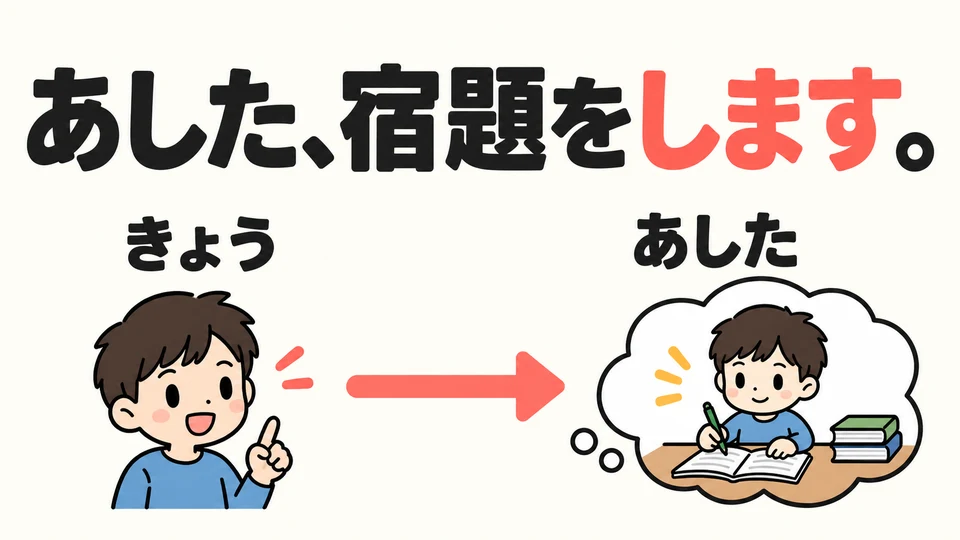
Look at the time arrow: the person is speaking today. On which day will they do their homework? They are talking about something that has not happened yet.
››

Lesson notes · ≈ JLPT N5 · Beginner 1

〜ます~masu

polite future plan

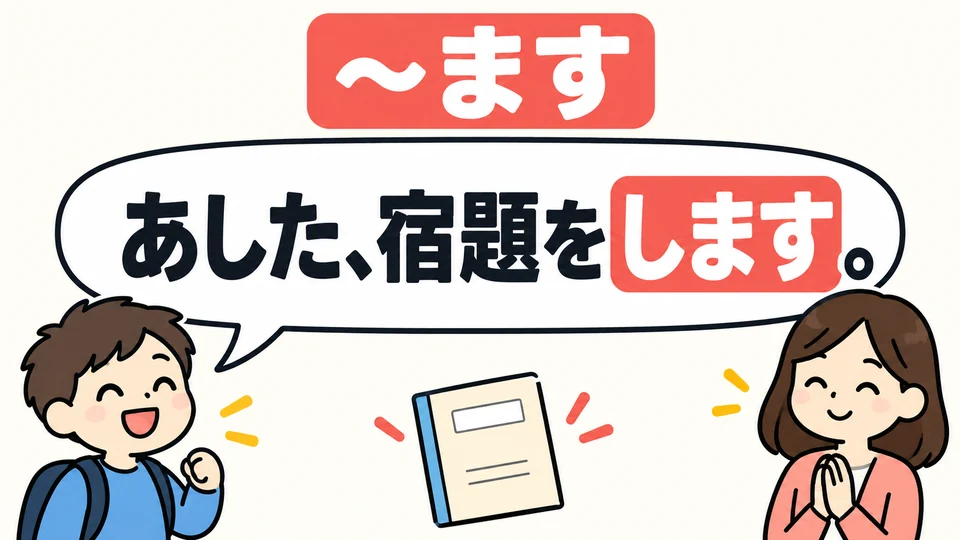
Use 「〜ます」 to tell someone politely about a future plan or scheduled action; time words clarify when.

Pattern
〜ます
Romaji
~masu
JLPT (approx.)
≈ N5
Course level
Beginner 1
Theme
Daily Life

How it works

  1. Look at the time arrow: the person is speaking today. On which day will they do their homework? They are talking about something that has not happened yet.

    Look at the time arrow: the person is speaking today. On which day will they do their homework? They are talking about something that has not happened yet.

  2. 「〜ます」 can express future plans or scheduled actions. The person in the picture plans to do their homework tomorrow.
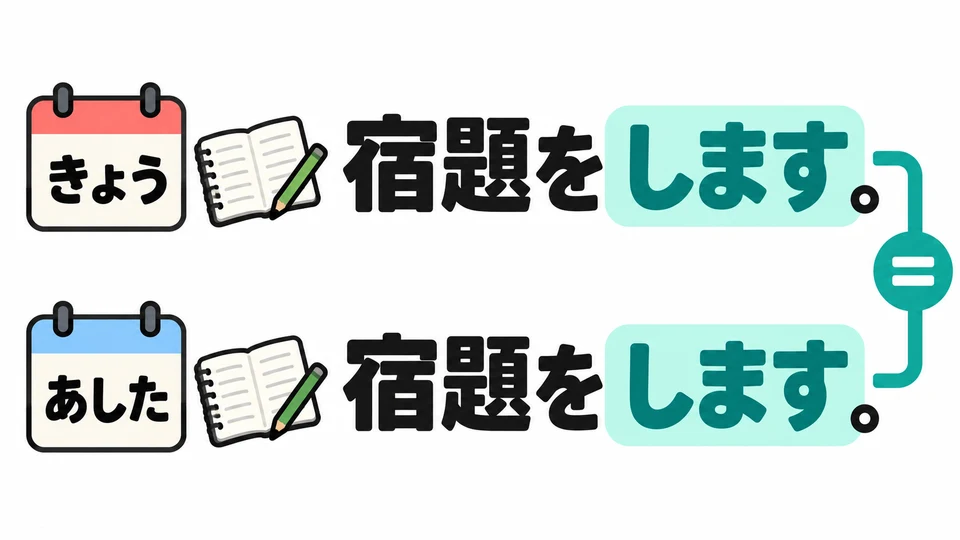
    「〜ます」 can express future plans or scheduled actions. The person in the picture plans to do their homework tomorrow.

  3. When talking about the future, the verb still uses the 「ます」 form. You do not need to change 「します」 to another form.
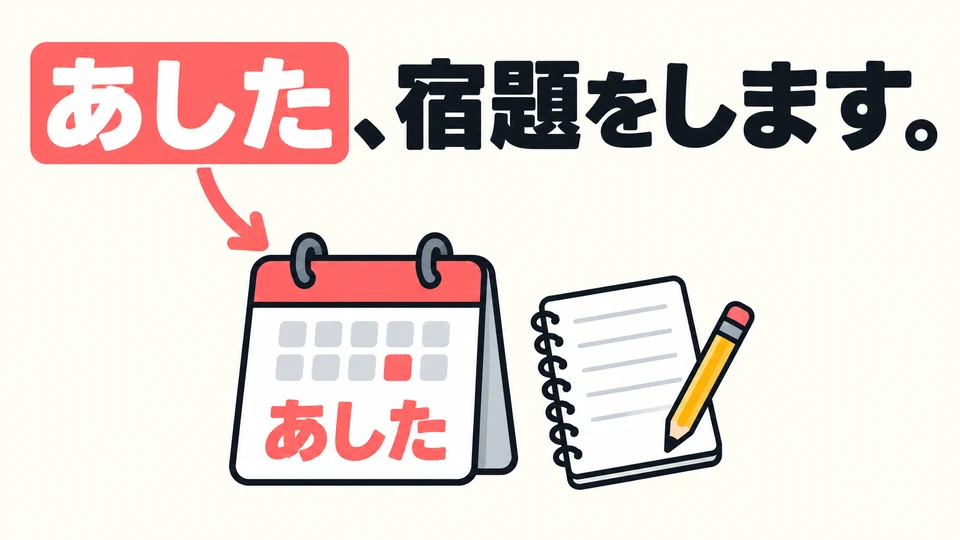
    When talking about the future, the verb still uses the 「ます」 form. You do not need to change 「します」 to another form.

  4. 「あした」 means “tomorrow.” This time word tells us that the action will happen tomorrow.
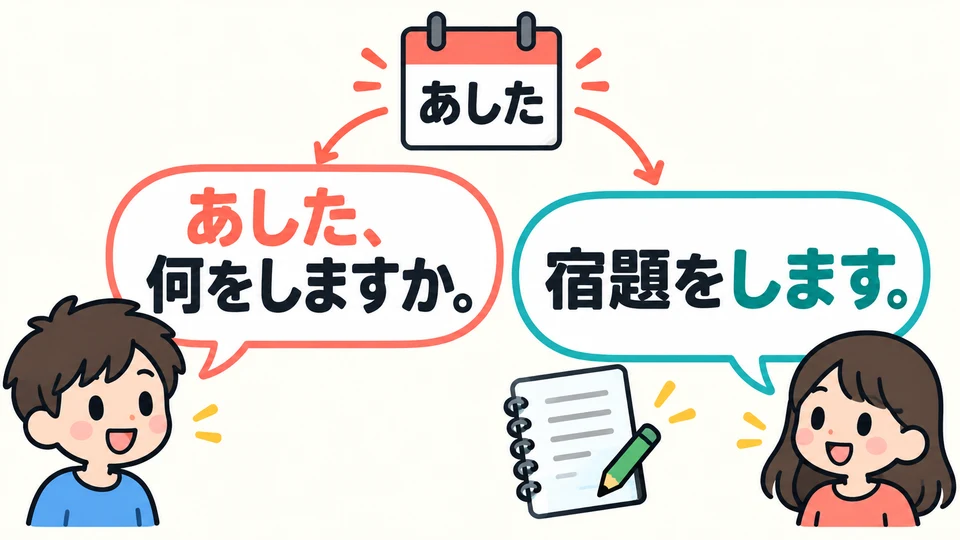
    「あした」 means “tomorrow.” This time word tells us that the action will happen tomorrow.
  • After the question 「あした、何をしますか。」, the answer 「宿題をします。」 also refers to a plan for tomorrow.

    After the question 「あした、何をしますか。」, the answer 「宿題をします。」 also refers to a plan for tomorrow.

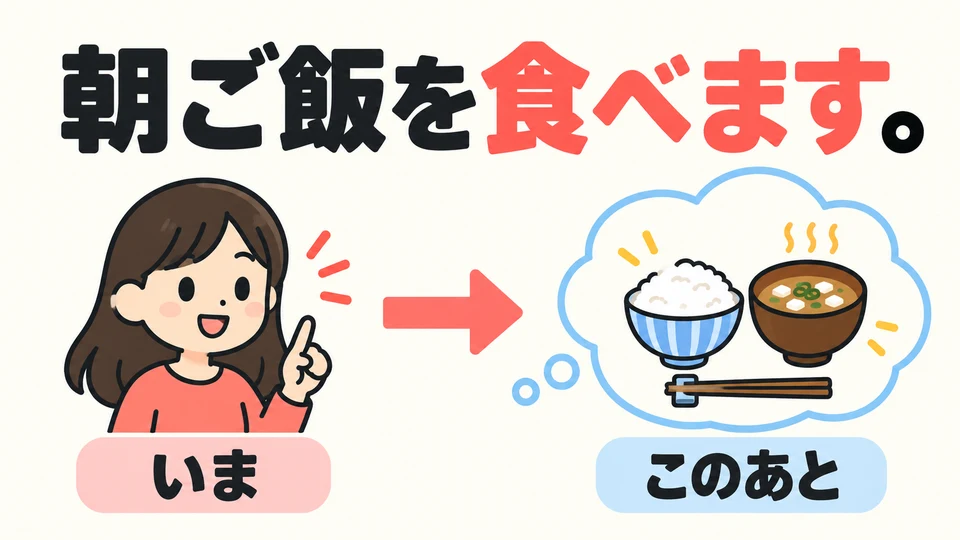
  • 「朝ご飯を食べます。」 can also describe what you plan to do next. Use the conversation to work out when the action will happen.

    「朝ご飯を食べます。」 can also describe what you plan to do next. Use the conversation to work out when the action will happen.

  • 「〜ます」 is a polite form. You can use it to tell others about your plans.

    「〜ます」 is a polite form. You can use it to tell others about your plans.

  • Example sentences

    • 宿題しゅくだいshukudaiをoします。しますshimasu

      I will do my homework.

    • 朝ご飯あさごはんasagohanをo食べます。たべますtabemasu

      I will eat breakfast.

    In a conversation

    • A
      あした、あした何なにをしますか。か

      A: What are you going to do tomorrow?

    • B
      宿題しゅくだいをします。します

      B: I'm going to do my homework.

    • A
      そうですか。か私わたしはわ学校がっこうへえ行きます。いきます

      A: I see. I'm going to school.

    Check yourself

    1. Which sentence is correct?

      1. あした、宿題をします。
      2. あした、宿題を。
      3. あした、宿題はします。
      4. あした、宿題するを。
      Show answer

      Answer: A あした、宿題をします。

    2. Which sentence is correct?

      1. 朝、6時に起きます。
      2. 朝、6時に起きますか。
      3. 朝、6時には起き。
      4. 朝、6時を起きます。
      Show answer

      Answer: A 朝、6時に起きます。

    3. Which sentence is correct?

      1. 朝ごはんを食べます。
      2. 朝ごはんを食べて。
      3. 朝ごはんを食べする。
      4. 朝ごはんが食べるを。
      Show answer

      Answer: A 朝ごはんを食べます。

    Take the quiz

    More grammar in this theme

    • 〜時〜分tell the clock time
    • 〜から〜までですtime range: from ... to ...
    • 何曜日ですかask the day of the week
    • 〜ますpolite future plan
    • 〜へ行きますdirection or destination
    • 〜で〜ますplace where action happens
    • 〜時から〜時まで〜ますdaily routine and time span
    • 〜や〜などexamples among several items
    • 〜時にtime when action happens
    • 何も〜ません/どこへも〜ませんtotal negation: nothing, nowhere
    Previous何曜日ですかNext〜へ行きます

    Keep practising

    Test your Japanese vocabulary12 adaptive questions, freeCheck your pronunciationRead aloud and get a scorePractise verb forms10-question conjugation quizSee the whole courseGrammar, vocabulary and quizzes by theme
    See the whole course
    Beginner 1
    Daily Life