
Japanese grammar · ≈ JLPT N5 · Beginner 1
〜へ行きます~ e ikimasu
direction or destination
Use 「〜へ行きます」 to say where someone is heading; へ is pronounced e.
How it works
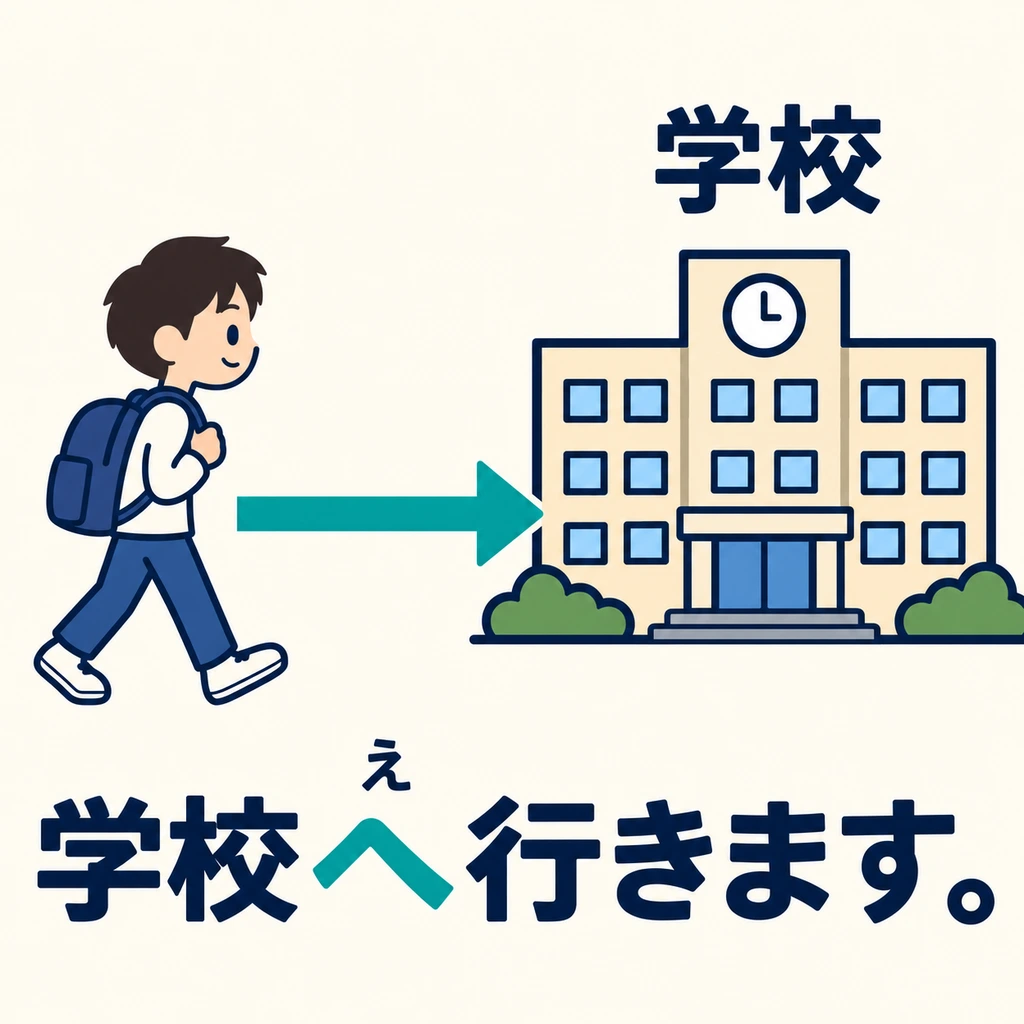
When you head to school with your backpack, you can say where you are going. Look at the picture: the arrow points toward the school.
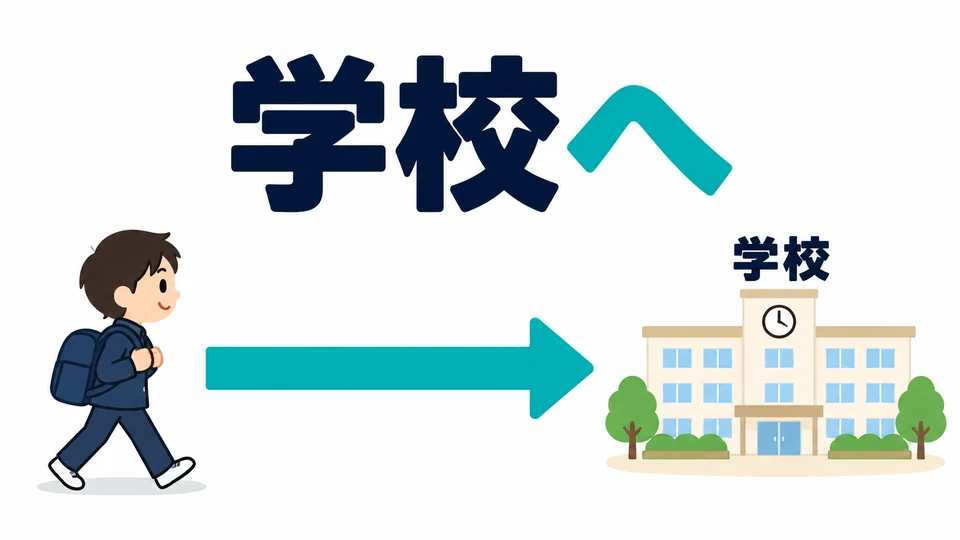
「へ」 marks the direction or destination of movement. In the picture, the school is where the student is heading.
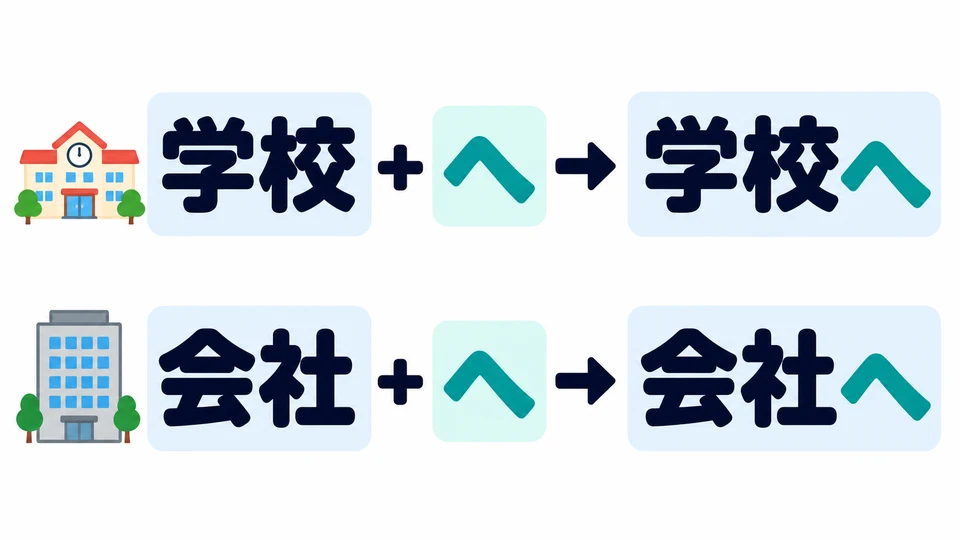
Say the place first, then add 「へ」: 学校へ, 会社へ. Put the place before 「へ」.
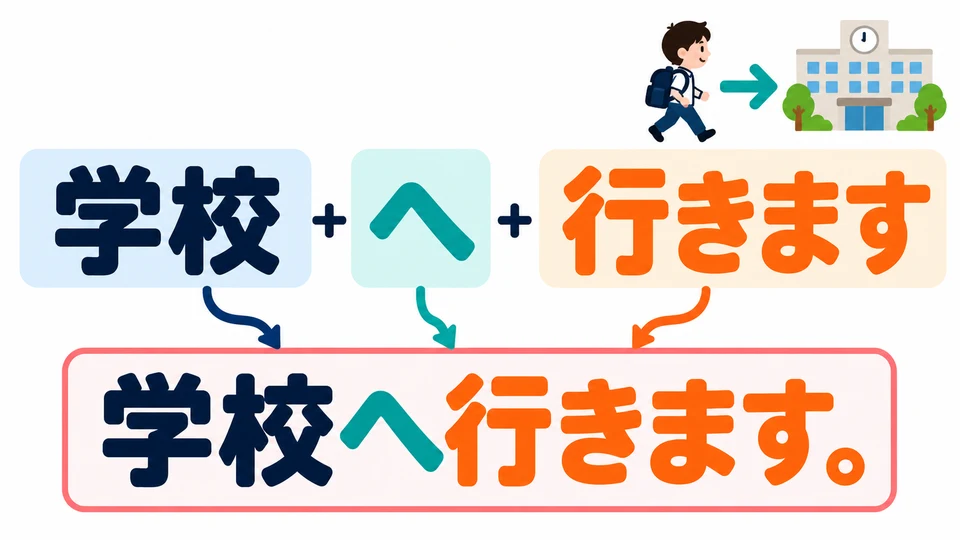
「へ」 often goes with movement verbs such as 「行きます」 to show where someone is heading.
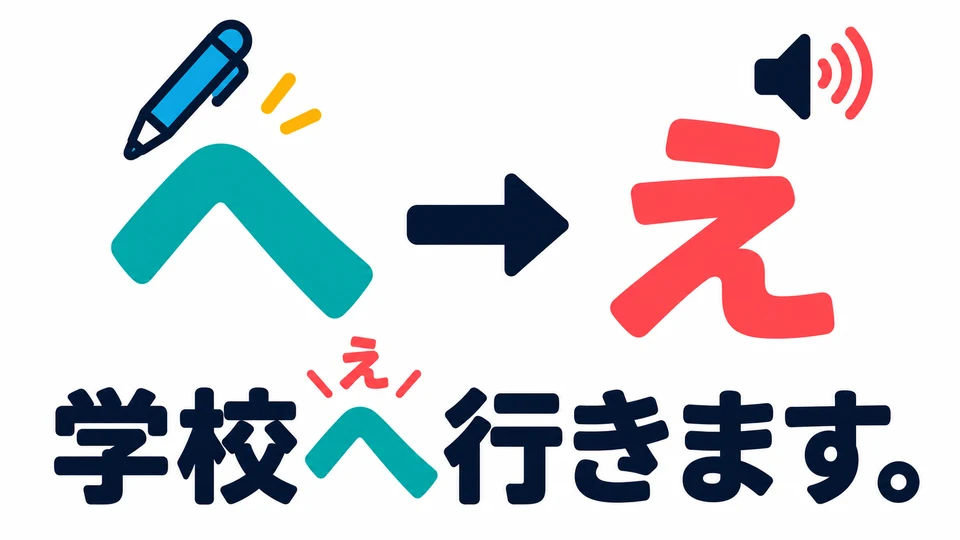
The particle 「へ」 is written 「へ」 but pronounced 「え」. Keep this sound in mind when reading the examples.
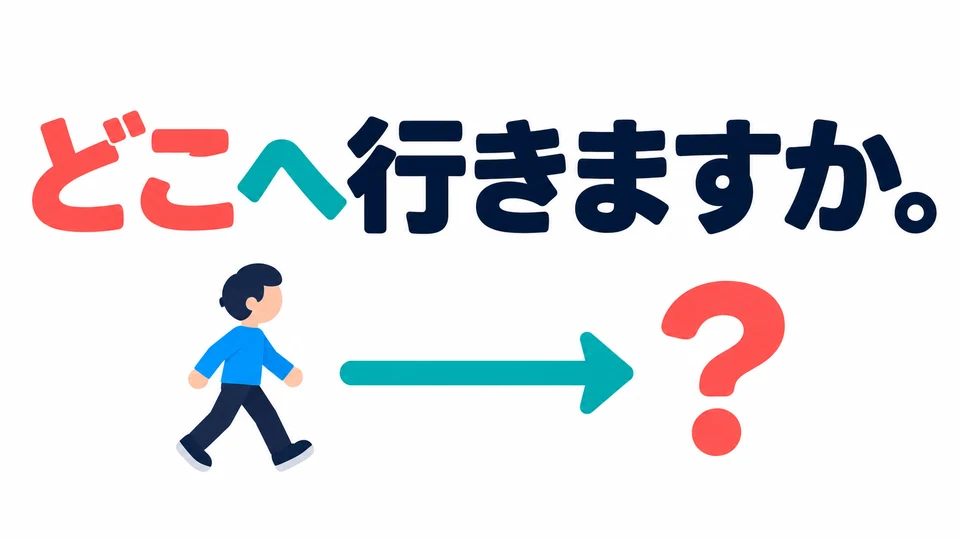
If you do not know where someone is going, ask about their destination with 「どこへ行きますか」.
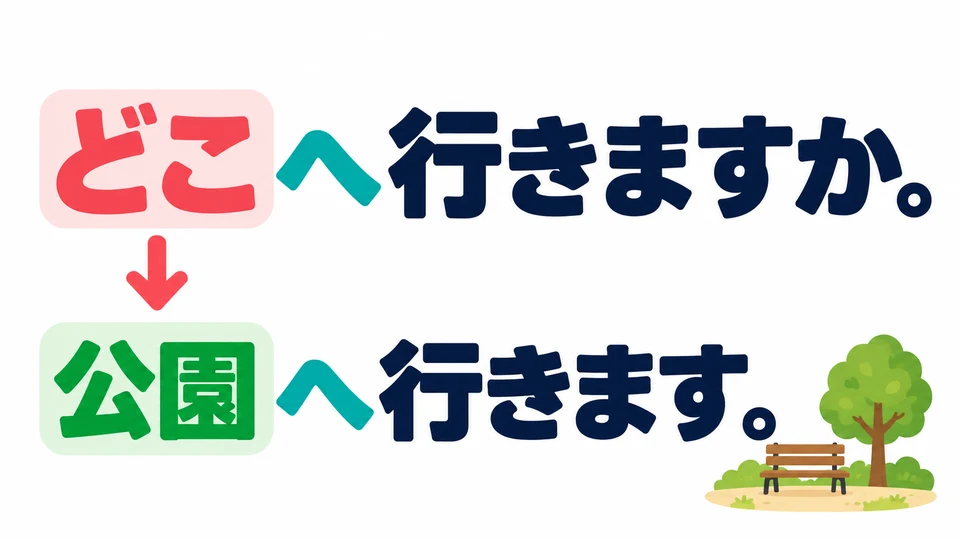
To answer, replace 「どこ」 with a place. 「公園へ行きます」 means “I am going to the park.”
Example sentences
- 学校gakkouへe行きますikimasu
I'm going to school.
- 会社kaishaへe行きます。ikimasu
I'm going to the office.
In a conversation
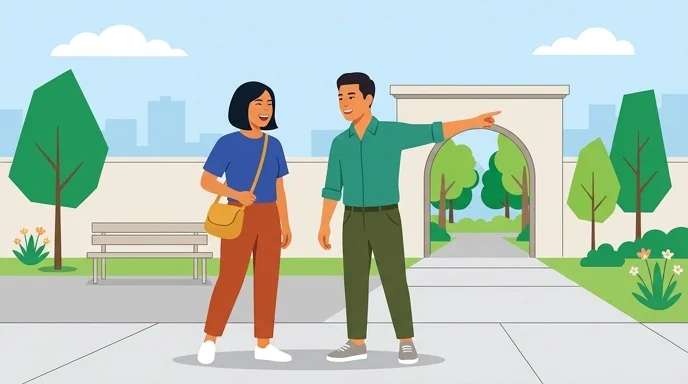
- Aあした、どこへ行きますか。
A: Where are you going tomorrow?
- B公園へ行きます。
B: I'm going to the park.
- A午後
Check yourself
Level 1 · Recognise
Which sentence is correct?
Level 1 · Recognise
Listen and choose the meaning
Level 2 · Build
Put the words in order
I will go to school tomorrow.
Level 3 · Use
What goes in the blank?
あした、 行きます。
I'll go to school tomorrow.
More grammar in this theme
- 〜へ行きますdirection or destination