
JPEDLAB iconJPEDLAB
Save history

Create an account and play

Explore first, then save your progress whenever you are ready. No email address is required.

Start free
Read as articleCards
1/10

Both pictures show someone studying. Look at the rooms: how do the places differ while the action stays the same?

››

Lesson notes · ≈ JLPT N5 · Beginner 1

〜で〜ます~ de ~masu

place where action happens

Use 「〜で〜ます」 to name where an action takes place, such as studying at home or in a library.

How it works
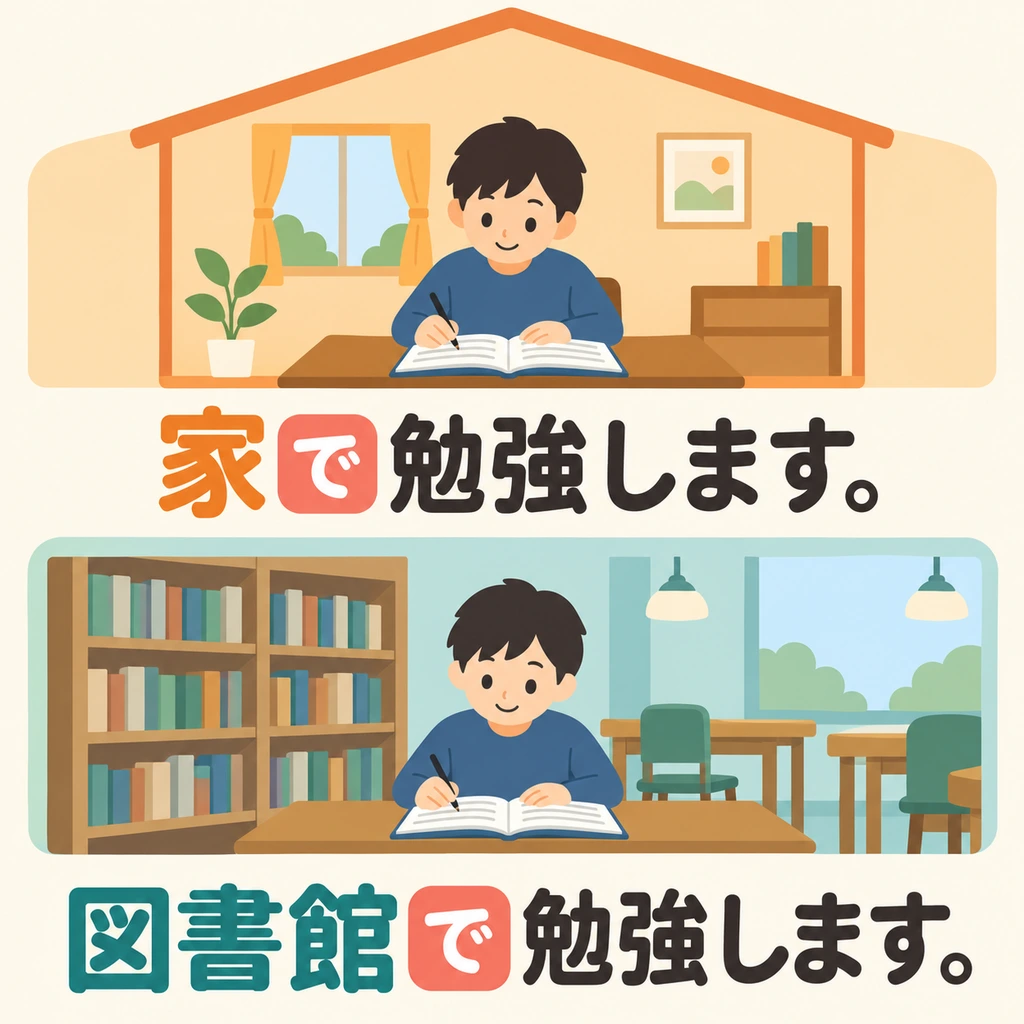
  1. Both pictures show someone studying. Look at the rooms: how do the places differ while the action stays the same?
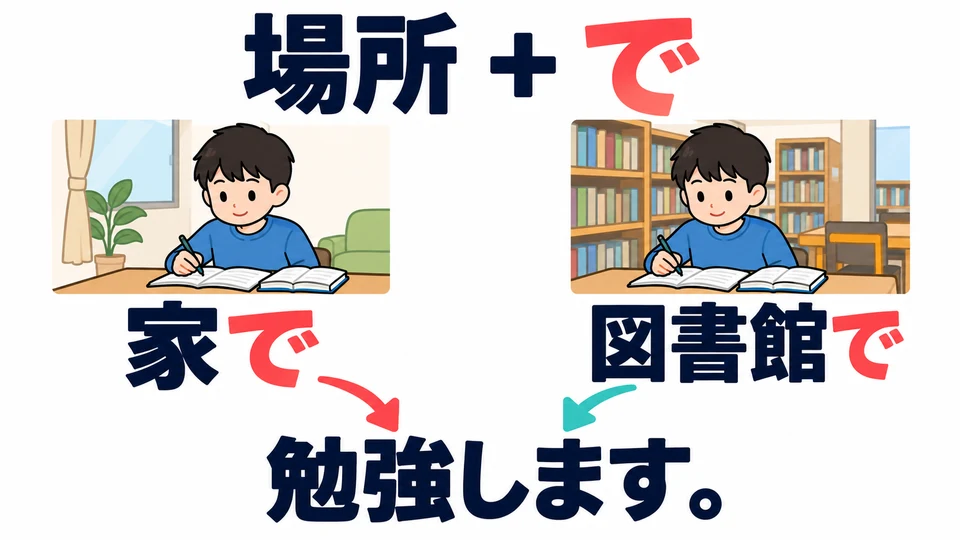
    Both pictures show someone studying. Look at the rooms: how do the places differ while the action stays the same?

  2. To say where an action happens, mark the place with 「で」. In the pictures, the places where the person studies are home and the library.
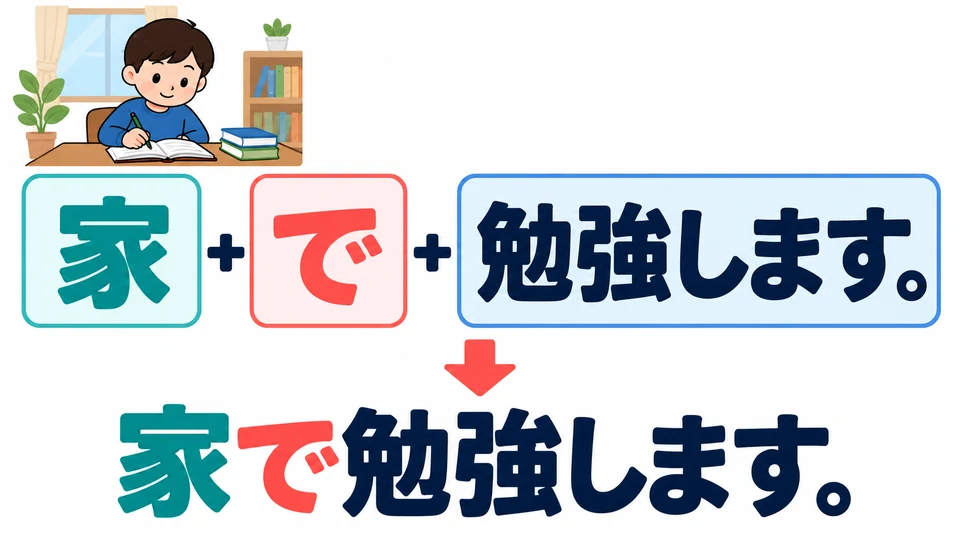
    To say where an action happens, mark the place with 「で」. In the pictures, the places where the person studies are home and the library.

  3. Put 「で」 after the noun naming the place, then state the action. 「家で勉強します。」 means “I study at home.”
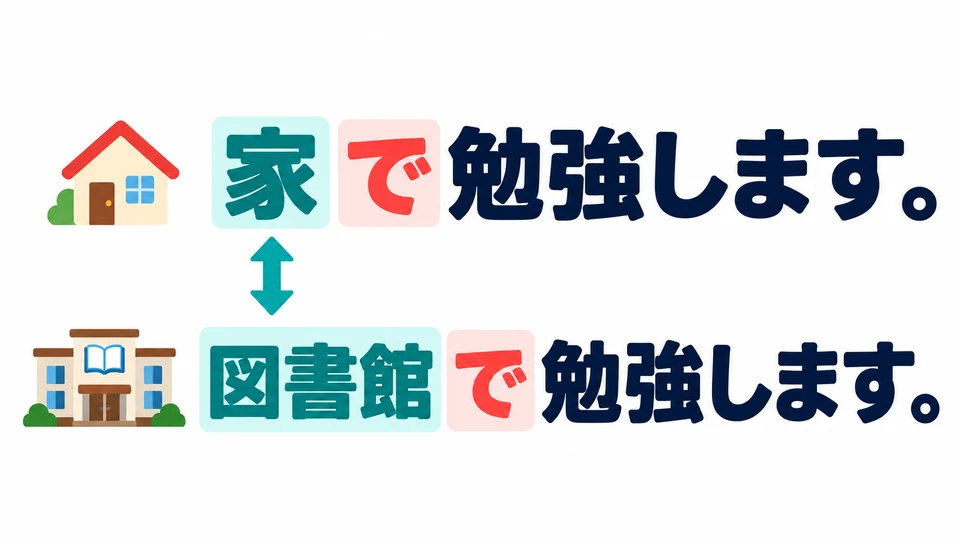
    Put 「で」 after the noun naming the place, then state the action. 「家で勉強します。」 means “I study at home.”

  4. If the place changes to the library, say 「図書館で勉強します。」. The action stays the same; only the place changes.
    If the place changes to the library, say 「図書館で勉強します。」. The action stays the same; only the place changes.

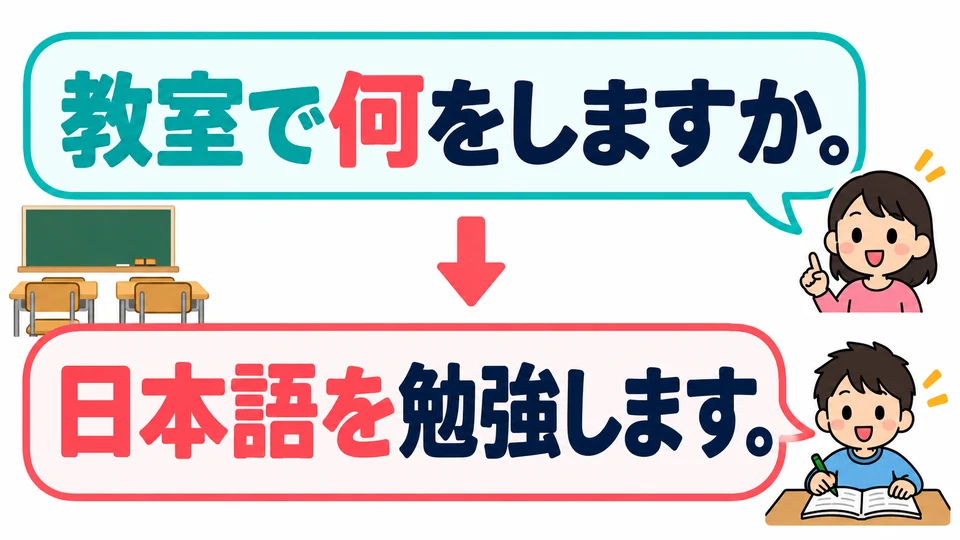
  5. 「教室で何をしますか。」 asks what you do in the classroom. Answer 「日本語を勉強します。」: “I study Japanese.”
    「教室で何をしますか。」 asks what you do in the classroom. Answer 「日本語を勉強します。」: “I study Japanese.”
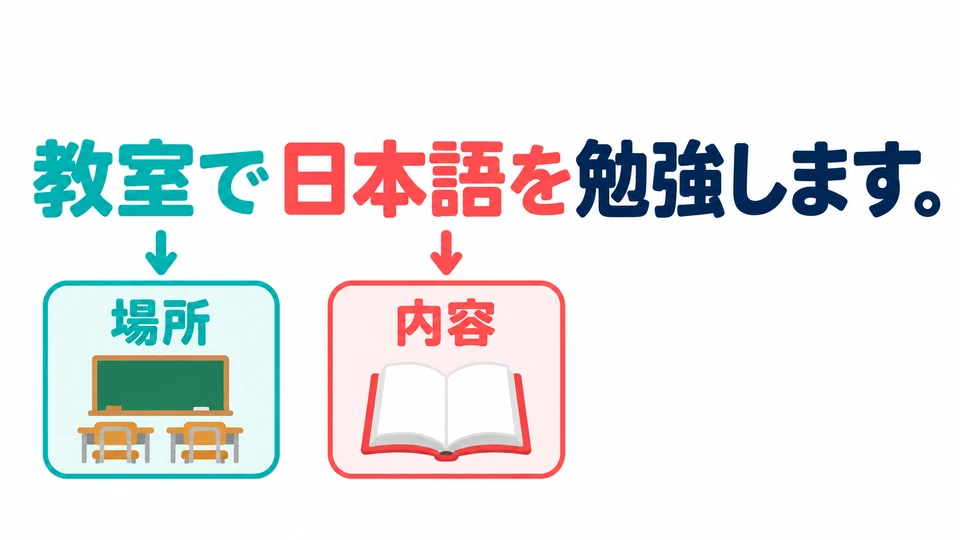
「教室で」 gives the place where you study; 「日本語を」 gives what you study. Notice their different roles.

「教室で」 gives the place where you study; 「日本語を」 gives what you study. Notice their different roles.

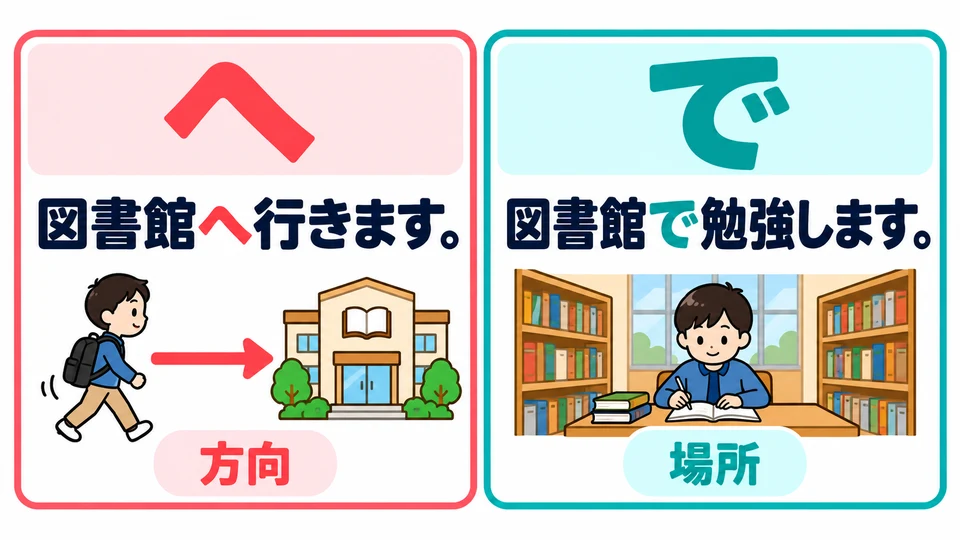
  • The 「へ」 you learned earlier marks the direction you go in. Here, 「で」 marks where you perform an action. Keep the two distinct.

    The 「へ」 you learned earlier marks the direction you go in. Here, 「で」 marks where you perform an action. Keep the two distinct.

  • Example sentences

    • 家いえieでde勉強べんきょうbenkyouします。しますshimasu

      I study at home.

    • 図書館としょかんtoshokanでde勉強べんきょうbenkyouします。しますshimasu

      I study at the library.

    In a conversation

    • A
      教室きょうしつで何なにをしますか。か

      A: What do you do in the classroom?

    • B
      日本にほん語ごを勉強べんきょうします。します

      B: I study Japanese.

    • A
      図書館としょかんでは、わ何なにをしますか。か

      A: What do you do at the library?

    Check yourself

    1. Level 1 · Recognise

      Which sentence is correct?

    2. Level 1 · Recognise

      Listen and choose the meaning

    3. Level 2 · Build

      Put the words in order

      I will study Japanese in the classroom.

    4. Level 3 · Use

      What goes in the blank?

      教室 何をしますか。

      What do you do in the classroom?

    More grammar in this theme

    • 〜時〜分tell the clock time
    • 〜から〜までですtime range: from ... to ...
    • 何曜日ですかask the day of the week
    • 〜ますpolite future plan
    • 〜へ行きますdirection or destination
    • 〜で〜ますplace where action happens
    • 〜時から〜時まで〜ますdaily routine and time span
    • 〜や〜などexamples among several items
    • 〜時にtime when action happens
    • 何も〜ません/どこへも〜ませんtotal negation: nothing, nowhere
    Previous〜へ行きますNext〜時から〜時まで〜ます

    Keep practising

    Test your Japanese vocabulary12 adaptive questions, freeCheck your pronunciationRead aloud and get a scorePractise verb forms10-question conjugation quizSee the whole courseGrammar, vocabulary and quizzes by theme
    See the whole course
    Beginner 1
    Daily Life