
JPEDLAB iconJPEDLAB
Save history

Create an account and play

Explore first, then save your progress whenever you are ready. No email address is required.

Start free
Read as articleCards
1/10

What do you do on days off? Look at the picture and choose two activities to tell a friend about.

››

Lesson notes · ≈ JLPT N5 · Beginner 1

〜や〜など~ ya ~ nado

examples among several items

Use 「〜や〜など」 to give a few examples from a larger, unstated set.

How it works
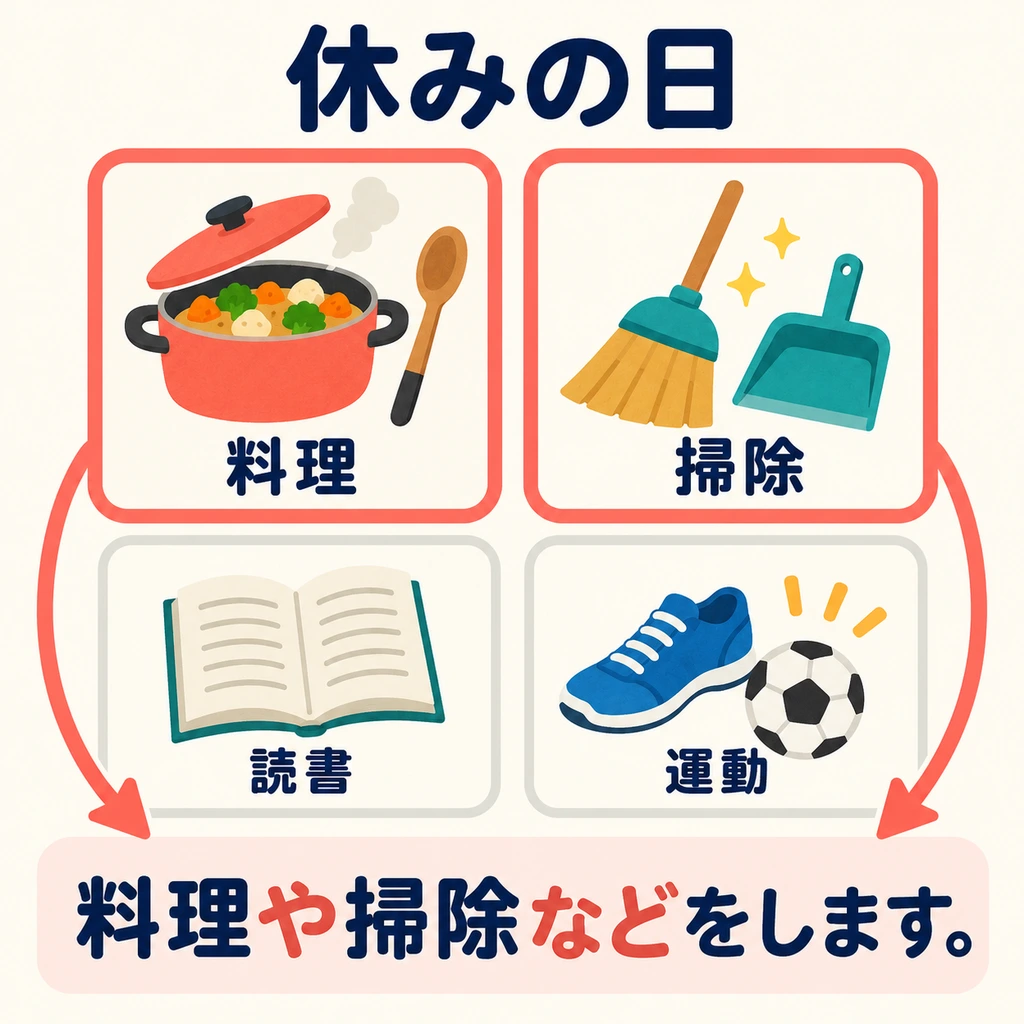
  1. What do you do on days off? Look at the picture and choose two activities to tell a friend about.
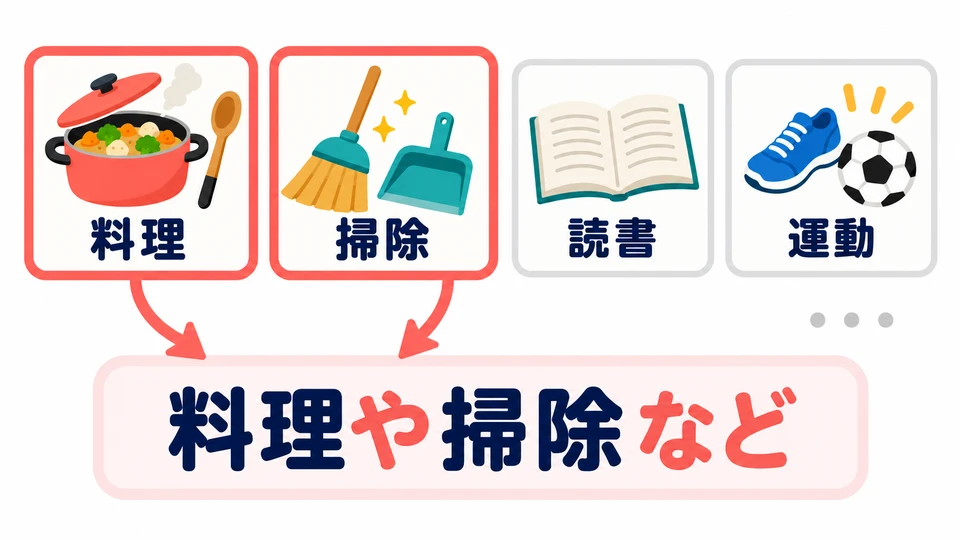
    What do you do on days off? Look at the picture and choose two activities to tell a friend about.

  2. 「料理や掃除など」 gives just a few examples. You do not have to name every activity.
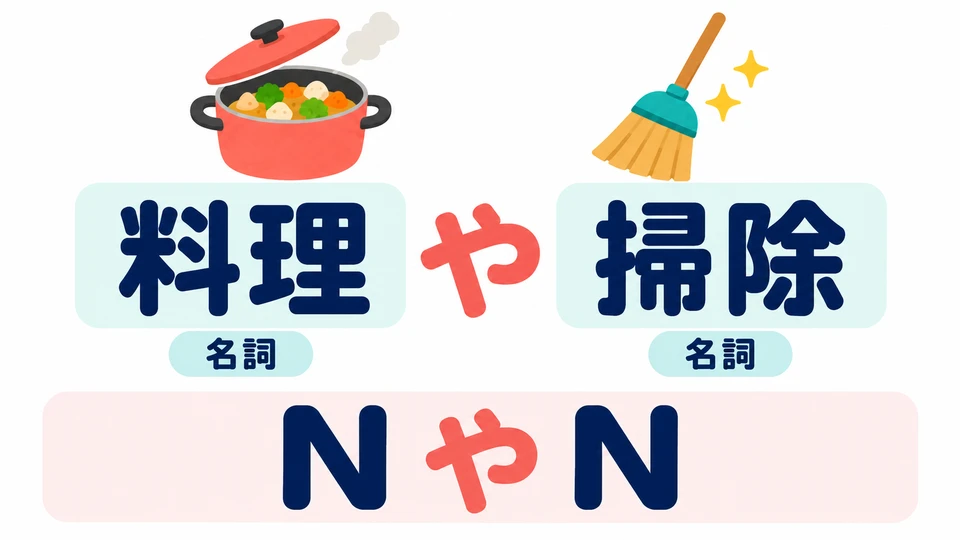
    「料理や掃除など」 gives just a few examples. You do not have to name every activity.

  3. 「や」 joins two or more nouns. Here, cooking and cleaning are expressed as nouns naming activities.
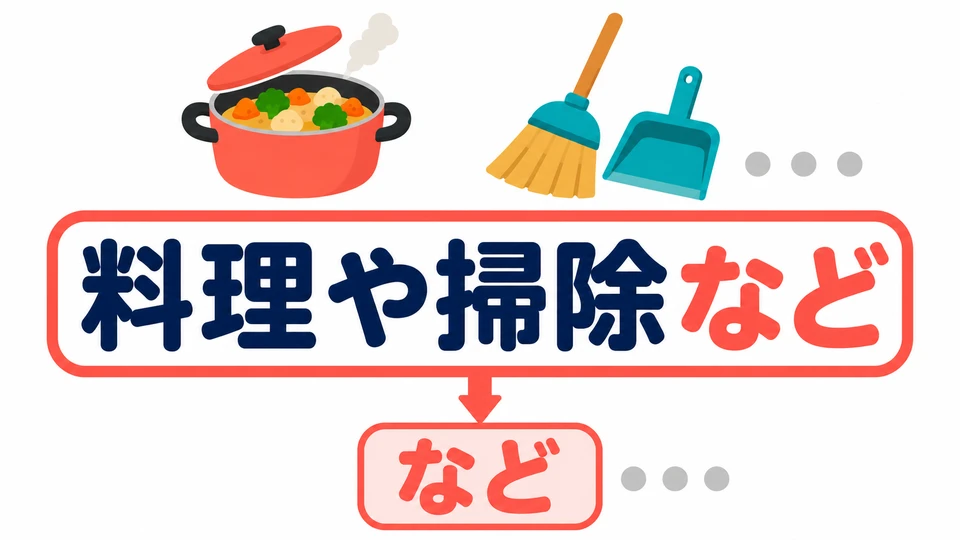
    「や」 joins two or more nouns. Here, cooking and cleaning are expressed as nouns naming activities.

  4. 「など」 comes after the last noun and means “and so on”: 料理や掃除など.
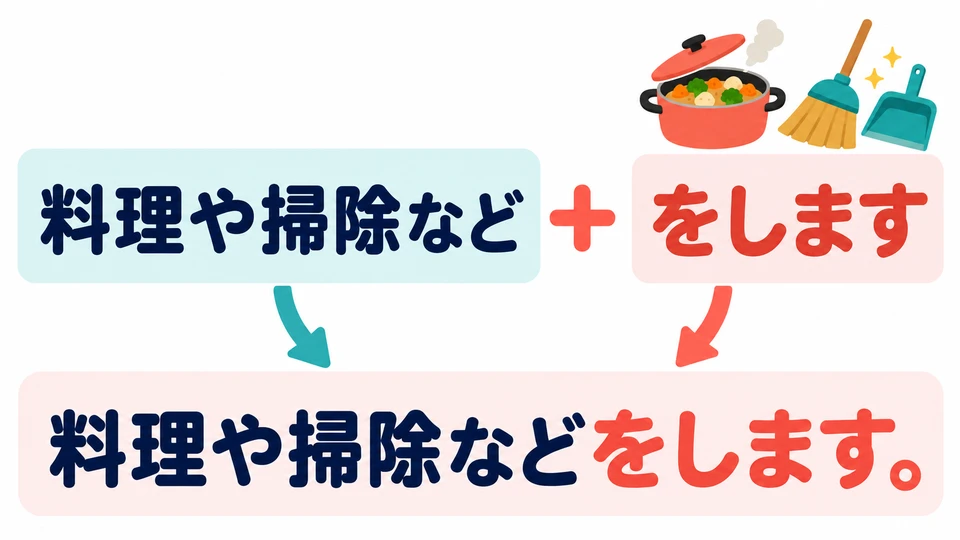
    「など」 comes after the last noun and means “and so on”: 料理や掃除など.

  5. To say you do these activities, add 「をします」 after the whole phrase: 料理や掃除などをします.
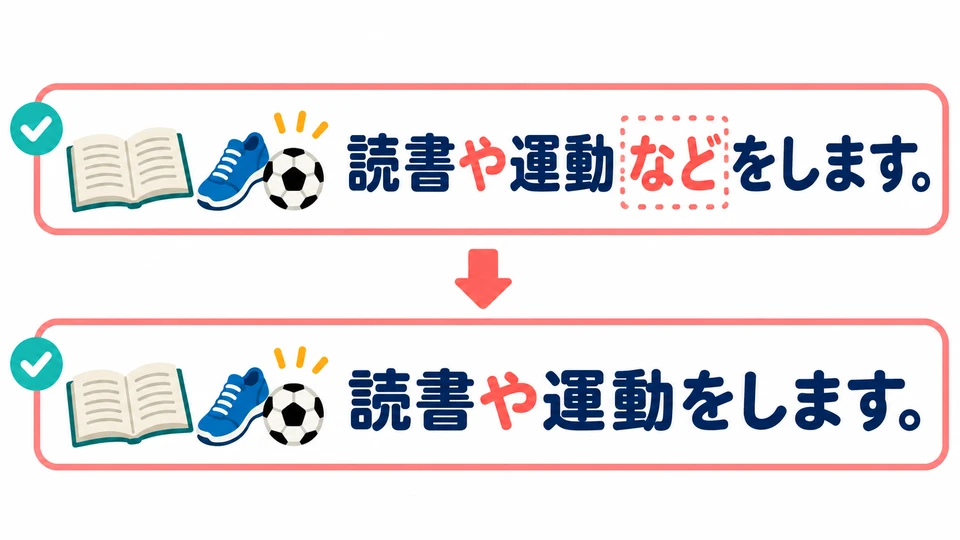
    To say you do these activities, add 「をします」 after the whole phrase: 料理や掃除などをします.

  6. You can leave out 「など」. 読書や運動をします still gives examples of activities.
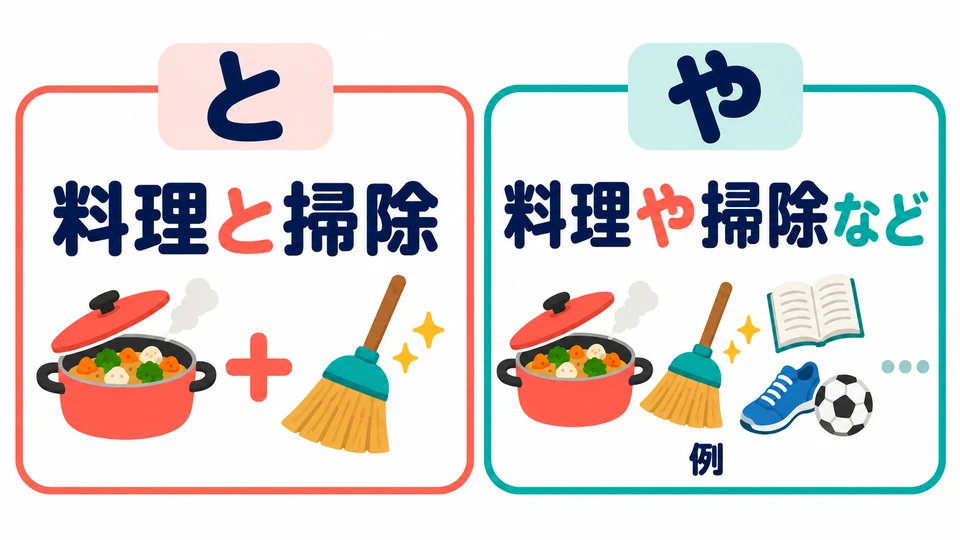
    You can leave out 「など」. 読書や運動をします still gives examples of activities.

  • The 「と」 you learned joins nouns in a list. 「や」 focuses on giving examples; it does not mean choosing one of two options.

    The 「と」 you learned joins nouns in a list. 「や」 focuses on giving examples; it does not mean choosing one of two options.

  • Example sentences

    • 読書どくしょdokushoやya運動うんどうundouをoしますshimasu

      I do things like reading and exercising.

    In a conversation

    • A
      休みやすみの日ひはわ何なにをしますか。か

      A: What do you do on your days off?

    • B
      料理りょうりや掃除そうじなどをします。します

      B: I do things like cooking and cleaning.

    • A
      そうですか。か夜よるはわ何なにをしますか。か

      A: I see. What do you do at night?

    Check yourself

    1. Level 1 · Recognise

      Which sentence is correct?

    2. Level 1 · Recognise

      Listen and choose the meaning

    3. Level 2 · Build

      Put the words in order

      On days off, I cook, clean, and so on.

    4. Level 3 · Use

      What goes in the blank?

      昼ごはんは、カレー を食べます。

      For lunch, I eat things like curry and salad.

    More grammar in this theme

    • 〜時〜分tell the clock time
    • 〜から〜までですtime range: from ... to ...
    • 何曜日ですかask the day of the week
    • 〜ますpolite future plan
    • 〜へ行きますdirection or destination
    • 〜で〜ますplace where action happens
    • 〜時から〜時まで〜ますdaily routine and time span
    • 〜や〜などexamples among several items
    • 〜時にtime when action happens
    • 何も〜ません/どこへも〜ませんtotal negation: nothing, nowhere
    Previous〜時から〜時まで〜ますNext〜時に

    Keep practising

    Test your Japanese vocabulary12 adaptive questions, freeCheck your pronunciationRead aloud and get a scorePractise verb forms10-question conjugation quizSee the whole courseGrammar, vocabulary and quizzes by theme
    See the whole course
    Beginner 1
    Daily Life