Japanese grammar · ≈ JLPT N5 · Beginner 1
〜へ〜に行きます~ e ~ ni ikimasu
go somewhere to do something
Use 「〜へ〜に行きます」 to name a destination and the action you go there to do.
How it works
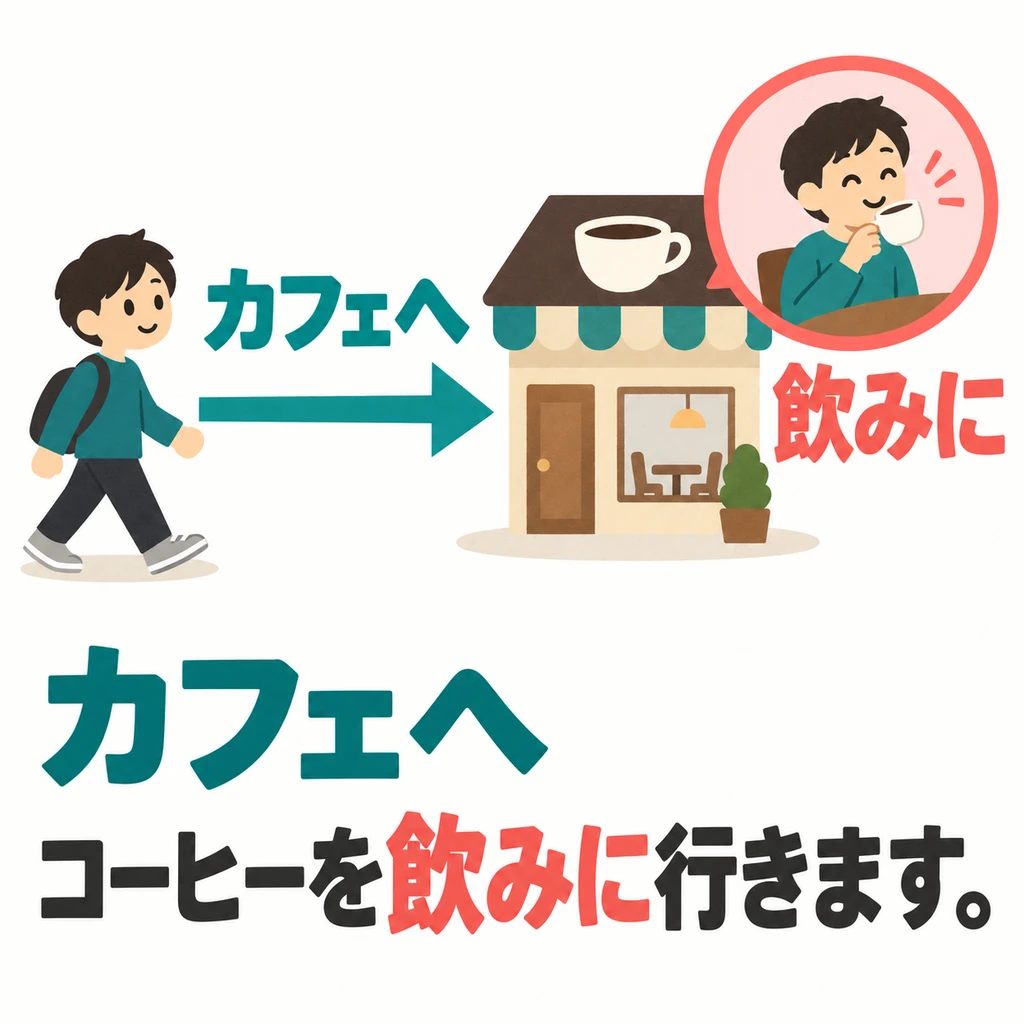
What is he going to the café to do? This pattern links the place you go to with what you want to do there.
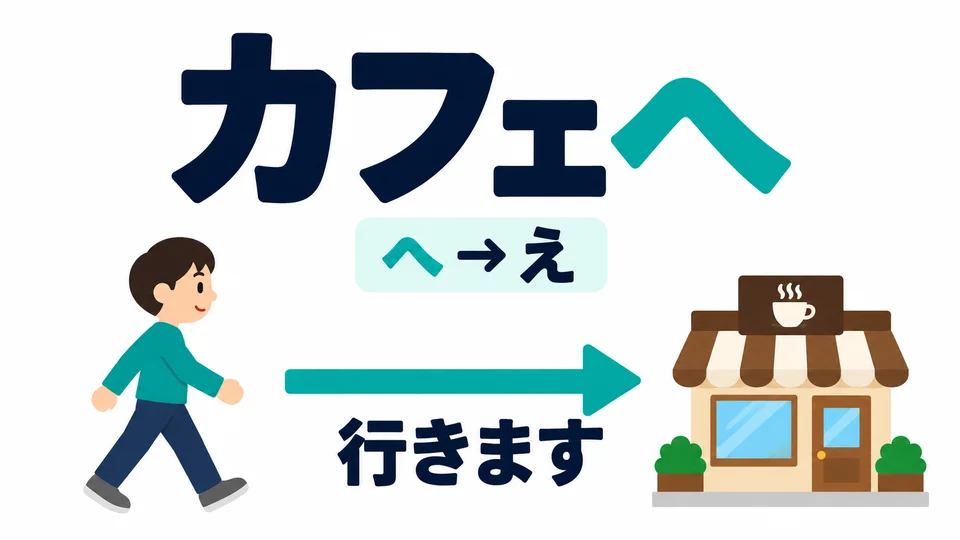
「カフェへ」 tells us where he is going. 「へ」 marks the destination and is pronounced 「え」 when used as a particle.
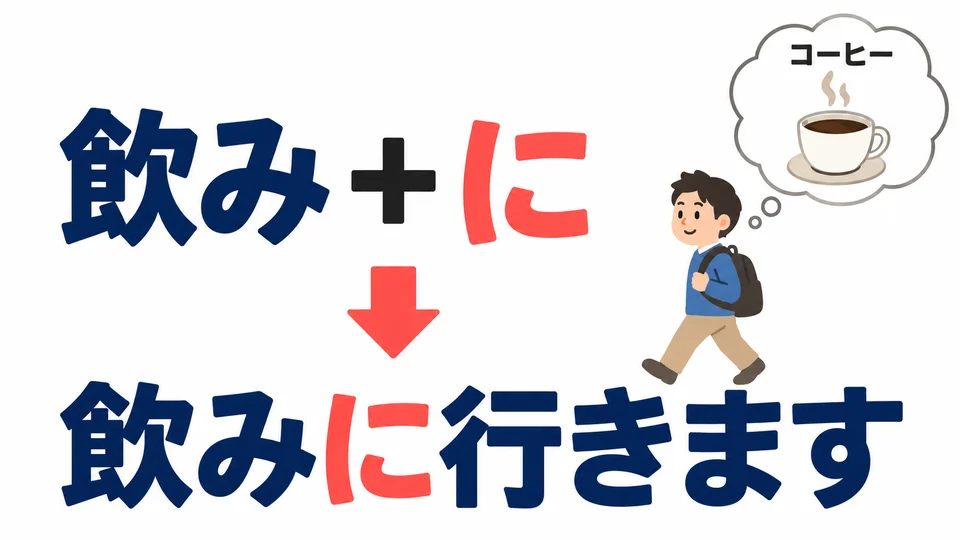
「飲みに」 explains the purpose: he goes to drink coffee. Use 「に」 after the action.
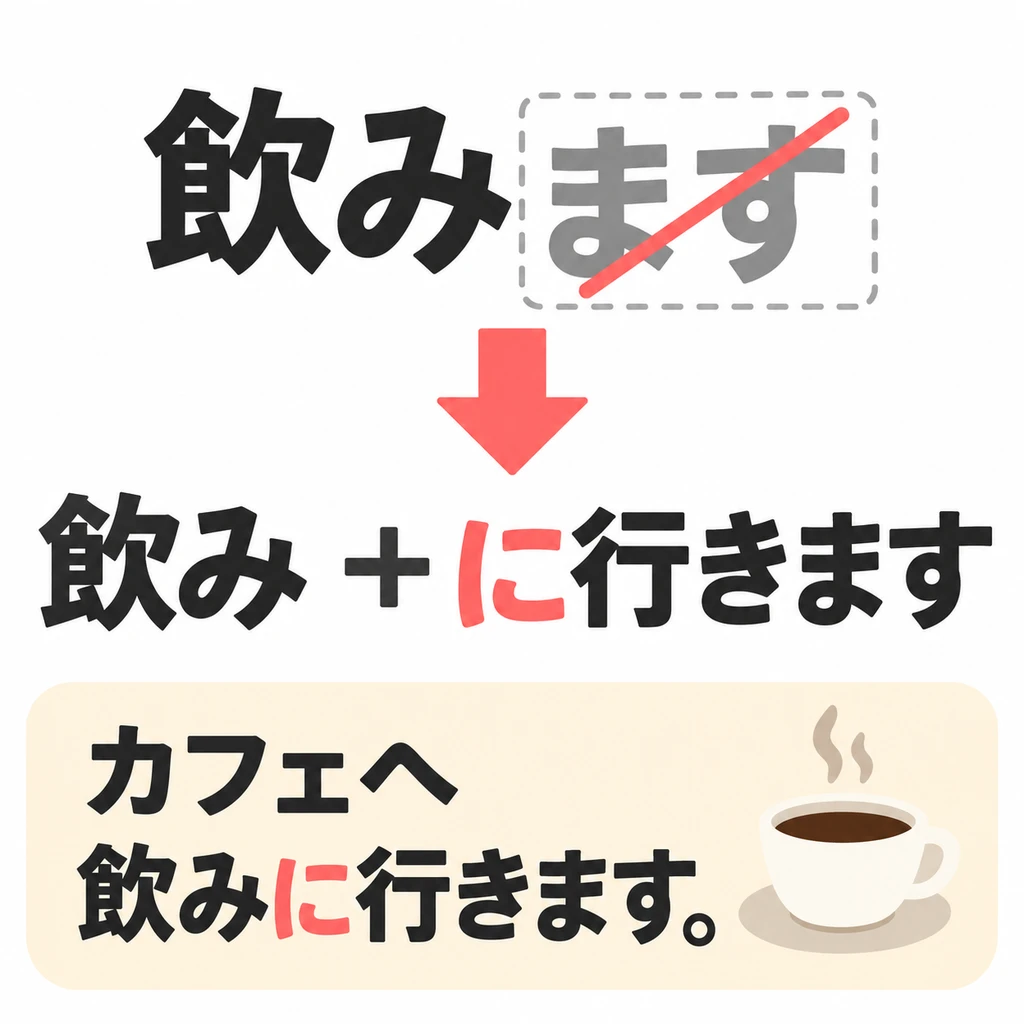
First remove 「ます」 from the end of the verb, then add 「に行きます」: 飲みます→飲みに行きます.
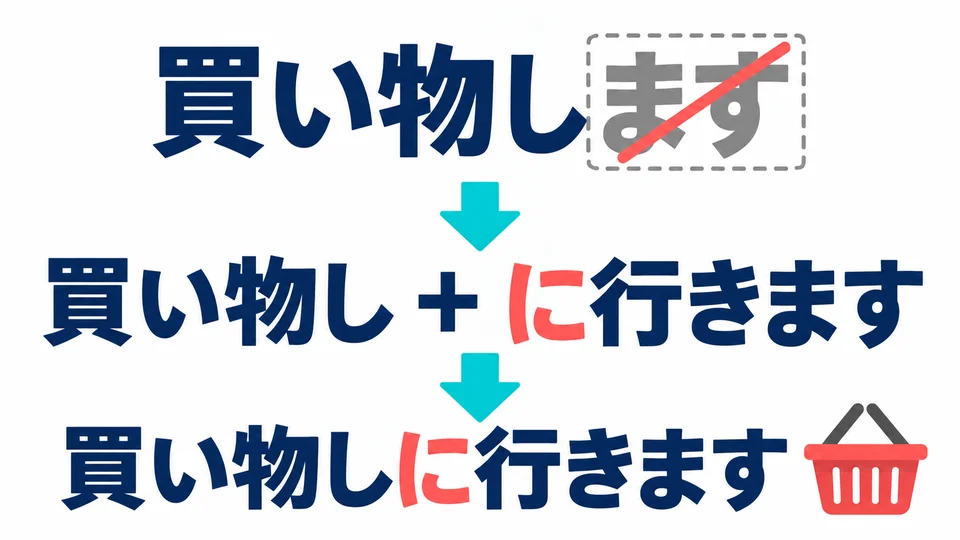
For 「買い物します」 in the example, removing 「ます」 leaves 「買い物し」. Then add 「に行きます」.
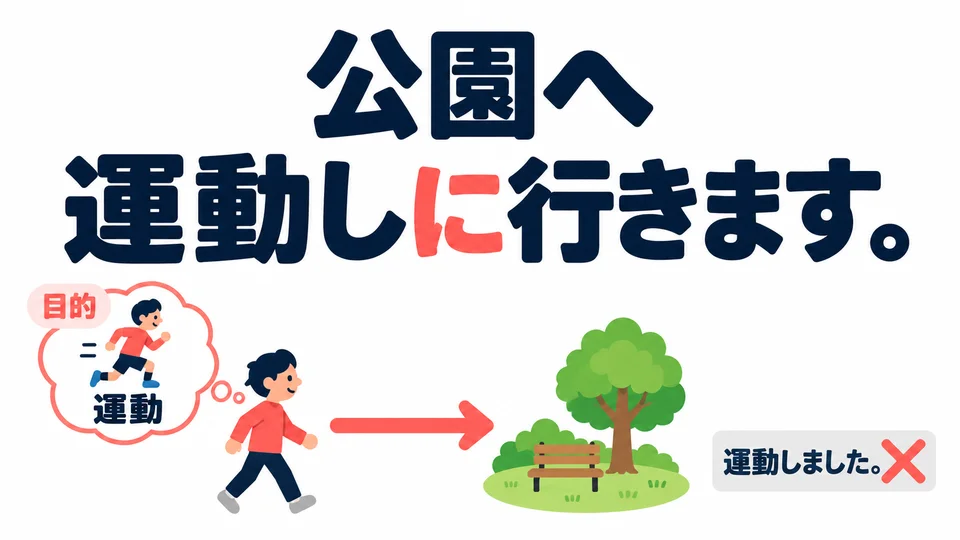
The purpose of going to the park is to exercise. 「運動しに行きます」 states that purpose; it does not mean the exercise is already finished.
Example sentences
- スーパーsuupaaへe買い物kaimonoしshiにni行きます。ikimasu
I go to the supermarket to shop.
- 公園kouenへ
In a conversation
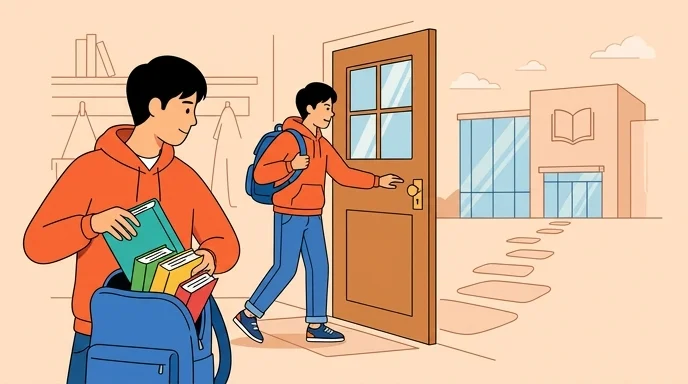
- Aどこへ行きますか。
A: Where are you going?
- B図書館へ勉強しに行きます。
B: I'm going to the library to study.
- A
Check yourself
Level 1 · Recognise
Which sentence is correct?
Level 1 · Recognise
Listen and choose the meaning
Level 2 · Build
Put the words in order
I will go to the library to study.
Level 3 · Use
What goes in the blank?
あとでスーパー 行きます。
I'll go to the supermarket to shop later.
More grammar in this theme
- 〜へ〜に行きますgo somewhere to do something