
Japanese grammar · ≈ JLPT N5 · Beginner 2
動詞のた形doushi no ta-kei
past verb form
「動詞のた形」follows て-form ending changes and expresses completed past actions, as in 食べた or 飲んだ.
How it works
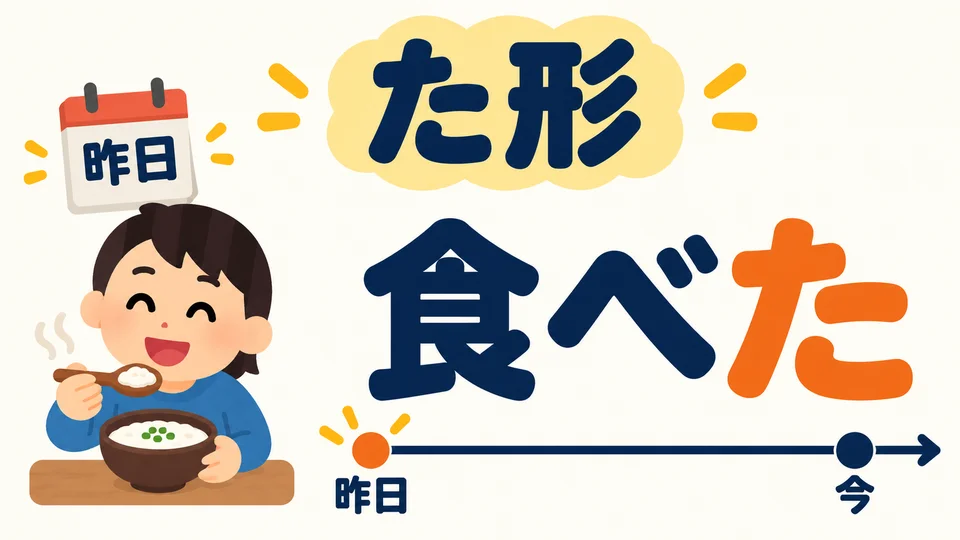
Think back to what you ate yesterday. The た form can express actions that have already happened. First, learn how to make it.
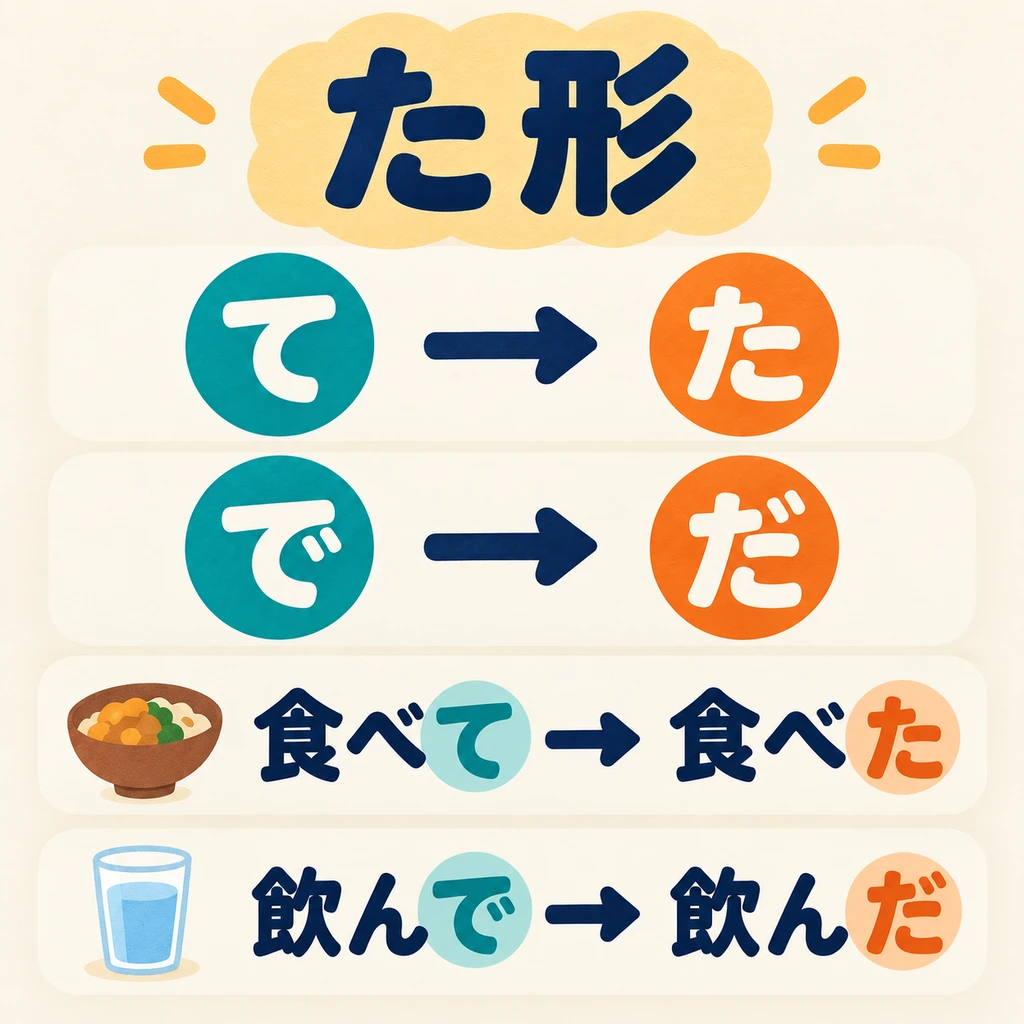
The た form follows the て-form rules. Look at the picture: 食べて becomes 食べた. Only the final て changes.
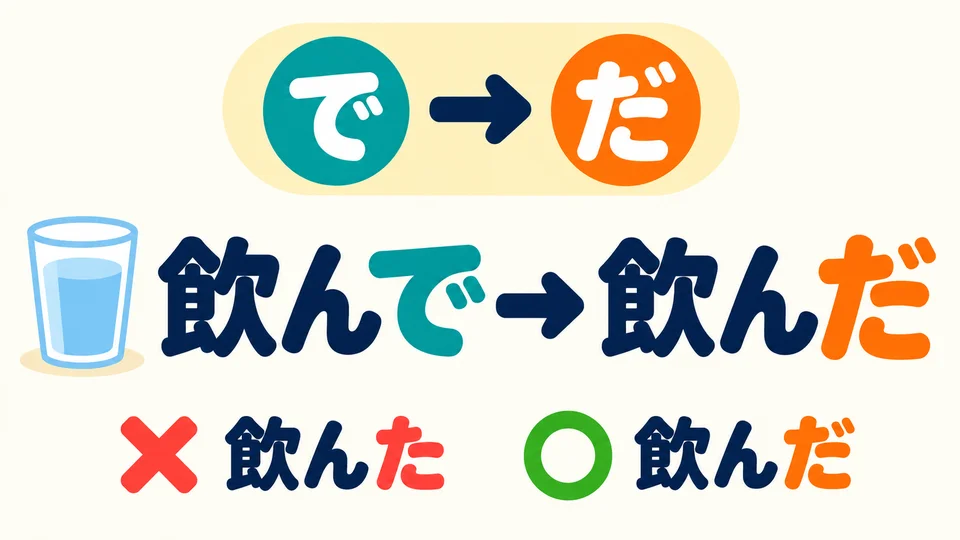
If the ending is で, change it to だ: 飲んで→飲んだ. Keep the voiced sound; do not change it to た.
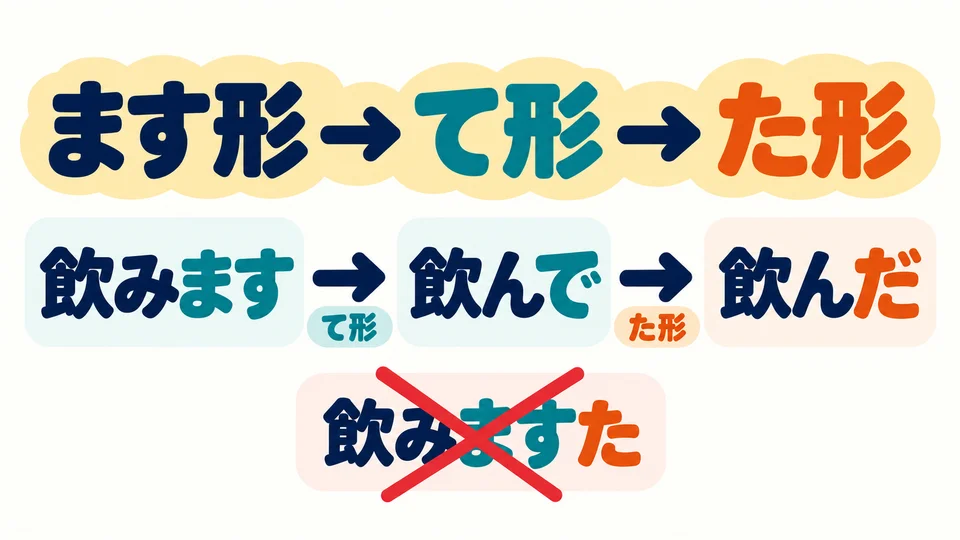
Starting from the ます form, first think of the て form: 飲みます→飲んで→飲んだ. Do not just add た.
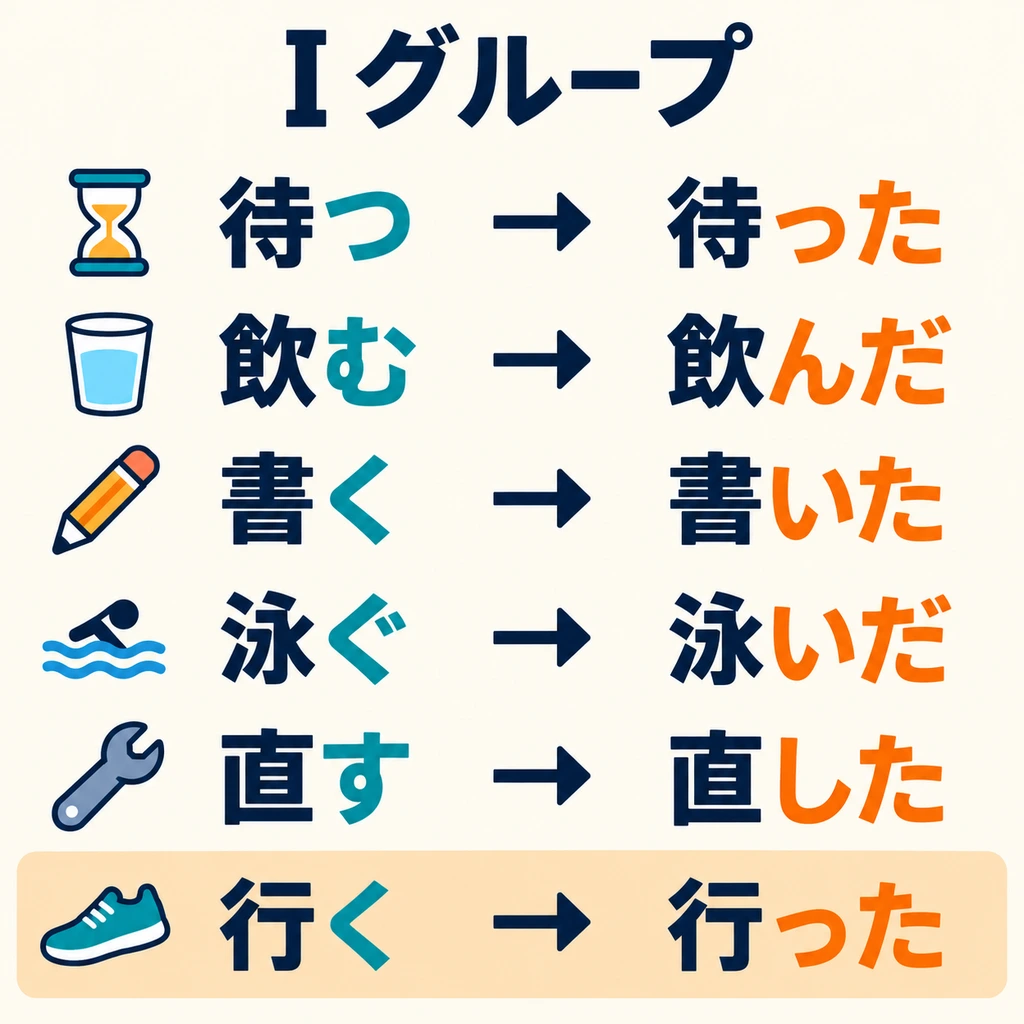
Group Ⅰ uses the same ending changes as the て form. Match the actions in the picture and notice what changes before た.
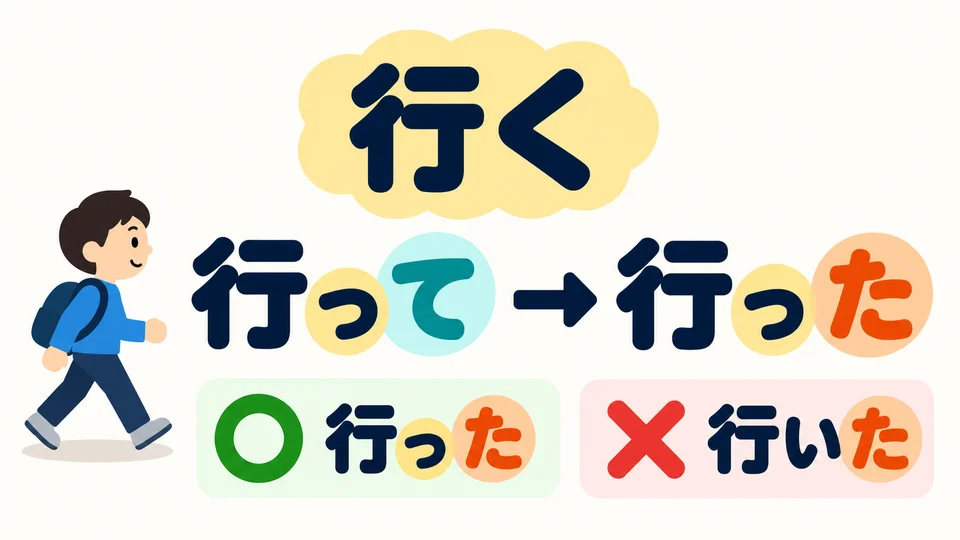
行く is an exception: 行って→行った. Keep the small っ in the middle; do not write 行いた.
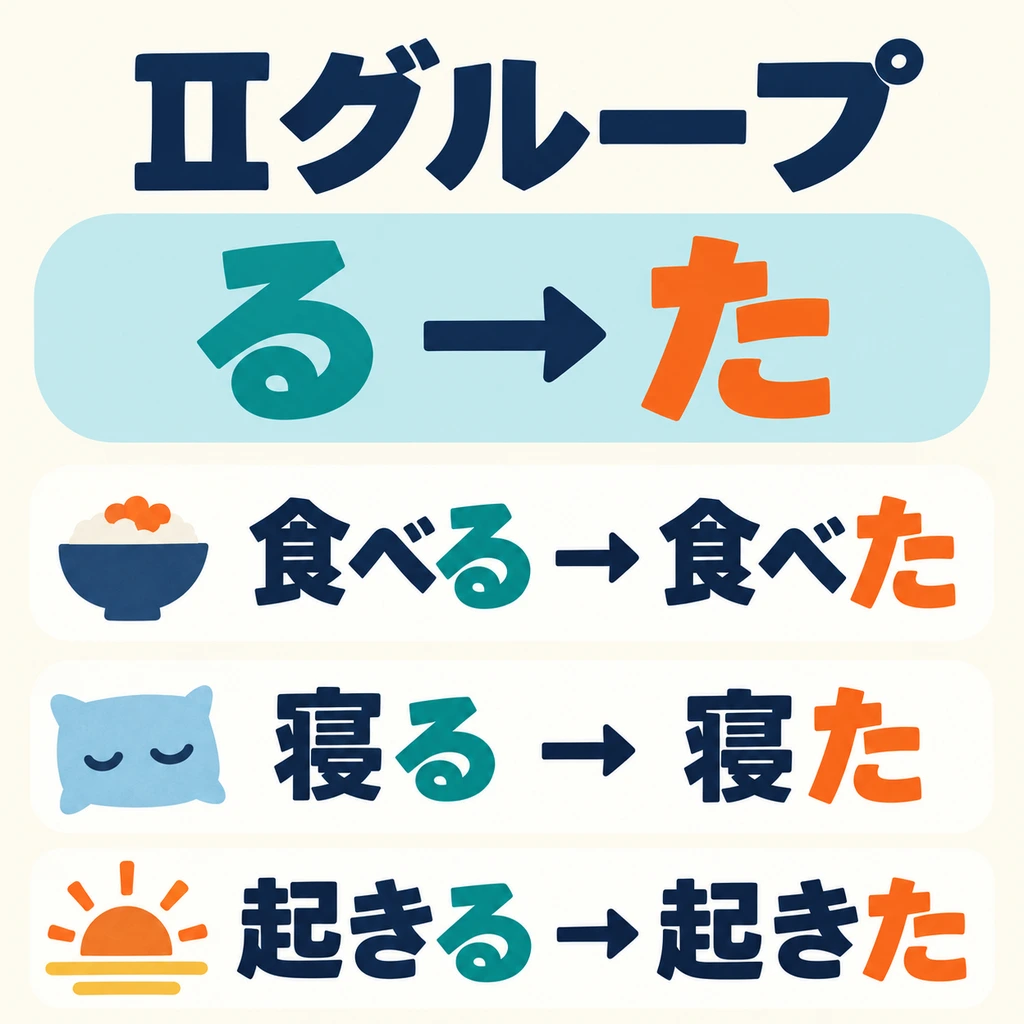
For Group Ⅱ, remove the final る and add た. 食べる, 寝る, and 起きる all change as shown in the picture.
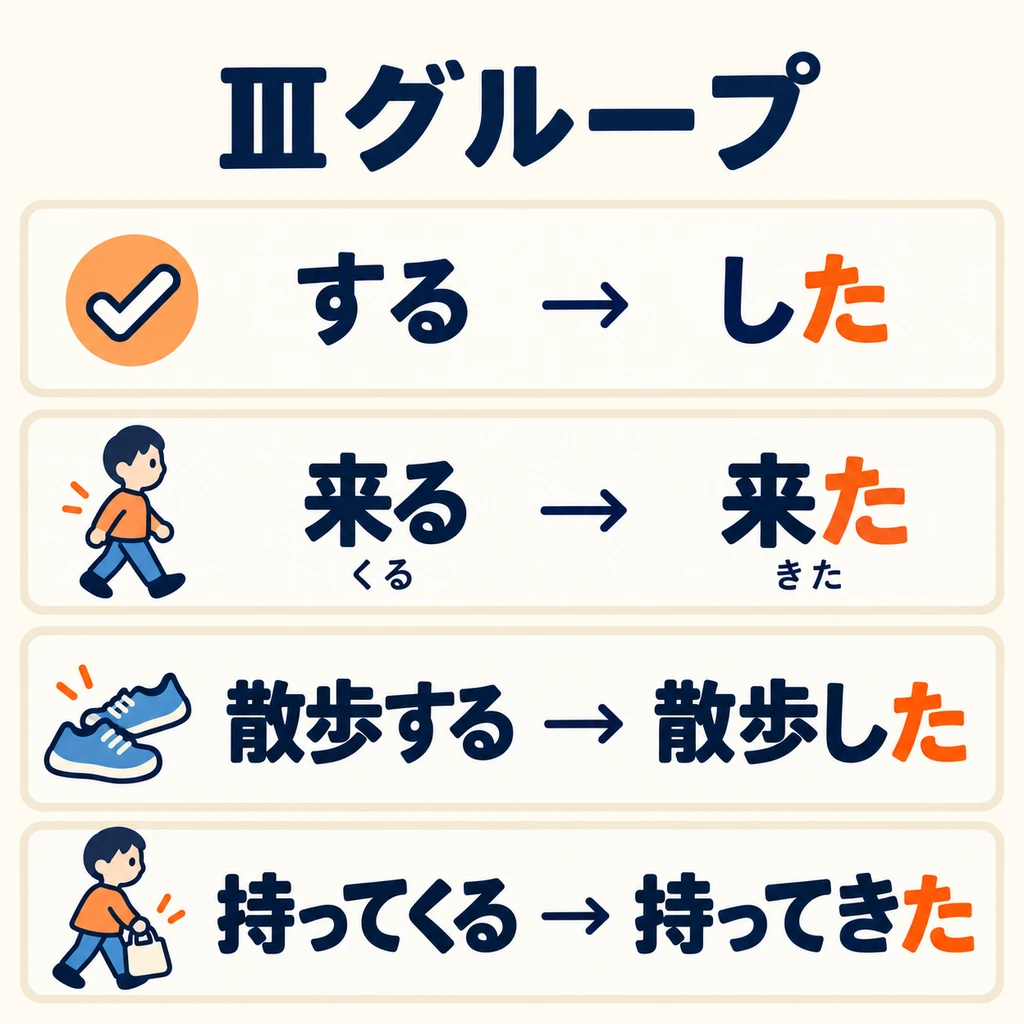
For Group Ⅲ, first learn する→した and 来る→来た. Their ます forms are します and 来ます.
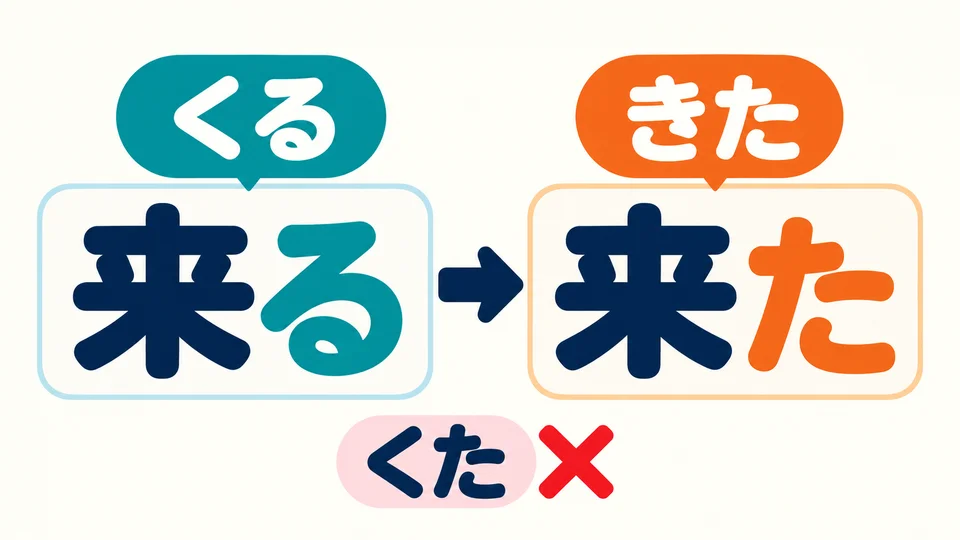
来た is read きた, not くた. The kanji 来 stays the same, but its reading changes from く to き.
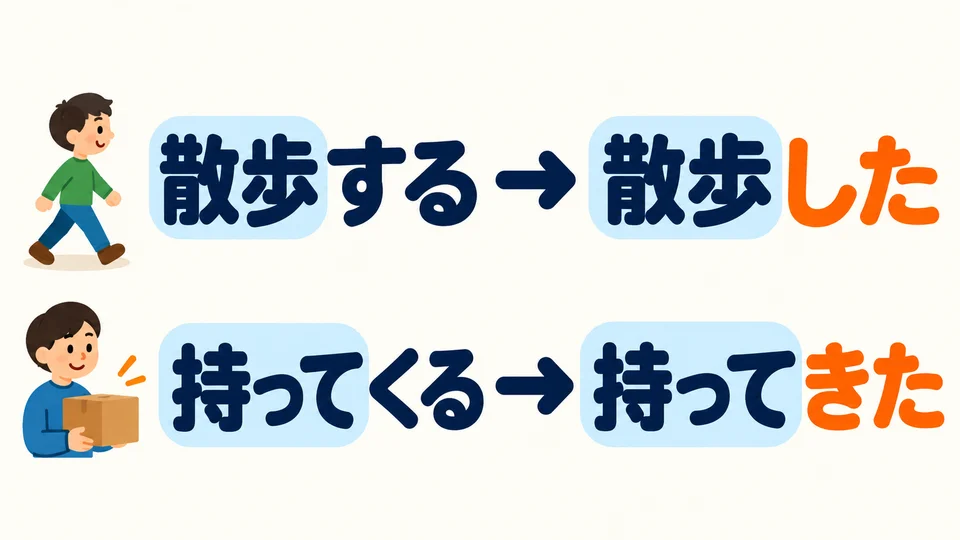
The same rule applies when words come before the verb: 散歩する→散歩した, 持ってくる→持ってきた.
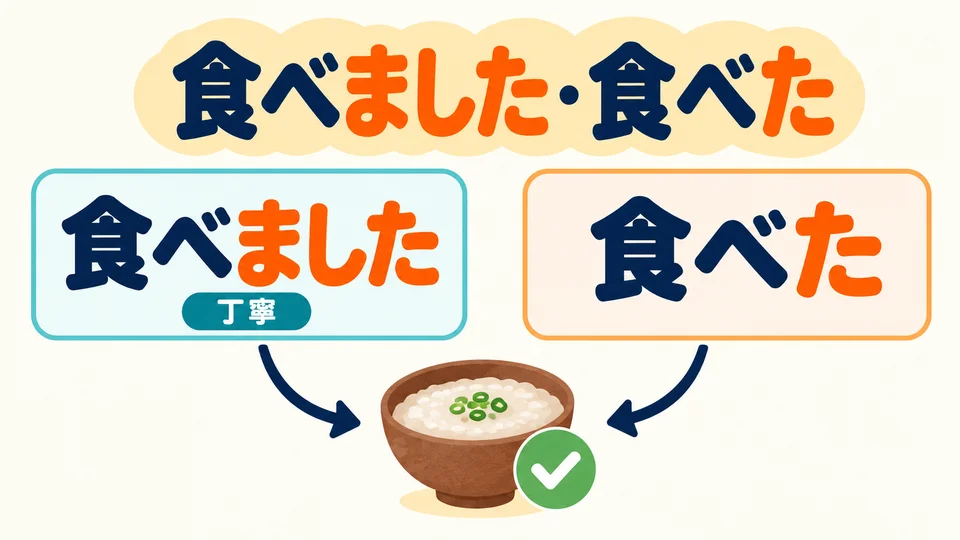
In the conversation, both 食べました and 食べた can mean “ate.” The first is the polite expression.
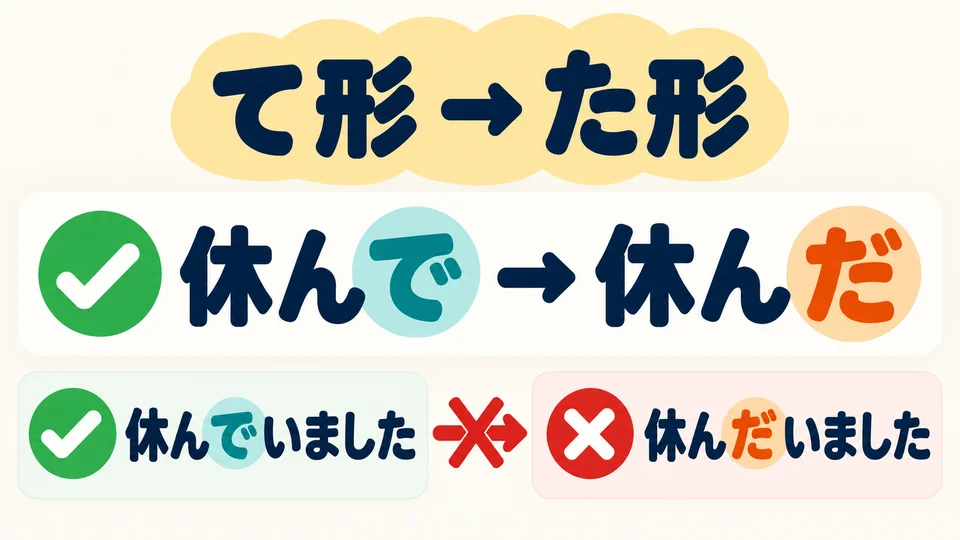
You cannot simply change 休んでいました in the conversation to 休んだいました. This rule is for forming a verb’s た form.
In a conversation

- A昨日どこか行きましたか?
Did you go anywhere yesterday?
- Bいいえ、家で休んでいました。
Check yourself
Level 1 · Recognise
Which sentence is correct?
Level 1 · Recognise
Listen and choose the meaning
Level 2 · Build
Put the words in order
I took medicine.
Level 3 · Use
What goes in the blank?
朝 薬を飲みました。
I woke up in the morning and took medicine.
More grammar in this theme
- 動詞のた形past verb form