JPEDLAB iconJPEDLAB
Save history

Create an account and play

Explore first, then save your progress whenever you are ready. No email address is required.

Start free
Read as articleCards
1/15

Think back to what you ate yesterday. The た form can express actions that have already happened. First, learn how to make it.

››

Lesson notes · ≈ JLPT N5 · Beginner 2

動詞のた形doushi no ta-kei

past verb form

「動詞のた形」follows て-form ending changes and expresses completed past actions, as in 食べた or 飲んだ.

How it works
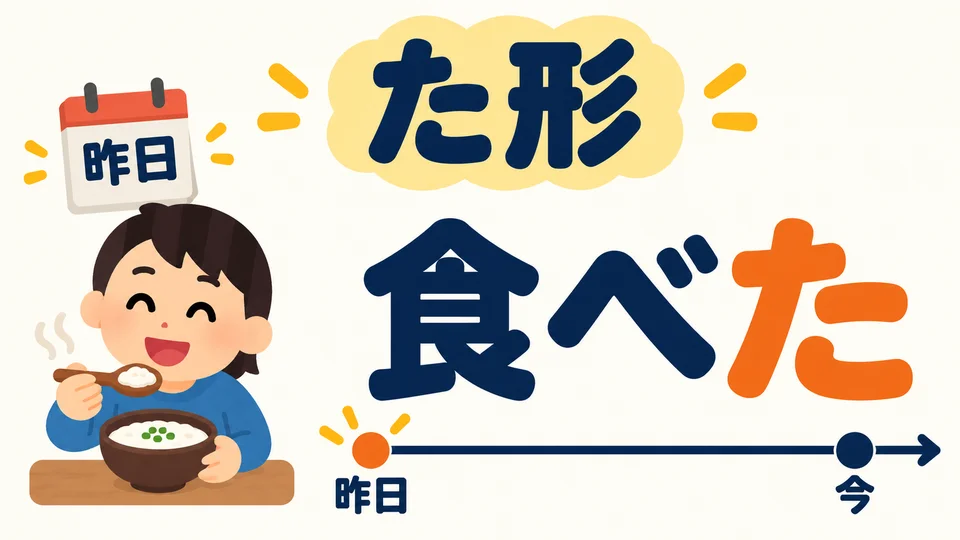
  1. Think back to what you ate yesterday. The た form can express actions that have already happened. First, learn how to make it.
    Think back to what you ate yesterday. The た form can express actions that have already happened. First, learn how to make it.

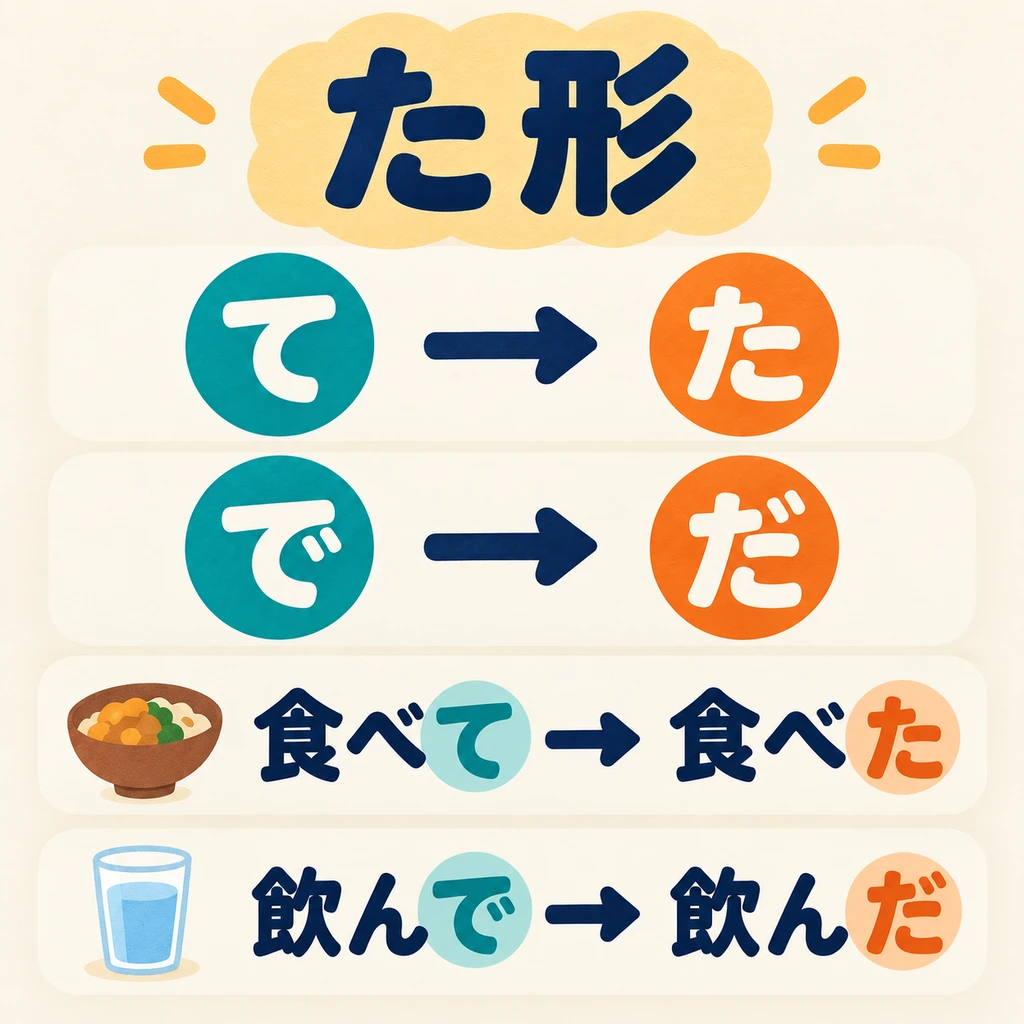
  2. The た form follows the て-form rules. Look at the picture: 食べて becomes 食べた. Only the final て changes.
    The た form follows the て-form rules. Look at the picture: 食べて becomes 食べた. Only the final て changes.

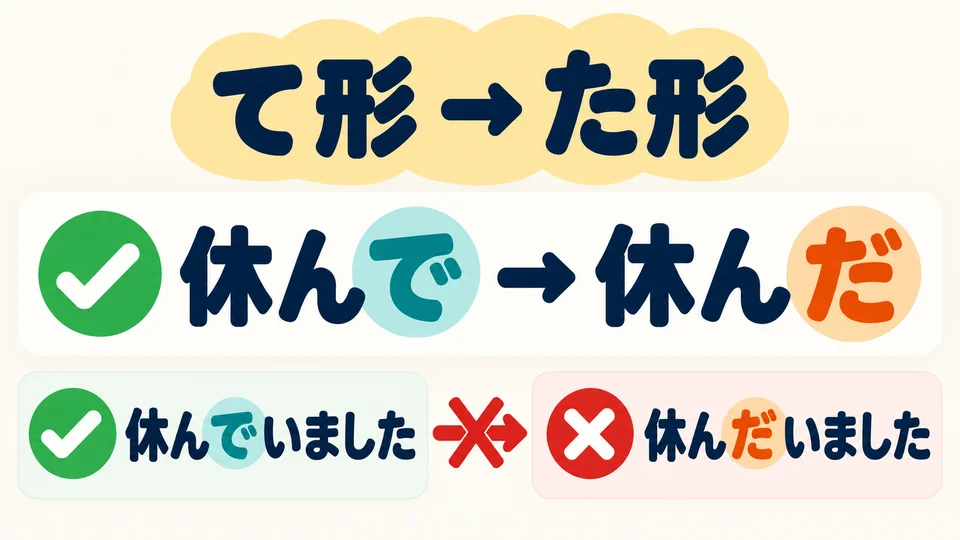
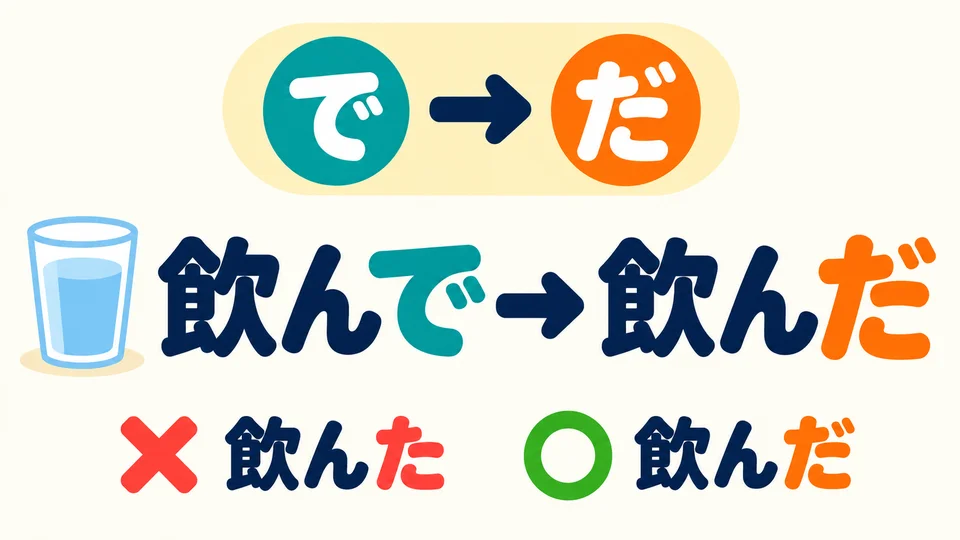
  3. If the ending is で, change it to だ: 飲んで→飲んだ. Keep the voiced sound; do not change it to た.
    If the ending is で, change it to だ: 飲んで→飲んだ. Keep the voiced sound; do not change it to た.

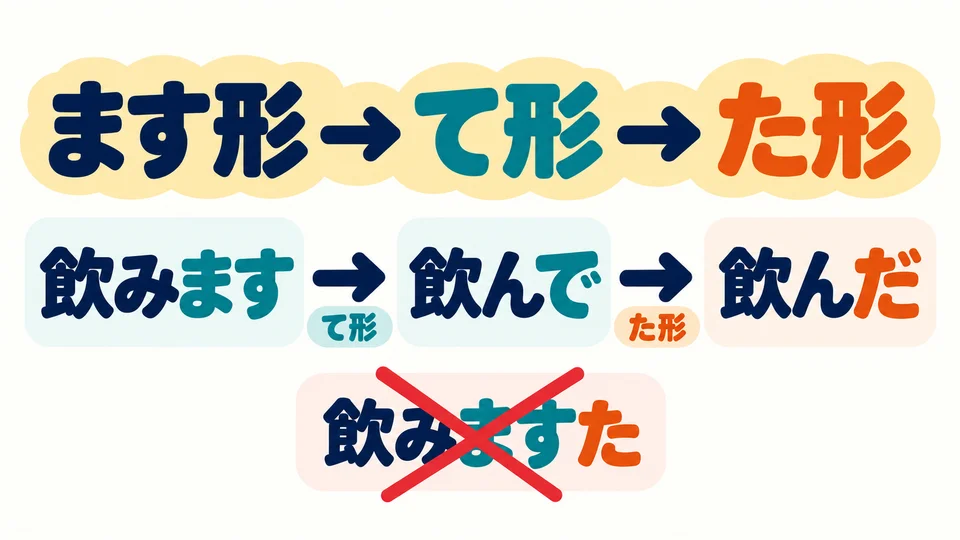
  4. Starting from the ます form, first think of the て form: 飲みます→飲んで→飲んだ. Do not just add た.
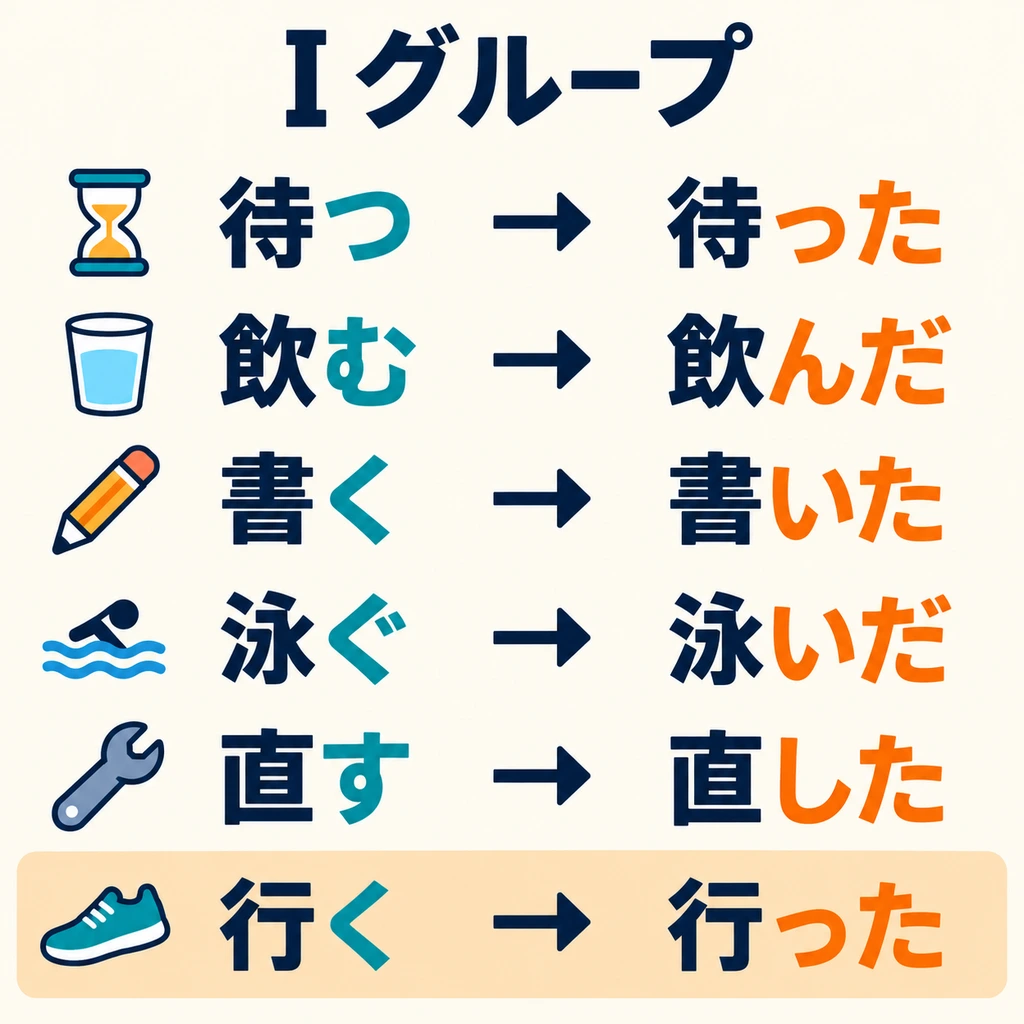
    Starting from the ます form, first think of the て form: 飲みます→飲んで→飲んだ. Do not just add た.

  5. Group Ⅰ uses the same ending changes as the て form. Match the actions in the picture and notice what changes before た.
    Group Ⅰ uses the same ending changes as the て form. Match the actions in the picture and notice what changes before た.
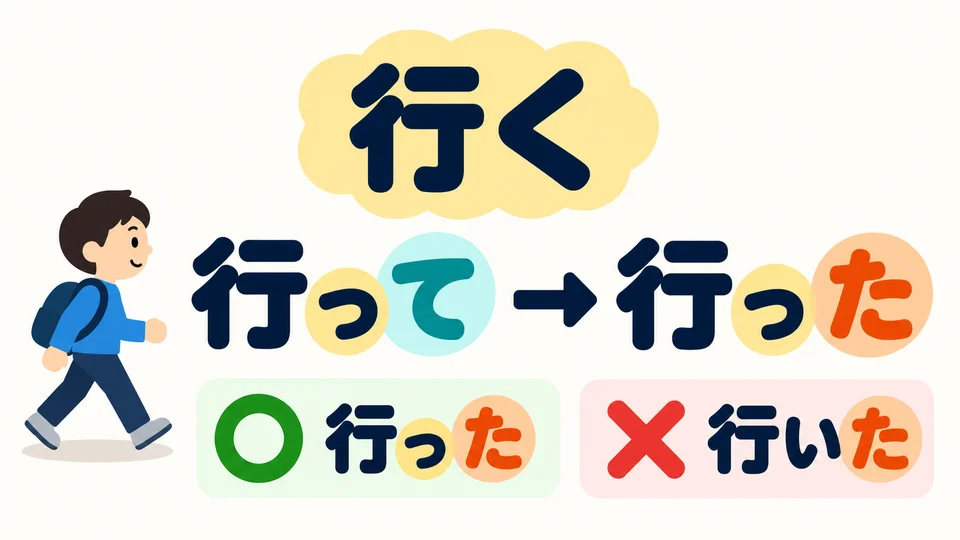
行く is an exception: 行って→行った. Keep the small っ in the middle; do not write 行いた.

行く is an exception: 行って→行った. Keep the small っ in the middle; do not write 行いた.

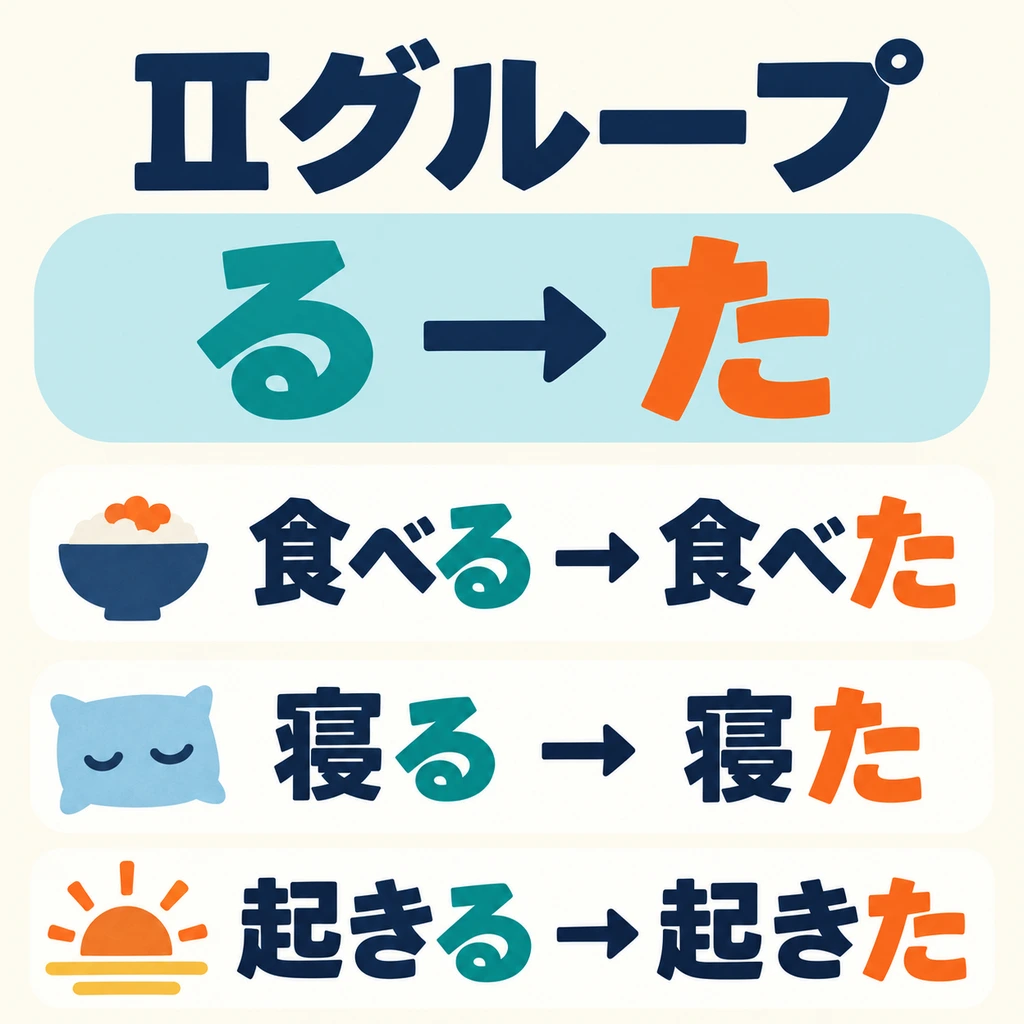
  • For Group Ⅱ, remove the final る and add た. 食べる, 寝る, and 起きる all change as shown in the picture.

    For Group Ⅱ, remove the final る and add た. 食べる, 寝る, and 起きる all change as shown in the picture.

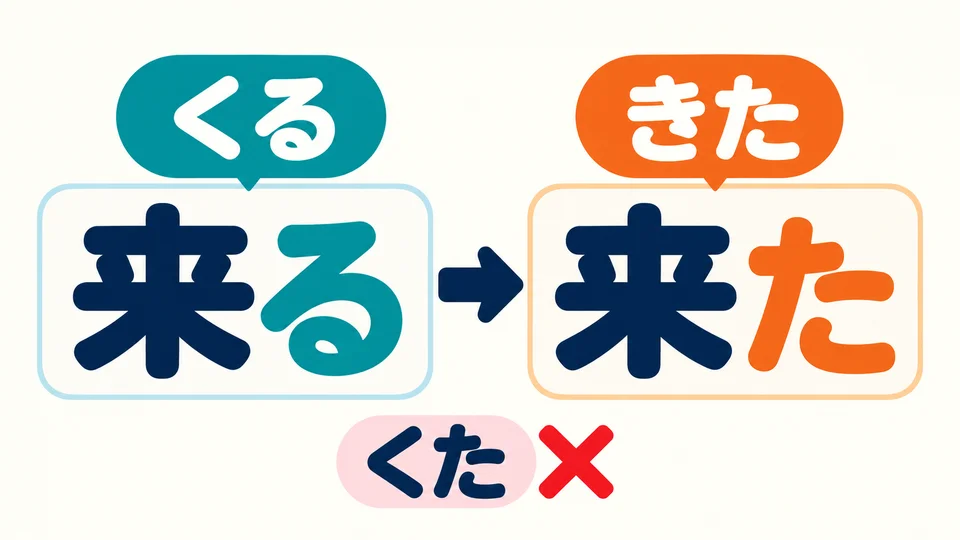
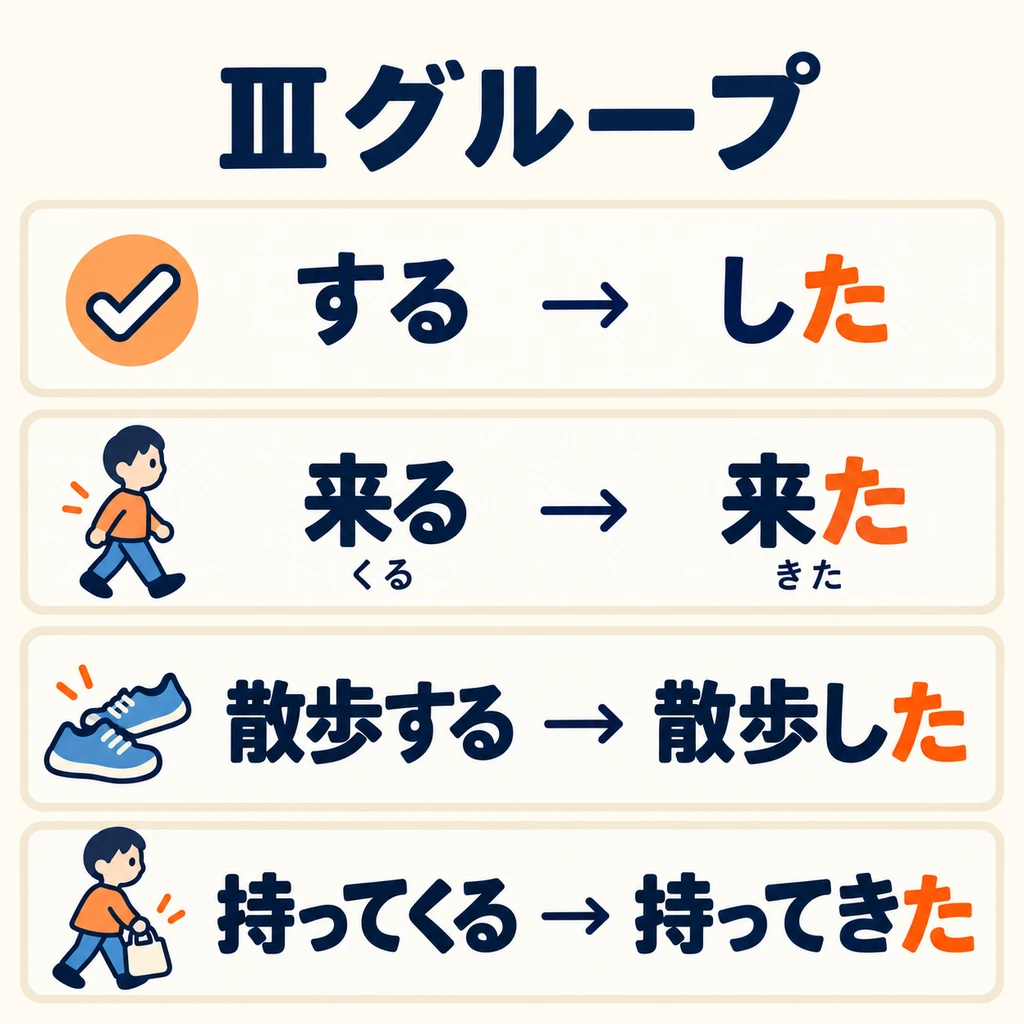
  • For Group Ⅲ, first learn する→した and 来る→来た. Their ます forms are します and 来ます.

    For Group Ⅲ, first learn する→した and 来る→来た. Their ます forms are します and 来ます.

  • 来た is read きた, not くた. The kanji 来 stays the same, but its reading changes from く to き.

    来た is read きた, not くた. The kanji 来 stays the same, but its reading changes from く to き.

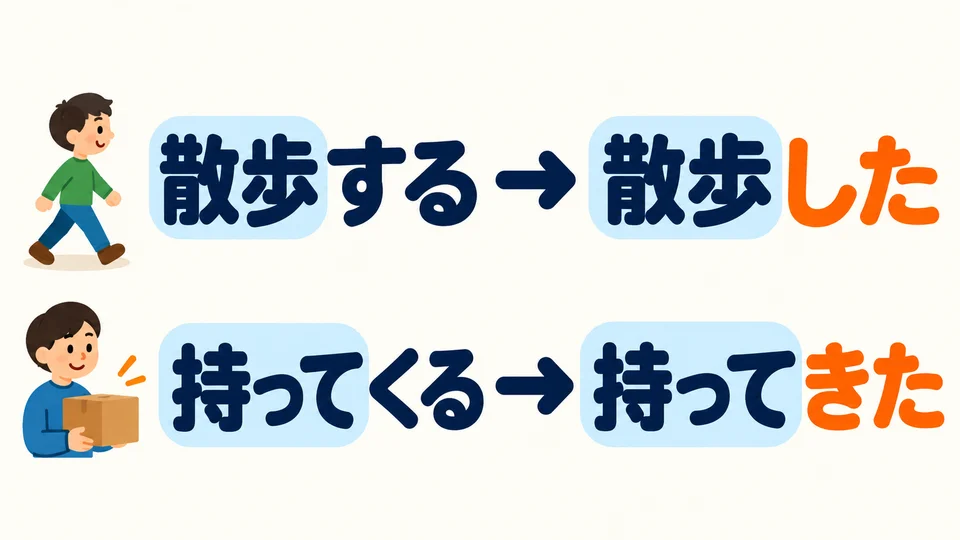
  • The same rule applies when words come before the verb: 散歩する→散歩した, 持ってくる→持ってきた.

    The same rule applies when words come before the verb: 散歩する→散歩した, 持ってくる→持ってきた.

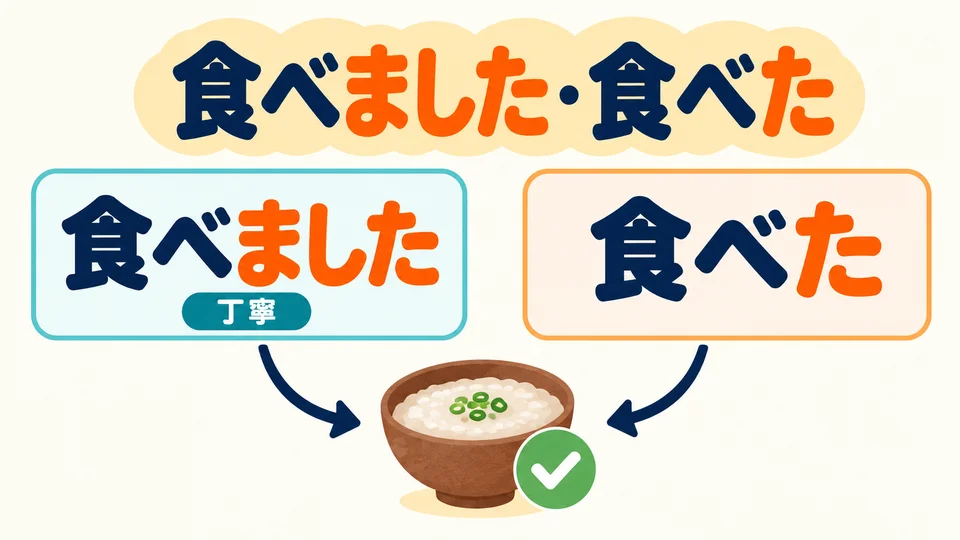
  • In the conversation, both 食べました and 食べた can mean “ate.” The first is the polite expression.

    In the conversation, both 食べました and 食べた can mean “ate.” The first is the polite expression.

  • You cannot simply change 休んでいました in the conversation to 休んだいました. This rule is for forming a verb’s た form.

    You cannot simply change 休んでいました in the conversation to 休んだいました. This rule is for forming a verb’s た form.

  • In a conversation

    • A
      昨日きのうどこか行きましたいきましたか?か

      Did you go anywhere yesterday?

    • B
      いいえ、いいえ家いえで休んやすんでいました。いました

      No, I was resting at home.

    • A
      何なんか食べましたたべましたか?か

      Did you eat anything?

    • B
      はい、はいおかゆを食べました。たべました

      Yes, I had some porridge.

    • A
      病院びょういんに行きましたいきましたか?か

      Did you go to the hospital?

    • B
      はい、はい昨日きのう行きました。いきました

      Yes, I went yesterday.

    Check yourself

    1. Level 1 · Recognise

      Which sentence is correct?

    2. Level 1 · Recognise

      Listen and choose the meaning

    3. Level 2 · Build

      Put the words in order

      I took medicine.

    4. Level 3 · Use

      What goes in the blank?

      朝 薬を飲みました。

      I woke up in the morning and took medicine.

    More grammar in this theme

    • 〜んですexplaining a situation
    • どうしたんですかasking what’s wrong
    • 動詞のた形past verb form
    • 〜たほうがいいですadvice to do something
    • 〜ないほうがいいですadvice against doing
    • 〜てからafter doing something
    • 〜前にbefore doing something
    PreviousどうしたんですかNext〜たほうがいいです

    Keep practising

    Test your Japanese vocabulary12 adaptive questions, freeCheck your pronunciationRead aloud and get a scorePractise verb forms10-question conjugation quizSee the whole courseGrammar, vocabulary and quizzes by theme
    See the whole course
    Beginner 2
    Injury and Illness