Japanese grammar · ≈ JLPT N4 · Beginner 2
〜たほうがいいです~ta hou ga ii desu
advice to do something
Use「〜たほうがいいです」with a verb in た-form to advise someone that doing something is better.
How it works
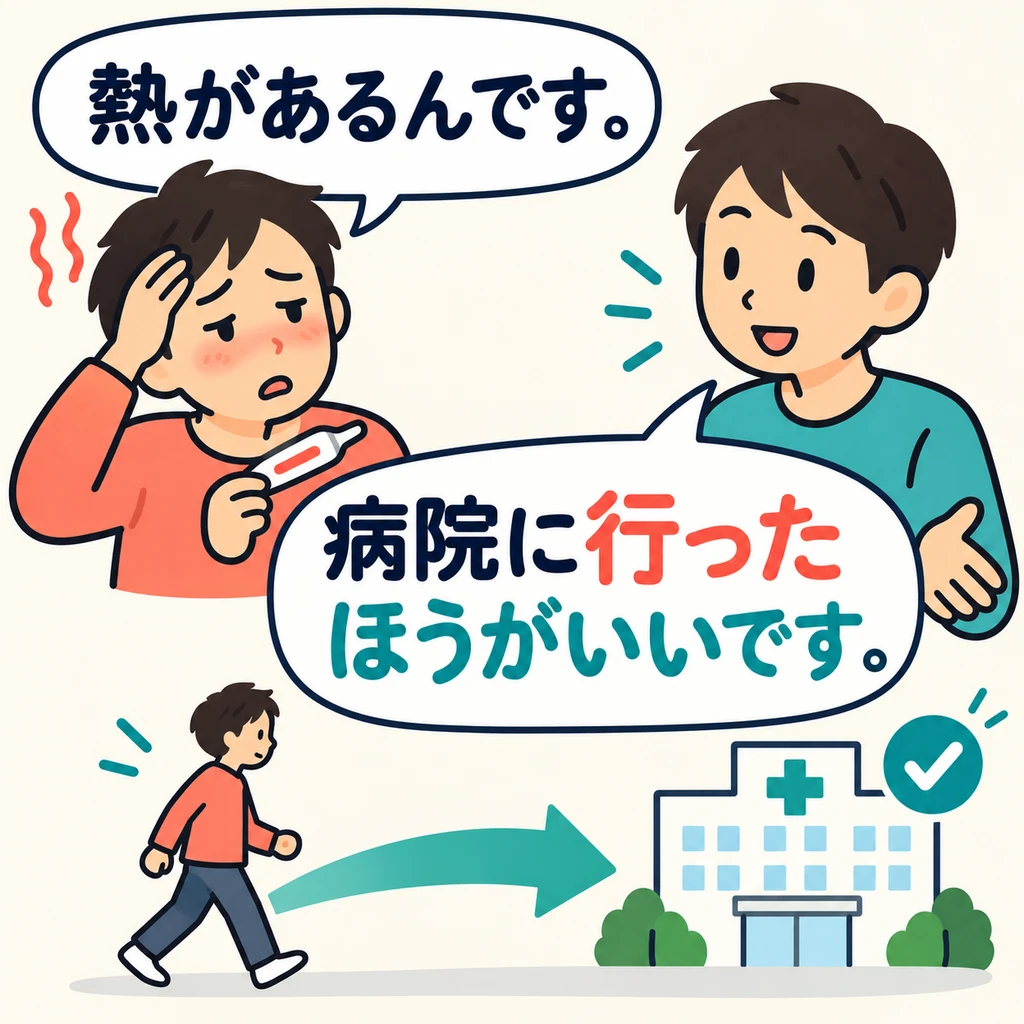
One friend has a fever. What does the other friend suggest doing? Follow the arrow.
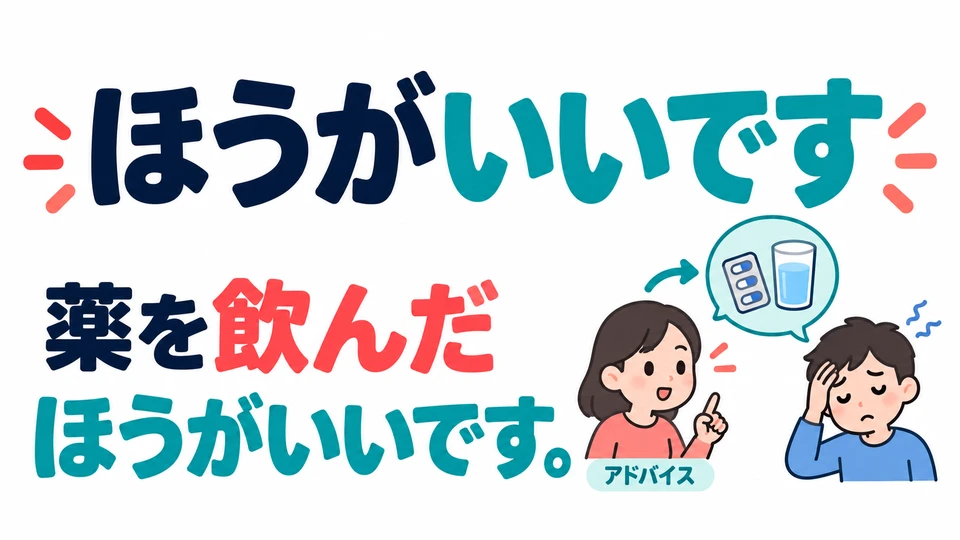
「ほうがいいです」 gives advice: it is better to do this.
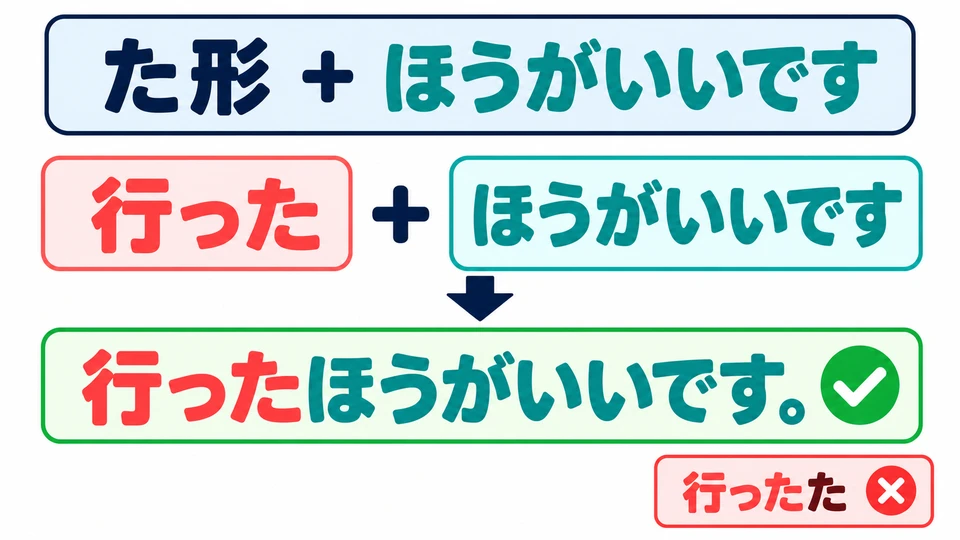
To advise someone to do something, put the verb in its た-form before it: 行った+ほうがいいです.
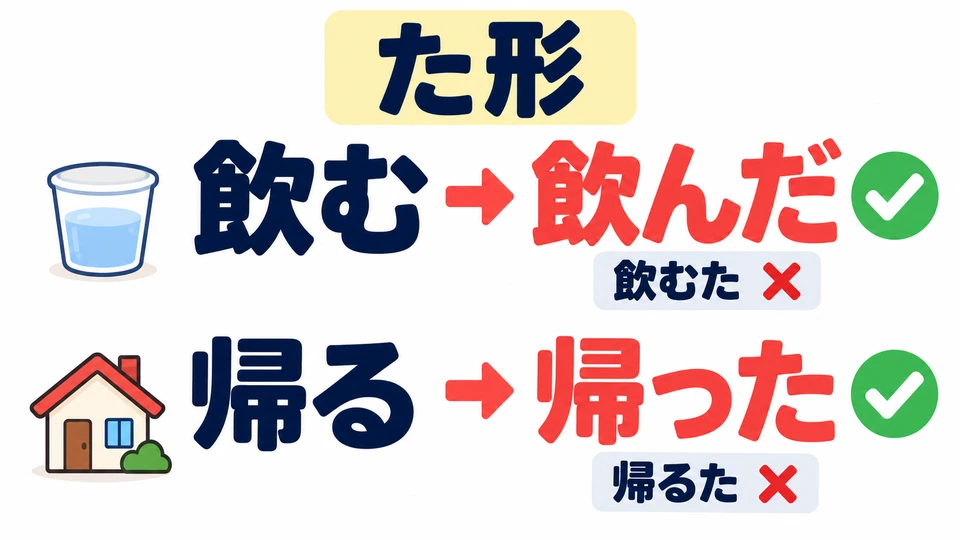
「飲んだ」 and 「帰った」 in the examples are both た-forms. You cannot simply add た to the dictionary form.
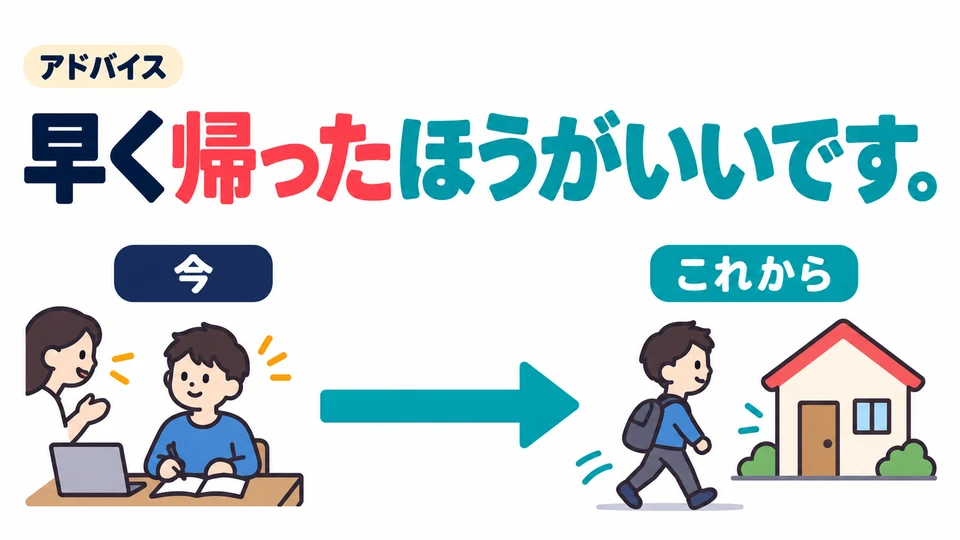
「早く帰ったほうがいいです」 advises going home early; it does not mean someone has already gone home.
Example sentences
- 薬kusuriをo飲んだnondaほうhouがgaいいです。iidesu
It's better to take some medicine.
- 早くhayaku帰ったkaetta
In a conversation
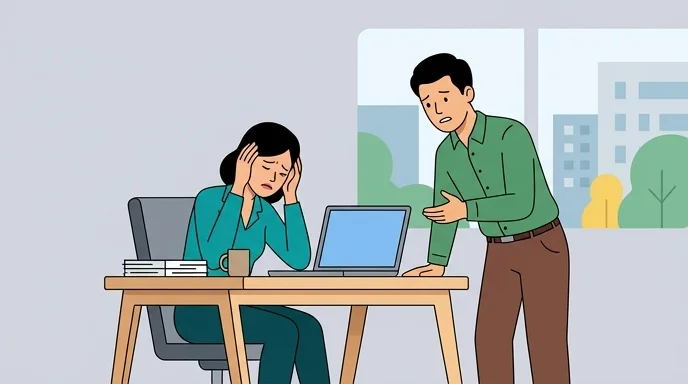
- A頭が痛いんです。どうしましょうか。
I have a headache. What should I do?
- B薬を飲んだほうがいいですよ。
Check yourself
Level 1 · Recognise
Which sentence is correct?
Level 1 · Recognise
Listen and choose the meaning
Level 2 · Build
Put the words in order
You should rest well.
Level 3 · Use
What goes in the blank?
薬を ほうがいいです。
You should take some medicine.
More grammar in this theme
- 〜たほうがいいですadvice to do something