
Japanese grammar · ≈ JLPT N4 · Beginner 2
〜た〜を/へ~ta ~o/e
noun modifier + particle
Put a plain-form verb before a noun to identify it, then mark the whole phrase with を or へ.
How it works
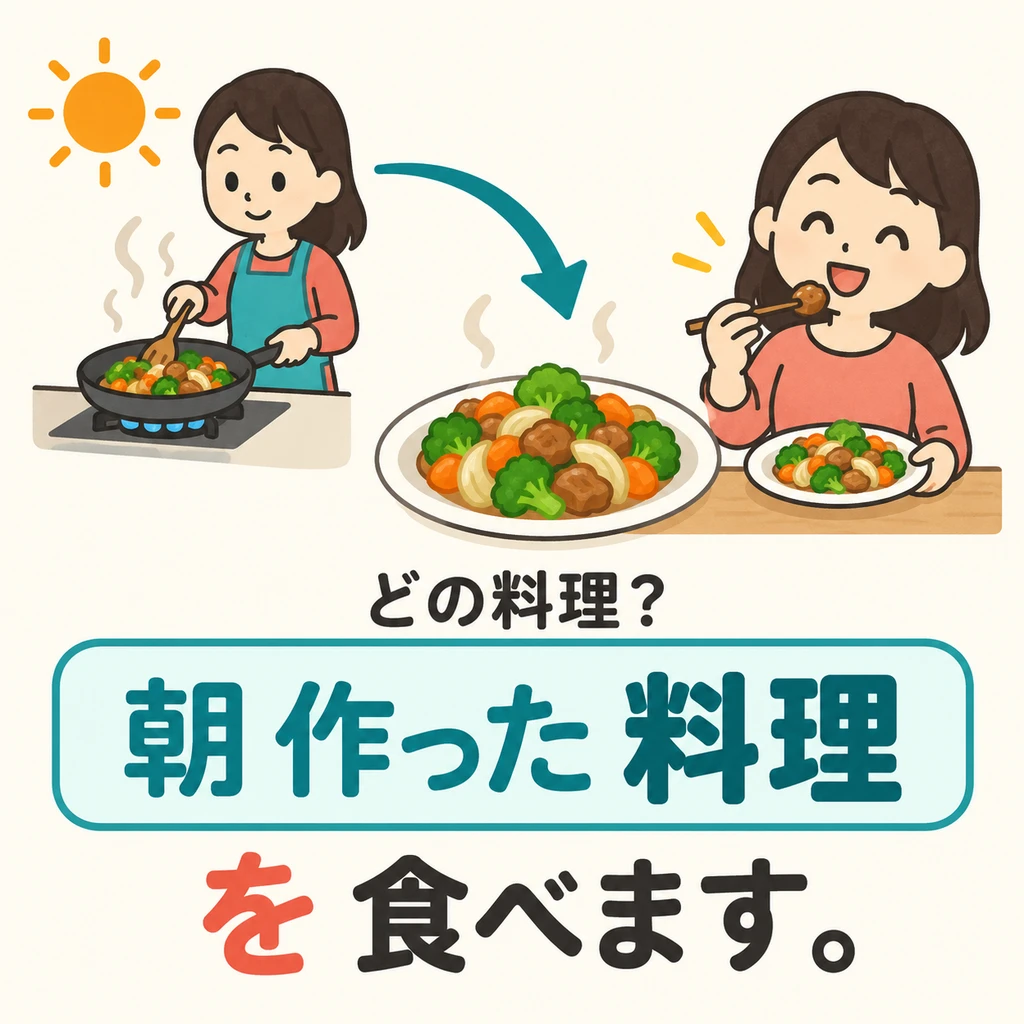
Which dish? Put “made in the morning” before the noun to show which dish you mean.
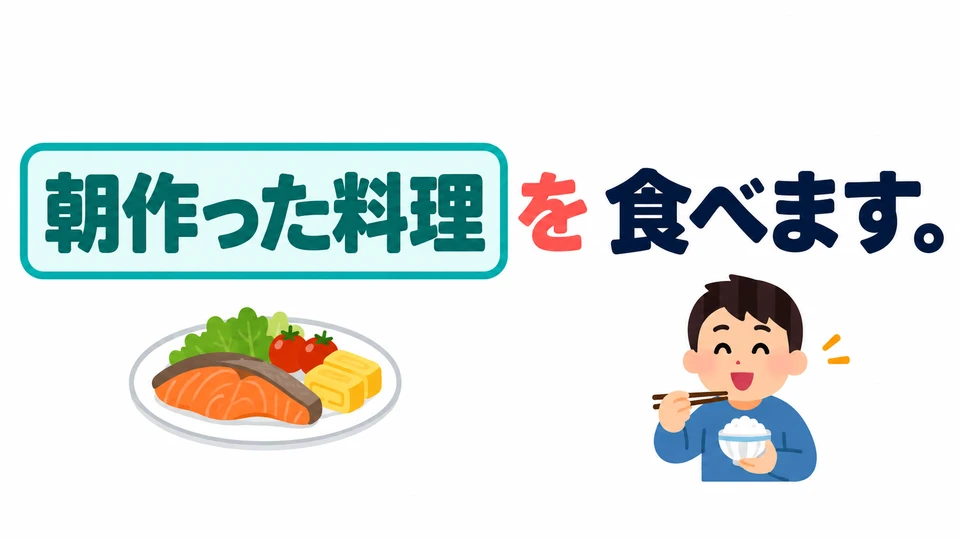
「朝作った料理」 is one whole noun phrase. Add を after it to mark what is eaten.
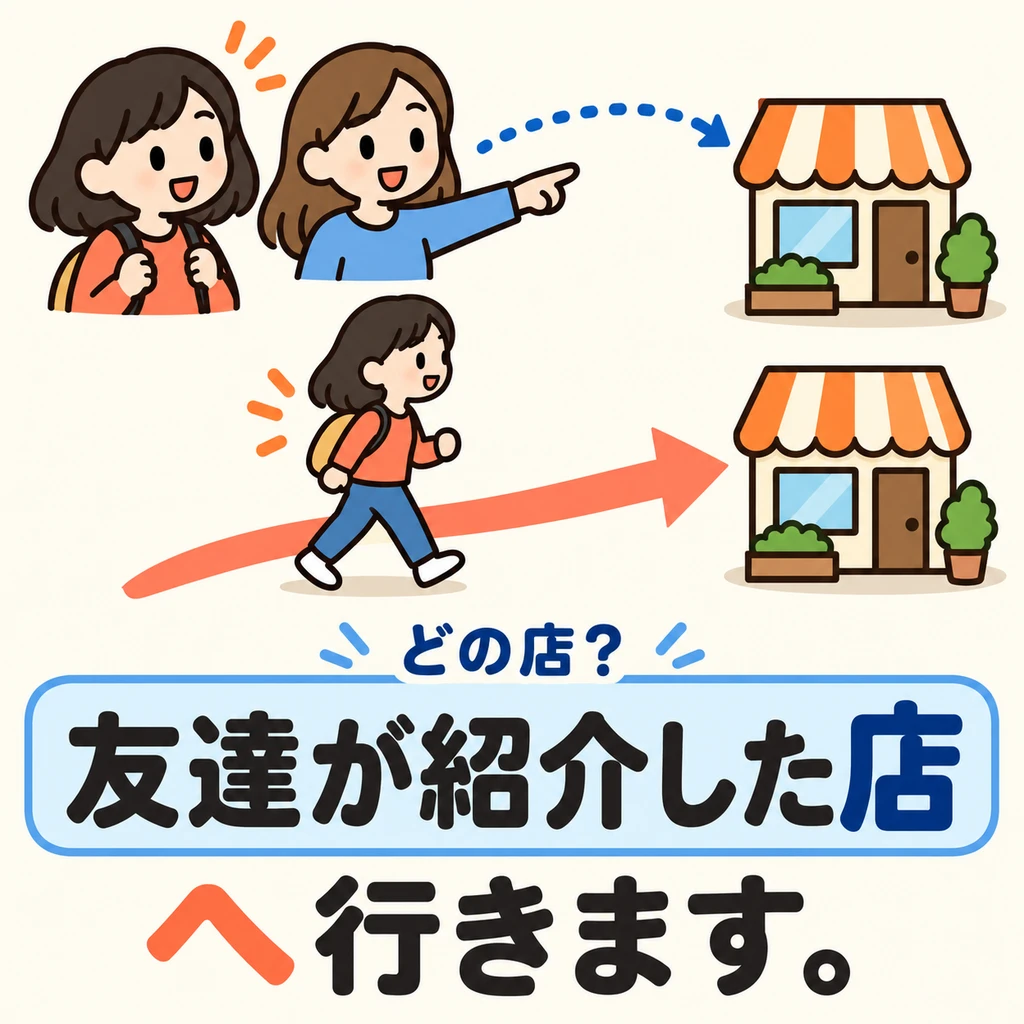
Which shop are you going to? First specify “the shop a friend recommended,” then add へ after the whole phrase to mark the destination.
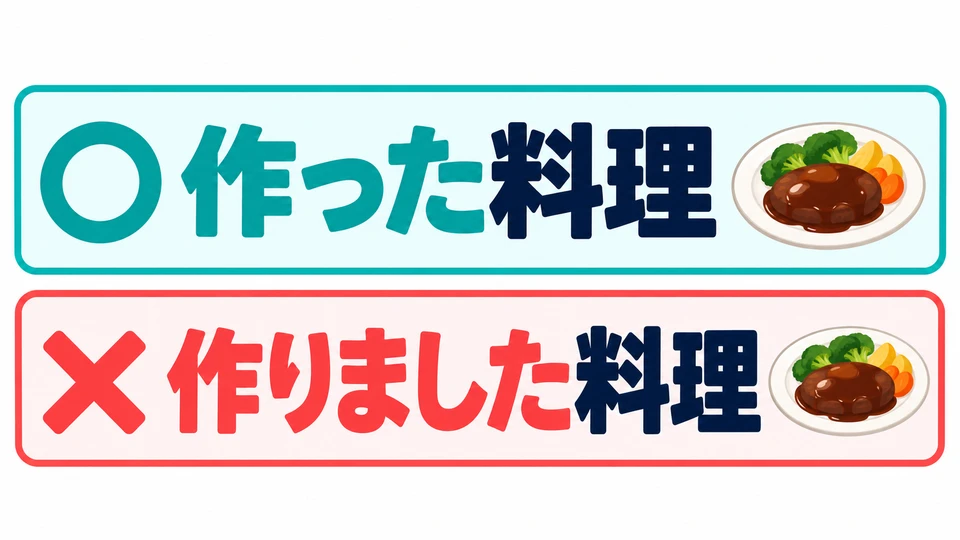
A verb modifying a noun uses the plain form: 作った料理, not 作りました料理.
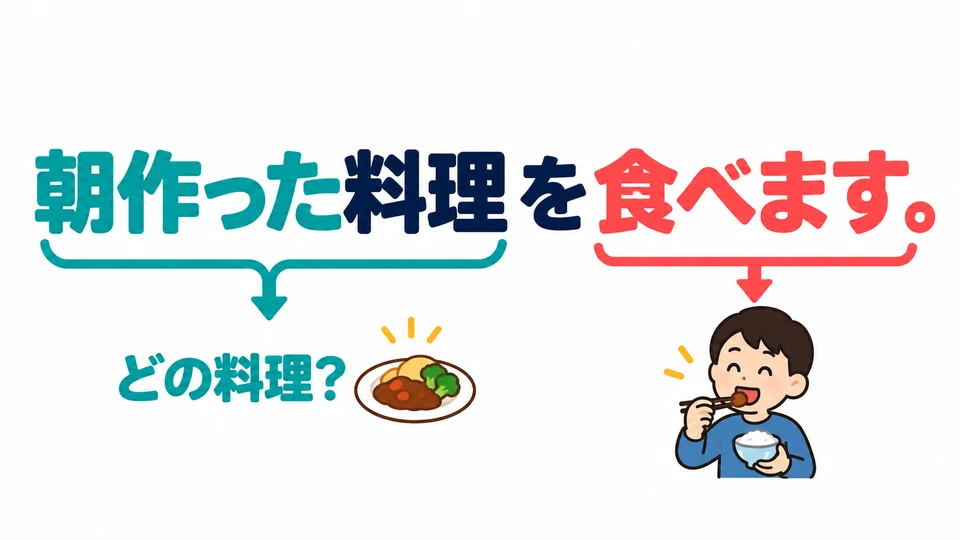
The words before the noun specify “which one.” At the end, 食べます politely expresses the action of eating.
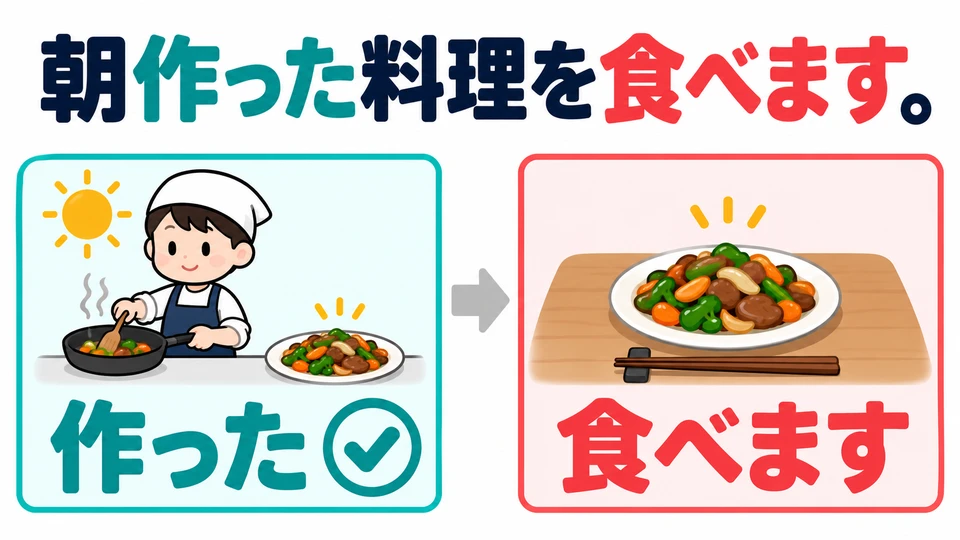
「作った」 says the food has already been made. The sentence ends in 食べます; it does not say it has already been eaten.
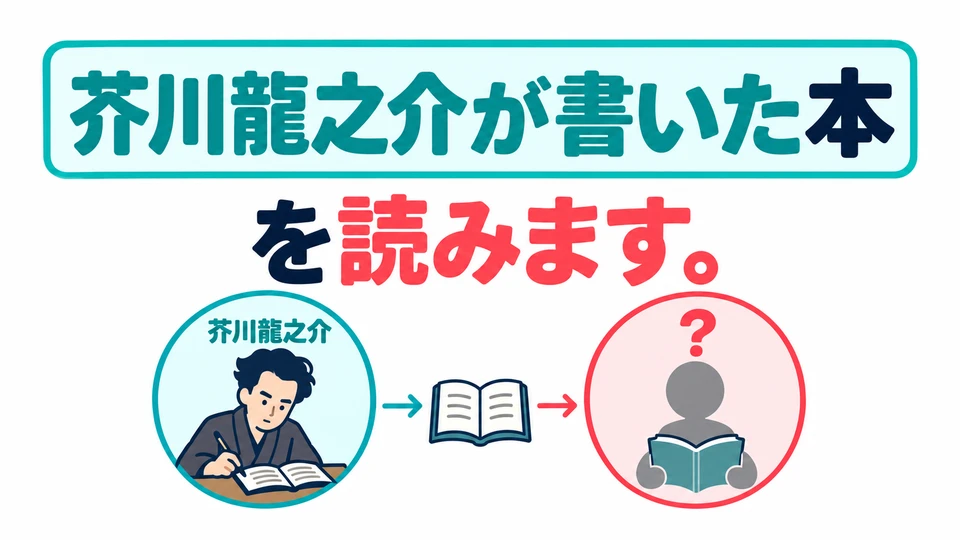
In the book example, the person before が is the writer. The reader is left unstated, so keep the two roles separate.
Example sentences
- 朝asa作ったtsukutta料理ryouriをo食べます。tabemasu
I eat the food I made in the morning.
- 芥川akutagawa龍之介ryuunosuke
In a conversation

- Aどちらのサイトを見ますか。
A: Which site do you look at?
- B友達が紹介したサイトを見ます。
Check yourself
Level 1 · Recognise
Which sentence is correct?
Level 1 · Recognise
Listen and choose the meaning
Level 2 · Build
Put the words in order
I'll use the information I collected yesterday.
Level 3 · Use
What goes in the blank?
週末、友達が 名所へ行きます。
I go to the scenic spot my friend introduced this weekend.
More grammar in this theme
- 〜た〜を/へnoun modifier + particle