Japanese grammar · ≈ JLPT N5 · Beginner 2
〜てはいけません~te wa ikemasen
prohibited action
Attach 「はいけません」 to the て-form to state that an action is forbidden in a specified place or situation.
How it works
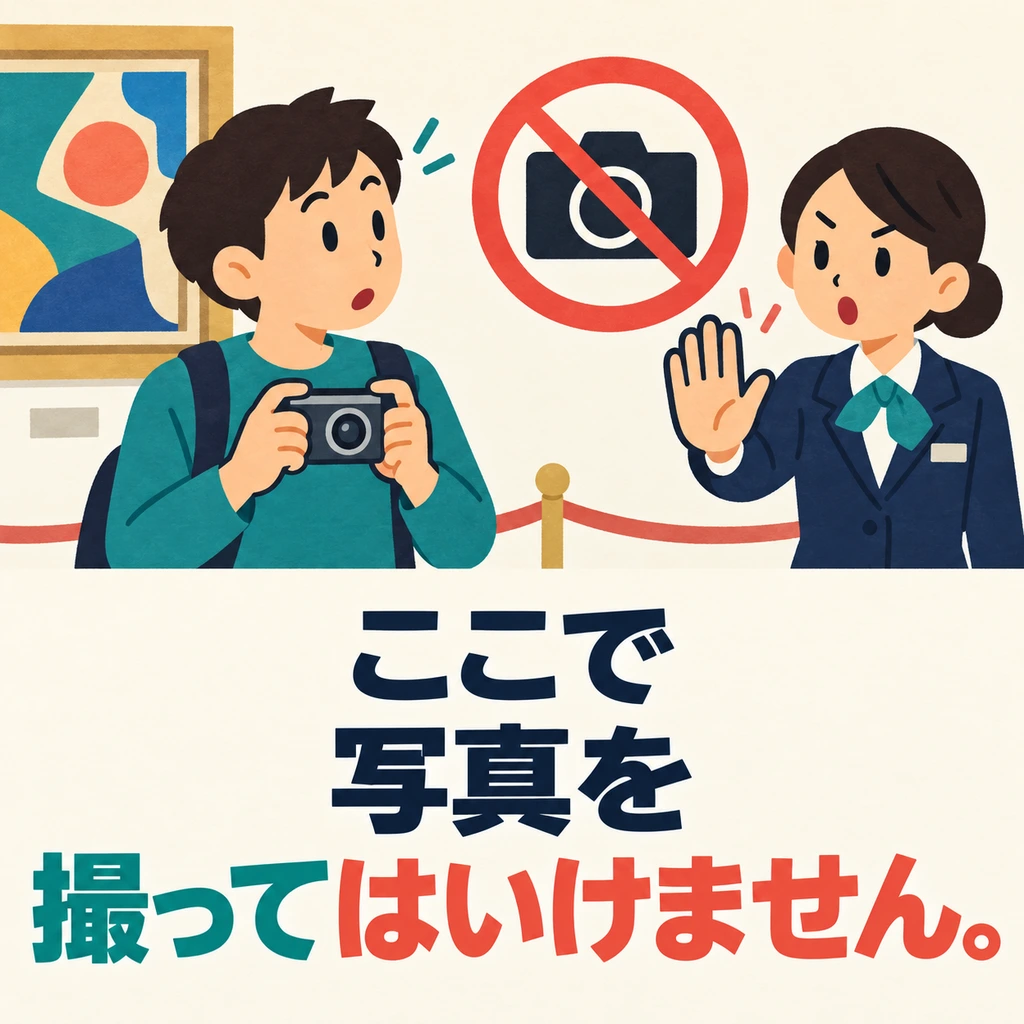
Look at the museum sign: the crossed-out camera means taking photos is forbidden here.
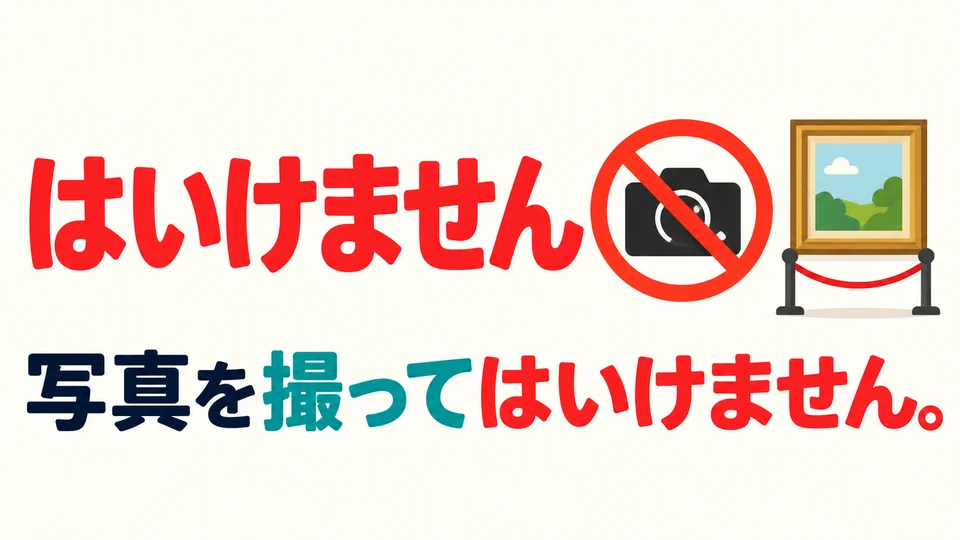
「はいけません」 means an action is not allowed. It states a rule, not a lack of ability.
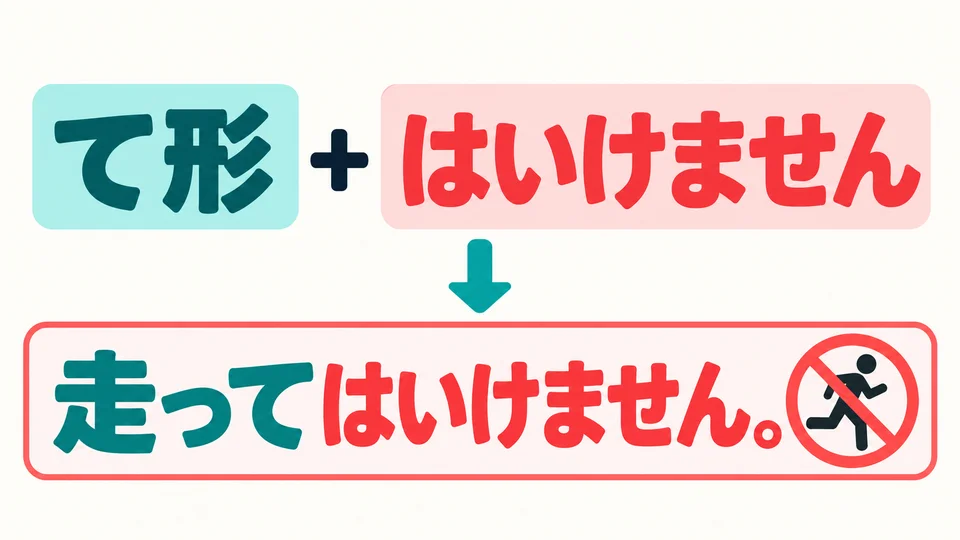
Put the verb in the て form, then add 「はいけません」 to say that the action is forbidden.
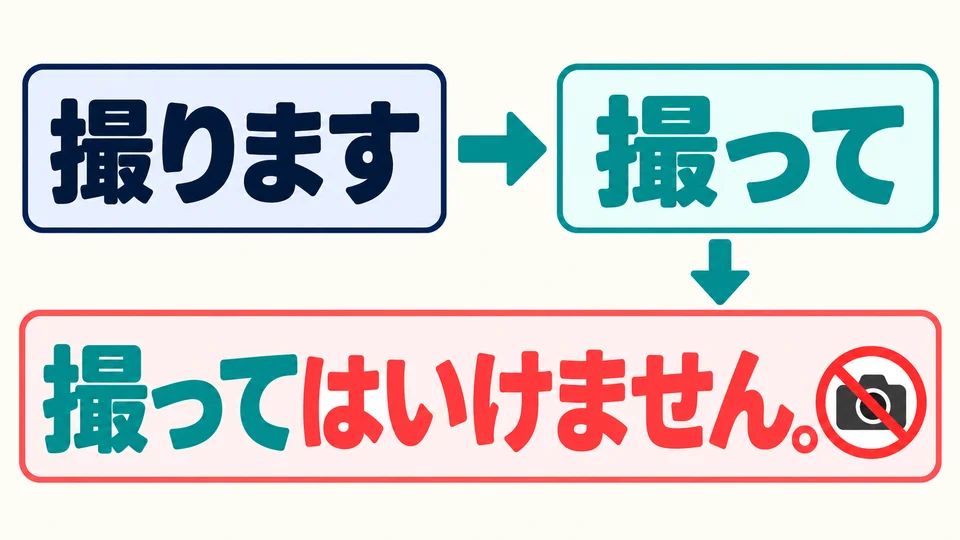
In the example, 「撮って」 is the て form of 「撮ります」. Add 「はいけません」 directly after it.
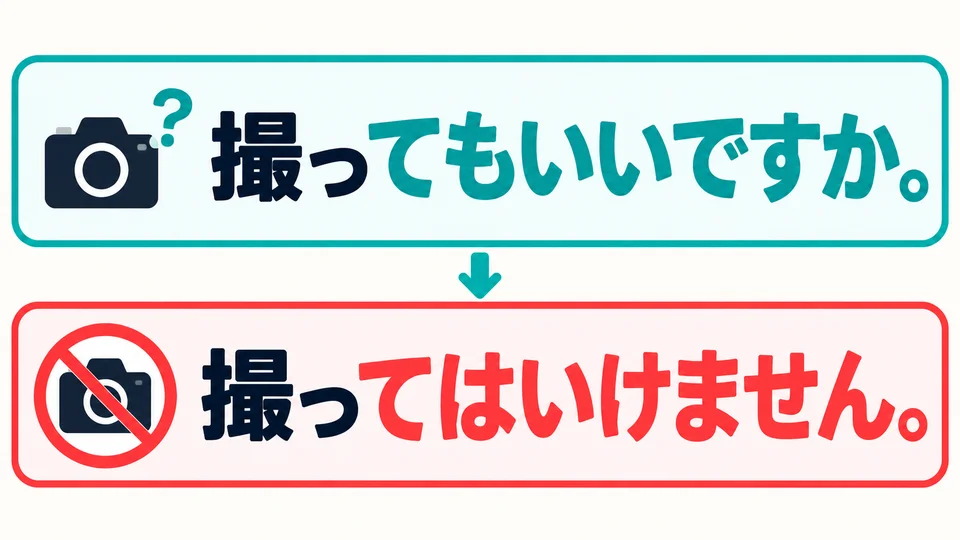
Asking 「てもいいですか」 requests permission. Answering 「てはいけません」 means it is not allowed.
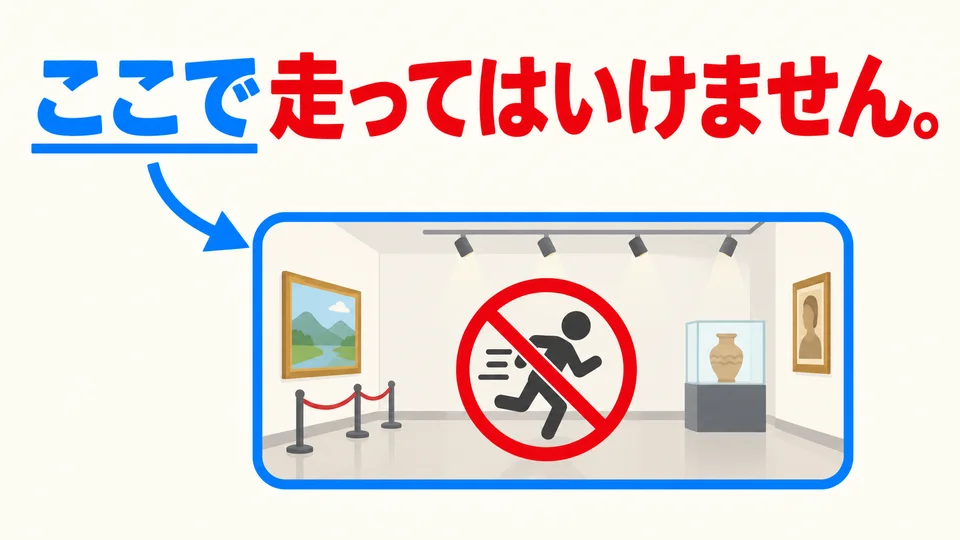
In the example, 「ここで」 specifies the place: running is forbidden here, not everywhere.
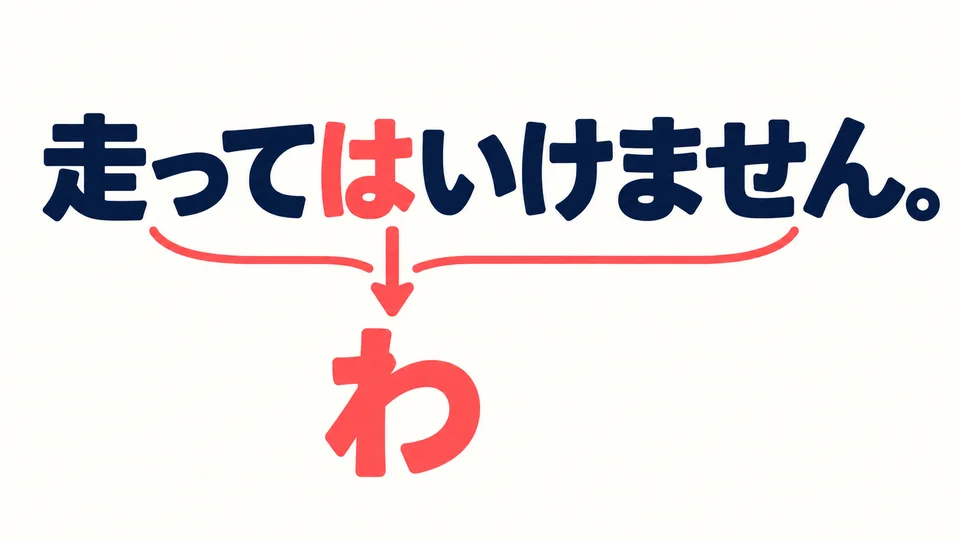
When reading 「走ってはいけません」, pronounce 「は」 as わ and connect it to the preceding て form.
Example sentences
- ここkokoでde走っhashiてteはwaいけません。ikemasen
You must not run here.
- 美術館bijutsukanでde
In a conversation

- Aすみません、ここで写真を撮ってもいいですか。
A: Excuse me, may I take photos here?
- Bいいえ、ここで写真
Check yourself
Level 1 · Recognise
Which sentence is correct?
Level 1 · Recognise
Listen and choose the meaning
Level 2 · Build
Put the words in order
You must not smoke here.
Level 3 · Use
What goes in the blank?
ここで写真を いけません。
You must not take photos here.
More grammar in this theme
- 〜てはいけませんprohibited action