Lesson notes · ≈ JLPT N5 · Beginner 2
〜てはいけません~te wa ikemasen
prohibited action
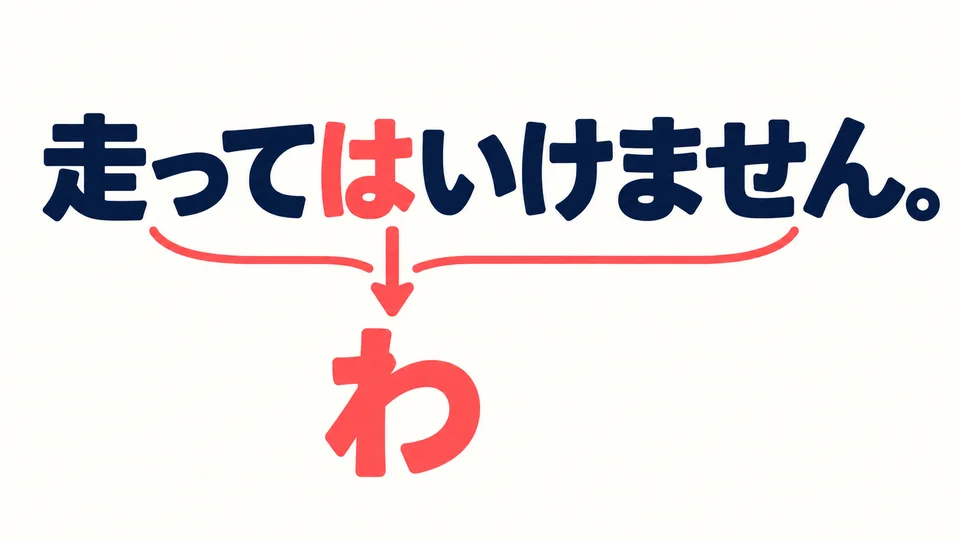
Attach 「はいけません」 to the て-form to state that an action is forbidden in a specified place or situation.
How it works
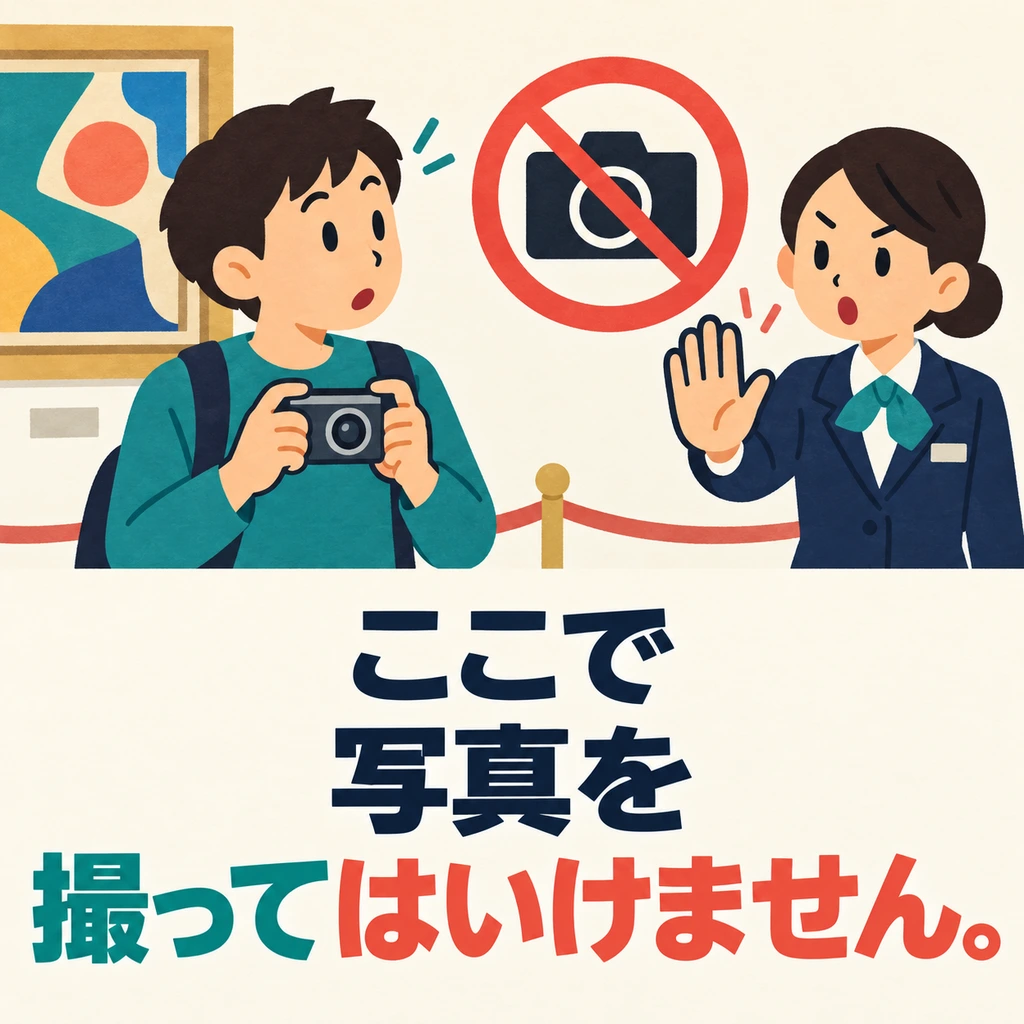
Look at the museum sign: the crossed-out camera means taking photos is forbidden here.
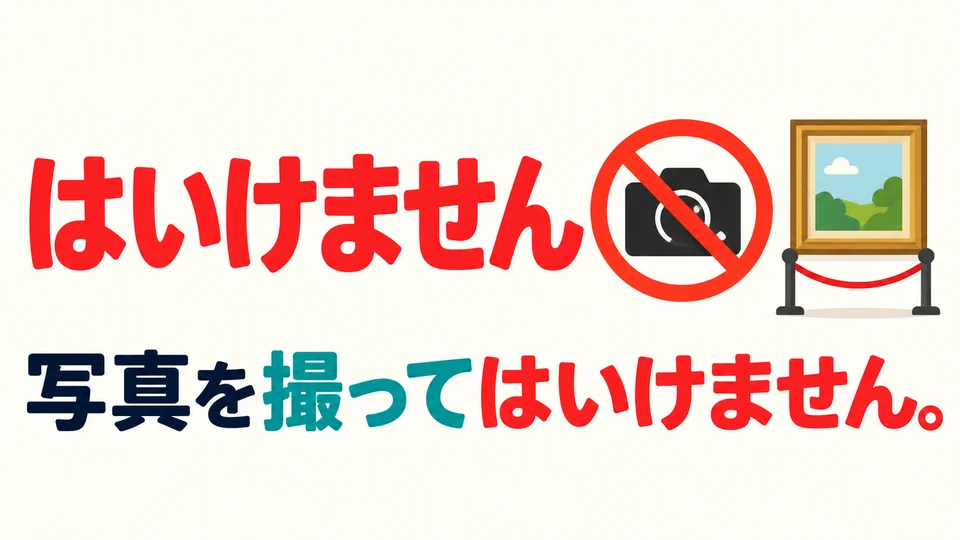
「はいけません」 means an action is not allowed. It states a rule, not a lack of ability.
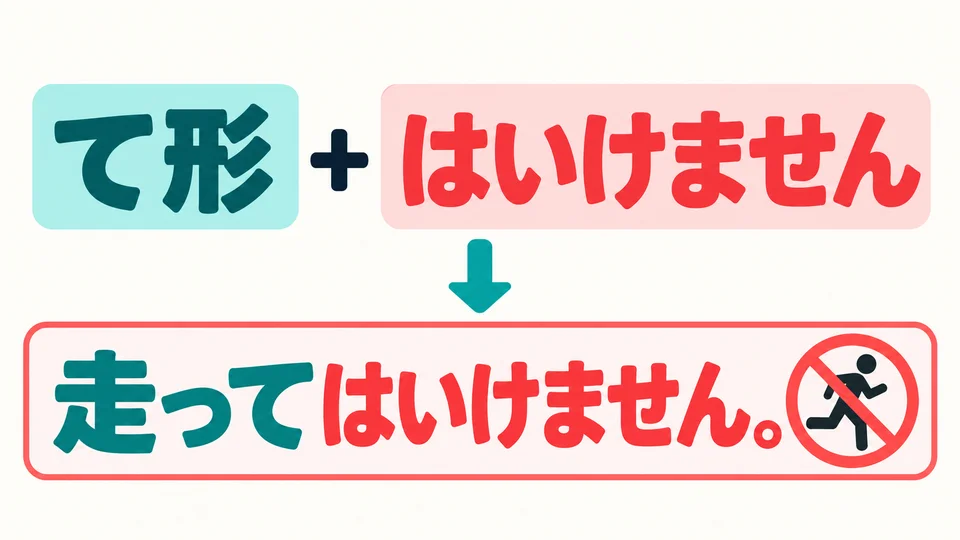
Put the verb in the て form, then add 「はいけません」 to say that the action is forbidden.
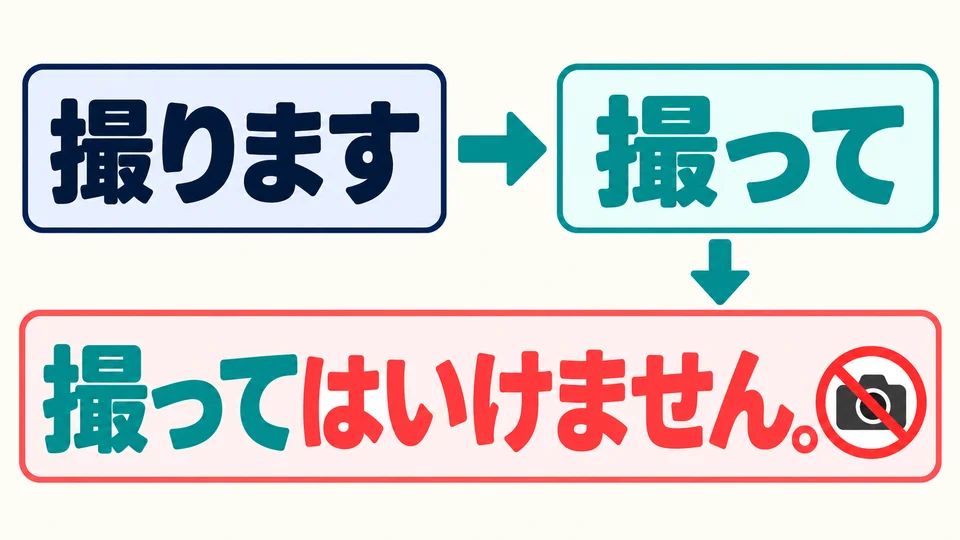
In the example, 「撮って」 is the て form of 「撮ります」. Add 「はいけません」 directly after it.
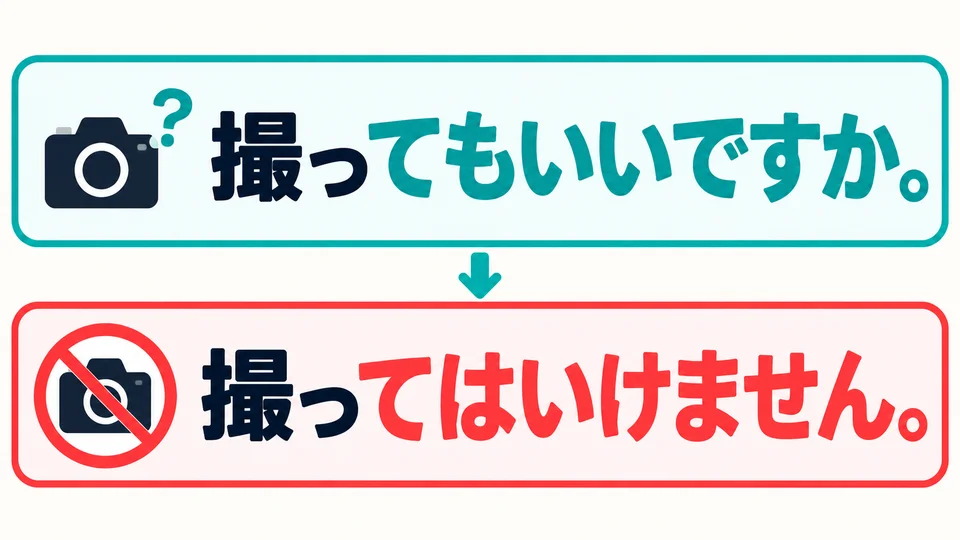
Asking 「てもいいですか」 requests permission. Answering 「てはいけません」 means it is not allowed.
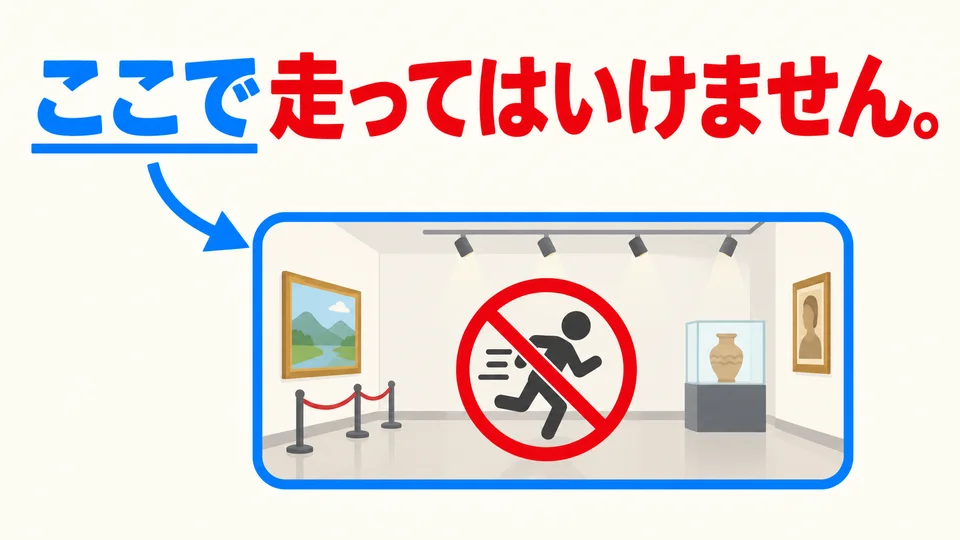
In the example, 「ここで」 specifies the place: running is forbidden here, not everywhere.