
Japanese grammar · ≈ JLPT N4 · Beginner 3
〜ています~te imasu
resulting state still holds
「〜ています」 describes a state that remains after a change, such as a window being open.
- Pattern
- 〜ています
- Romaji
- ~te imasu
- JLPT (approx.)
- ≈ N4
- Course level
- Beginner 3
- Theme
- TV and Magazines
How it works
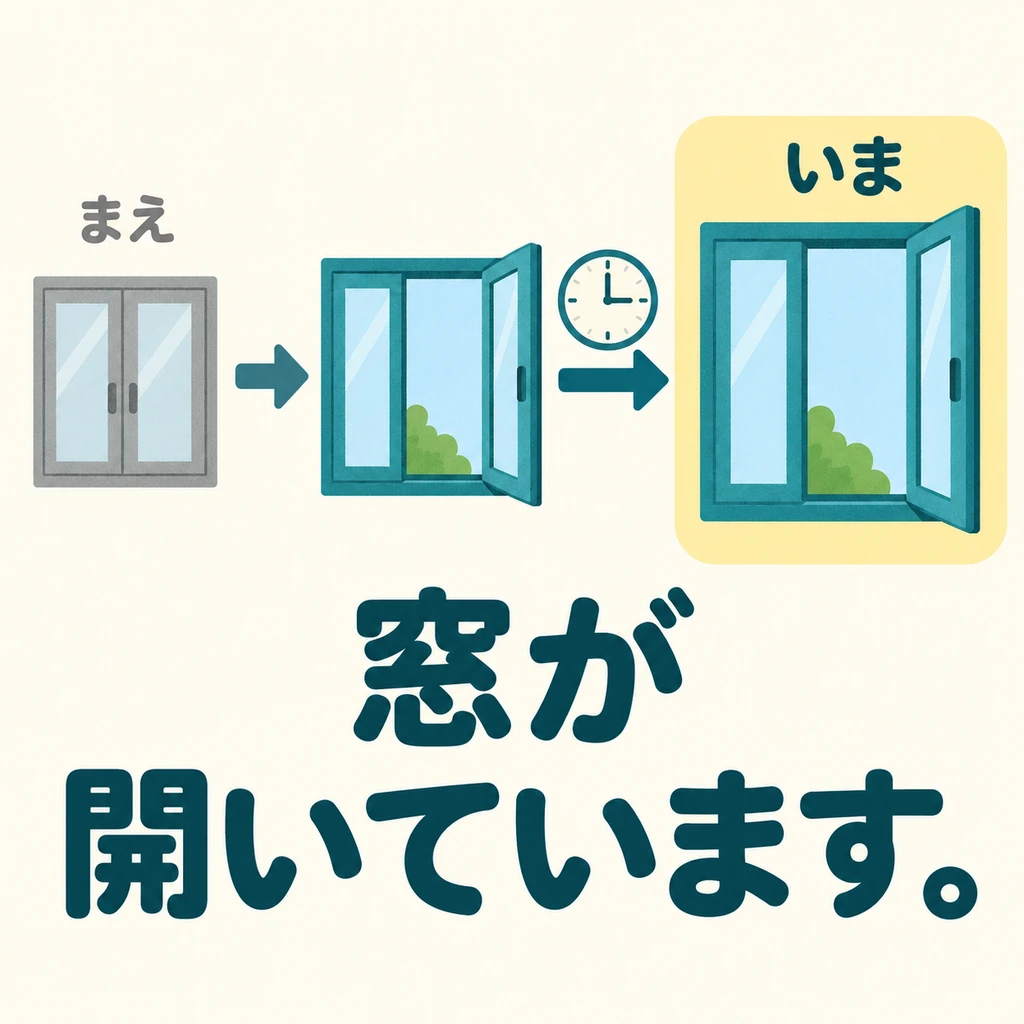
Follow the time arrows: the window opened and is still open now. The focus is on the state left by the change.
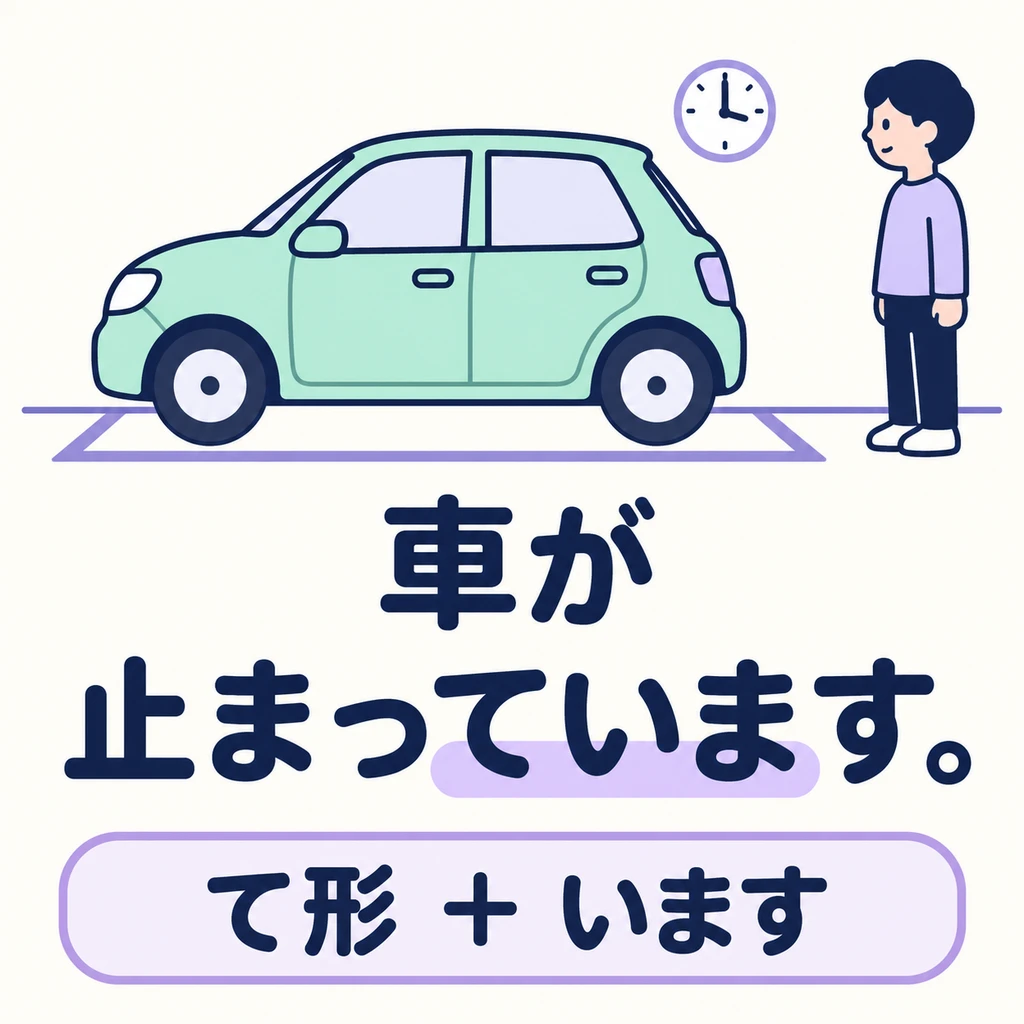
The car has stopped and is still there now. Use 「止まっています」 to describe the state you see.
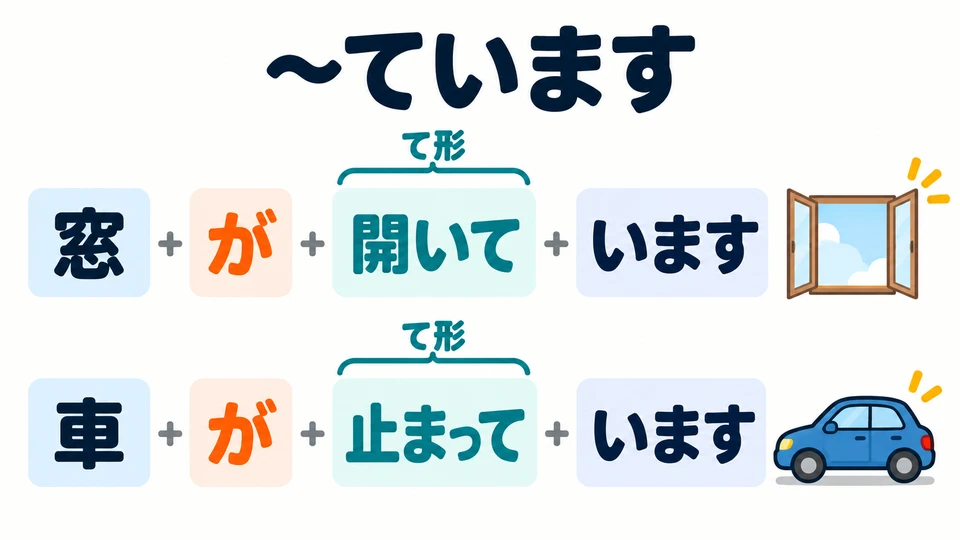
To express this resulting state, add 「います」 to the verb’s て form. Put 「が」 after the thing whose state you describe.
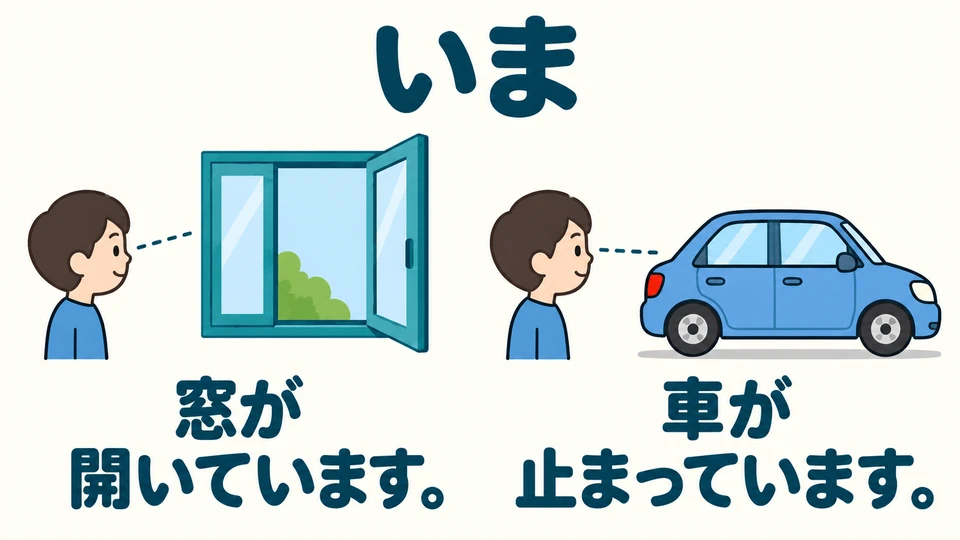
You can say this just by observing the window or car as it is now. You don’t need to know who caused the change.
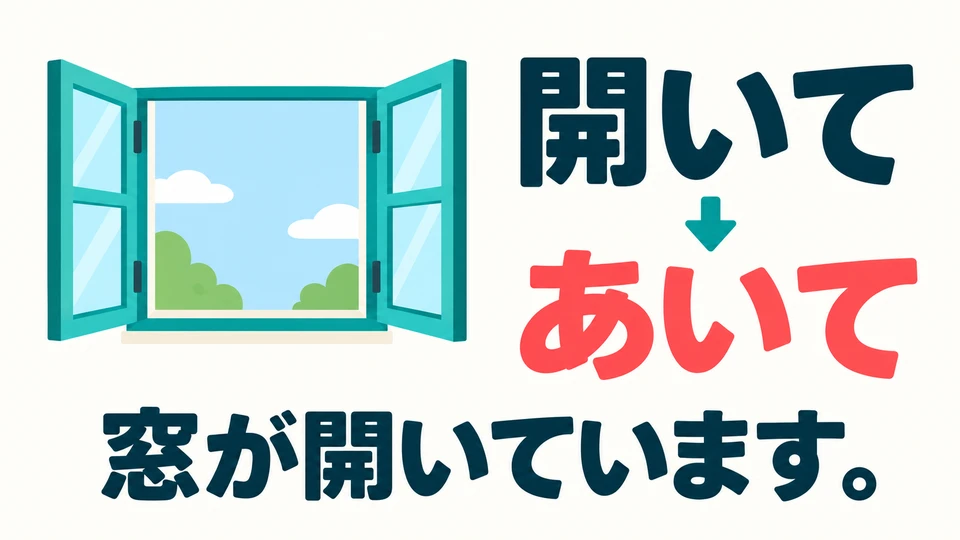
In the example, 「開いて」 is usually read 「あいて」. Keep this reading in mind when saying that a window is open.
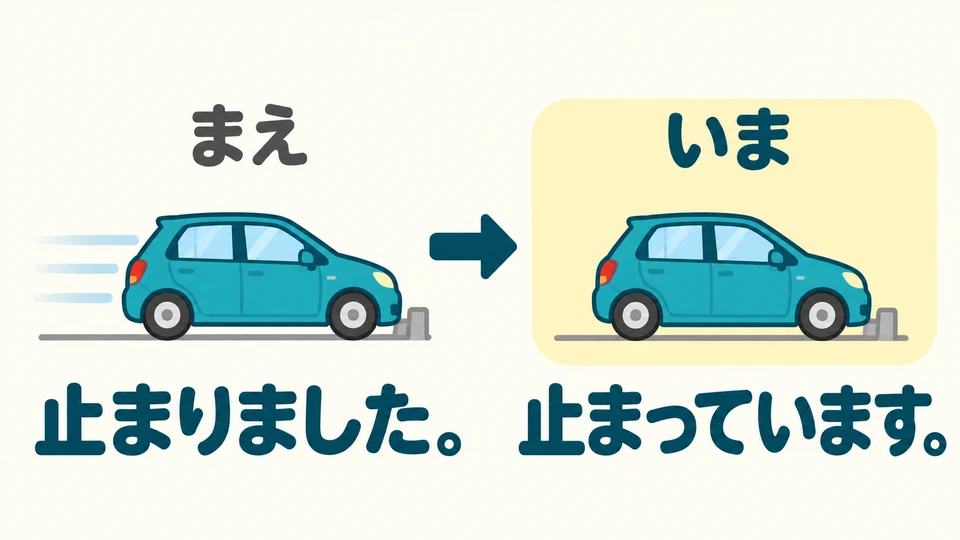
「止まりました」 says the car stopped; 「止まっています」 emphasizes that it is still stopped now.
Example sentences
- 窓madoがga開いaiてteいますimasu
The window is open
- 車kurumaがga止まっtomatてteいます
In a conversation

- Aあれ、窓が開いていますね。
A: Oh, the window is open.
- Bそうですね。閉めましょうか。
B: Yes, it is. Shall I close it?
Check yourself
Which sentence is correct?
- ドアが開いています。
- ドアが開きって。
- ドアが開きいて。
- ドアが開きますしています。
Show answer
Answer: A ドアが開いています。
Which sentence is correct?
- 電気がついています。
- 電気がついてにます。
- 電気がつきっています。
- 電気がつきますしています。
Show answer
Answer: A 電気がついています。
Which sentence is correct?
- ゴミ箱が壊れています。
- ゴミ箱が壊れてあります。
- ゴミ箱が壊れっています。
- ゴミ箱が壊れますしています。
Show answer
Answer: A ゴミ箱が壊れています。
More grammar in this theme
- 〜ていますresulting state still holds