
Japanese grammar · ≈ JLPT N4 · Beginner 3
〜と、〜があります~to, ~ ga arimasu
route and predictable result
Use 「〜と、〜があります」 to give a route step in dictionary form and say what is predictably found afterward.
How it works
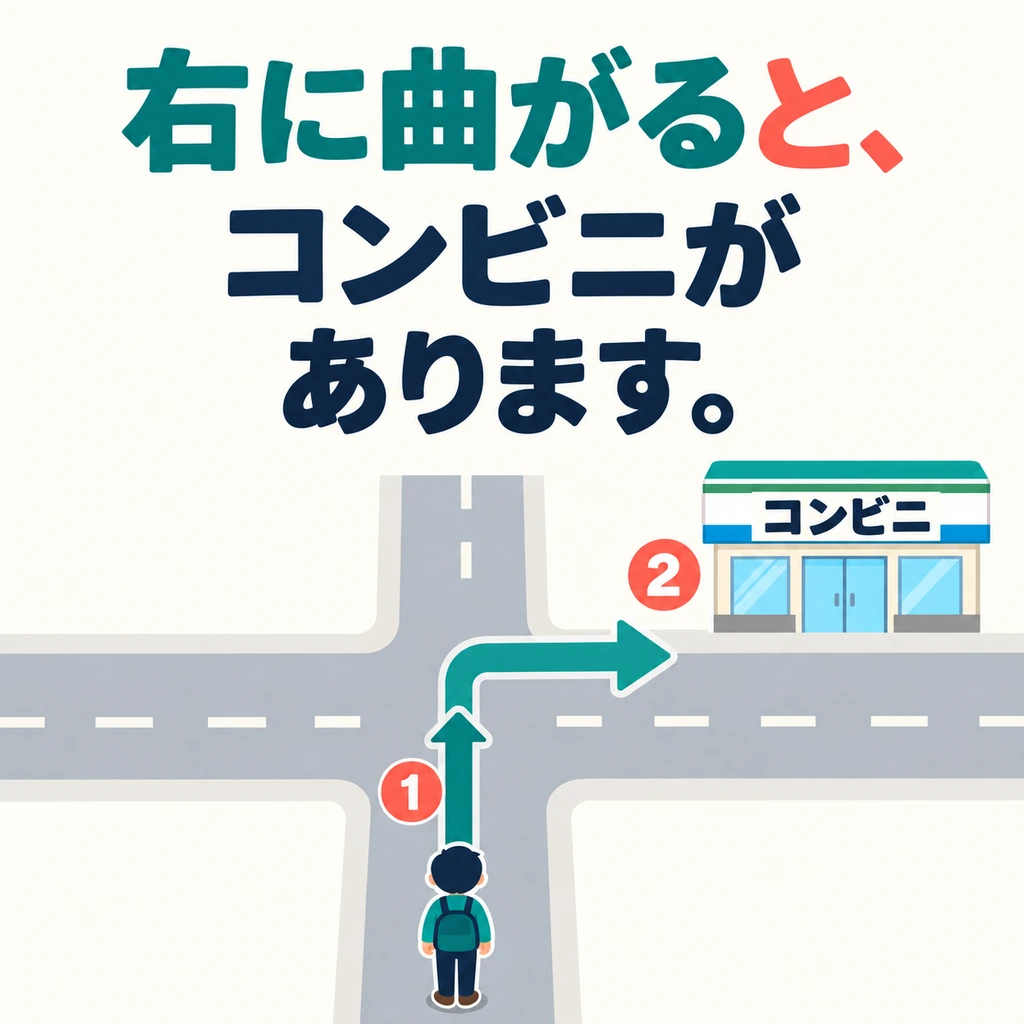
Follow the arrow. What will you see after turning right? When giving directions, 「と」 links an action to the place you find.
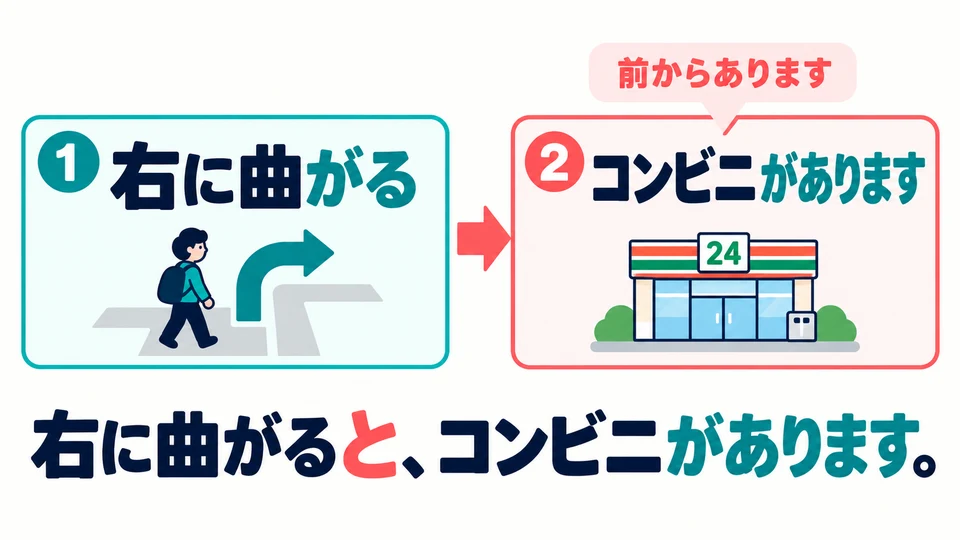
Here it means “once you …, you …”: first turn right, then spot the convenience store. The store was already there.
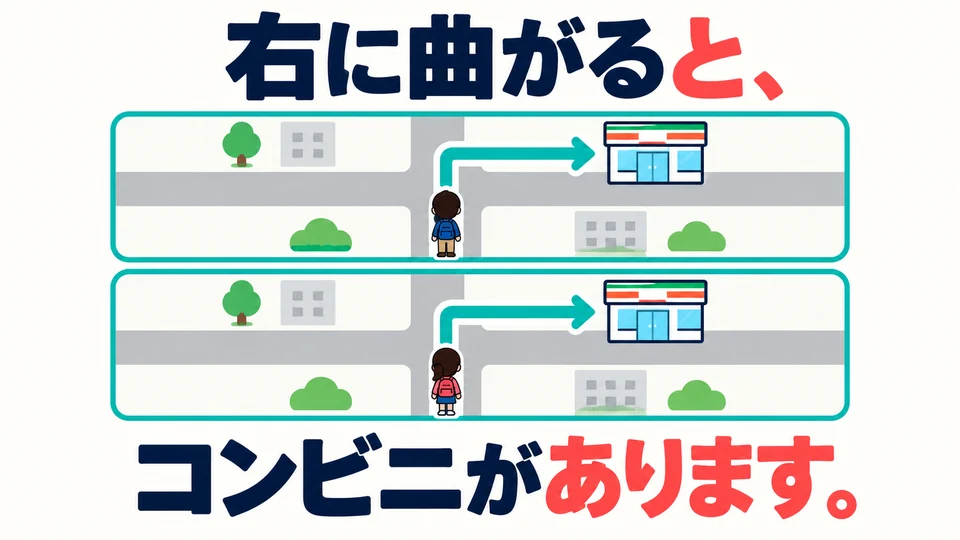
Following this route leads to the same place each time. 「と」 describes the predictable result of taking that route.
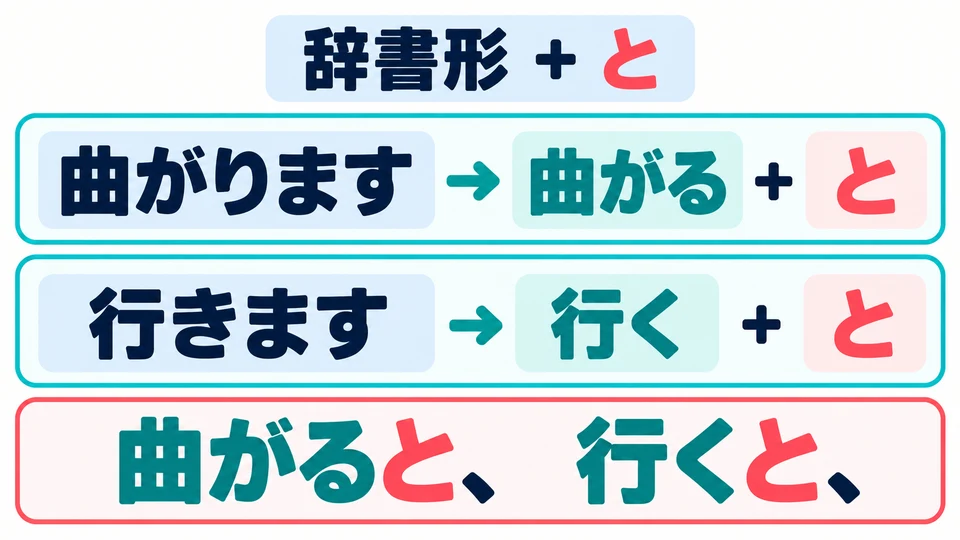
Before 「と」, use the verb’s dictionary form: 曲がります→曲がる, 行きます→行く.
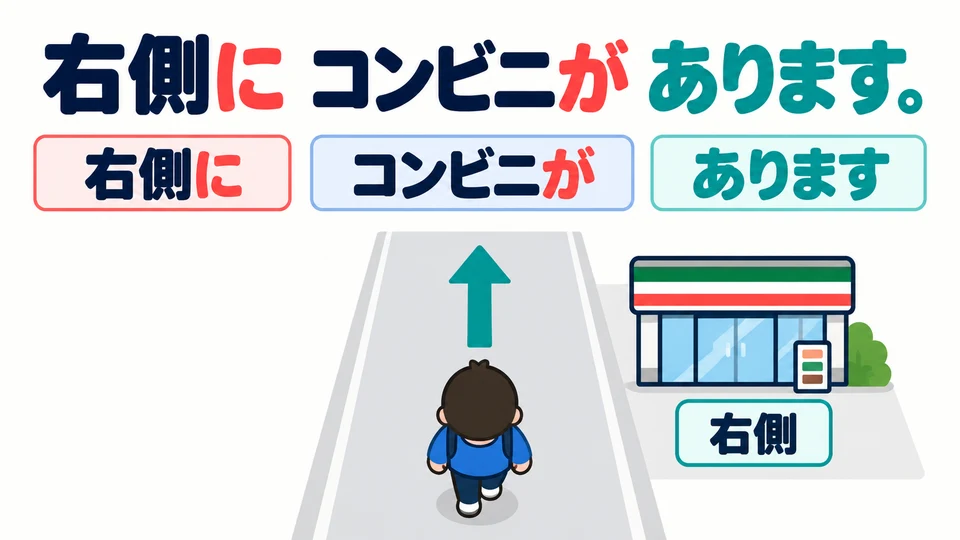
Then 「Nがあります」 tells you what is there; 「右側に」 tells you it is on the right.
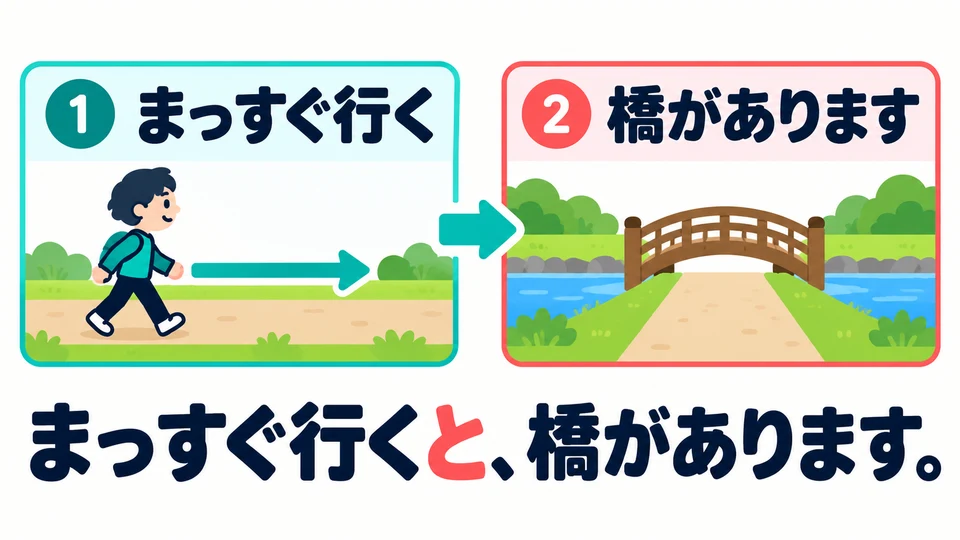
「まっすぐ行くと、橋があります。」 Go straight first, then see a bridge. The order is the same.
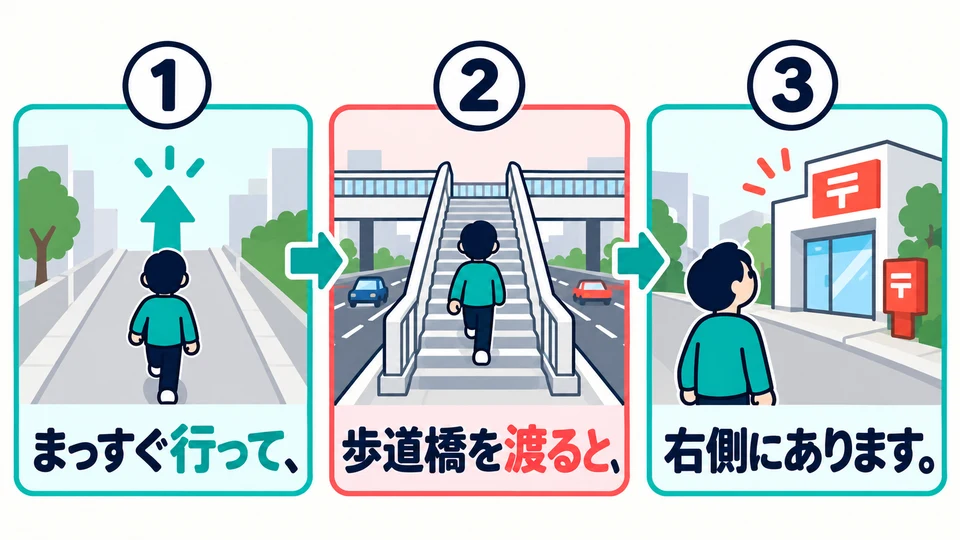
For a longer route, first use 「行って」 to link the steps. Then use 「渡ると」 to introduce the location after crossing the bridge.
Example sentences
- 交差kousa点tenをo右migiにni曲がるmagaruと、toコンビニkonbiniがgaあります。arimasu
If you turn right at the intersection, you'll find a convenience store.
In a conversation

Check yourself
Level 1 · Recognise
Which sentence is correct?
Level 1 · Recognise
Listen and choose the meaning
Level 2 · Build
Put the words in order
If you turn right at the intersection, there's a convenience store.
Level 3 · Use
What goes in the blank?
交差点を右に コンビニがあります。
If you turn right at the intersection, there's a convenience store.
More grammar in this theme
- 〜と、〜がありますroute and predictable result